- Company Articles
- Products and Technology
- Product knowledge
- How Flat Rigid Castor Wheels Reduce Vibration in Sensitive Medical Equipment Racks

How Flat Rigid Castor Wheels Reduce Vibration in Sensitive Medical Equipment Racks
Related Product
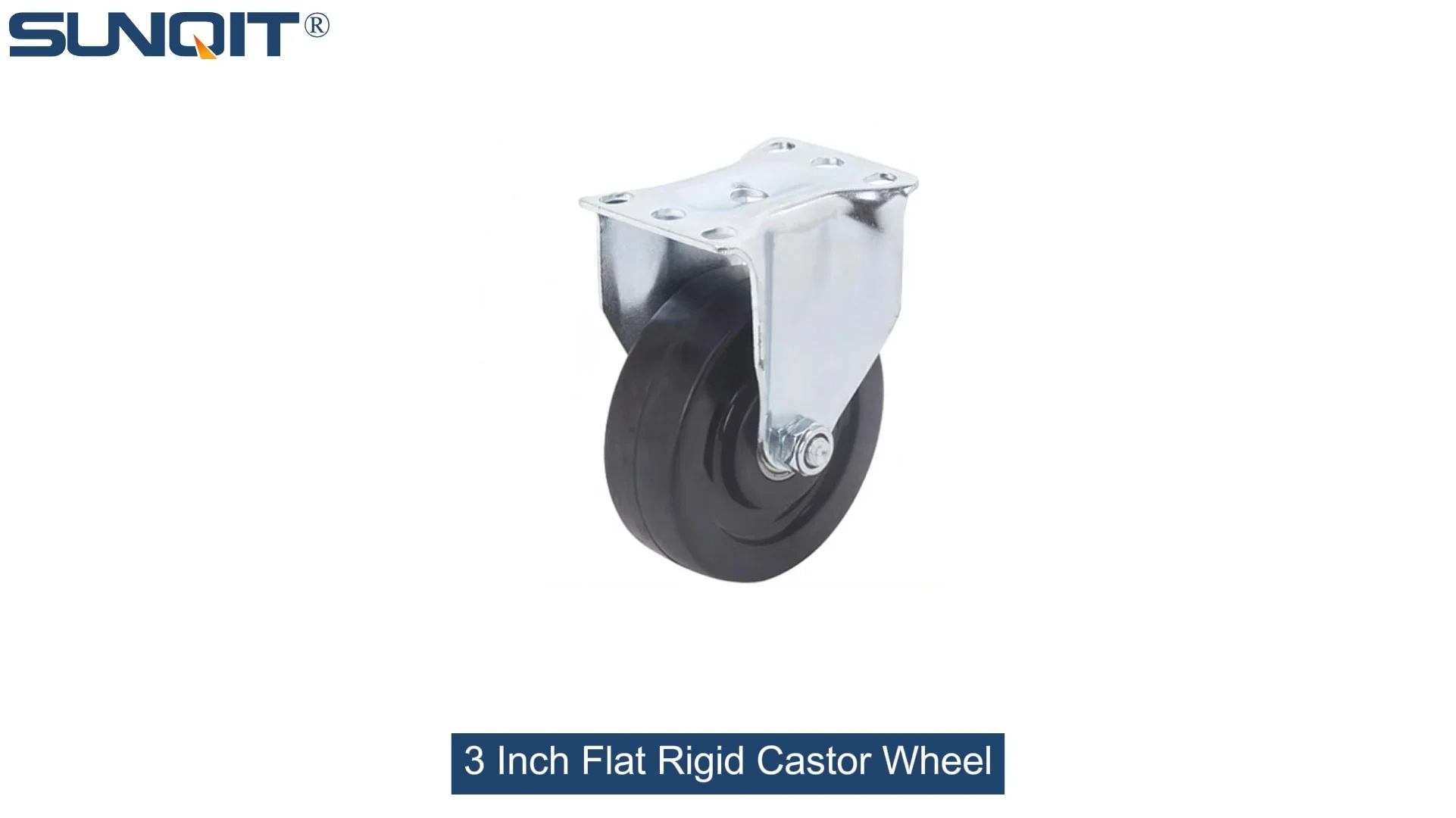
Flat Rigid Castor Wheel
Chair Casters Ball Bearing Wheels Rubber Base. Resistant to abrasion, impact and corrosion. Heavy payload can hold 70Kgs per pcs,which can make it works at a stable and smooth status.
Walk into any modern medical lab or hospital equipment room, and you'll notice something critical but often overlooked: the racks and carts that hold life-saving tools, precision instruments, and delicate samples. These aren't just metal shelves on wheels—they're the silent guardians of accuracy in environments where even a hair's breadth of movement can compromise test results, damage sensitive machinery, or delay patient care. Think about a high-resolution microscope analyzing tissue samples, a centrifuge spinning at thousands of RPM, or a blood gas analyzer measuring minute chemical levels. For these tools, stability isn't a luxury; it's a necessity. And at the heart of that stability? The wheels beneath them.
Vibration is the invisible enemy here. It creeps in from uneven floors, nearby foot traffic, or even the hum of HVAC systems, and it doesn't take much to throw off a sensitive instrument. A 2023 study in the Journal of Medical Engineering found that vibrations as small as 0.1g (about the force of a gentle bump) can cause a 15% error in certain lab tests—a margin that could mean misdiagnosing a patient or invalidating hours of research. So, how do we keep these vibrations in check? The answer lies in choosing the right mobility solution, and that's where flat rigid castor wheels come into play.
In this article, we'll dive into why vibration matters for medical equipment, how standard castors often fall short, and the specific ways flat rigid castor wheels tackle this problem. We'll also explore their design, materials, and real-world impact—because when it comes to protecting sensitive tools, the wheels under the rack are just as important as the rack itself.
Why Vibration Is a Critical Threat to Medical Equipment
To understand why flat rigid castor wheels are so valuable, let's first unpack why vibration is such a big deal in medical settings. Sensitive equipment is designed to measure, analyze, or manipulate objects at microscopic scales. A centrifuge, for example, separates blood components by spinning at speeds up to 30,000 RPM; even a tiny wobble can cause samples to mix incorrectly. Similarly, an electron microscope uses beams of electrons to create images with nanometer-level resolution—vibrations here can blur details, making it impossible to spot early signs of disease in tissue samples.
Vibration sources in medical facilities are everywhere. Floors, even in new buildings, are rarely perfectly level; a slight slope or crack can cause a rolling rack to vibrate as it's moved. Foot traffic from staff, carts, or stretchers sends shockwaves through the floor. Nearby equipment, like MRI machines or ventilation systems, generates constant low-frequency vibrations that can resonate through metal racks. Even the act of stopping or starting a mobile rack can jolt its contents—think of how a sudden stop in a car makes your coffee spill, but on a much smaller, more critical scale.
| Equipment Type | Vibration Sensitivity | Potential Impact of Vibration |
|---|---|---|
| Electron Microscope | Extreme (0.01g max) | Blurred images, missed cellular details |
| Clinical Centrifuge | High (0.05g max) | Sample mixing, inaccurate separation |
| Blood Gas Analyzer | Moderate (0.1g max) | Incorrect pH/electrolyte readings |
| PCR Machine | Moderate (0.1g max) | DNA amplification errors, false negatives |
The stakes here are clear: even minor vibrations can lead to misdiagnoses, wasted resources, and compromised patient safety. That's why medical facilities invest heavily in vibration-dampening solutions—from specialized flooring to isolated workbenches. But one of the most effective (and often overlooked) solutions is right under their noses: the castor wheels that make these racks mobile in the first place.
Why Standard Castors Struggle with Vibration
Not all castors are created equal. Walk into a hardware store, and you'll find dozens of options—swivel casters, locking casters, heavy-duty casters—but most aren't designed with medical-grade stability in mind. Let's break down why standard castors often fail to protect sensitive equipment from vibration:
- Swivel Mechanisms: Swivel casters are great for maneuverability—they rotate 360 degrees, making it easy to navigate tight spaces. But that flexibility comes at a cost. The swivel joint introduces extra points of movement; even when locked, tiny gaps in the bearing can allow the wheel to wobble, transmitting vibrations up into the rack.
- Soft or Flexible Treads: Many standard casters use soft rubber or plastic treads for quiet operation or floor protection. While these treads absorb some shock, they also compress and flex under load. Over time, this flexing creates a "spring effect," where the wheel bounces slightly on uneven surfaces, amplifying vibrations instead of dampening them.
- Poor Mounting Stability: Standard casters often attach to racks with simple bolts or clips, leaving room for play between the caster and the rack frame. This looseness means that when the wheel hits a bump, the entire caster assembly can shift, sending vibrations straight through to the equipment above.
- Lightweight Construction: To keep costs low, many off-the-shelf casters use thin metal or plastic frames. These materials lack the rigidity to resist bending under load, so when the rack moves, the caster itself flexes, creating additional vibration.
Take, for example, a standard swivel caster with a plastic tread. When you roll it over a small floor imperfection—a common scenario in busy hospitals—the wheel compresses, then rebounds. That rebound creates a small shockwave that travels up the caster stem, through the rack, and into the equipment. Multiply that by four casters on a rack, and you've got a recipe for unstable equipment. For labs using material racks or workbenches with these casters, the result is often constant readjustment, repeated calibrations, and the occasional loss of sensitive samples.

Flat Rigid Castor Wheels: Designed for Stability
Enter flat rigid castor wheels. Unlike their swiveling, flexible counterparts, these casters are built with one goal in mind: minimizing movement and vibration. Let's start with the basics: what is a flat rigid castor wheel? At its core, it's a fixed-direction caster (no swivel) with a flat, solid mounting plate and a rigid frame. The "flat" refers to the mounting surface—broad and even, ensuring a secure attachment to the rack. The "rigid" means no moving parts beyond the wheel itself; the caster doesn't pivot or swivel, so there's no extra play in the joint.
This simplicity is intentional. By eliminating swivel mechanisms and flex points, flat rigid castors drastically reduce the number of places where vibration can enter the system. But it's not just about stripping down components—these casters are engineered with precision, using materials and design features that work together to dampen and isolate vibrations.
Let's break down the key features that make flat rigid castor wheels a game-changer for sensitive medical equipment racks:
1. Fixed Direction: No Swivel, No Wobble
The most obvious difference between flat rigid castors and standard casters is the lack of a swivel joint. Instead of rotating to change direction, flat rigid castors are fixed in place—they only roll forward and backward. This might seem like a downside for maneuverability, but in medical settings, where racks often follow fixed paths (e.g., from lab to storage room), it's a strength. Without a swivel joint, there's no pivot point to introduce wobble or lateral movement. The caster moves in a straight line, and the rack stays stable.
Think of it like comparing a shopping cart (with swivel casters that often wobble) to a hand truck (with fixed wheels that track straight). The hand truck is harder to turn, but it's far more stable when moving in a straight line—exactly what you want when transporting a rack of sensitive centrifuges or microscopes.
2. Rigid Frame and Mounting: A Solid Foundation
Flat rigid castors are built like tanks. Their frames are typically made from thick steel or aluminum—materials chosen for their rigidity and resistance to bending. The mounting plate is broad and flat, with multiple bolt holes to secure it firmly to the rack. This isn't just about holding the caster in place; it's about creating a direct, unbroken path from the wheel to the rack, with no gaps or flex points where vibrations can take hold.
Many medical equipment racks use aluminum profile frames for their lightweight strength, and flat rigid castors are designed to pair perfectly with these profiles. The mounting plate aligns with the profile's T-slots, allowing for secure attachment with specialized caster accessories like bolts and washers that eliminate play. When the caster is bolted directly to the aluminum profile, the entire system—rack, caster, wheel—acts as a single, rigid unit, minimizing vibration transfer.
3. Precision Bearings: Smooth Rolling, Less Vibration
Even the best frame is only as good as the wheel it supports, and flat rigid castor wheels use precision bearings to ensure smooth, vibration-free rolling. Unlike the loose, low-cost bearings in standard casters, these bearings are sealed and pre-lubricated, with tight tolerances that prevent the wheel from wobbling as it turns. The result? The wheel rolls evenly over small imperfections, instead of bouncing or jolting.
Some models even use double-sealed bearings, which not only reduce vibration but also protect against dust and moisture—critical in sterile medical environments where contamination is a concern. When paired with a rigid frame, these bearings ensure that the only movement is the rotation of the wheel itself, not the caster assembly.
4. Vibration-Dampening Treads: The Right Balance of Grip and Stability
The wheel tread is the final piece of the puzzle. Flat rigid castors use specialized tread materials that balance grip, durability, and vibration dampening. While standard casters might use soft rubber, medical-grade flat rigid castors often opt for polyurethane or thermoplastic elastomers (TPE). These materials are firmer than rubber, so they don't compress as much under load—reducing that "spring effect" we talked about earlier. But they're still flexible enough to absorb small shocks from uneven floors.
Polyurethane, in particular, is a favorite in medical settings. It's resistant to chemicals (important for cleaning with disinfectants), quiet rolling (so it doesn't add noise pollution to labs), and offers excellent traction—preventing the rack from slipping on smooth hospital floors. Some manufacturers even offer treads with a "diamond pattern" or "grooved" design, which further enhances grip without sacrificing vibration control.
The tread thickness is also carefully calibrated. Too thin, and it won't absorb shocks; too thick, and it introduces flex. Most medical-grade flat rigid castors have treads between 10-15mm thick—just enough to cushion small bumps without compromising rigidity.

Real-World Impact: How Flat Rigid Castors Improve Medical Workflows
It's one thing to talk about design features, but how do flat rigid castor wheels actually perform in real medical settings? Let's look at a case study from a mid-sized hospital lab in Chicago, which switched to flat rigid castors on their material racks and workbenches in 2024. The lab houses equipment like centrifuges, PCR machines, and a small electron microscope, all mounted on mobile racks that need to be moved daily for cleaning and equipment access.
Before the switch, the lab used standard swivel casters with rubber treads. Technicians reported constant issues: the electron microscope required recalibration every other day due to vibration, and centrifuge samples occasionally mixed during transport. The lab's quality control team found that 8% of blood gas tests had to be repeated due to vibration-related errors—a significant drain on time and resources.
After installing flat rigid castor wheels (paired with aluminum profile racks for added stability), the results were striking. Recalibration frequency for the electron microscope dropped to once a month. Blood gas test repeats fell to 1.5%. Technicians noted that racks moved more smoothly, with less "shaking" when rolling over floor seams or small cracks. Perhaps most importantly, the lab's equipment downtime decreased by 22%, freeing up staff to focus on patient care instead of troubleshooting.
Another example comes from a pharmaceutical research facility in Boston, which uses flat rigid castors on their material rack b (3 row and 3 floor) units—tall, heavy racks storing sensitive drug samples and lab supplies. These racks are moved weekly to access items on lower shelves, and before switching to flat rigid castors, samples would sometimes shift or spill due to vibration. With the new casters, the facility reports zero sample spills in six months, and the racks feel "rock solid" even when fully loaded.
These stories highlight a key point: flat rigid castor wheels aren't just about reducing vibration—they're about improving workflow, reducing costs, and enhancing safety. When equipment stays stable, staff spend less time fixing problems and more time doing what they do best: saving lives.

How to Choose the Right Flat Rigid Castor Wheels for Your Needs
Not all flat rigid castors are the same, and choosing the right one depends on your specific equipment and environment. Here are the key factors to consider:
- Load Capacity: Start by calculating the total weight of your rack and equipment. Flat rigid castors come in load capacities from 100kg to over 1000kg per wheel. Always choose a caster with a capacity higher than your total load (a good rule of thumb is 1.5x the weight, divided by the number of casters). For example, a 4-wheel rack carrying 400kg should use casters rated for at least 150kg each (400kg / 4 wheels = 100kg per wheel; 100kg x 1.5 = 150kg).
- Floor Type: Consider your facility's flooring. Smooth tile or vinyl floors work well with polyurethane treads. If you have carpet or uneven concrete, look for treads with deeper grooves for better traction. Avoid hard plastic treads on delicate floors, as they can scratch—opt for rubber or polyurethane instead.
- Environmental Conditions: Are the racks used in sterile environments (like operating rooms) or areas with frequent cleaning? Look for casters with sealed bearings and corrosion-resistant materials (stainless steel frames, for example). If chemicals are present, ensure the tread material is resistant to disinfectants like bleach or alcohol.
- Mounting Compatibility: Check that the caster's mounting plate fits your rack's frame. If you're using aluminum profile racks, ensure the caster has holes or slots that align with the profile's T-slots. Many manufacturers offer caster accessories like mounting brackets or adapters to ensure a secure fit.
- Regulatory Compliance: Medical equipment must meet strict standards (e.g., ISO 13485 for medical devices). Choose casters from suppliers who comply with these regulations, ensuring the materials are non-toxic, easy to clean, and won't off-gas harmful fumes in enclosed spaces.
Maintaining Flat Rigid Castor Wheels for Long-Term Performance
Even the best castors need maintenance to perform at their best. Here's how to keep your flat rigid castor wheels in top shape:
- Regular Cleaning: Wipe down wheels and frames weekly with a damp cloth to remove dust, debris, or chemical residues. For stubborn grime, use a mild detergent—avoid harsh abrasives that can damage the tread or frame.
- Lubrication: Even sealed bearings need occasional lubrication. Every 6 months (or more often in high-use areas), apply a small amount of medical-grade lubricant to the wheel axle. This reduces friction, ensuring smooth rolling and preventing bearing wear.
- Inspect for Wear: Check treads monthly for cracks, flat spots, or uneven wear. If the tread is worn down by more than 2mm, replace the wheel—worn treads lose their vibration-dampening properties. Also, tighten any loose mounting bolts to prevent wobble.
- replace Damaged Parts: If a bearing fails or the frame bends, replace the caster immediately. Using damaged casters puts your equipment at risk of vibration damage and can lead to rack instability.
By following these steps, you can extend the life of your flat rigid castors and ensure they continue to protect your sensitive equipment for years to come.
The Future of Vibration Control: Innovations in Flat Rigid Castor Design
As medical technology advances, so too do the tools that support it. Flat rigid castor wheels are no exception. Here are a few emerging trends we're seeing in the industry:
- Smart Casters with Vibration Sensors: Imagine castors that can detect excessive vibration and alert staff via a mobile app. Some manufacturers are experimenting with built-in accelerometers that monitor vibration levels, helping facilities identify problem areas (like uneven floors) before equipment is damaged.
- Advanced Tread Materials: New formulations of polyurethane and TPE are being developed to offer even better vibration dampening. These "intelligent" treads can adjust their firmness based on load or floor conditions, optimizing stability in real time.
- Lightweight Rigidity: Using aerospace-grade aluminum alloys, manufacturers are creating flat rigid castors that are lighter than steel but just as strong. This reduces the overall weight of mobile racks, making them easier to move without sacrificing stability.
- Modular Design: Casters that allow for easy tread replacement, so you don't have to buy a whole new caster when the tread wears out. This is not only cost-effective but also reduces waste, aligning with the growing focus on sustainability in healthcare.
These innovations promise to make flat rigid castor wheels even more effective at protecting sensitive medical equipment, ensuring that as technology advances, stability keeps pace.
Conclusion: The Wheels That Keep Medicine Moving Forward
In the world of medical equipment, every detail matters. From the precision of a microscope lens to the calibration of a centrifuge, accuracy is non-negotiable. And while we often focus on the equipment itself, the tools that support it—like the castor wheels under a rack—play a critical role in maintaining that accuracy.
Flat rigid castor wheels may not be the most glamorous part of a lab or hospital, but they're essential. By eliminating swivel joints, using rigid frames and precision bearings, and selecting the right tread materials, these casters drastically reduce vibration, protecting sensitive equipment from damage and ensuring reliable results. They're a testament to the idea that sometimes, the simplest solutions are the most effective.
So, the next time you walk into a medical lab and see a rack of equipment gliding smoothly across the floor, take a moment to appreciate the wheels beneath it. They're not just moving the rack—they're helping doctors, researchers, and technicians deliver better care, one stable roll at a time.