- Company Articles
- Products and Technology
- Application Cases
- How Flat Rigid Castor Wheels Support Lean Production Principles in Factories

How Flat Rigid Castor Wheels Support Lean Production Principles in Factories
Related Product
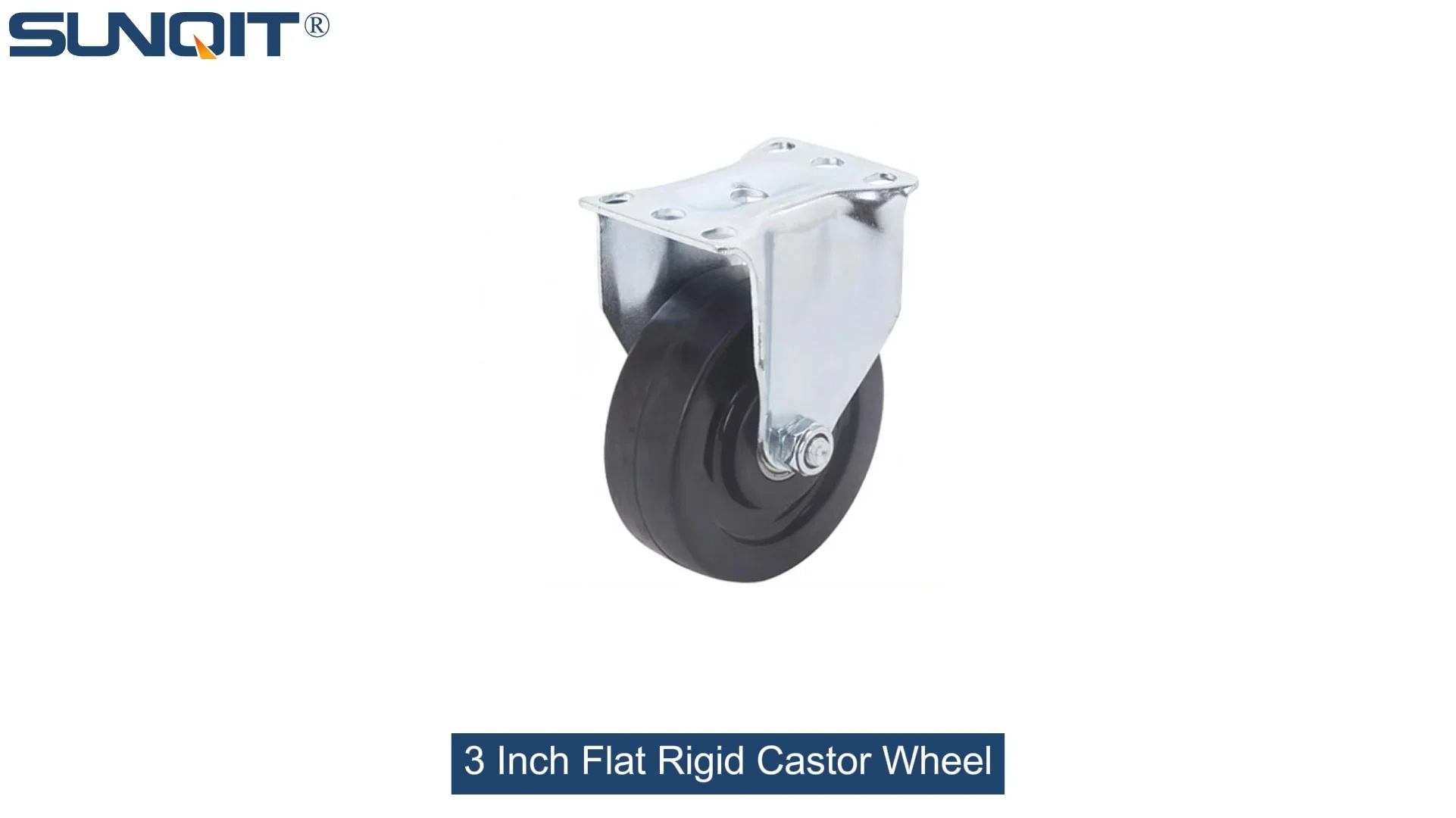
Flat Rigid Castor Wheel
Chair Casters Ball Bearing Wheels Rubber Base. Resistant to abrasion, impact and corrosion. Heavy payload can hold 70Kgs per pcs,which can make it works at a stable and smooth status.
In the fast-paced world of manufacturing, where every second counts and waste is the enemy, lean production has emerged as more than just a methodology—it's a mindset. At its core, lean is about creating more value with fewer resources by eliminating waste, streamlining processes, and fostering continuous improvement. While big-picture strategies like value stream mapping and pull systems often take the spotlight, the success of lean often hinges on the smallest, most overlooked components of the factory floor. One such unsung hero? The flat rigid castor wheel. These unassuming wheels, often found beneath workbenches, flow racks, and material trolleys, play a quiet yet critical role in upholding lean principles. In this article, we'll explore how flat rigid castor wheels support lean production, from enhancing stability in workstations to reducing waste in material flow, and why they've become a staple for factories committed to operational excellence.
Understanding Lean Production: The Foundation of Modern Manufacturing
Before diving into the specifics of flat rigid castor wheels, let's briefly recap the key principles of lean production. Developed from Toyota's legendary Production System (TPS), lean is built on five core pillars: value, value stream, flow, pull, and perfection. "Value" refers to what the customer is willing to pay for; "value stream" maps the steps required to deliver that value, identifying both value-adding and non-value-adding activities (waste); "flow" ensures materials and information move smoothly through the process without delays; "pull" means producing only what's needed, when it's needed; and "perfection" is the relentless pursuit of eliminating waste over time.
Waste, or "muda" in Japanese, comes in many forms: overproduction, waiting, transportation, overprocessing, inventory, motion, and defects. Lean factories aim to stamp out all seven, but one of the most insidious—and often hardest to spot—is "motion waste," which includes unnecessary movement of people, tools, or materials. This is where equipment design, including the choice of castor wheels, becomes crucial. A workstation that wobbles, a trolley that drifts off course, or a flow rack that jams—all of these force workers to waste time adjusting, readjusting, or even halting production. Flat rigid castor wheels, with their focus on stability and controlled movement, directly address this, making them a silent partner in the fight against motion waste.
Flat Rigid Castor Wheels: What Are They, and Why Do They Matter?
Castor wheels come in many shapes and sizes, from swivel casters that rotate 360 degrees to locking casters that secure equipment in place. Flat rigid castor wheels, as the name suggests, are fixed in direction (non-swivel) and feature a flat, stable base. Unlike their swivel counterparts, which prioritize maneuverability, flat rigid casters are designed for straight-line movement and stability. They're typically made from durable materials like steel, polyurethane, or rubber, with a focus on load-bearing capacity and resistance to wear and tear.
At first glance, their simplicity might make them seem less impressive than high-tech, swiveling alternatives. But in lean environments, simplicity is often a strength. Flat rigid casters excel in scenarios where precision, stability, and predictability are non-negotiable—qualities that align perfectly with lean's demand for consistent, waste-free flow. Let's break down their impact across key lean principles.

Stability: The Backbone of Error-Free Workstations
In manufacturing, precision is everything. A misaligned part, a wobbly tool, or a workstation that shifts mid-assembly can lead to defects, rework, and wasted materials—all forms of muda. This is especially true for delicate operations, such as electronics assembly or precision machining, where even a fraction of an inch of movement can ruin a product. Enter the flat rigid castor wheel: by providing a stable, fixed base for workbenches, these wheels ensure that tools, materials, and assembly surfaces stay exactly where they need to be.
Consider a typical lean workbench, designed to hold tools, components, and a workspace for operators. If this workbench is equipped with swivel casters, even a slight bump from a passing trolley or a quick movement by the operator could cause it to shift. The operator would then spend valuable time realigning the workbench, adjusting tools, or repositioning materials—time that could be spent adding value. With flat rigid casters, the workbench stays anchored. There's no unexpected movement, no need for constant readjustment, and no risk of errors caused by instability. This stability directly reduces motion waste and defect waste, two of lean's biggest targets.
But stability isn't just about preventing movement—it's also about supporting heavy loads without compromise. Many lean workbenches are designed to hold hundreds of pounds of tools, parts bins, and equipment. Flat rigid casters, with their robust construction and wide contact area, distribute weight evenly across the floor, reducing the risk of sinking or tilting. This is particularly important in facilities with uneven floors, where unstable casters might cause a workstation to rock. By maintaining a level surface, flat rigid casters ensure that operators can work efficiently, without straining to compensate for wobbling or imbalance—another win for reducing motion waste.

Durability: Aligning with Lean's "Eliminate Waste" Mantra
Lean production isn't just about efficiency in the moment—it's about long-term sustainability. One of the most overlooked forms of waste is "waste from replacement," which occurs when equipment breaks down or wears out prematurely, requiring frequent repairs or replacements. This not only costs money but also disrupts production schedules, leading to downtime (waiting waste) and rushed work (which often causes defects). Flat rigid castor wheels, built for durability, directly counter this by minimizing the need for replacement and maintenance.
Unlike swivel casters, which have complex internal mechanisms (bearings, swivel plates, and locks) that can wear out or jam over time, flat rigid casters have fewer moving parts. Their simple design—typically a wheel mounted on a fixed axle attached to a flat plate—means there are fewer components to fail. This simplicity translates to longer lifespans, even in high-traffic factory environments. For example, a steel flat rigid caster with a polyurethane wheel can withstand daily use on concrete floors for years, whereas a swivel caster with a plastic swivel plate might start to degrade after six months of heavy loads.
Durability also ties into cost-effectiveness, a key aspect of lean's waste reduction goals. While flat rigid casters might have a slightly higher upfront cost than cheaper, low-quality swivel casters, their longer lifespan and lower maintenance needs result in a lower total cost of ownership (TCO). A lean pipe supplier that specializes in durable components will often highlight this: investing in quality casters upfront reduces the need for frequent replacements, saving money and time in the long run. For factories aiming for "perfection" (lean's fifth principle), this focus on durability is non-negotiable.

Supporting Flow: Keeping Materials Moving Smoothly in Lean Systems
"Flow" is one of lean's most critical principles: the idea that materials, information, and work-in-progress should move through the production process continuously, without stops or bottlenecks. When flow is interrupted—by a jammed conveyor, a stuck trolley, or a misaligned flow rack—waiting waste occurs, and the entire value stream suffers. Flat rigid castor wheels play a vital role in maintaining this flow, particularly in material handling systems like flow racks and turnover trolleys.
Flow racks, a staple in lean warehouses and factories, are designed to allow materials to "flow" from the back to the front via gravity, ensuring that the oldest stock is used first (FIFO—first in, first out). These racks often rely on roller tracks or wheels to facilitate smooth movement. While the rollers themselves get most of the attention, the casters beneath the rack are equally important. If a flow rack is equipped with unstable casters, it might tilt to one side, causing materials to jam or slide off track. Flat rigid casters, with their fixed direction and stable base, keep the rack level and aligned, ensuring that materials glide smoothly from input to output.
Turnover trolleys, used to transport materials between workstations, are another area where flat rigid casters shine. In a lean system, these trolleys need to move in predictable, straight paths—from the warehouse to the assembly line, or from one workstation to the next. Swivel casters, while maneuverable, can cause trolleys to drift off course, especially when loaded unevenly. This drift not only slows down transportation (motion waste) but also increases the risk of collisions with other equipment or workers. Flat rigid casters, fixed in direction, keep trolleys moving in straight lines, reducing transit time and improving safety. For example, in an automotive plant, a turnover trolley carrying engine parts from the storage area to the assembly line can move efficiently along a predefined path, with no need for constant steering—saving operators time and reducing the risk of accidents.
Comparing Castor Types: Why Flat Rigid Casters Excel in Lean Environments
To truly appreciate the value of flat rigid castor wheels in lean systems, it's helpful to compare them with other common castor types, such as swivel casters and locking swivel casters. The table below highlights key differences and how they align with lean principles:
| Feature | Flat Rigid Casters | Swivel Casters (Non-Locking) | Locking Swivel Casters | Lean Benefit |
|---|---|---|---|---|
| Stability | High (fixed direction, wide base) | Low (prone to drifting) | Medium (stable when locked, but lock can fail) | Reduces motion waste from readjusting workstations |
| Durability | High (fewer moving parts) | Medium (complex swivel mechanism prone to wear) | Low (locks and swivel parts wear quickly) | Minimizes replacement waste and downtime |
| Load Capacity | High (even weight distribution) | Medium (weight concentrated on swivel joint) | Medium-Low (locks add stress to the mechanism) | Supports heavy workbenches/racks without failure |
| Maneuverability | Low (fixed direction) | High (360° rotation) | Medium (swivel when unlocked, fixed when locked) | Better for straight-line, predictable movement (flow) |
| Maintenance Needs | Low (simple design, few parts to service) | Medium (requires lubrication for swivel joint) | High (locks and swivel joint need frequent checks) | Reduces maintenance time (non-value-adding activity) |
As the table shows, while swivel casters offer superior maneuverability, they fall short in stability, durability, and maintenance—all critical areas for lean production. Locking swivel casters attempt to bridge the gap, but their complexity introduces new risks (lock failure, increased wear) that contradict lean's focus on simplicity and reliability. Flat rigid casters, by contrast, prioritize the qualities that matter most in lean environments: stability, durability, and low maintenance. They may not be the most flexible option, but in a system built on predictability and waste reduction, flexibility often takes a backseat to consistency.
Real-World Impact: A Case Study in Lean Manufacturing
To illustrate the tangible benefits of flat rigid castor wheels, let's look at a real-world example: a mid-sized electronics manufacturer specializing in printed circuit boards (PCBs). Prior to adopting lean principles, the factory relied on swivel caster-equipped workbenches and trolleys. Operators frequently complained about wobbly workstations, which made precise soldering and component placement difficult. Trolleys transporting PCBs between assembly stations often drifted off course, leading to delays and occasional collisions with other equipment. The maintenance team was constantly replacing swivel casters, which wore out quickly due to the heavy loads and constant movement.
As part of their lean transformation, the factory partnered with a lean pipe supplier to redesign their workstations and material handling systems. The supplier recommended switching to flat rigid castor wheels for workbenches and flow racks, citing their stability and durability. The results were striking:
- Reduced defects: With stable workbenches, soldering errors dropped by 18%, as operators no longer had to compensate for wobbling surfaces.
- Faster material flow: Turnover trolleys equipped with flat rigid casters moved along predefined paths 22% faster, reducing transportation time and waiting waste.
- Lower maintenance costs: Caster replacement frequency decreased by 60%, as flat rigid casters lasted significantly longer than swivel casters. The maintenance team reallocated their time to more value-adding tasks, such as preventive maintenance on critical machinery.
- Improved operator satisfaction: Operators reported less physical strain and frustration, leading to a more engaged workforce—a key driver of continuous improvement in lean systems.
This case study highlights a crucial point: lean transformation isn't just about big changes. Sometimes, the smallest adjustments—like switching to flat rigid castor wheels—can yield significant improvements in efficiency, quality, and cost.
Choosing the Right Flat Rigid Castor Wheels: Key Considerations for Lean Factories
Not all flat rigid castor wheels are created equal. To maximize their impact on lean production, factories must choose casters that align with their specific needs. Here are some key factors to consider:
Load Capacity
First and foremost, consider the weight the casters will need to support. Workbenches, flow racks, and trolleys can carry anywhere from 100 to 1,000+ pounds. Choose casters with a load capacity that exceeds the expected weight to account for uneven loading or occasional overloading. A good rule of thumb is to select casters with a capacity of at least 125% of the maximum load.
Floor Type
The factory floor material (concrete, tile, epoxy) will influence the choice of wheel material. For rough concrete floors, steel or polyurethane wheels are ideal, as they resist wear and tear. For smooth epoxy floors, rubber wheels may be better, as they reduce noise and prevent scuffing.
Wheel Diameter
Larger wheels (4–6 inches) roll more easily over small obstacles (cracks, debris) than smaller wheels (2–3 inches), reducing the force required to move trolleys or workstations. In lean terms, this reduces motion waste by making transportation easier for operators.
Supplier Reliability
Finally, partner with a reputable lean pipe supplier that specializes in high-quality casters and accessories. A reliable supplier will offer consistent product quality, technical support, and on-time delivery—all critical for maintaining lean flow and avoiding downtime. Look for suppliers with a track record in lean manufacturing, as they'll understand your unique needs and can recommend the best casters for your specific application.
Conclusion: Flat Rigid Casters—Small Components, Big Lean Impact
In the world of lean production, success lies in the details. While strategies like value stream mapping and 5S get the headlines, it's the components—like flat rigid castor wheels—that often make the biggest difference. By providing stability for workstations, reducing waste from replacement and maintenance, and supporting smooth material flow, these wheels embody lean's core principles: eliminate waste, create value, and pursue perfection.
For factories embarking on their lean journey, or looking to refine their existing systems, the message is clear: don't overlook the small stuff. Invest in high-quality flat rigid castor wheels, partner with a trusted lean pipe supplier, and watch as these unassuming components help transform your factory floor into a model of efficiency, quality, and continuous improvement. After all, in lean production, every wheel counts.