- Company Articles
- Products and Technology
- Solution
- How Free Flow Chain Conveyors Integrate with Lean Workstations

How Free Flow Chain Conveyors Integrate with Lean Workstations
Related Product
Free Flow Chain Conveyor
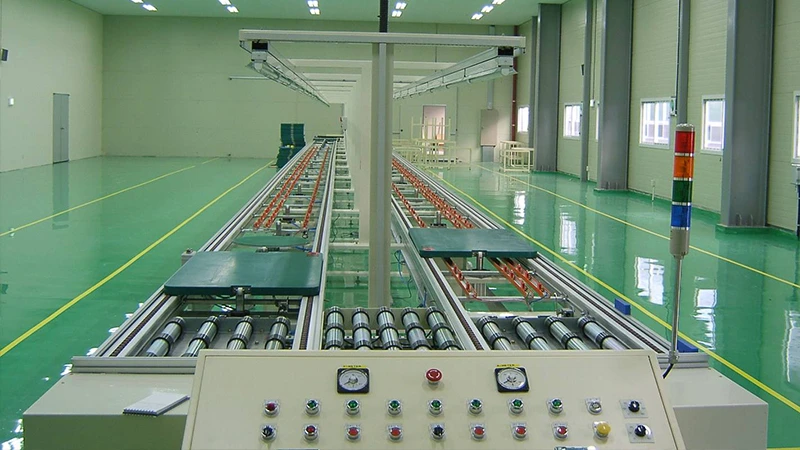
The free flow conveyor system uses a free flow chain that can increase the speed of the tooling board that supports the products. This can improve the efficiency and quality of the production process, as well as reduce the wear and tear of the system.
The Heart of Lean Manufacturing: Where Workstations and Flow Converge
Lean manufacturing isn't just a buzzword—it's a promise to make work better. Better for the people on the floor, better for the bottom line, and better for the products that reach customers. At its core, lean is about stripping away waste: the extra steps, the waiting, the clutter that turns a smooth day into a frustrating one. But here's the thing: even the sharpest lean processes can stumble if the tools and spaces that power them don't play well together. That's where two workhorses of the factory floor come into focus: the humble yet mighty lean workstation and the unsung hero of material flow, the free flow chain conveyor. When these two join forces, they don't just support lean principles—they bring them to life.
Walk into any shop floor that's truly "lean," and you'll notice something immediately: everything feels intentional. There's no excess, no confusion, and no wasted motion. A big part of that magic comes from how workstations and conveyors talk to each other. Imagine (oops, scratch that—let's see ) a line where parts glide to the worker instead of the worker chasing parts. Where the bench they stand at fits their body like a well-worn glove, and every tool is exactly where it needs to be. That's not luck—that's integration. And at the center of it all? A lean system designed to make flow feel effortless.
Lean Workstations: More Than Just a Bench
Let's start with the basics: what even is a lean workstation? It's not just a table with a chair. A lean workstation is a workspace engineered to eliminate waste at the source. Think of it as a command center where every detail—from the height of the surface to the placement of a screwdriver—serves a purpose. And one of the most versatile players in this space is the lean pipe workbench. Built with modular components like aluminum pipes and joints, these workbenches are like the Lego sets of manufacturing: you can snap them together, take them apart, and rebuild them as needs change. Need a shelf for extra parts? Add it. Want to lower the surface for a new task? Adjust it. That flexibility is key because in lean, rigidity is the enemy of progress.
But a lean workstation isn't just about adjustability. It's about ergonomics, too. When a worker bends, reaches, or strains all day, fatigue sets in—and with fatigue comes mistakes, slowdowns, and even injuries. A well-designed lean pipe workbench keeps tools at elbow height, materials within arm's reach, and the work surface aligned with the worker's waist. It's not just about making the job easier; it's about respecting the people doing the job. And when workers feel respected, they're more engaged, more focused, and more likely to spot ways to make things even better. That's the human side of lean—and it matters.
Free Flow Chain Conveyors: The Glue of Smooth Material Flow
Now, let's talk about moving stuff. In any production line, materials need to get from Point A to Point B—fast, reliably, and with as little hassle as possible. Enter the free flow chain conveyor. Unlike clunky, motorized belts that can jolt or jam, these conveyors use a series of low-friction chains or rollers that let items glide along with minimal effort. Gravity often does the heavy lifting, or a gentle push from a worker is all it takes to keep things moving. The "free flow" part is critical here: there's no stopping and starting, no wrestling with stuck boxes, just a steady, predictable stream of parts.
What makes these conveyors so lean-friendly? For one, they're modular. Like the lean pipe workbench, free flow chain conveyors can be customized to fit the space. Need a curve to navigate around a corner? Add it. A drop to feed into a lower workstation? No problem. They're also low-maintenance—no complicated motors or gears to fix, just simple, durable parts that stand up to the daily grind. And because they're so easy to adjust, they grow with your needs. If production ramps up, you can extend the conveyor. If a new product line requires a different layout, you can reconfigure it in a fraction of the time it would take with rigid systems.
When Workstations Meet Conveyors: The Integration That Changes Everything
So, we've got lean workstations that make tasks efficient and ergonomic, and free flow chain conveyors that keep materials moving. But when you connect them? That's when the real lean magic happens. Let's break down how this integration works—and why it matters.
Picture a typical assembly line before integration: A worker stands at their bench, assembles a part, then sets it aside. When they need more components, they walk to a flow rack across the floor, grab a box, and carry it back. Meanwhile, the next station is waiting for the finished part, so the worker hurries, maybe fumbles, and the whole line slows down. Now, imagine the same line with integration: The flow rack is positioned next to a free flow chain conveyor, which feeds directly into the worker's lean pipe workbench. Components glide along the conveyor right to their fingertips. When they finish a part, they slide it onto another conveyor that carries it to the next workstation. No walking, no waiting, no wasted steps.
This isn't just about speed—it's about flow. In lean terms, "flow" means creating a steady, uninterrupted rhythm where each step leads naturally to the next. When a free flow chain conveyor connects a flow rack to a workbench, it turns "fetching parts" from a chore into a seamless part of the process. Workers stay in their zone, focused on the task, not the logistics. And because the conveyor moves at the pace of the line, there's no buildup of inventory—another key lean principle. Parts arrive just when they're needed, so there's no excess stock cluttering the area.
Real-World Impact: A Day in the Life (With and Without Integration)
Let's ground this in reality with a quick comparison. Below is a snapshot of how a typical electronics assembly station might operate without integrated workstations and conveyors, versus how it runs with them. The difference is striking.
| Aspect | Without Integration | With Integrated Lean System |
|---|---|---|
| Part Retrieval | Worker walks 20 steps to flow rack, searches for components, carries back (2-3 minutes per trip). | Components slide via free flow conveyor directly to workbench (0 steps, 0 extra time). |
| Worker Fatigue | Constant bending, reaching, and walking leads to tiredness by mid-shift. | Ergonomic lean pipe workbench and conveyor-fed parts reduce strain; workers stay fresh. |
| Line Downtime | Stations wait for parts or finished items; 10-15% of shift spent idle. | Steady flow means stations stay busy; downtime drops to 2-3%. |
| Error Rate | Rushed workers make mistakes; 5-7% defect rate. | Focused, less stressed workers; defect rate drops to 1-2%. |
The numbers speak for themselves, but the human impact is even clearer. Workers on the integrated line aren't just more productive—they're happier. They spend their day building things, not fetching things. They feel trusted to do their best work, supported by tools that make sense. And when workers are happy, they're more likely to suggest improvements: "What if we angle the conveyor slightly to make loading easier?" or "Could we add a small shelf here for tools?" That's the lean cycle in action—people and systems working together to get better, every day.
The Role of Flow Racks: The Unsung Link in the Chain
We can't talk about integration without mentioning flow racks. These simple yet effective storage systems are often the starting point for the conveyor workflow. A flow rack holds stacks of components, with each level tilted slightly so that when the front box is taken, the next one slides forward—no digging, no searching, just easy access. When a flow rack is paired with a free flow chain conveyor, it becomes a feeder system: components move from the rack to the conveyor to the workstation, all without human intervention. It's like a silent assistant that keeps the line stocked and the workers focused.
Flow racks are also customizable, which makes them perfect for lean environments. You can adjust the number of levels, the angle of the shelves, and even the size of the bins to fit whatever you're storing—from small electronics parts to larger mechanical components. And because they're often built with the same modular parts as lean pipe workbenches (think aluminum pipes and joints), they blend seamlessly into the overall system. It's all about creating a cohesive ecosystem where every piece has a purpose and every purpose aligns with eliminating waste.
Why This Integration Matters for Your Lean Journey
At the end of the day, integrating free flow chain conveyors with lean workstations isn't just about buying new equipment. It's about investing in a lean system that works with your team, not against them. Here are the biggest benefits you'll see:
- Reduced Waste: Less walking, less waiting, less searching—all the "non-value-added" activities that eat into productivity.
- Happier, More Engaged Teams: When work feels manageable and tools feel intuitive, workers take pride in their roles.
- Flexibility: Modular components mean you can adapt quickly to new products, higher demand, or process changes.
- Better Quality: Less fatigue and distraction lead to fewer mistakes and more consistent output.
- Lower Costs: Reduced downtime, fewer defects, and higher efficiency all add up to a healthier bottom line.
Lean manufacturing is a journey, not a destination. And like any journey, the right gear makes all the difference. A lean pipe workbench that adapts to your team, a free flow chain conveyor that keeps materials moving, and flow racks that keep things organized—these aren't just tools. They're the building blocks of a workplace where everyone can do their best work, waste is a thing of the past, and success feels inevitable.
So, if you're looking to take your lean efforts to the next level, start by looking at how your workstations and conveyors interact. Are they working together, or against each other? The answer might just be the key to unlocking the full potential of your team—and your business.