- Company Articles
- Products and Technology
- Solution
- How Free Flow Chain Conveyors Support Continuous Improvement in Lean Factories

How Free Flow Chain Conveyors Support Continuous Improvement in Lean Factories
Related Product
Free Flow Chain Conveyor
The free flow conveyor system uses a free flow chain that can increase the speed of the tooling board that supports the products. This can improve the efficiency and quality of the production process, as well as reduce the wear and tear of the system.
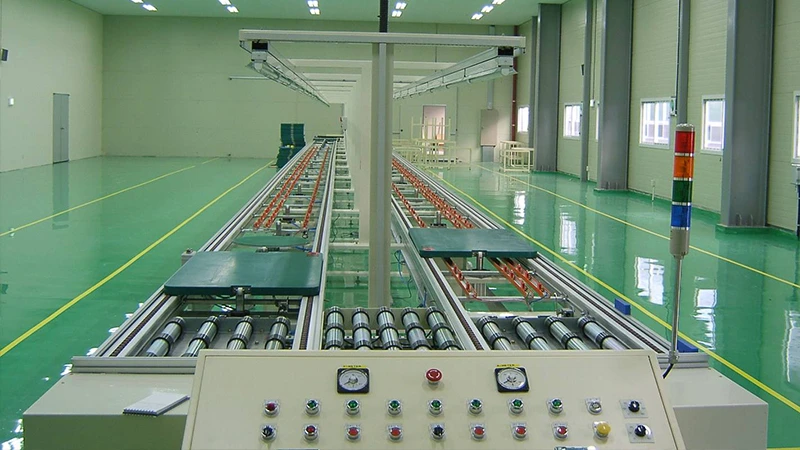
The unsung hero of seamless production—where efficiency meets humanity
The Heartbeat of Lean: Why Flow Matters More Than You Think
Walk into any manufacturing facility, and you'll quickly sense the rhythm of the place. Some hum with a steady, almost musical cadence—parts gliding smoothly, workers moving with purpose, delays few and far between. Others feel more like a chaotic symphony out of tune: bins stacked haphazardly, employees rushing to fix bottlenecks, and that ever-present tension of falling behind schedule. The difference often comes down to one word: flow .
In lean manufacturing, flow isn't just a buzzword. It's the lifeblood that turns disjointed processes into a cohesive dance. It's about ensuring materials, parts, and information move through the production line without unnecessary stops, like water flowing through a clear stream rather than a river. And at the center of that flow—quietly, reliably—sits the free flow chain conveyor. It's not the flashiest piece of equipment on the factory floor, but ask any frontline worker, and they'll tell you: a well-designed conveyor system isn't just metal and rollers. It's the difference between starting the day dreading delays and ending it feeling proud of a job well done.
Beyond the Basics: What Makes Free Flow Chain Conveyors a Lean Powerhouse
Let's start with the basics: free flow chain conveyors (sometimes called "flow conveyors" or "roller conveyors") use a series of rotating rollers or chains to move products along a path with minimal effort. Unlike heavy, fixed machinery, these systems are often modular—built from interchangeable parts like aluminum profiles, roller tracks, and plastic guide rails—that can be reconfigured as production needs change. But their real magic lies in how they embody lean principles, turning abstract ideas like "eliminate waste" into tangible, day-to-day improvements.
1. They Turn "Push" into "Pull" (and Workers Breathe Easier)
Traditional manufacturing often relies on a "push" system: parts are made in bulk and sent down the line, whether the next station is ready or not. This leads to piles of inventory clogging up workspaces, workers scrambling to store excess parts, and delays when the line gets backed up. Free flow conveyors, by contrast, enable a "pull" system—where parts only move forward when the downstream station signals it's ready. Imagine a line where a worker at the assembly bench simply pulls a lever, and the next component glides gently toward them, exactly when they need it. No more hunting for misplaced parts. No more lifting heavy bins. Just a steady, calm rhythm that lets workers focus on quality, not chaos.
2. They Slash Waste (the Kind That Frustrates Teams Most)
Lean thinking identifies eight types of waste, but two of the most demoralizing are motion (unnecessary movement of people) and waiting (time lost because materials aren't ready). Free flow conveyors attack both head-on. Take a typical electronics assembly line, for example: before conveyors, workers might spend 20% of their shift walking to fetch parts from distant storage racks or waiting for a colleague to pass a bin. With a flow rack connected to a conveyor, parts are delivered right to their workbench—often via gravity or gentle motorized rollers—cutting motion waste by half. And because the conveyor maintains a steady pace, waiting times plummet. One supplier we worked with reported a 35% reduction in "idle time" after installing conveyors, and the feedback from workers? "It feels like we're actually building things now, not just waiting around."
3. They Adapt Fast (Because Change is Inevitable)
In today's manufacturing world, flexibility isn't a nice-to-have—it's survival. A factory might produce 10,000 units of Product A this month and switch to a smaller batch of Product B next month, with entirely different dimensions and weight requirements. Traditional conveyors, bolted to the floor and rigidly designed, would need to be torn out and replaced. But free flow systems, built with modular aluminum lean pipes and quick-connect joints, can be reconfigured in hours, not weeks. A team might add a 45° aluminum guide rail to redirect parts, swap out plastic roller tracks for heavier-duty steel ones, or extend a line with new aluminum profile accessories—all without calling in contractors. This adaptability doesn't just save money; it empowers teams to own their processes. When workers can tweak the conveyor to fit their needs, they feel invested in the outcome, turning "this is how we've always done it" into "let's try something better."
From the Factory Floor: Real Stories of Lean Transformation
Numbers tell part of the story, but people tell the rest. Let's look at a mid-sized automotive parts manufacturer we partnered with a few years back. Their assembly line for brake components was struggling: high turnover, frequent errors, and missed deadlines. Workers were manually lifting 20-pound brake calipers onto workbenches, then carrying finished parts to a packing station 50 feet away. The team was exhausted, and quality was slipping—scratches on parts from dropped bins, mix-ups between left and right calipers.
We proposed a lean solution centered on a free flow chain conveyor system. Here's what we installed: a gravity-fed roller track (using 1-inch swivel roller balls for smooth movement) running from the storage area to each workbench, with aluminum guide rails to keep parts aligned. At each station, we added an ESD workstation (critical for electronics in the calipers) with a built-in bin for rejected parts. Finished parts then rolled via conveyor to the packing area, where a flow rack with 3 rows and 3 floors kept boxes organized by order.
The results? Within three months, physical strain injuries dropped by 70%. Error rates fell by 40% because parts no longer got mixed up during transport. And perhaps most importantly, turnover slowed—workers who'd been planning to quit stayed, telling us, "I don't go home sore anymore. I actually enjoy coming to work." That's the human impact of lean tools: they don't just make factories more efficient—they make them better places to work.
| Metric | Before Conveyors | After Conveyors | Improvement |
|---|---|---|---|
| Daily Production (Units) | 350 | 520 | +49% |
| Worker Overtime (Hours/Week) | 85 | 22 | -74% |
| Scrap Rate | 8% | 3% | -63% |
| Worker Satisfaction Score (1-10) | 4.2 | 7.8 | +86% |
Choosing the Right Conveyor: It's About People, Not Just Parts
Not all free flow chain conveyors are created equal. To truly support continuous improvement, you need a system that's built for your team's specific needs—not just a one-size-fits-all solution. Here are the questions we always ask when partnering with a factory:
What's the "Pain Point" You're Solving?
Is it heavy lifting? Then focus on load capacity—stainless steel swivel roller balls or heavy-duty aluminum pipe might be necessary. Is it static electricity damaging sensitive electronics? An ESD workbench paired with conductive caster wheels will prevent shocks. For food or pharmaceutical industries, stainless steel pipe series ensure easy cleaning and compliance with safety standards.
How Often Will Your Needs Change?
If you switch products monthly, opt for modular components: aluminum lean pipes with internal rotary joints that let you reangle the conveyor in minutes, or plastic roller track guide rails (yellow or grey) that snap on and off without tools. A factory with stable, long-running production might prefer fixed systems, but even then, leaving room to expand with extra roller track connectors or caster accessories ensures you're not stuck if demand spikes.
Have You Asked the People Who'll Use It?
This might be the most critical step. Workers on the floor know exactly where the current system fails—maybe the conveyor is too high, forcing them to bend; maybe the roller track guide rail is too narrow, causing parts to jam. Involving them in the design process (e.g., testing different caster wheels to see which roll easiest on your factory floor) doesn't just lead to a better conveyor. It builds trust, turning "management's new machine" into "our system."
The Future of Lean: Conveyors as Catalysts for Continuous Improvement
Lean manufacturing isn't a destination—it's a journey of constant small improvements. Free flow chain conveyors aren't just tools for today's efficiency; they're platforms for tomorrow's innovations. Imagine adding sensors to your roller track to track bottlenecks in real time, or integrating with robotics to automatically redirect parts when a station is busy. With the right foundation—modular aluminum profiles, durable lean pipe joints, and a focus on worker needs—your conveyor system can grow with your lean journey, not hold it back.
At the end of the day, lean is about respect—for your team, your customers, and your resources. A free flow chain conveyor that reduces stress, cuts waste, and lets people do their best work? That's respect in action. It's not just about moving parts faster. It's about creating a workplace where everyone can say, "I helped make this better." And in the end, that's the most powerful continuous improvement of all.