- Company Articles
- Products and Technology
- Solution
- How Gusset Alp 3030 Supports Medical Device Manufacturing Workbenches

How Gusset Alp 3030 Supports Medical Device Manufacturing Workbenches
Related Product
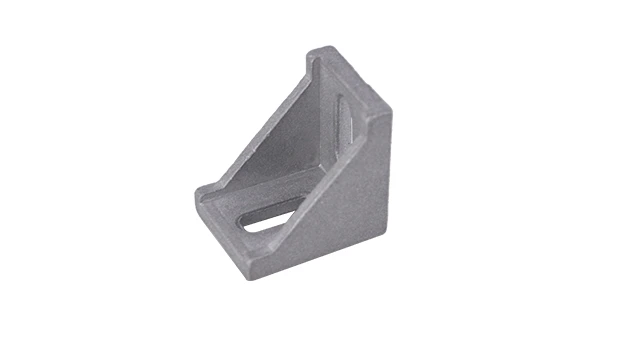
Gusset ALP 3030
The 3030 bracket/Gusset is an external fastening method that creates a 90 degree connection. 3030 means this size is used for 30 series aluminum profile with a quick connection by bolt and nut.
In the world of medical device manufacturing, where a single misplaced component or a momentary lapse in precision can have life-altering consequences, the tools and environments that shape production matter as much as the skilled hands operating them. Among these critical tools, the humble workbench stands as an unsung hero—a silent partner in ensuring that everything from intricate surgical instruments to life-saving pacemakers meets the rigorous standards of safety, accuracy, and reliability. But not all workbenches are created equal. In an industry defined by constant innovation, strict regulatory compliance, and the need for lean, efficient workflows, modern medical manufacturing facilities demand workbenches that are more than just sturdy surfaces. They need systems that adapt, protect, and endure. Enter the Gusset Alp 3030—a small but mighty component that's quietly revolutionizing how medical device workbenches are designed, built, and utilized. In this article, we'll explore how this unassuming aluminum profile accessory plays a pivotal role in supporting the unique demands of medical device manufacturing, from enhancing structural stability to enabling lean system integration and ensuring ESD safety.
1. The Unique Demands of Medical Device Manufacturing Workbenches
To understand why components like the Gusset Alp 3030 matter, we first need to grasp the extraordinary demands placed on workbenches in medical device production. Unlike workbenches in general manufacturing or DIY workshops, these stations are the frontline of precision, where even the smallest variables can impact product quality. Let's break down the key challenges:
Precision and Stability: Medical devices often involve microscale components—think of the tiny gears in a surgical robot or the delicate wiring in a heart monitor. Even the slightest wobble or vibration during assembly can lead to misalignment, compromising functionality. Workbenches must remain rock-solid, even when technicians apply pressure or when heavy equipment (like microscopes or testing devices) is mounted on them.
Flexibility for Rapid Change: The medical device industry moves fast. A facility might produce syringe assemblies one month and switch to catheter components the next, or scale up production of a critical device in response to a public health need. Traditional fixed workbenches, bolted to the floor and built for a single purpose, can't keep up. Modern workbenches need to be reconfigurable—adjustable in height, modular in layout, and easy to disassemble or repurpose without downtime.
ESD Protection: Many medical devices incorporate sensitive electronics, from circuit boards in diagnostic tools to sensors in wearable health monitors. Electrostatic discharge (ESD)—that tiny spark you feel when touching a doorknob—can fry these components, rendering devices useless or, worse, unsafe for patients. Workbenches must integrate ESD safeguards to dissipate static electricity, protecting both the products and the technicians building them.
Regulatory Compliance: Medical device manufacturing is governed by stringent regulations, such as ISO 13485 and FDA guidelines. Workbenches must be constructed from materials that are non-toxic, easy to sanitize, and resistant to harsh disinfectants (like alcohol or hydrogen peroxide). They must also be traceable, with documentation proving they meet safety and quality standards—no small feat for any component involved in their construction.
These challenges aren't just checkboxes; they're daily realities for manufacturers. A workbench that fails to address even one of these areas can lead to production delays, costly rework, or, in the worst case, non-compliant products reaching patients. This is where the Gusset Alp 3030 steps in—not as a standalone solution, but as a critical piece of the puzzle that makes high-performance medical workbenches possible.
2. What is Gusset Alp 3030?
At first glance, the Gusset Alp 3030 might seem like little more than a metal bracket. But to dismiss it as such would be to overlook its engineering ingenuity. Let's start with the basics: A "gusset" is a structural component used to reinforce joints, adding rigidity and distributing stress across a frame. In the context of aluminum profile systems—the modular building blocks of modern workbenches—the Gusset Alp 3030 is a specialized gusset designed specifically for 3030 aluminum profiles. These profiles, named for their 30mm x 30mm cross-section, are the backbone of many industrial workbenches, thanks to their lightweight yet durable nature.
The Gusset Alp 3030 is typically made from high-grade aluminum alloy (often 6063-T5, a material prized for its strength, corrosion resistance, and machinability). Its design is simple but effective: a flat, angular bracket with pre-drilled holes that align with the T-slots of 3030 aluminum profiles. When bolted into place at the joint where two or more profiles meet (e.g., the corner of a workbench frame), it acts as a reinforcement, preventing the joint from flexing under load. Unlike welded reinforcements, which are permanent and difficult to modify, the Gusset Alp 3030 is modular—easily added, removed, or repositioned as needed.
But what sets the Gusset Alp 3030 apart from generic gussets? It's all in the details. The bracket is precision-engineered to fit the exact dimensions of 3030 profiles, ensuring a snug, gap-free connection that maximizes load distribution. Its edges are often rounded to prevent snagging on cables or fabrics, a small but important feature in cleanroom environments where debris must be minimized. Additionally, many versions are anodized—a process that adds a protective oxide layer to the aluminum, enhancing corrosion resistance and making the surface easier to clean (a must for medical settings where sanitization is non-negotiable).
To put it simply: The Gusset Alp 3030 is the "hidden strength" behind modular aluminum workbenches. It transforms a basic frame into a robust structure capable of withstanding the demands of medical device manufacturing, all while retaining the flexibility that makes aluminum profiles so valuable.

3. Structural Integrity: How Gusset Alp 3030 Enhances Workbench Stability
In medical device assembly, stability isn't just a preference—it's a requirement. Imagine a technician using a precision torque wrench to fasten a 0.5mm screw into a pacemaker component. If the workbench shifts by even a fraction of a millimeter mid-turn, the screw could be overtightened, stripping the thread, or undertightened, leading to a loose connection. Either scenario could result in a device failure that endangers a patient's life. This is why structural integrity is the foundation of any medical workbench—and why the Gusset Alp 3030 is so critical.
Let's break down how the Gusset Alp 3030 improves stability:
Stress Distribution at Joints: The weakest point in any frame is the joints. Without reinforcement, a workbench frame made of 3030 aluminum profiles can flex when loaded, especially at corners where vertical and horizontal profiles meet. The Gusset Alp 3030 bridges these joints, creating a triangular support structure (a shape known in engineering for its inherent stability). When weight is applied to the workbench—whether from equipment, tools, or the technician's own movements—the gusset spreads that stress across the entire joint, rather than concentrating it on a single bolt or connection point.
Resistance to Dynamic Loads: Stability isn't just about static weight; it's also about handling dynamic forces—like the sudden downward pressure of a technician pressing a tool, or the vibration from a nearby conveyor. Without reinforcement, these forces can cause the workbench to wobble, creating a feedback loop that amplifies movement. The Gusset Alp 3030 stiffens the frame, reducing resonance and dampening vibrations. In practical terms, this means less hand fatigue for technicians (who don't have to steady their tools) and fewer errors in delicate assembly tasks.
To quantify this impact, let's look at a simple comparison. A basic 3030 aluminum profile workbench frame (1200mm long x 800mm wide x 900mm tall) without gussets might deflect (bend) by 2-3mm when a 50kg load is placed on its surface. With Gusset Alp 3030 reinforcements at all four corners and along the center supports, that deflection drops to less than 0.5mm—well within the tolerance required for medical device assembly. The table below illustrates this difference in stability under common load scenarios:
| Load Scenario | Deflection (Without Gusset Alp 3030) | Deflection (With Gusset Alp 3030) | Reduction in Deflection |
|---|---|---|---|
| Static load: 50kg (typical equipment/tools) | 2.8mm | 0.4mm | 85.7% |
| Dynamic load: 20kg sudden downward force (simulated tool use) | 4.2mm | 0.7mm | 83.3% |
| Sideways load: 15kg (simulated technician leaning) | 3.5mm | 0.6mm | 82.9% |
These numbers aren't just abstract—they translate to real-world benefits. A workbench with minimal deflection reduces eye strain (since the component being worked on stays in focus), improves accuracy (tools don't drift off target), and extends the lifespan of the frame itself by reducing wear on joints and fasteners. For medical manufacturers, this means fewer rejected parts, lower rework costs, and a more reliable production process.

4. Flexibility and Adaptability in Lean Systems
The principles of lean manufacturing—eliminating waste, optimizing workflows, and continuously improving processes—are deeply ingrained in medical device production. In an industry where time-to-market can save lives and inefficiencies can drive up costs, lean systems are not just a competitive advantage; they're a necessity. Central to lean manufacturing is the concept of "flow"—ensuring that materials, components, and assemblies move smoothly through the production line with minimal delay. Workbenches, as the primary workstations in this flow, must be able to adapt quickly to changes in production needs. Here, the Gusset Alp 3030 shines by enabling the flexibility that lean systems demand.
Modular Reconfiguration: Traditional workbenches are often custom-built for a specific task. If a manufacturer needs to switch from assembling blood glucose monitors to ventilator parts, they might have to replace the entire bench—a time-consuming and costly process. Modular workbenches built with 3030 aluminum profiles and Gusset Alp 3030 reinforcements, however, can be reconfigured in hours, not days. Need to add a shelf for new tools? Simply unbolt the gusset, adjust the vertical profile, and reattach. Want to widen the work surface to accommodate larger components? Add an extra horizontal profile and secure it with Gusset Alp 3030 brackets. The gusset's modular design means that the frame can be modified without cutting, welding, or specialized tools—empowering technicians to make changes on the fly.
Scalability for Changing Volumes: Medical device demand can fluctuate dramatically—think of the surge in ventilator production during the COVID-19 pandemic. Lean systems require that production capacity can scale up or down quickly. With Gusset Alp 3030-reinforced workbenches, manufacturers can easily add new workstations by assembling additional frames, or repurpose existing ones by reconfiguring their layout. For example, a facility might shift from a linear production line to a U-shaped cell (a common lean optimization to reduce movement) by rearranging workbenches—no new equipment needed, just a few adjustments to the frames and their gusset reinforcements.
Reduced Downtime During Maintenance: In lean manufacturing, equipment downtime is a form of waste. If a workbench component (like a damaged profile or loose joint) needs repair, the longer the bench is out of service, the more the production flow is disrupted. The Gusset Alp 3030 simplifies maintenance by allowing quick disassembly and reassembly. A technician can remove a damaged profile, replace it with a new one, and reattach the gusset in minutes, minimizing downtime and keeping the production line moving.
Consider a real-world example: A mid-sized medical device manufacturer recently decided to adopt a "cellular manufacturing" approach, grouping workbenches into cells where small teams handle entire assemblies, rather than passing parts from station to station. To do this, they needed to reconfigure 12 workbenches from long, linear setups into compact, circular cells. Using workbenches reinforced with Gusset Alp 3030, the reconfiguration took just two days—far less than the week it would have taken with traditional benches. The result? A 30% reduction in time spent moving components between stations and a 15% increase in daily production output. This is the power of flexibility enabled by the Gusset Alp 3030.
5. ESD Protection Integration
Electrostatic discharge (ESD) is a silent threat in medical device manufacturing. Even a discharge of just 250 volts can damage sensitive electronic components—a level well below what a human can feel (which is around 3,000 volts). For devices like implantable pacemakers, defibrillators, or neurostimulators, ESD damage can lead to malfunctions that put patients at risk. This is why ESD workbenches are mandatory in medical electronics assembly, and why the materials used in these workbenches matter. The Gusset Alp 3030, made from conductive aluminum, plays a key role in integrating ESD protection into the workbench system.
Grounding Path Completion: An effective ESD workbench system requires a continuous path to ground, ensuring that any static charge generated by technicians or equipment is safely dissipated. This system typically includes ESD mats on the work surface, wrist straps for technicians, and conductive flooring. But the workbench frame itself must also be part of this path. Since aluminum is a highly conductive material, a frame built with 3030 aluminum profiles acts as a natural conductor. The Gusset Alp 3030, by securely connecting these profiles, ensures there are no breaks in the conductive path. Even if a joint becomes slightly loose over time, the gusset maintains electrical continuity, preventing static buildup in isolated sections of the frame.
Compatibility with ESD Accessories: ESD workbenches often include additional accessories, such as conductive bins for components, ionizers to neutralize static in the air, or grounding clips for tools. These accessories need to be connected to the bench's grounding system. The T-slots in 3030 aluminum profiles (which the Gusset Alp 3030 uses for mounting) provide a convenient way to attach grounding hardware. For example, a grounding bolt can be inserted into the T-slot near the gusset, creating a secure connection point for wires leading to ESD mats or accessories. The gusset itself, being part of the frame, ensures that this grounding point is electrically connected to the rest of the bench and ultimately to the facility's ground system.
Durability in ESD Environments: ESD workbenches are often cleaned with specialized conductive cleaners to maintain their electrostatic properties. Generic gussets made from non-conductive materials (like plastic) or low-grade metals can degrade over time when exposed to these cleaners, losing their ability to conduct electricity. The Gusset Alp 3030, made from anodized aluminum, is resistant to chemical corrosion, ensuring that its conductive properties remain intact even after repeated cleanings. This durability is critical for maintaining ESD protection over the workbench's lifespan, reducing the risk of unexpected failures.
In practice, this means that when a technician wearing an ESD wrist strap works on a pacemaker circuit board atop a Gusset Alp 3030-reinforced bench, any static charge they generate flows through the strap, into the bench frame, through the gusset-reinforced joints, and safely to ground. The result? Zero ESD damage, higher product reliability, and peace of mind that every device leaving the facility is free from hidden electrical defects.
6. Compliance and Material Safety
Regulatory compliance is the backbone of medical device manufacturing. Organizations like the FDA (Food and Drug Administration) and ISO (International Organization for Standardization) set strict guidelines for everything from product design to production processes, and non-compliance can result in fines, product recalls, or even facility shutdowns. Workbenches, as integral parts of the production environment, must meet these standards—and the materials used in their construction, including components like the Gusset Alp 3030, are subject to scrutiny. Let's explore how the Gusset Alp 3030 supports compliance and material safety.
Material Traceability and Certification: Medical device manufacturers are required to maintain detailed records of the materials used in their production equipment, including workbenches. This traceability ensures that if a material is found to be defective or non-compliant, the manufacturer can quickly identify which workbenches (and thus which products) might be affected. Reputable suppliers of Gusset Alp 3030 provide full material certification, including test reports for strength, corrosion resistance, and chemical compatibility. This documentation makes it easy for manufacturers to demonstrate compliance during audits, proving that their workbenches meet ISO 13485 (the international standard for medical device quality management) and FDA 21 CFR Part 820 (Quality System Regulation) requirements.
Chemical Resistance and Cleanability: Medical manufacturing facilities are rigorous about cleanliness. Workbenches are regularly sanitized with disinfectants, solvents, and cleaning agents to prevent contamination. The Gusset Alp 3030, made from anodized aluminum, is highly resistant to these chemicals. Unlike untreated metals, which can corrode or leach substances into the environment, anodized aluminum forms a protective oxide layer that repels liquids and resists degradation. This means the gusset won't flake, rust, or release harmful particles—critical for maintaining a sterile production environment and preventing product contamination.
Non-Toxic and Biocompatible: While the Gusset Alp 3030 itself doesn't come into direct contact with medical devices (that's the role of the work surface or ESD mat), any material in the production environment must be non-toxic and biocompatible. Aluminum is inherently inert, meaning it doesn't react with bodily fluids or tissues—a property that's been validated through decades of use in medical implants and equipment. The anodization process further enhances this safety by sealing the aluminum surface, preventing the release of any trace elements. For manufacturers, this eliminates the risk of the gusset introducing harmful substances into the production process, ensuring that devices remain safe for patient use.
In short, the Gusset Alp 3030 isn't just a structural component—it's a compliance tool. By choosing workbenches reinforced with certified, high-quality gussets, medical device manufacturers can streamline audits, reduce regulatory risk, and focus on what matters most: producing safe, effective devices that improve patient outcomes.
7. Conclusion: The Quiet Force Behind Medical Manufacturing Excellence
In the grand scheme of medical device manufacturing, with its cutting-edge robotics, precision machinery, and life-saving innovations, the Gusset Alp 3030 might seem like a minor detail. But as we've explored, it's the sum of these details that defines excellence in production. From enhancing structural stability to enabling lean system flexibility, integrating ESD protection, and ensuring regulatory compliance, this unassuming aluminum bracket plays a vital role in supporting the workbenches that are the heart of medical device assembly.
For medical device manufacturers, the choice to invest in quality workbench components like the Gusset Alp 3030 is a choice to prioritize precision, reliability, and adaptability. It's a decision that reduces errors, minimizes downtime, and ensures compliance—all while laying the groundwork for continuous improvement. In an industry where every component matters, the Gusset Alp 3030 proves that even the smallest parts can have the biggest impact.
As medical technology continues to advance, and as manufacturing processes become more complex and demanding, the role of the Gusset Alp 3030 will only grow. It's not just a support for workbenches; it's a support for the future of medical device manufacturing—one that empowers manufacturers to build better, safer, and more efficient systems, ultimately improving patient care around the world.