- Company Articles
- Products and Technology
- Product knowledge
- How Heavy Duty Split Foot Seats Improve Lean Pipe Workstation Safety

How Heavy Duty Split Foot Seats Improve Lean Pipe Workstation Safety
Related Product
Heavy Duty Split Foot Seat
M10 aluminum heavy duty split foot deat with foot adjuster for workbench and flow rack.
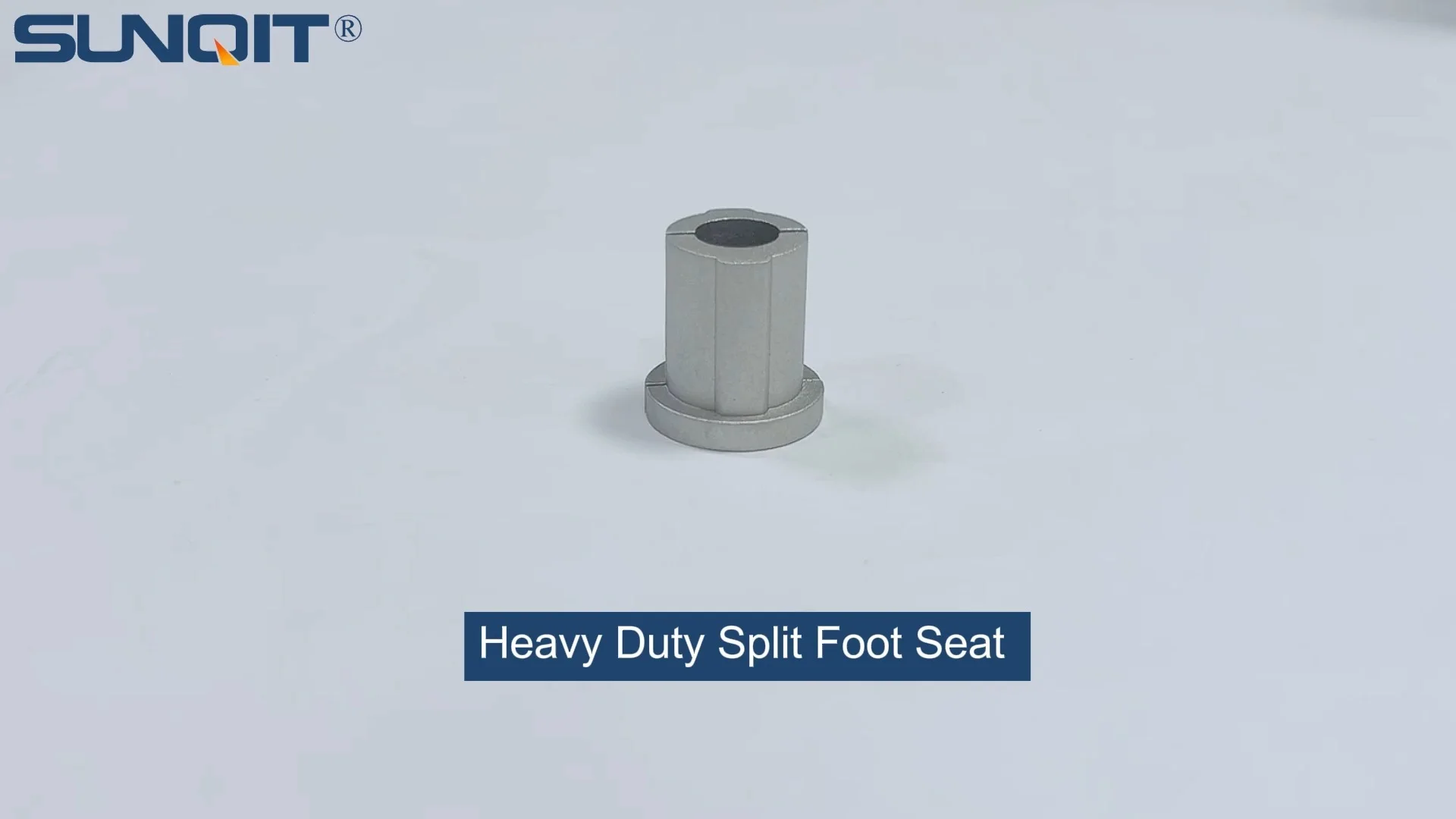
The unsung hero of stability in modern manufacturing
Introduction: The Backbone of Modern Manufacturing
Walk into any thriving manufacturing facility today, and you'll likely hear the steady hum of efficiency: conveyor belts gliding, tools clicking into place, and teams collaborating to turn raw materials into finished products. At the heart of this orchestration lies a quiet workhorse: the lean pipe workstation. These modular, flexible setups are the backbone of lean systems worldwide, designed to streamline workflows, reduce waste, and keep production lines moving like well-oiled machines. But for all their flexibility and adaptability, there's one aspect that can make or break their success—and the safety of the people who use them every day: stability.
Imagine Maria, a seasoned assembly technician at a electronics plant. For eight hours a day, she stands at her lean pipe workbench, carefully fitting delicate components into circuit boards. The workstation, made from lightweight aluminum lean pipes and sturdy joints, was designed to be ergonomic, with tools within arm's reach and a height that aligns with her elbows. But lately, something feels off. When she leans forward to grab a part from the flow rack beside her, the workbench wobbles slightly. At first, she dismisses it as a minor annoyance—maybe the floor is uneven, or the caster wheels (though locked) aren't gripping as they should. But last Tuesday, that wobble turned into a jolt: as she tightened a screw, the bench shifted, causing her hand to slip. The component scraped against the table, leaving a scratch, and Maria felt a twinge in her lower back from overcompensating. "It's just a little shake," she thought. But in manufacturing, "little" issues rarely stay that way.
Stability isn't just about preventing scraped components or sore backs. It's about creating a workspace where workers feel confident, where tools stay put, and where the risk of trips, falls, or repetitive strain injuries is minimized. And in the world of lean pipe workstations, one component has emerged as a quiet champion of this stability: the heavy duty split foot seat. In this article, we'll dive into why these unassuming parts matter, how they solve critical safety challenges, and why they've become a non-negotiable for manufacturers committed to protecting their teams and their bottom line.
Understanding Lean Pipe Workstations: Flexibility Meets Function
Before we can appreciate the role of heavy duty split foot seats, it's important to understand the star of the show: the lean pipe workstation. Born from the principles of lean manufacturing—think Toyota Production System, where efficiency and waste reduction reign supreme—these workstations are built to be adaptable, cost-effective, and tailored to specific tasks. Unlike rigid, one-size-fits-all workbenches, lean pipe workstations are constructed using modular components: aluminum or steel pipes, connectors, joints, and accessories like shelves, bins, and tool holders. This modularity means they can be reconfigured in hours (not days) as production needs change—adding a shelf here, adjusting the height there, or even converting a static bench into a mobile trolley with the addition of caster wheels.
At their core, lean pipe workstations are designed to support the "lean system" philosophy: eliminate waste, optimize flow, and empower workers to do their best. But here's the catch: flexibility can sometimes come at the cost of stability. Traditional workbenches are often bolted to the floor or made from solid steel, prioritizing sturdiness over adaptability. Lean pipe workstations, by contrast, rely on their component parts to balance both. You've got the pipes (lightweight but strong), the joints (which lock the structure in place), and the "feet"—the parts that connect the workstation to the floor. These feet are critical. They're the final link in the chain, responsible for transferring the workstation's weight (and any loads placed on it) to the ground. And if they fail to do that reliably, the entire system's safety and efficiency unravel.
So, what are the "feet" options for lean pipe workstations? Typically, manufacturers choose between three main types: caster wheels (for mobility), adjustable leveling feet (for fine-tuning height on uneven floors), and fixed feet (for stability). Caster wheels are great when you need to move the workstation—say, to reconfigure a production line or clean underneath. Adjustable leveling feet, with their threaded stems and rubber pads, let you tweak each corner to compensate for dips or bumps in the floor. But both have limitations. Casters, even with brakes, can develop play over time, and their small contact area with the floor makes them prone to sinking into soft surfaces (like worn concrete). Leveling feet, while adjustable, are often single-point contact—meaning if the floor is uneven beyond their adjustment range, they can't distribute weight evenly. That's where heavy duty split foot seats enter the picture: they're designed to bridge the gap between flexibility and rock-solid stability.

The Hidden Danger: When Stability Fails
To understand why heavy duty split foot seats matter, let's first look at what happens when workstation stability goes wrong. It's not just about a wobbly bench—it's a ripple effect that touches everything from worker safety to product quality to operational costs. Let's break it down.
Worker Safety: The Stakes Couldn't Be Higher
The most critical risk of an unstable workstation is injury to workers. When a lean pipe workbench wobbles, workers instinctively compensate. They might shift their weight awkwardly, grip tools tighter, or lean in unnatural positions to steady themselves. Over time, this leads to repetitive strain injuries (RSIs)—think carpal tunnel syndrome, lower back pain, or tendonitis. In more acute cases, a sudden shift could cause a worker to lose balance entirely, leading to slips, trips, or falls. Even a small fall can result in sprains, fractures, or head injuries. And let's not forget about falling objects: if a workstation rocks violently enough, tools, parts, or finished products can slide off shelves, feet or toes.
Consider a study by the Occupational Safety and Health Administration (OSHA), which reports that over 20% of workplace injuries in manufacturing are due to "contact with objects and equipment"—a category that includes falling tools or unstable machinery. While not all of these are linked to workstation stability, it's clear that an unsteady work surface increases risk. For example, a 2019 case study from a automotive parts plant found that after replacing standard leveling feet with heavy duty split foot seats on 50 lean pipe workstations, reported incidents of "tool slippage" and "worker compensation claims for back strain" dropped by 37% in six months. The correlation? Workers no longer had to overcompensate for wobbling, reducing both acute and chronic injury risks.
Product Quality: When Instability Becomes Costly Waste
In manufacturing, precision is everything. A fraction of an inch off, and a component might not fit; a sudden jolt, and a delicate part could crack. Unstable workstations are a silent enemy of quality. Take Maria's example earlier: her wobbly bench led to a scratched circuit board. That's a defective unit—waste, in lean terms. Multiply that by hundreds of workstations and thousands of units per day, and the costs add up: rework, scrap, missed deadlines, and even customer returns. In high-precision industries like aerospace or medical device manufacturing, the stakes are even higher. A single unstable workstation could lead to a part that fails in the field, with catastrophic consequences.
Operational Disruption: Downtime and Frustration
Stability issues don't just hurt workers and products—they slow down production. When a workstation wobbles, workers pause to adjust it, or to pick up fallen tools. They might spend extra time double-checking parts for damage. In severe cases, a workstation might need to be taken offline entirely for repairs or reconfiguration. All of this adds up to downtime—time that could be spent building products. And let's not underestimate the human cost of frustration: workers who struggle with unstable equipment are more likely to feel undervalued, leading to lower morale and higher turnover. In an industry already facing labor shortages, keeping skilled workers happy and safe is critical.
Key Takeaway: Stability isn't a "nice-to-have"—it's the foundation of safe, efficient, and high-quality manufacturing. When workstations wobble, everyone loses. But solving this problem isn't as simple as "just bolt it down"—lean systems require flexibility, and bolted-down workstations can't adapt to changing needs. So, how do you balance adaptability and stability? The answer lies in choosing the right "feet" for the job.

Heavy Duty Split Foot Seats: Designing for Stability
If stability is the goal, and flexibility is non-negotiable, then heavy duty split foot seats are the solution. But what exactly are they? At first glance, they might look like simple metal blocks—but their design is anything but basic. Let's break down their anatomy and why it matters.
What Are Heavy Duty Split Foot Seats?
Heavy duty split foot seats are fixed, load-bearing components that attach to the bottom of lean pipe workstation legs, replacing or complementing other feet like casters or standard leveling feet. The "split" in their name refers to their base: instead of a single, solid pad, the foot is divided into two separate contact points (or "split pads") that rest on the floor. This split design is intentional—and it's what gives them their superpower: the ability to distribute weight more evenly and adapt to minor floor irregularities.
Most split foot seats are made from high-strength materials like cast iron, reinforced steel, or aluminum alloy—chosen for their durability and resistance to wear. The top of the foot features a threaded stem or a mounting bracket that connects to the workstation's leg (often an aluminum lean pipe or profile). The bottom, the "split" part, is typically coated with a non-slip material like rubber or polyurethane to prevent sliding. Some models even include small, built-in adjustments (like a hex nut on the stem) to fine-tune height by a few millimeters—combining the best of fixed stability and minor leveling.
The Split Design: Why Two Points Are Better Than One
To understand the genius of the split design, think about standing on one foot versus two. Stand on one foot, and you're wobbly—your body constantly adjusts to stay balanced. Stand on two feet, and you're stable—each foot supports part of your weight, and together they create a wider base of support. Heavy duty split foot seats work the same way. A standard single-point foot has a small contact area with the floor (maybe 2-3 inches in diameter). If the floor has a tiny bump or dip, that single point might not make full contact, leading to rocking. A split foot seat, with two contact points (each maybe 1-2 inches in diameter, spaced a few inches apart), creates a wider "stance." Even if one pad hits a bump, the other can still grip the floor, distributing the weight and preventing wobble.
This is especially critical in older factories, where floors are rarely perfectly level. Concrete can crack, settle, or wear unevenly over decades of use. A split foot seat doesn't just "sit" on the floor—it "adapts" to it. The two pads pivot slightly (depending on the design), ensuring both maintain contact even on minor slopes or bumps. It's like having a mini suspension system for each workstation leg, absorbing small irregularities so the rest of the bench stays steady.
Load Capacity: Built for the Toughest Jobs
The "heavy duty" in their name isn't just marketing—it's a promise of strength. Most standard leveling feet or plastic feet can handle loads of 200-500 pounds per foot. Heavy duty split foot seats, by contrast, often boast load capacities of 1,000-2,000 pounds per foot (and sometimes more for industrial-grade models). This matters because lean pipe workstations aren't just holding a few tools—they might support heavy equipment, stacks of materials, or even multiple workers at once (in the case of larger assembly tables).
For example, a lean pipe workbench in an automotive plant might hold a 500-pound engine block during assembly. Multiply that by four legs, and each foot needs to support at least 125 pounds (plus the weight of the bench itself). A heavy duty split foot seat with a 1,000-pound capacity has more than enough "headroom" to handle that load, even with sudden shifts (like when a worker lifts a part onto the bench). This over-capacity isn't just about safety—it's about longevity. A foot that's not maxed out will wear more slowly, reducing the need for replacements and maintenance.

How Split Foot Seats Outperform Other Workstation Feet
By now, you might be thinking: "Why not just use caster wheels with brakes? Or adjustable leveling feet?" It's a fair question—both have their place. But when it comes to stability, heavy duty split foot seats outshine them in key ways. Let's compare.
| Feature | Heavy Duty Split Foot Seats | Caster Wheels (with Brakes) | Adjustable Leveling Feet |
|---|---|---|---|
| Stability | Excellent: Split design creates a wide, stable base; adapts to uneven floors. | Poor to Fair: Brakes can slip; small wheel contact area prone to wobble. | Good: Adjusts for height, but single-point contact struggles with severe unevenness. |
| Mobility | None: Fixed in place. | Excellent: Designed for movement; easy to reposition. | None: Fixed in place. |
| Load Capacity | High (1,000-2,000+ lbs per foot). | Medium (300-800 lbs per caster, depending on size). | Medium-High (500-1,000 lbs per foot). |
| Floor Protection | Good: Non-slip rubber pads prevent scratching; large contact area reduces floor stress. | Fair: Brakes can mar floors; wheels may leave marks or indentations under heavy loads. | Good: Rubber pads, but smaller contact area than split seats. |
| Best For | Fixed workstations requiring maximum stability; uneven floors; heavy loads. | Mobile workstations (trolleys, temporary setups); frequent reconfiguration. | Workstations on slightly uneven floors; need for minor height adjustment. |
The table tells the story: split foot seats aren't a replacement for casters or leveling feet—they're a specialized tool for specific needs. If you need to move a workstation daily, casters are the way to go. If your floor is slightly uneven but the load is light, leveling feet might suffice. But for fixed workstations (the majority in most plants), where stability and load capacity are non-negotiable, split foot seats are the clear winner.
Let's take a real-world example: a medical device manufacturer that produces surgical tools. Their lean pipe workstations must hold delicate instruments during assembly, and the floors in their 40-year-old facility have minor cracks and dips. Initially, they used adjustable leveling feet, but workers complained of wobbling, and quality control checks found small scratches on 5% of tools—likely from the bench shifting during assembly. They switched to heavy duty split foot seats, and within a month, the scratch rate dropped to 0.5%. Why? The split design adapted to the floor's irregularities, keeping the workbench steady even when workers leaned on it. The non-slip pads also prevented the bench from sliding during cleaning (a common issue with leveling feet on smooth concrete).
Beyond Stability: Additional Benefits of Split Foot Seats
While stability is their primary job, heavy duty split foot seats offer other perks that make them a smart investment for lean systems. Let's explore a few.
Reduced Vibration: Protecting Sensitive Work
In precision manufacturing—think electronics, optics, or medical devices—vibration is the enemy. Even small tremors can disrupt delicate tasks like soldering tiny components or measuring parts with micrometer precision. Heavy duty split foot seats, with their rubber or polyurethane pads, act as shock absorbers. The split design, combined with the flexible pad material, dampens vibrations from nearby machinery or foot traffic, creating a steadier work surface. This isn't just about product quality; it's about reducing eye strain and fatigue for workers who need to focus on minute details for hours.
Floor Protection: Saving on Repair Costs
Factory floors take a beating. Heavy equipment, dropped tools, and constant foot traffic can lead to cracks, chips, and unevenness over time. Standard metal feet or casters (even with rubber wheels) can exacerbate this by concentrating weight into small areas, leading to indentations or scratches. Split foot seats, with their larger total contact area (two pads instead of one), distribute weight more evenly, reducing pressure on the floor. The non-slip pads also prevent sliding, which can scrape or wear away concrete. Over time, this translates to lower floor repair costs—a hidden savings that adds up.
Easy Installation and Maintenance: Less Downtime
Lean systems thrive on efficiency, and that includes setup and upkeep. Heavy duty split foot seats are designed for quick installation: most screw directly into the workstation's legs using standard threads, requiring only a wrench or hex key. Unlike casters, which have multiple moving parts (bearings, brakes, axles) that can wear out, split foot seats are simple—no moving parts, no brakes to adjust, no bearings to lubricate. Maintenance is minimal: just occasional checks to ensure the foot is tight and the rubber pad isn't worn. This simplicity means less downtime for repairs and more time for production.
Choosing the Right Split Foot Seat for Your Workstation
Not all split foot seats are created equal. To maximize safety and performance, you'll need to choose the right model for your workstation. Here are the key factors to consider:
1. Load Capacity
Start with the numbers: how much weight will each foot need to support? Calculate the total weight of the workstation (pipes, joints, shelves) plus the maximum load it will hold (tools, materials, equipment). Divide that by the number of legs (usually 4-6) to get the per-foot load. Then, choose a split foot seat with a capacity at least 50% higher than that number (to account for sudden shifts or overloads). For example, if each leg needs to support 200 pounds, a 300-pound capacity foot is a safe bet.
2. Floor Type
Concrete, tile, or epoxy? The floor material impacts the type of pad you need. For rough concrete, a harder rubber pad (80-90 durometer) will resist wear. For smooth epoxy or tile, a softer pad (60-70 durometer) will provide better grip and prevent sliding. Some split foot seats come with interchangeable pads, letting you adapt to different floor types.
3. Floor Unevenness
How bumpy is your floor? If it's severely uneven, look for split foot seats with a slight pivot (1-2 degrees) between the two pads, allowing them to "rock" and maintain contact. For minor unevenness, a fixed split design will suffice.
4. Workstation Height
Split foot seats add height to the workstation (typically 2-4 inches). Make sure this doesn't push the work surface above ergonomic standards (usually 30-36 inches for standing workbenches). If height is critical, look for low-profile split foot seats (1-2 inches tall) or combine them with shorter legs.
5. Material
Steel is the most common material for split foot seats (strong, durable, cost-effective). For corrosive environments (food processing, chemical plants), stainless steel is better. Aluminum is lightweight but less strong—only suitable for light loads.
Conclusion: Stability as the Foundation of Lean Safety
In the fast-paced world of manufacturing, it's easy to get caught up in the "shiny" aspects of lean systems—new tools, faster conveyors, smarter software. But at the end of the day, none of that matters if the workstations themselves aren't safe and stable. Heavy duty split foot seats may not be the most glamorous component in your lean pipe workbench, but they're one of the most critical. They're the quiet guardians, ensuring that Maria (and every worker like her) can focus on building quality products without worrying about wobbling benches or hidden injuries. They're the unsung heroes that turn "good enough" workstations into great ones—stable, efficient, and built to protect the people who power your production.
So, the next time you walk through your facility, take a look at the feet of your lean pipe workstations. Are they up to the task? If you're seeing wobble, hearing complaints of sore backs, or noticing too many defective parts, it might be time to make the switch. Heavy duty split foot seats aren't just an upgrade—they're an investment in safety, quality, and the future of your team. And in lean manufacturing, that's the best kind of waste reduction there is.