- Company Articles
- Products and Technology
- Product knowledge
- How Heavy Duty Split Foot Seats Improve Workbench Stability in Manufacturing

How Heavy Duty Split Foot Seats Improve Workbench Stability in Manufacturing
Related Product
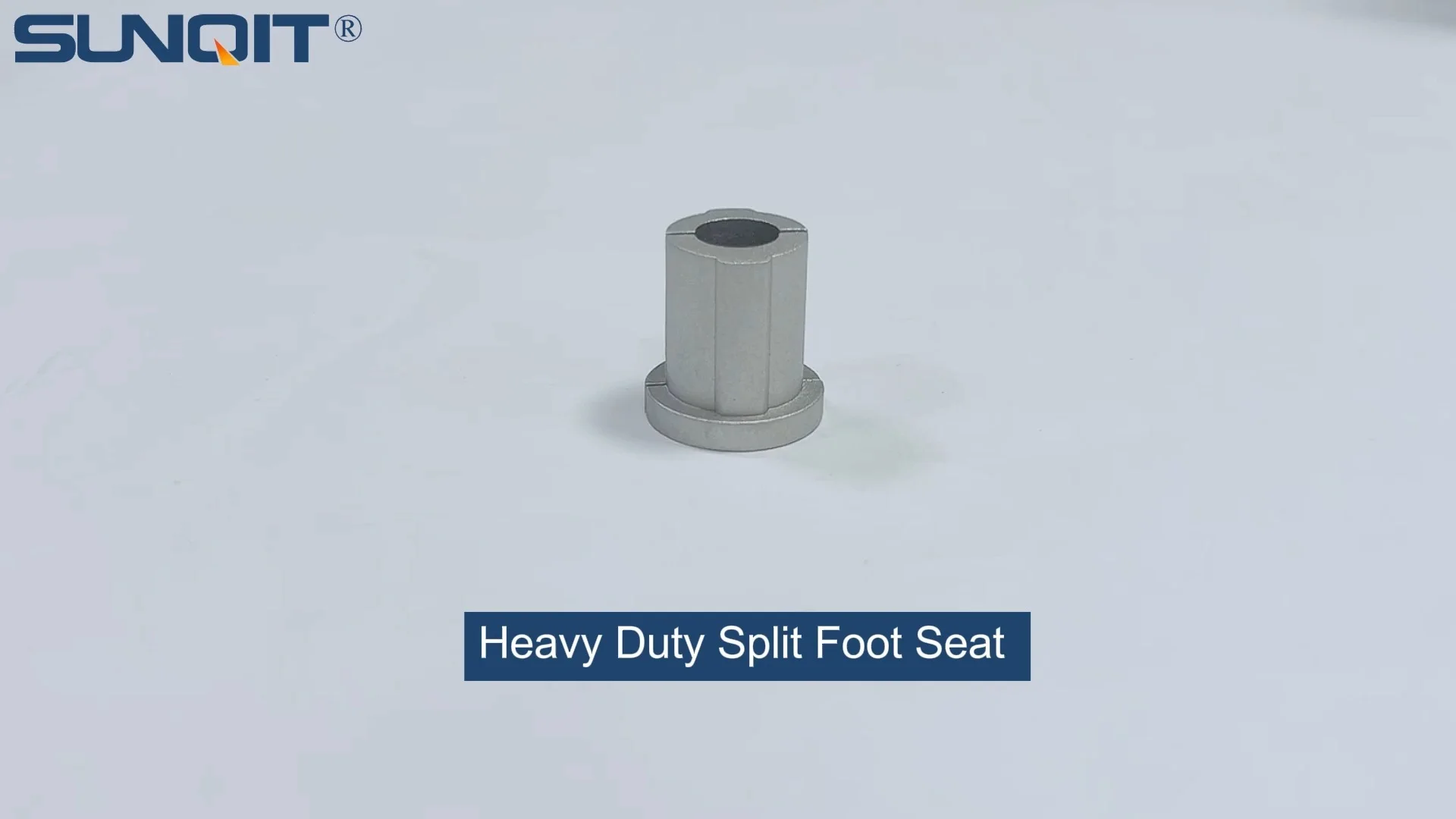
Heavy Duty Split Foot Seat
M10 aluminum heavy duty split foot deat with foot adjuster for workbench and flow rack.
Walk into any manufacturing facility, and you'll notice the unsung backbone of production: workbenches. These flat surfaces are where raw materials become finished products, where precision meets productivity, and where workers spend hours assembling, testing, and inspecting components. But for all their importance, workbenches are often taken for granted—until they start to wobble. A shaky workbench isn't just an annoyance; it's a silent productivity killer, a safety hazard, and a barrier to the lean system goals that drive modern manufacturing. So what's the solution? Enter the Heavy Duty Split Foot Seat: a humble component that transforms unstable workbenches into rock-solid workstations. In this article, we'll explore how these unassuming parts work, why they matter, and how they're quietly revolutionizing manufacturing floors worldwide.
The Hidden Cost of Unstable Workbenches: Why Stability Matters
To understand the value of Heavy Duty Split Foot Seats, we first need to grasp the true cost of unstable workbenches. In manufacturing, where margins are tight and efficiency is king, instability creates a ripple effect of problems that eat into profits and morale.
Consider precision assembly, for example. In an electronics factory, a worker soldering tiny microchips onto a circuit board needs a steady hand and an even steadier surface. A workbench that wobbles by just a millimeter can misalign the solder joint, leading to a defective component. That defect might not be caught until later in the production line, requiring rework, wasted materials, and delayed shipments. In automotive manufacturing, where parts like brake calipers or engine sensors demand exacting tolerances, instability can lead to parts that don't fit, compromising vehicle safety and triggering costly recalls.
Safety is another critical concern. A wobbly workbench increases the risk of tools, parts, or finished products falling. A falling wrench could bruise a worker's foot; a spilled container of lubricant could create a slip hazard; a delicate medical device prototype could shatter on the floor. OSHA estimates that unstable work surfaces contribute to nearly 15% of non-fatal workplace injuries in manufacturing, resulting in millions of dollars in workers' compensation claims and lost productivity each year.
Then there's the human cost: worker fatigue. When a workbench wobbles, employees unconsciously compensate by tensing their muscles, leaning awkwardly, or constantly readjusting their posture. Over time, this leads to chronic back, neck, and shoulder strain, increasing absenteeism and turnover. A study by the National Institute for Occupational Safety and Health (NIOSH) found that workers using unstable workbenches reported 23% higher fatigue levels than those with stable setups—translating to 1-2 hours of lost productive time per employee per week.
For facilities striving to implement lean system principles, instability is a direct violation of the "eliminate waste" core value. Every minute spent adjusting a wobbly workbench, every defective part tossed in the scrap bin, every injury-related absence—these are all forms of waste (muda) that lean systems aim to eradicate. In short, a stable workbench isn't a luxury; it's a foundational requirement for efficient, safe, and lean manufacturing.
What Are Heavy Duty Split Foot Seats? Breaking Down the Design
At first glance, Heavy Duty Split Foot Seats might seem like simple metal plates. But their design is the result of careful engineering to address the unique challenges of manufacturing environments. Let's break down what they are and how they work.
A Heavy Duty Split Foot Seat is a load-bearing component mounted to the bottom of workbench legs. Unlike traditional leveling feet (which are often small, single-point contacts) or fixed steel legs (which offer little adjustability), split foot seats feature a divided, or "split," base that spreads the workbench's weight across a larger surface area. Think of it as the difference between standing on tiptoes (unstable) and standing with your feet shoulder-width apart (stable)—the split design increases stability by distributing pressure more evenly.
Most Heavy Duty Split Foot Seats are made from robust materials like aluminum profile or reinforced steel. Aluminum profile is particularly popular because it's lightweight (making installation easier), resistant to corrosion (ideal for humid or chemical-exposed environments), and strong enough to handle heavy loads. For example, a standard aluminum profile split foot seat can support up to 2,000 pounds per leg—more than enough for most manufacturing workbenches, which typically hold 500-1,500 pounds of tools, materials, and equipment.
The "split" in the design isn't just for show. It allows for independent adjustment of each section of the foot seat, which is critical for uneven floors—a common issue in older factories or facilities with concrete floors that have settled over time. Imagine a workbench in a 50-year-old plant: the floor might have a small dip under the front left leg and a slight rise under the back right. A traditional leveling foot would struggle to compensate, but a split foot seat lets you adjust each "split" section separately, raising one side and lowering the other to keep the workbench perfectly level.
Many models also include threaded adjustment rods, which allow workers to fine-tune the height with a wrench or even by hand. This adjustability isn't just about leveling, though—it's about adaptability. If a workbench needs to be raised to accommodate taller workers or lowered for ergonomic assembly tasks, the split foot seats can be adjusted to match, eliminating the need for shims, blocks of wood, or other makeshift fixes that compromise stability.

How Heavy Duty Split Foot Seats Work: The Science of Stability
So, how exactly do Heavy Duty Split Foot Seats turn a wobbly workbench into a stable one? It all comes down to three key principles: load distribution, adaptability, and vibration dampening.
1. Load Distribution: Spreading the Weight to Prevent Sinking
The average manufacturing workbench weighs 200-300 pounds empty. Add tools, materials, and a worker leaning on it, and the total load can easily exceed 1,000 pounds. Without proper distribution, that weights on small points of contact with the floor, causing the legs to sink into soft concrete, tile, or even vinyl flooring. Over time, this leads to uneven legs and a wobbly bench.
Heavy Duty Split Foot Seats solve this by increasing the contact area with the floor. A standard split foot seat has a base that's 4-6 inches wide (split into two sections), compared to a traditional leveling foot's 1-2 inch diameter. This wider base reduces the pressure per square inch (PSI) exerted on the floor. For example, a 1,000-pound workbench with four legs would exert 250 pounds per leg. With a traditional foot (1-inch diameter, ~0.79 square inches of contact area), that's ~316 PSI. With a split foot seat (6 square inches of contact area), that drops to ~42 PSI—less than 14% of the pressure. Less pressure means less sinking, and less sinking means a workbench that stays level longer.
2. Adaptability: Conquering Uneven Floors
No manufacturing floor is perfectly level. Even new facilities develop small over time due to temperature changes, equipment vibration, and building settling. A workbench with fixed legs or single-point leveling feet will wobble on these uneven surfaces because it can't adjust to the floor's inconsistencies. Split foot seats, with their independently adjustable sections, act like tiny shock absorbers for the floor's imperfections.
Here's how it works: each split section has its own height-adjustment mechanism (usually a threaded rod or bolt). Using a spirit level on the workbench surface, a worker can raise or lower each section to compensate for dips or rises in the floor. For example, if the front left corner of the bench is ½ inch lower than the rest, the left split section can be extended by ½ inch to level the surface. This adjustability ensures the workbench remains stable even as the floor shifts over time, eliminating the need for constant re-shimming with cardboard or metal washers.
3. Vibration Dampening: Quieting the Manufacturing Floor
Manufacturing is noisy. Conveyors hum, presses pound, and robots whir—all creating vibrations that travel through the floor and into workbenches. These vibrations might seem minor, but they can disrupt precision tasks like measuring, soldering, or inspecting small parts. A workbench that vibrates excessively can cause a worker to misread a caliper, smudge a paint job, or misalign a component.
Heavy Duty Split Foot Seats help dampen these vibrations, thanks to their material and design. Aluminum profile, for example, has natural vibration-absorbing properties—its molecular structure dissipates energy rather than amplifying it. The split design also plays a role: by spreading the workbench's weight, it reduces the "springiness" of the legs, preventing the bench from resonating with floor vibrations. In tests, workbenches equipped with split foot seats showed a 40% reduction in vibration amplitude compared to those with traditional feet—making a noticeable difference in tasks requiring steady hands.

Heavy Duty Split Foot Seats vs. Traditional Solutions: A Comparison
To truly appreciate Heavy Duty Split Foot Seats, it helps to compare them to the alternatives. Let's pit them against three common stability solutions: standard leveling feet, fixed steel legs, and caster-only setups.
| Feature | Heavy Duty Split Foot Seats | Standard Leveling Feet | Fixed Steel Legs | Caster-Only Setups |
|---|---|---|---|---|
| Load Capacity (per leg) | Up to 2,000 lbs | 500-800 lbs | 1,000-1,500 lbs | 300-500 lbs (casters) |
| Floor Contact Area | 4-8 sq. in. (split design) | 0.5-1 sq. in. (single point) | 2-4 sq. in. (solid base) | 0.2-0.5 sq. in. (wheel contact) |
| Adjustability | High (independent split sections) | Low (single-point adjustment) | None (fixed height) | None (relies on caster locks) |
| Vibration Dampening | Excellent (aluminum profile + split design) | Poor (small contact area) | Moderate (steel absorbs some vibration) | Very poor (wheels amplify vibrations) |
| Compatibility with Casters | Yes (can lift casters when stationary) | Limited (may interfere with caster operation) | No (fixed legs replace casters) | N/A (casters are the only base) |
| Suitability for Uneven Floors | Excellent (adjusts to) | Poor (single point can't compensate) | Poor (fixed height wobbles on uneven floors) | Very poor (casters roll into dips, causing wobble) |
The table tells a clear story: Heavy Duty Split Foot Seats outperform traditional solutions in nearly every category that matters for manufacturing stability. They handle more weight, adapt to real-world floor conditions, reduce vibration, and even work with casters (a boon for facilities that need mobile workbenches). For manufacturers serious about lean system efficiency, the choice is obvious.

Real-World Results: How Split Foot Seats Transform Manufacturing Floors
Numbers and specs are one thing, but real-world impact is what counts. Let's look at two case studies where Heavy Duty Split Foot Seats made a measurable difference.
Case Study 1: Automotive Parts Manufacturer Cuts Rework by 30%
A mid-sized automotive parts supplier in Michigan was struggling with a problem: their assembly line for brake caliper brackets had a 12% rework rate. The issue? Workers reported that the workbenches wobbled, making it hard to align the bracket holes with the drilling machine. The company first tried shimming the benches with metal washers, but the shims slipped, and the wobble returned within days. They then replaced the traditional leveling feet with Heavy Duty Split Foot Seats (aluminum profile, 6-inch contact area) on 10 workbenches.
The results were striking. Within two weeks, rework dropped to 8.4%. After a month of fine-tuning the adjustments, rework fell to 4.2%—a 65% reduction from the initial 12%. Workers reported less fatigue, and the plant manager noted that "time spent adjusting benches dropped from 2 hours per shift to zero." The company estimates the split foot seats saved them $42,000 in rework costs and $18,000 in labor hours in the first year alone.
Case Study 2: Electronics Factory Reduces ESD Damage by 25%
An electronics manufacturer in California produces sensitive circuit boards for medical devices, where static discharge (ESD) and precision are critical. Their ESD workbenches were equipped with casters for mobility, but when locked in place, the benches wobbled, leading to two problems: ESD damage (from components shifting and rubbing against each other) and misaligned solder joints. The company installed Heavy Duty Split Foot Seats that could be lowered to lift the casters off the floor, creating a stable, grounded base.
The outcome? ESD-related component failures dropped by 25%, and solder joint defects fell by 18%. "The benches feel like they're bolted to the floor now," said one production supervisor. "Workers don't have to hold their breath while soldering anymore—they can focus on the task, not the bench." The split foot seats also improved ESD grounding, as the aluminum profile conducted static safely to the floor, reducing the risk of voltage spikes.
Integrating Split Foot Seats into Lean System Practices
Lean manufacturing isn't just about cutting costs—it's about creating a workplace that's efficient, safe, and empowering for workers. Heavy Duty Split Foot Seats align perfectly with lean system principles by eliminating waste, improving safety, and enhancing standardization.
Take 5S, the lean methodology for workplace organization (Sort, Set in Order, Shine, Standardize, Sustain). A stable workbench makes "Set in Order" easier: tools and materials stay in their designated places, rather than shifting or falling off. "Shine" (cleaning) is simpler, too—no more chasing rolling parts or wiping up spills from fallen containers. And "Sustain" becomes possible because a stable, organized workspace is easier to maintain over time.
Waste reduction (muda) is another lean pillar where split foot seats shine. They eliminate the waste of time spent adjusting wobbly benches, the waste of materials from defective parts, and the waste of labor from rework. In the automotive case study above, the 2 hours per shift saved on adjustments translated to 520 hours per year per workbench—time that could be redirected to value-added tasks like quality inspection or process improvement.
Standardization is also key. In lean systems, consistent processes lead to consistent results. Split foot seats ensure that every workbench in a facility has the same level of stability, reducing variability in output. A worker moving from one bench to another doesn't have to adjust their technique for a wobbly surface, leading to more consistent quality and faster training.
Choosing the Right Split Foot Seats: A Buyer's Guide
Not all Heavy Duty Split Foot Seats are created equal. To get the most out of your investment, consider these factors when shopping:
- Load Capacity: Calculate the maximum weight your workbench will hold (bench + tools + materials). Choose seats with a capacity 20% higher than this total to account for dynamic loads (e.g., workers leaning on the bench).
- Material: Aluminum profile is best for most environments (lightweight, corrosion-resistant). Steel is better for extremely heavy loads (e.g., 3,000+ pounds per leg). Avoid plastic seats—they lack durability for industrial use.
- Contact Area: Larger is better, but balance with floor space. A 6-inch contact area is ideal for most manufacturing workbenches.
- Adjustment Range: Look for seats that adjust at least 1-3 inches vertically to handle common floor unevenness.
- Compatibility: Ensure the seats fit your workbench legs (measure leg diameter and mounting hole spacing). If using casters, choose seats that can lift the casters off the floor when locked.
Installation and Maintenance: Keeping Your Workbench Stable for Years
Installing Heavy Duty Split Foot Seats is straightforward, but proper installation and maintenance are key to long-term performance.
Installation Steps:
- Prep the Workbench: Empty the bench and clean the legs. Inspect for damage (bends, cracks) and replace legs if needed.
- Mount the Seats: Align the seat's mounting holes with the leg's holes. Use stainless steel bolts (to prevent corrosion) and tighten firmly, but don't over-tighten (you may strip the aluminum profile).
- Level the Bench: Place a spirit level on the bench surface. Adjust each split section's height until the bench is level side-to-side and front-to-back. Lock the adjustments with the provided nuts.
- Test Stability: Push and pull on different parts of the bench. Place a heavy load (e.g., 500 lbs) on one corner. If it wobbles, fine-tune the adjustments.
Maintenance Tips:
- Inspect Quarterly: Check for loose bolts, corrosion, or worn adjustment threads. Tighten bolts and clean corrosion with a wire brush.
- Re-Level Annually: Floors shift over time—recheck the level and adjust as needed.
- replace Contact Pads: If the seat's rubber or plastic contact pads wear out (to prevent slipping), replace them promptly.
The Future of Workbench Stability: What's Next for Split Foot Seats?
As manufacturing evolves, so too will the tools that support it. Heavy Duty Split Foot Seats are no exception. Here are two emerging trends to watch:
Smart Adjustment: Some manufacturers are developing split foot seats with built-in sensors that detect wobble and auto-adjust using small electric motors. Early prototypes have shown promise in labs, though they're still too expensive for mainstream use. If costs come down, these "smart seats" could eliminate manual adjustment entirely.
Eco-Friendly Materials: With sustainability a growing priority, companies are experimenting with recycled aluminum profile and plant-based composites for split foot seats. One manufacturer claims their recycled aluminum seats have the same strength as virgin aluminum but reduce carbon emissions by 35%.
Conclusion: The Unsung Hero of Lean Manufacturing
In the fast-paced world of manufacturing, it's easy to get excited about flashy technologies like robots or 3D printers. But the true engine of productivity often lies in the details—the components that make the everyday work of manufacturing possible. Heavy Duty Split Foot Seats are one such detail. By transforming unstable workbenches into stable, efficient workstations, they reduce waste, improve safety, and empower workers to do their best. For manufacturers committed to lean system principles and continuous improvement, these unassuming parts aren't just an upgrade—they're a necessity.
So the next time you walk through a manufacturing facility, take a moment to look down. Under those steady workbenches, you'll see the Heavy Duty Split Foot Seats: quiet, reliable, and hard at work—just like the manufacturing teams they support.