- Company Articles
- Products and Technology
- Product knowledge
- How Heavy Duty Split Foot Seats Integrate with Inner Rotating Aluminum Joints

How Heavy Duty Split Foot Seats Integrate with Inner Rotating Aluminum Joints
Related Product
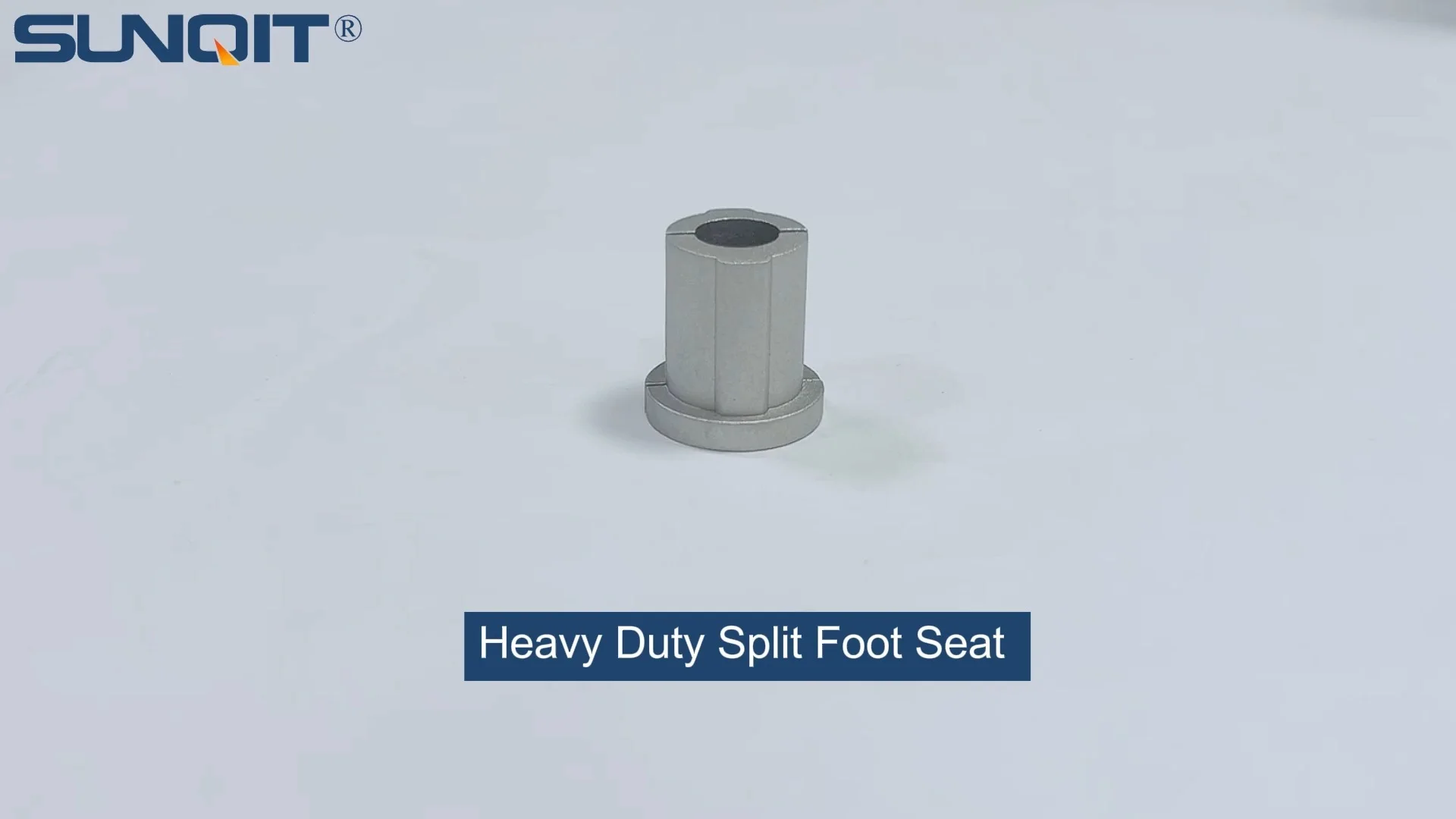
Heavy Duty Split Foot Seat
M10 aluminum heavy duty split foot deat with foot adjuster for workbench and flow rack.
Walk into any modern factory, warehouse, or workshop, and you'll notice a silent but critical battle at play: the need for stability versus the demand for flexibility. Industrial workspaces thrive on structures that can handle heavy loads without wobbling, yet adapt quickly when production lines shift, new tools are added, or workflows change. This balancing act isn't just about efficiency—it's about safety, worker comfort, and long-term cost savings. Two components that have emerged as unsung heroes in this quest are heavy duty split foot seats and inner rotating aluminum joints . Together, they form a dynamic duo that solves this stability-flexibility puzzle, especially when paired with aluminum profiles to build everything from workbenches to material racks. Let's dive into how these two parts work, why their integration matters, and how they're transforming industrial setups around the world.
Understanding Heavy Duty Split Foot Seats: The Foundation of Stability
Before we explore how heavy duty split foot seats integrate with rotating joints, let's start with the basics: what exactly are these components, and why are they so crucial? At their core, heavy duty split foot seats are the "feet" of industrial structures—think of them as the foundation that keeps workbenches, material racks, and assembly lines firmly planted on the ground. But unlike generic, one-size-fits-all feet, these are engineered for the rigors of industrial environments.
Design and Features: Built for the Toughest Floors
The "split" in their name is no accident. Unlike solid, single-piece foot seats, split foot seats have a divided base—typically two parallel plates or a split rubber pad—that spreads weight more evenly across the floor. This design addresses a common problem in industrial settings: uneven or rough flooring. Factories rarely have perfectly smooth floors; years of heavy machinery, spills, and foot traffic leave small cracks, dips, or bumps. A solid foot might rock on these imperfections, but a split foot seat's divided base "grips" the floor, reducing wobble and distributing pressure to minimize damage to both the floor and the structure above.
Material matters too. Most heavy duty split foot seats are made from a combination of metal (often aluminum or steel) and high-density rubber. The metal plate provides structural strength, ensuring the seat can support loads up to 1,000 kg or more, while the rubber bottom adds friction to prevent slipping. Some models even include adjustable screws, allowing workers to fine-tune the height of each foot to compensate for major floor unevenness—a small detail that makes a big difference in stability.
Real-World Problem Solved: The Wobbly Workbench
Imagine a small electronics assembly workshop where a workbench holds a precision soldering station, a microscope, and bins of tiny components. The workbench, fitted with basic plastic feet, wobbles slightly every time a worker leans on it or moves a tool. This isn't just annoying—it's dangerous. A shaky surface increases the risk of soldering errors, dropped parts, or even tool accidents. After upgrading to heavy duty split foot seats with rubber bases, the workbench stabilizes. The split design conforms to the workshop's slightly uneven concrete floor, and the rubber grip eliminates slipping. Workers report less fatigue (no more bracing against wobbles) and a 15% reduction in dropped components. That's the power of a well-designed foundation.
Beyond Stability: Compatibility and Versatility
Heavy duty split foot seats aren't just about staying put—they're also about playing well with others. In industrial setups, most structures are built using modular aluminum profiles (think of these as the "bones" of workbenches, racks, and conveyors). These profiles have standardized T-slots or holes that allow components like feet, joints, and shelves to be attached quickly. Split foot seats are engineered to fit these profiles seamlessly, with pre-drilled holes or clamp-on designs that require no welding or specialized tools. This compatibility is key because it means they can be swapped in or out as needs change—no need to rebuild an entire structure if a foot wears out or a heavier load requires an upgrade.
Inner Rotating Aluminum Joints: The Flexibility Engine
If heavy duty split foot seats are the "roots" of industrial structures, providing stability and grounding, then inner rotating aluminum joints are the "joints"—the flexible connections that let those structures bend, twist, and adapt. These unassuming components are the reason a workbench shelf can swivel to face a worker, a material rack can adjust its angle to feed parts to a conveyor, or a tool arm can rotate 90 degrees to reach a new workstation.
How They Work: Precision in Motion
Inner rotating aluminum joints are designed to connect two or more aluminum profiles (or pipes) while allowing controlled rotation. Inside each joint is a mechanism—often a set of ball bearings or a precision-machined pivot point—that lets one part of the joint turn relative to the other, usually 360 degrees horizontally and up to 180 degrees vertically. What sets "inner rotating" joints apart is that the rotation mechanism is enclosed within the joint's aluminum housing, protecting it from dust, grease, and debris that could jam the movement over time. This enclosed design also gives the joint a sleek, low-profile look, avoiding the bulky external hinges of older models.
Precision is critical here. A poorly made rotating joint might stick, wobble mid-rotation, or fail under load. High-quality inner rotating aluminum joints are engineered with tight tolerances—meaning the moving parts fit together with minimal play. This ensures smooth, consistent rotation, even when supporting tools, bins, or heavy materials. Some joints also include locking mechanisms, letting workers "freeze" the rotation at a specific angle once they've positioned a component perfectly. For example, a shelf holding frequently used tools can be rotated into easy reach, then locked to prevent accidental movement during use.
Why Aluminum? The Material Advantage
Aluminum isn't chosen by accident for these joints. It's lightweight, which keeps overall structure weight down (important for portability if needed), yet strong enough to handle industrial loads. It's also resistant to corrosion, a must in environments where moisture, oils, or chemicals are present. Unlike steel, aluminum doesn't rust, so joints stay smooth and functional even in damp warehouses or food processing plants. Plus, aluminum is easy to machine, allowing manufacturers to create intricate internal mechanisms (like the ball bearings or locking pins) that make the rotation possible.
Case Study: Adapting a Material Rack for Seasonal Demand
A clothing manufacturer experiences seasonal spikes in production—think back-to-school rushes or holiday shopping. Their material racks, which hold bolts of fabric, need to switch from storing heavy winter fabrics (thick wool, fleece) to lightweight summer materials (cotton, linen) quickly. With fixed-angle racks, workers had to unload everything, reconfigure the shelves, and reload—a process that took 4 hours and disrupted production. After installing inner rotating aluminum joints on the rack posts, the shelves can now rotate. In spring, workers simply unlock the joints, tilt the shelves to a steeper angle (so lightweight fabrics don't slide off), and relock them—done in 30 minutes. The aluminum joints handle the weight of both fabric types, and their corrosion resistance stands up to the steam used to clean the racks between seasons. Flexibility, meet efficiency.

The Integration: Why Stability + Flexibility = Industrial Magic
By now, you might be thinking: heavy duty split foot seats keep structures stable; inner rotating aluminum joints add flexibility. But why pair them together? Can't you just use one or the other? The answer lies in the reality of industrial workspaces: most structures need both. A workbench must stay steady (stability) but might need adjustable shelves (flexibility). A material rack must hold heavy loads without tipping (stability) but might need angled tiers (flexibility). This is where the integration of split foot seats and rotating joints shines—they're not competing; they're complementary.
The Synergy: How They Work as a Team
Let's break it down. Heavy duty split foot seats provide the "base stability"—they anchor the structure to the floor, ensuring it doesn't shift or wobble, even when rotating joints are in motion. Without this base, flexibility becomes a liability. Imagine a tool arm attached to a rotating joint on a wobbly workbench: every time you rotate the arm, the entire bench rocks, making precise positioning impossible. The split foot seats eliminate that rock, so the rotation happens smoothly, with no unintended movement.
On the flip side, inner rotating aluminum joints turn a static structure into a dynamic one—without sacrificing the stability the split foot seats provide. For example, a workbench with split foot seats can have a rotating tool holder attached via inner rotating joints. The workbench itself stays rock-solid, but the tool holder swivels to bring tools to the worker, reducing reaching and bending. It's the best of both worlds: a foundation you can trust, with moving parts that enhance productivity.
| Feature | Heavy Duty Split Foot Seats | Inner Rotating Aluminum Joints | Combined Effect |
|---|---|---|---|
| Primary Role | Anchor structure to floor; prevent wobble/slipping | Enable controlled rotation of components (shelves, arms, etc.) | Stable base + flexible moving parts = adaptable, secure workspace |
| Key Benefit | Safety (reduces tipping/accidents); worker comfort (no wobbles) | Efficiency (reduces movement); adaptability (quick reconfiguration) | Higher productivity + lower injury risk |
| Material Focus | Rubber (grip) + metal (strength) | Aluminum (lightweight, corrosion-resistant) | Durable, low-maintenance system |
| Best For | Heavy loads; uneven floors; high-traffic areas | Frequently reconfigured setups; precision work; multi-task stations | Dynamic workspaces (factories, workshops, labs) |
Step-by-Step Integration: Building a Better Workbench
Integrating heavy duty split foot seats with inner rotating aluminum joints isn't rocket science, but it does require attention to detail. Let's walk through how to build a basic adaptable workbench using these components, along with aluminum profiles (the "frame" of the structure).
- Choose Your Aluminum Profile: Start with a sturdy aluminum profile, like a 40x40mm or 30x60mm extrusion (common sizes for workbenches). These profiles have T-slots along their length, making it easy to attach feet, joints, and shelves.
- Attach the Split Foot Seats: Flip the profile frame upside down. Slide the split foot seats into the T-slots at each corner (most seats have bolts or clips that fit into these slots). Tighten the screws until the seats are secure—you should feel resistance, but don't overtighten (this can warp the profile). Adjust the height of each seat if needed to account for floor unevenness.
- Install Inner Rotating Joints: Decide where you want moving components (e.g., a side shelf, tool arm). Slide the inner rotating joints into the T-slots on the vertical posts of the workbench frame. Position them at the desired height, then tighten the joint's locking screws to hold them in place. Test the rotation—should be smooth, with no sticking.
- Add Rotating Components: Attach shelves, tool holders, or other accessories to the rotating part of the joints. If the joint has a locking mechanism, test it to ensure components stay in place once positioned.
- Test and Adjust: Flip the workbench upright. Check for stability—press down on corners, lean on the surface. If it wobbles, recheck the foot seat tightness or adjust their height. Then test the rotating components: swivel them through their full range, lock them at different angles, and ensure they don't cause the workbench to shift. If all looks good, you're ready to go!
This process takes about 1-2 hours for a basic workbench, and the beauty is that it's modular. If you need to add more rotating joints later (e.g., a second shelf), you can do so without rebuilding the entire bench—just slide new joints into the T-slots and secure them. It's this ease of modification that makes the integration so powerful for growing businesses.

Challenges and Solutions: Making Integration Seamless
Like any industrial component, heavy duty split foot seats and inner rotating aluminum joints can face hiccups during integration. Let's address common challenges and how to solve them.
Challenge 1: Mismatched Sizing
Not all aluminum profiles are created equal. Some have wider T-slots, different hole patterns, or varying thicknesses. If your split foot seats or inner rotating joints don't match the profile's size, they won't attach securely. For example, a joint designed for a 30mm profile won't fit a 40mm profile, leading to loose connections or instability.
Solution: Always check compatibility before purchasing. Most manufacturers list the profile sizes their components work with (e.g., "fits 40x40mm aluminum profiles"). If you're unsure, ask for samples or consult with a lean pipe accessories supplier who specializes in modular systems—they can help you pick components that work together.
Challenge 2: Overloading the Rotating Joints
Inner rotating aluminum joints have weight limits—typically 50-150 kg, depending on the design. Hanging too much weight on a rotating component (e.g., a shelf loaded with heavy tools) can strain the joint, causing it to stick, lock up, or even fail over time.
Solution: Check the joint's load rating before installation. If you need to support heavier loads, use multiple joints (e.g., two joints per shelf instead of one) or opt for heavy-duty joint models. Also, distribute weight evenly—avoid overloading one side of a rotating component, which can create uneven stress.
Challenge 3: Floor Damage from Split Foot Seats
While split foot seats are gentle on floors compared to metal feet, they can still scratch or mark delicate surfaces (like polished concrete or epoxy floors) if dragged or if debris gets trapped under the rubber base.
Solution: Lift, don't drag, structures when moving them. Clean the floor and foot seat bases regularly to remove grit that could scratch. For extra protection, choose split foot seats with extra-soft rubber or add adhesive felt pads to the bottom (check load ratings—felt may reduce grip on very smooth floors).

Maintenance: Keeping the Duo Working Like New
Even the best components need a little care to last. Here's how to maintain heavy duty split foot seats and inner rotating aluminum joints for years of reliable performance:
For Heavy Duty Split Foot Seats:
- Clean the bases: Wipe rubber bases with a damp cloth monthly to remove dust, oil, or debris that could reduce grip.
- Check for wear: Inspect rubber pads for cracks, tears, or flattening. If the rubber is worn, replace the foot seats—worn rubber reduces stability and increases slipping risk.
- Tighten hardware: Every 3-6 months, check that the bolts attaching the seats to the aluminum profile are tight. Vibration from daily use can loosen them over time.
For Inner Rotating Aluminum Joints:
- Lubricate moving parts: Once or twice a year, apply a small amount of silicone-based lubricant to the joint's rotation mechanism (avoid oil-based lubricants, which attract dust). Wipe away excess to prevent gunk buildup.
- Clean internal components: If rotation becomes stiff, gently wipe the joint's internal parts (if accessible) with a dry cloth to remove dust or debris. For stubborn grime, use a soft brush (like a toothbrush) to dislodge particles.
- Test locking mechanisms: If your joints have locks, test them monthly to ensure they engage/disengage smoothly. If a lock sticks, apply a tiny amount of lubricant to the mechanism.
A little maintenance goes a long way. A survey of manufacturers using these components found that regular upkeep extended their lifespan by 2-3 years, reducing replacement costs and downtime.
Looking Ahead: The Future of Modular Industrial Components
As factories and workshops embrace automation, IoT, and flexible manufacturing, the demand for adaptable structures will only grow. Heavy duty split foot seats and inner rotating aluminum joints are poised to evolve alongside these trends. We're already seeing innovations like smart foot seats with built-in sensors that alert workers if a structure is becoming unstable (e.g., if a foot is loose or load exceeds capacity). Inner rotating joints may soon integrate with digital tools, allowing workers to program and save favorite rotation angles for quick setup changes.
But even as technology advances, the core principle remains: great industrial design solves real problems. Heavy duty split foot seats and inner rotating aluminum joints solve the age-old problem of stability vs. flexibility, making workspaces safer, more efficient, and ready for whatever the future brings. Whether you're building a simple workbench or a complex production line, this dynamic duo is worth investing in.
In the end, industrial success isn't just about big machines or fancy software—it's about the small, thoughtful components that make daily work easier, safer, and more productive. Heavy duty split foot seats and inner rotating aluminum joints may not grab headlines, but they're the unsung heroes keeping modern workspaces running smoothly. So the next time you walk into a factory and see a stable, adaptable workbench or rack, take a moment to appreciate the foundation and the joints that make it all possible. They're proof that sometimes, the best innovations are the ones that work quietly, behind the scenes, to build a better workspace.