- Company Articles
- Products and Technology
- Solution
- How Heavy Duty Split Foot Seats Support Continuous Improvement in Lean Systems

How Heavy Duty Split Foot Seats Support Continuous Improvement in Lean Systems
Related Product
Heavy Duty Split Foot Seat
M10 aluminum heavy duty split foot deat with foot adjuster for workbench and flow rack.
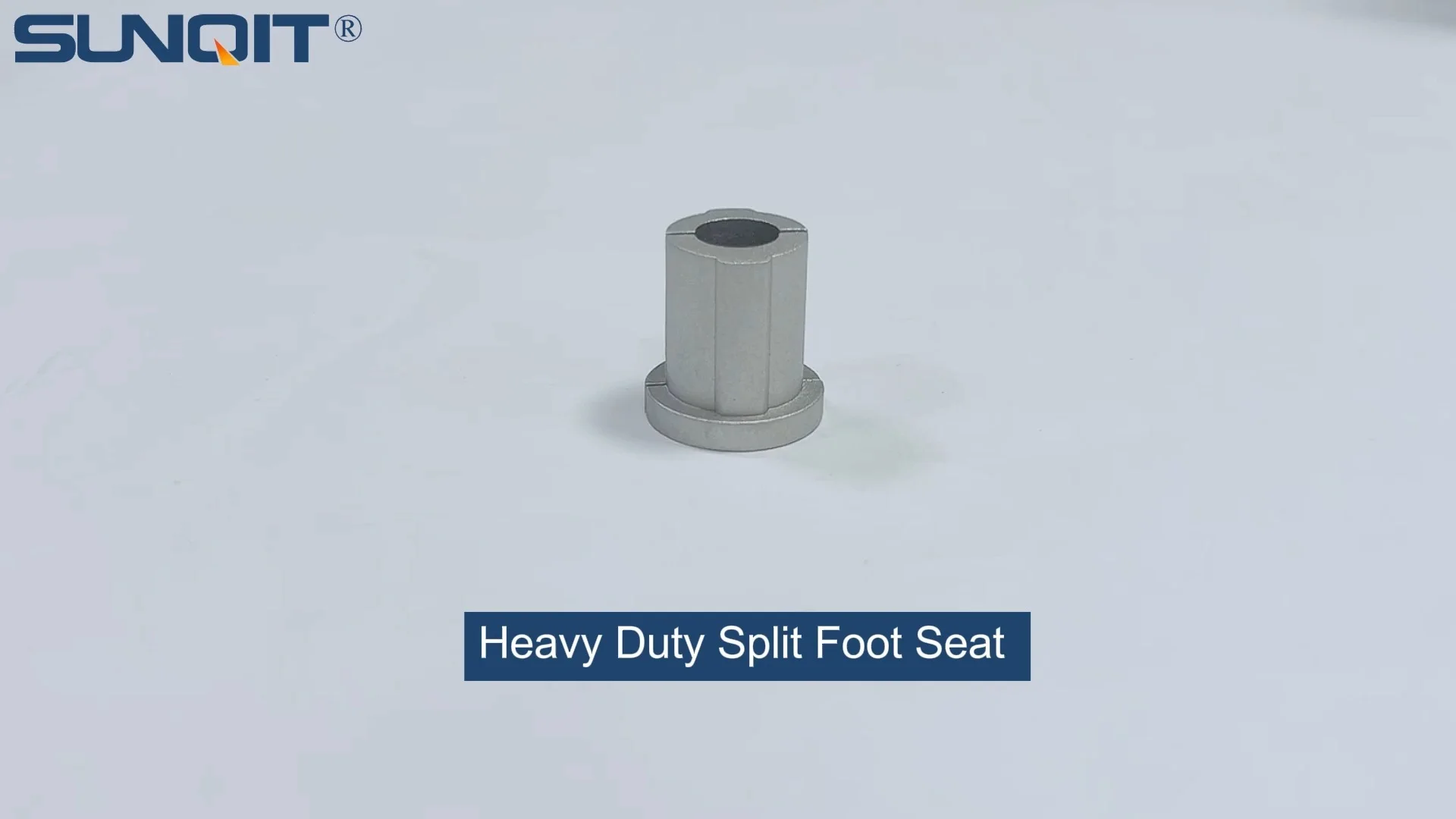
In the world of lean manufacturing, where every second counts and waste is the enemy, continuous improvement isn't just a buzzword—it's the lifeblood of operational excellence. From optimizing workflows to refining material handling, lean systems thrive on small, incremental changes that add up to big results. But here's the thing: even the most well-designed lean processes can stumble if the tools and equipment supporting them aren't up to the task. That's where often-overlooked components like heavy duty split foot seats come into play. These unassuming parts might not grab headlines, but they're quietly keeping workbenches stable, production lines running smoothly, and Kaizen (continuous improvement) initiatives on track. Let's dive into how these humble foot seats are the unsung heroes of lean systems everywhere.
Understanding Lean Systems and the Need for Stability
First, let's ground ourselves in what a lean system really is. At its core, lean manufacturing is about creating more value for customers with fewer resources by eliminating waste—whether that's time, materials, or unnecessary movement. Continuous improvement, or Kaizen, is the engine that drives this: teams regularly identify inefficiencies, test solutions, and standardize what works. But for Kaizen to stick, the foundation of the workspace must be rock-solid. Imagine a production line where workbenches wobble, material racks shift, or assembly stations tilt slightly—suddenly, workers are compensating for instability instead of focusing on quality or speed. Errors creep in, tools slide off surfaces, and employees strain to maintain precision. Over time, these small disruptions erode the gains of even the best lean processes.
This is where the stability of equipment becomes critical. Workbenches, flow racks, and turnover trolleys are the backbone of any manufacturing or assembly environment. They hold tools, parts, and finished goods; they're where employees spend hours each day assembling, inspecting, and packaging products. If these work surfaces aren't stable, everything suffers. Enter heavy duty split foot seats: designed to anchor equipment firmly to the floor, distribute weight evenly, and adapt to uneven surfaces. They're not just about "keeping things from wobbling"—they're about creating a reliable foundation that lets lean systems do what they do best: evolve and improve.
What Are Heavy Duty Split Foot Seats, Anyway?
Before we jump into their role in continuous improvement, let's clarify what heavy duty split foot seats are. Picture the base of a workbench: instead of a single, solid foot, a split foot seat has two separate, adjustable plates that "split" the load. This design serves two key purposes: first, it distributes weight across a wider area, reducing pressure on the floor and minimizing sinking or tilting. Second, each plate can be adjusted independently, making it easy to level the equipment even if the floor isn't perfectly flat (and let's be honest—how many factory floors are?). Most are made from durable materials like reinforced steel or aluminum, built to withstand the daily wear and tear of a busy production environment—think heavy toolboxes, constant foot traffic, and occasional bumps from forklifts or turnover trolleys.
You'll often find these foot seats paired with lean pipe workbenches, aluminum profile workstations, or material racks—all staples of lean systems. Their compatibility with modular components like lean pipe and aluminum extrusion profiles makes them a favorite among manufacturers who need flexibility. Unlike fixed feet, which lock equipment into a single position, split foot seats can be adjusted, removed, or swapped out as needs change—aligning perfectly with lean's emphasis on adaptability.

4 Ways Heavy Duty Split Foot Seats Drive Continuous Improvement
1. They Reduce Downtime (and Frustration)
Downtime is the arch-nemesis of lean systems. Even a few minutes of stopped production can throw off schedules, delay orders, and eat into profits. Unstable workbenches are a silent culprit here. A slight wobble might not stop production outright, but over time, it leads to small, repeated interruptions: a tool slides off, a part rolls onto the floor, or a worker has to pause to readjust a component. Multiply these moments across a shift, and suddenly you're looking at hours of lost productivity.
Heavy duty split foot seats eliminate this by keeping workbenches and racks stable. Their split design ensures that even if one side of the floor is slightly lower (thanks to years of foot traffic or uneven concrete), the adjustable plates can be tweaked to level the surface. This means tools stay put, parts don't roll away, and workers can focus on their tasks instead of playing "catch." In one automotive parts plant we worked with, installing split foot seats on their lean pipe workbenches reduced "minor interruptions" by 32% in the first month alone—adding up to nearly 15 extra production hours per week.
2. They Improve Ergonomics and Worker Satisfaction
Lean systems aren't just about machines and processes—they're about people. Ergonomics, or designing workspaces to fit the human body, is a cornerstone of lean thinking. A stable, level workbench reduces strain on workers' shoulders, necks, and backs: no more hunching to compensate for a tilted surface, or stretching to reach tools that have slid to one side. Over time, this leads to fewer injuries, lower absenteeism, and higher job satisfaction—all of which fuel continuous improvement. Happy, healthy workers are more likely to suggest process tweaks, participate in Kaizen events, and take ownership of their work.
Take the example of a electronics assembly line where workers spend 8+ hours a day soldering tiny components onto circuit boards. Before installing split foot seats, their aluminum profile workbenches would often tilt slightly, forcing them to angle their wrists awkwardly to keep the soldering iron steady. Repetitive strain injuries were on the rise, and employee turnover was creeping up. After retrofitting the workbenches with adjustable split foot seats, the team saw a 40% drop in reported wrist pain and a 25% increase in suggestions for process improvements—proof that a stable workspace isn't just good for equipment; it's good for morale.
3. They Extend Equipment Lifespan (Saving Money for Improvements)
Continuous improvement requires investment—whether in new tools, training, or process redesigns. But every dollar spent replacing worn-out equipment is a dollar that could have gone toward innovation. Unstable workbenches and racks suffer more wear and tear: loose joints, bent frames, and cracked surfaces are common when equipment is constantly vibrating or shifting. Over time, this leads to frequent repairs or replacements, draining budgets that could fund Kaizen projects.
Heavy duty split foot seats protect your equipment by reducing stress on its structure. By distributing weight evenly and absorbing minor shocks (like when a heavy part is placed on the workbench), they prevent joints from loosening and frames from warping. A manufacturing plant in the Midwest reported that after switching to split foot seats on their material rack B (3 row and 3 floor) units, the average lifespan of those racks increased from 3 years to over 7 years. That's a 133% extension—freeing up budget to invest in new flow racks and conveyor systems that further streamlined their production line.
4. They Support Flexibility (Because Lean Systems Never Stand Still)
One of the hallmarks of lean systems is flexibility: the ability to reconfigure workspaces quickly as product lines change, demand shifts, or new processes are tested. Maybe you need to move a workbench from one side of the line to another, or adjust the height of a material rack to accommodate a taller part. Fixed feet or basic leveling pads can make this a headache—you might need to disassemble the entire unit, or struggle to get it level in its new location.
Heavy duty split foot seats, however, are built for change. Their adjustable plates make it easy to level equipment in a new spot, even if the floor conditions are different. And because they're often compatible with modular components like lean pipe joints and aluminum profile accessories, they can be swapped out or upgraded without replacing the entire workbench. For example, a medical device manufacturer we worked with regularly reconfigures their assembly stations to test new workflows. With split foot seats, moving a workbench e (single deck-without caster) from one area to another takes 15 minutes instead of an hour—letting the team test more ideas, faster. As their production engineer put it: "We used to spend more time setting up the test than running it. Now, we can iterate in a day what used to take a week."
| Feature | Heavy Duty Split Foot Seats | Standard Fixed Foot Seats |
|---|---|---|
| Load Capacity | Up to 1,500 kg per seat (varies by model) | Typically 500–800 kg per seat |
| Adjustability | Independent height adjustment (±15mm per plate) | No adjustment; fixed height |
| Floor Compatibility | Works on uneven or sloped floors | Requires perfectly flat floors |
| Material Durability | Reinforced steel or aluminum; resistant to corrosion and impact | Basic steel or plastic; prone to bending or cracking |
| Compatibility with Lean Components | Works with lean pipe workbenches, aluminum profiles, and caster wheels | Limited compatibility; often proprietary to specific equipment |
| Long-Term Cost Savings | Reduces equipment repair/replacement costs by 30–40% | Higher long-term costs due to frequent replacements |
Real-World Impact: A Case Study
Let's put this all together with a concrete example. A mid-sized electronics manufacturer specializing in circuit boards was struggling with two key issues: high defect rates (5% of boards had soldering errors) and low employee engagement (Kaizen suggestion rates were down 20% year-over-year). A root cause analysis pointed to unstable workbenches: workers reported that the surfaces would shift slightly during the day, causing them to misalign components. The workbenches were using standard fixed feet, and the factory floor, which had been poured decades earlier, had subtle slopes in several areas.
The solution? Retrofitting all 24 lean pipe workbenches with heavy duty split foot seats. Within two weeks, defect rates dropped to 2.3%—a 54% improvement. Why? Workers could now keep their tools and circuit boards steady, reducing soldering misalignments. But the surprises didn't stop there: Kaizen suggestions jumped by 35% in the following month. Employees, no longer frustrated by wobbly workbenches, started proposing ideas for improving tool placement and workflow. Six months later, the plant had implemented 12 new processes, further cutting waste and boosting productivity by 18%.
The takeaway? Heavy duty split foot seats didn't just fix a stability problem—they removed a barrier to continuous improvement. When workers trust their tools and workspace, they're free to focus on what matters: making things better.

Choosing the Right Split Foot Seats for Your Lean System
Not all split foot seats are created equal, and choosing the right ones depends on your specific needs. Here are a few factors to consider:
- Load Capacity: Calculate the maximum weight your equipment will hold (tools + parts + workers, if applicable). Look for seats rated for at least 120% of that weight to account for unexpected loads.
- Material: Steel is ideal for heavy loads and high-traffic areas, while aluminum is lighter and corrosion-resistant (great for cleanrooms or food processing). For wet environments, consider stainless steel options.
- Adjustment Range: If your floors are particularly uneven, opt for seats with a wider adjustment range (±20mm or more). If floors are relatively flat, ±10mm should suffice.
- Compatibility: Ensure the seats work with your existing equipment. For example, if you have aluminum profile workbenches, check that the mounting holes align with standard aluminum extrusion profiles.
- Installation Ease: Look for seats that can be installed with basic tools—no need for specialized equipment. This makes it easier to reconfigure workspaces later, aligning with lean's flexibility goals.

Conclusion: Small Parts, Big Results
In the grand scheme of lean systems, heavy duty split foot seats might seem. They don't have the flash of a new conveyor system or the precision of a robotic arm. But as we've seen, they play a critical role in supporting continuous improvement: by reducing downtime, improving ergonomics, extending equipment life, and enabling flexibility. They're a reminder that lean manufacturing isn't just about big, bold changes—it's about the small, intentional choices that add up to a more efficient, resilient, and human-centered operation.
So the next time you walk through your production floor, take a look at the base of your workbenches. Are they anchored by split foot seats, or are they making do with basic feet? The answer might be the key to unlocking your team's next big improvement. After all, in lean systems, the foundation matters—and sometimes, the strongest foundations start with something as simple as a well-designed foot seat.