- Company Articles
- Products and Technology
- Solution
- How Heavy Duty Split Foot Seats Support Reusable Lean Manufacturing

How Heavy Duty Split Foot Seats Support Reusable Lean Manufacturing
Related Product
Heavy Duty Split Foot Seat
M10 aluminum heavy duty split foot deat with foot adjuster for workbench and flow rack.
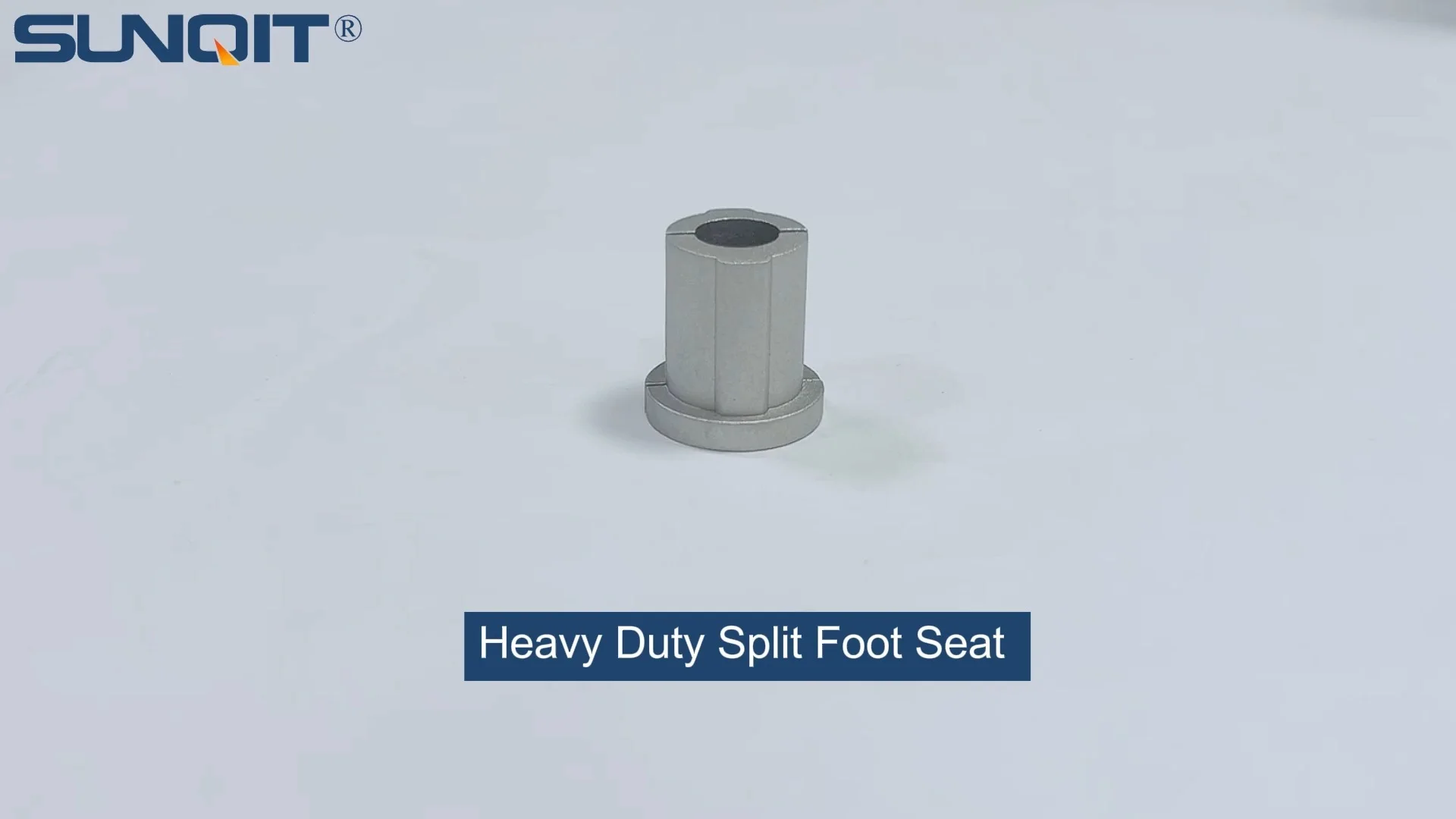
The unsung hero of flexible, sustainable production systems
In the fast-paced world of manufacturing, where efficiency and adaptability can make or break a business, lean manufacturing has emerged as more than just a buzzword—it's a philosophy that drives smarter, more sustainable operations. At its core, lean is about eliminating waste, streamlining processes, and creating systems that can evolve with changing demands. But here's the thing: lean isn't just about big-picture strategies. It's often the smallest, most unassuming components that turn those strategies into reality. Enter the heavy duty split foot seat —a humble yet critical part of the lean toolkit that quietly supports reusable, flexible, and durable work environments.
You might not have noticed it before, but walk into any well-optimized production floor, and you'll likely find it holding up workbenches, racks, and material handling systems. Its design, focused on stability, reusability, and compatibility with other lean components like aluminum profiles and lean pipe workbenches , makes it a cornerstone of modern lean systems. In this article, we'll dive into how this unassuming part plays a pivotal role in building reusable lean manufacturing setups, why it matters for your bottom line, and how it integrates seamlessly with the tools that keep your production line running smoothly.
Reusable Lean Manufacturing: More Than Just a Trend
Before we zoom in on the heavy duty split foot seat, let's take a step back to understand why reusability is so central to lean manufacturing. Traditional manufacturing setups often rely on fixed, one-size-fits-all equipment. A workbench built for a specific product, a rack designed for a single part, or a conveyor system that can't adapt to new layouts—these might work in the short term, but they become liabilities when production needs shift. Suddenly, you're stuck with equipment that's obsolete, leading to wasted money, time, and resources.
Reusable lean manufacturing flips that script. It's about building systems that can be reconfigured, repurposed, and reused as your needs change. Need to adjust your assembly line for a new product? Your workbenches should move. Adding a new material storage area? Your racks should expand without requiring a complete overhaul. This flexibility doesn't just reduce waste—it also makes your operation more resilient. In an era where consumer demands, supply chains, and product designs change overnight, adaptability isn't a luxury; it's a necessity.
But building reusable systems isn't easy. It requires components that are durable enough to withstand repeated use, versatile enough to connect with different tools, and strong enough to support the demands of a busy production floor. That's where the heavy duty split foot seat comes in. It's not just a "foot" for your equipment—it's the foundation that makes reusability possible.
What Is a Heavy Duty Split Foot Seat, Anyway?
At first glance, a heavy duty split foot seat might look like a simple metal bracket. But its design is anything but basic. Let's break it down: it's a two-piece (or "split") base that attaches to the bottom of structures like workbenches, racks, or roller tracks , providing a stable foundation while allowing for easy installation and adjustment. Unlike fixed, welded bases, the split design means it can be quickly detached, repositioned, or swapped out—key for reusability.
Most heavy duty split foot seats are made from high-grade steel or aluminum, chosen for their strength and resistance to wear and tear. They often feature pre-drilled holes or slots that align with standard aluminum profile T-slots or lean pipe connections, making them compatible with a wide range of lean components. Some models even include adjustable height settings, allowing you to level workbenches on uneven floors or fine-tune the height of material racks to match your operators' needs.
But what really sets the heavy duty split foot seat apart is its focus on "heavy duty" performance. These aren't your average furniture feet. They're engineered to support hundreds—sometimes thousands—of pounds of weight, making them ideal for industrial settings where equipment, materials, and tools are constantly being moved, stacked, and reorganized. Whether you're supporting a loaded lean pipe workbench in an electronics assembly line or a rack of heavy automotive parts, this component ensures stability without sacrificing flexibility.

Why Split Foot Seats Beat Traditional Fixed Bases
To truly appreciate the value of heavy duty split foot seats, let's compare them to the traditional fixed bases that have long dominated manufacturing floors. The difference is clear—and it all comes down to reusability, cost, and efficiency.
| Feature | Traditional Fixed Bases | Heavy Duty Split Foot Seats |
|---|---|---|
| Installation & Removal | Often welded or bolted permanently; requires tools and time to remove. | Split design allows quick attachment/detachment with basic tools; no welding needed. |
| Reusability | Typically single-use; damaged or obsolete bases are discarded. | Easily repurposed for new setups; compatible with multiple structures. |
| Adjustability | Fixed height and position; hard to level on uneven floors. | Many models offer height adjustment; swivel or tilt features for leveling. |
| Cost Over Time | Low upfront cost, but high long-term costs due to replacement needs. | Higher upfront cost, but lower long-term costs due to reusability and durability. |
| Compatibility | Designed for specific equipment; limited cross-use. | Works with aluminum profiles , lean pipes, and standard industrial components. |

Integrating Split Foot Seats into Your Lean System
A heavy duty split foot seat doesn't work in isolation. Its true power lies in how well it integrates with the other components of your lean system . Let's take a closer look at how it pairs with some of the most common tools on the production floor:
1. Lean Pipe Workbenches: The Backbone of Assembly Lines
Lean pipe workbenches are a staple in lean manufacturing. Made from lightweight yet sturdy pipes and joints, they're easy to customize with shelves, tool holders, and bins. But even the most well-designed workbench is only as good as its base. That's where split foot seats come in. By attaching to the bottom of the workbench's frame (often made from aluminum profiles or lean pipes), they provide a stable platform that keeps the workbench level and secure—even when operators are leaning on it, placing heavy tools, or assembling parts.
What's more, if you need to reconfigure your assembly line—say, to accommodate a new product or optimize workflow—split foot seats make moving the workbench a breeze. Simply loosen the bolts, lift the bench (or use a pallet jack), and reposition it. No need to disassemble the entire structure or replace the base. This kind of flexibility is why lean pipe workbenches paired with split foot seats are a favorite in industries like electronics, automotive, and medical device manufacturing, where product lines change frequently.
2. Aluminum Profiles: The Building Blocks of Customization
Aluminum profiles are the Swiss Army knife of lean manufacturing. With their T-slot design, they can be connected to form everything from workstations and racks to machine guards and material handlers. But to build something sturdy, you need a solid foundation—and that's where split foot seats shine. Most split foot seats are designed to fit directly into the T-slots of aluminum profiles, using bolts or brackets that slide into the slots and lock in place. This secure connection ensures that your aluminum profile structures (whether a small shelf or a large assembly line) stay upright and stable, even under heavy loads.
Aluminum profiles are lightweight, which makes them easy to reconfigure, but that lightness can sometimes compromise stability. Split foot seats add the weight and grip needed to keep things steady. For example, a material rack built with aluminum profiles might wobble if placed on uneven concrete, but with split foot seats adjusted to level the rack, it becomes rock-solid. This combination of lightweight flexibility and heavy-duty stability is what makes aluminum profiles and split foot seats a match made in lean heaven.
3. Roller Tracks: Keeping Materials Moving Smoothly
Roller tracks are essential for moving materials along the production line—think of them as the highways of your manufacturing floor. Whether you're sliding bins of parts from one workstation to the next or feeding components into a machine, roller tracks need to be perfectly aligned to prevent jams and ensure smooth flow. Split foot seats play a critical role here by supporting the tracks and keeping them level. Even a slight dip or tilt in a roller track can cause materials to get stuck, slowing down production. With adjustable split foot seats, you can fine-tune the height of each section of track, ensuring a seamless, gravity-fed flow that keeps your line moving.
And when you need to reroute your roller tracks—say, to shorten the distance between two workstations or add a new branch—split foot seats make it easy. Unlike tracks bolted to fixed bases, which require cutting or welding to reposition, tracks supported by split foot seats can be lifted, moved, and reattached in minutes. This agility is a game-changer for lean systems, where minimizing downtime during reconfigurations is key to maintaining efficiency.

Real-World Impact: How Split Foot Seats Transform Production Floors
It's one thing to talk about the benefits of heavy duty split foot seats in theory, but let's look at how they perform in real manufacturing settings. Take, for example, a mid-sized electronics manufacturer that recently transitioned to a reusable lean system. Before adopting split foot seats, their assembly line relied on fixed wooden workbenches and welded steel racks. When they needed to introduce a new smartphone model with different assembly steps, they had to completely replace three workbenches and two material racks—a process that took two full days and cost over $10,000 in new equipment and labor.
After switching to lean pipe workbenches supported by heavy duty split foot seats, their next product launch was a different story. They simply repositioned the existing workbenches (using the split foot seats to level them in their new locations), added a few extra shelves using aluminum profiles , and adjusted the roller tracks to feed components to the new stations. The entire reconfiguration took just four hours and cost less than $500 in additional parts. The savings in time and money were immediate—and that's not counting the long-term benefits of reusing their existing equipment.
Another example comes from a automotive parts supplier. They were struggling with uneven floors in their warehouse, which caused their material racks to wobble, leading to damaged parts and safety concerns. By replacing their fixed rack bases with adjustable heavy duty split foot seats, they were able to level each rack individually, eliminating wobble and reducing part damage by 30%. What's more, when they expanded their warehouse a year later, they reused 80% of their existing racks—simply moving them to the new space and readjusting the split foot seats to the new floor conditions.
"We used to think of bases as an afterthought—just something to hold up the real equipment. But after switching to split foot seats, we realized how much time and money we were wasting on fixed bases. Now, reconfiguring our line is as easy as moving furniture, and we haven't had to replace a single base in three years. It's one of those small changes that makes a huge difference."
— Manufacturing Manager, Midwest Automotive Parts Co.
Sustainability: Split Foot Seats and the Green Lean Revolution
In today's world, sustainability isn't just a corporate buzzword—it's a business imperative. Customers, regulators, and employees alike are demanding more eco-friendly practices, and lean manufacturing is uniquely positioned to deliver. At its core, lean is about reducing waste, which aligns perfectly with sustainability goals. And when it comes to reducing waste from equipment, heavy duty split foot seats are a unsung hero.
Consider this: every time you replace a fixed base because it's welded to an obsolete structure, you're throwing away metal that could have been reused. Split foot seats, by contrast, are designed to outlast the structures they support. A single split foot seat can be used on a workbench today, a rack tomorrow, and a roller track next year. This reusability reduces the need for new materials, cuts down on manufacturing emissions, and minimizes the waste sent to landfills.
Many split foot seats are also made from recycled or recyclable materials, like high-grade steel or aluminum, which can be melted down and repurposed at the end of their long lifespan. And because they're built to be durable, they require fewer replacements, further reducing their environmental footprint. For companies looking to meet sustainability targets or achieve certifications like ISO 14001, integrating reusable components like split foot seats is a tangible way to make progress.
The Future of Reusable Lean Manufacturing: What's Next for Split Foot Seats?
As manufacturing continues to evolve—with trends like automation, Industry 4.0, and modular production on the rise—the demand for reusable, flexible systems will only grow. And heavy duty split foot seats are evolving right along with it. Manufacturers of these components are already exploring new designs, like smart foot seats with built-in sensors that monitor weight distribution or alert maintenance teams when adjustments are needed. Imagine a split foot seat that can tell you if a rack is overloaded, or if a workbench is starting to wobble—preventing accidents and downtime before they happen.
There's also a push for even greater compatibility. New split foot seat designs are being engineered to work with emerging materials, like carbon fiber composites, which offer even lighter weight and higher strength than aluminum. And as lean systems become more global, standardization across regions is making it easier for companies to source split foot seats that work seamlessly with equipment from different suppliers.
But perhaps the most exciting development is the growing recognition of how "small" components like split foot seats contribute to the big-picture goals of lean manufacturing. As more companies embrace the idea that reusability starts at the component level, we'll see even more investment in innovative, durable, and flexible parts that make lean systems smarter, more sustainable, and more profitable.
Why Heavy Duty Split Foot Seats Deserve a Spot in Your Lean Toolkit
At the end of the day, lean manufacturing is about details. It's about the small choices that add up to big results—fewer wasted hours, less scrap material, lower costs, and a more adaptable operation. Heavy duty split foot seats might not grab headlines, but they're one of those details that make a world of difference. By providing a stable, reusable foundation for your lean pipe workbenches , aluminum profiles , roller tracks , and other key equipment, they enable the flexibility and durability that modern lean systems demand.
Whether you're building a new lean system from scratch or upgrading an existing one, don't overlook the importance of a strong base. Invest in heavy duty split foot seats, and you'll be investing in a more efficient, sustainable, and adaptable future for your manufacturing operation. After all, in lean manufacturing, the best systems are built from the ground up—and that ground starts with the right foundation.