- Company Articles
- Products and Technology
- Solution
- How Heavy Duty Split Foot Seats Support Sustainable Lean Practices

How Heavy Duty Split Foot Seats Support Sustainable Lean Practices
Related Product
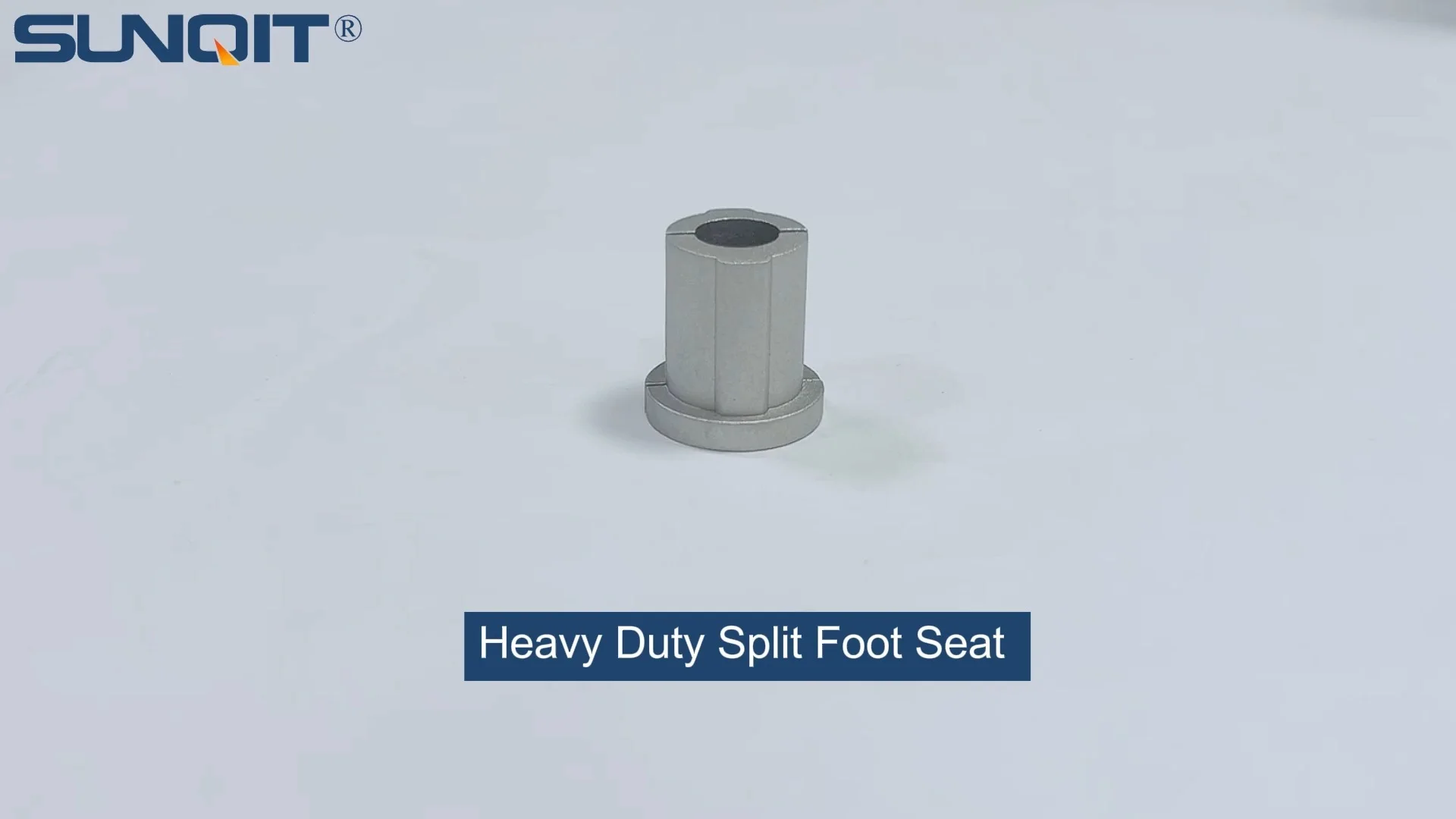
Heavy Duty Split Foot Seat
M10 aluminum heavy duty split foot deat with foot adjuster for workbench and flow rack.
In the fast-paced world of modern manufacturing and production, the pursuit of efficiency and sustainability has become more than just a trend—it's a necessity. Lean practices, which focus on minimizing waste while maximizing value, have long been a cornerstone of operational excellence. But in recent years, there's a growing recognition that true lean success isn't just about streamlining processes; it's about building systems that are sustainable over time—for both the business and the planet. Enter the unsung heroes of this movement: the physical components that form the backbone of lean systems. Among these, heavy duty split foot seats stand out as a critical yet often overlooked element that bridges the gap between operational efficiency and long-term sustainability. In this article, we'll explore how these unassuming components play a pivotal role in supporting sustainable lean practices, from enhancing stability and durability to reducing waste and promoting adaptability.
Understanding Lean Practices and the Need for Sustainable Infrastructure
Before diving into the specifics of heavy duty split foot seats, let's first ground ourselves in what lean practices truly entail. At its core, lean is a philosophy centered on continuous improvement: identifying and eliminating waste (whether it's time, materials, or energy) to create more value for customers. But in today's context, "value" extends beyond just product quality and cost—it includes the environmental impact of operations. Sustainable lean, then, is about designing systems that are not only efficient but also resilient, reducing their carbon footprint and minimizing resource consumption over their lifecycle.
A key challenge in achieving sustainable lean is ensuring that the physical infrastructure supporting these processes—think workbenches, material racks, and production lines—is up to the task. All too often, facilities rely on flimsy, short-lived equipment that requires frequent replacement, leading to more waste, higher costs, and disruptions in workflow. This is where components like heavy duty split foot seats come into play. By providing a stable, durable foundation for critical equipment, they help create systems that can withstand the demands of daily operations while adapting to evolving needs—all without compromising sustainability.
What Are Heavy Duty Split Foot Seats, and Why Do They Matter?
At first glance, a heavy duty split foot seat might seem like a simple piece of hardware. Essentially, it's a support component designed to anchor structures like workbenches, material racks, or turnover trolleys to the ground, distributing weight evenly and preventing tipping or wobbling. What sets "split" foot seats apart is their design: they feature a divided base that allows for greater stability, especially when paired with modular systems like aluminum profiles or lean pipe workbenches. Made from robust materials such as steel or aluminum, these foot seats are built to handle heavy loads—often up to several hundred kilograms—making them ideal for high-capacity work environments.
But their importance goes beyond just stability. In the context of lean systems, heavy duty split foot seats address two critical pain points: waste from equipment failure and inefficiency from unstable workspaces. A wobbly workbench, for example, can lead to errors in assembly, damage to materials, and even workplace injuries—all forms of waste that lean seeks to eliminate. By providing a rock-solid foundation, split foot seats reduce these risks, ensuring that workers can focus on value-adding tasks rather than compensating for unstable equipment.

Stability: The Foundation of Efficient Workflows
Stability might seem like a basic requirement, but in a lean environment, it's the bedrock of efficiency. Imagine a production line where workers are constantly readjusting tools on a shaky workbench, or a material rack that leans under the weight of inventory, causing products to shift and fall. These scenarios aren't just frustrating—they're costly. Time spent fixing issues, replacing damaged goods, or even treating injuries eats into productivity, directly contradicting lean principles.
Heavy duty split foot seats tackle this by distributing the weight of the structure (and its contents) across a larger surface area. This reduces pressure on the floor, minimizes vibration, and prevents the kind of sway that leads to errors. For example, in an electronics assembly plant using an ESD workstation ( electrostatic discharge workstation), stability is critical to protecting sensitive components from damage. A split foot seat ensures the workstation remains level and secure, even when technicians are leaning on it or moving tools across the surface. Similarly, in a warehouse using flow racks to store and transport goods, split foot seats keep the racks upright, preventing items from jamming or falling as they slide along roller tracks.
The result? A smoother workflow where processes aren't interrupted by equipment instability. Workers can move with confidence, knowing their tools and materials are secure, which translates to faster cycle times and higher quality output—both hallmarks of successful lean implementation.

Durability: Reducing Waste Through Longevity
Sustainability and lean both share a common enemy: waste. In lean terms, "waste" includes anything that doesn't add value, and one of the most insidious forms is the waste of resources due to premature equipment failure. A cheap, poorly made foot seat might save money upfront, but if it cracks or bends after a few months of use, the cost of replacing it—plus the downtime and labor involved—quickly negates those savings. This is where the "heavy duty" in heavy duty split foot seats becomes crucial.
Constructed from high-grade materials like reinforced steel or aluminum profile, these foot seats are designed to last. Aluminum, in particular, offers a unique combination of strength and sustainability: it's lightweight yet durable, resistant to corrosion (even in humid or industrial environments), and 100% recyclable. Unlike plastic or low-quality steel, which degrade over time and end up in landfills, aluminum split foot seats can withstand years of heavy use with minimal wear and tear. When they do eventually reach the end of their lifecycle, they can be melted down and repurposed, reducing the demand for raw materials and cutting down on environmental impact.
This durability directly aligns with sustainable lean goals by minimizing the "waste of replacement." Instead of constantly buying new foot seats, facilities can invest once in a high-quality solution that serves them for decades. Over time, this not only reduces costs but also lowers the carbon footprint associated with manufacturing and transporting replacement parts.

Adaptability: Supporting Lean's Culture of Continuous Improvement
Lean isn't a one-and-done process; it's about constant evolution. As customer demands change, product lines shift, or new technologies emerge, production systems must adapt quickly. Rigid, fixed infrastructure that can't be reconfigured becomes a barrier to this agility, leading to the "waste of inflexibility." Heavy duty split foot seats, however, are designed with modularity in mind, making them a perfect fit for lean's culture of continuous improvement.
How do they enable adaptability? For starters, they're compatible with a wide range of lean system components, including aluminum profiles, lean pipe workbenches, and caster wheels. This means that a workbench anchored by split foot seats can easily be reconfigured: add a caster to make it mobile for line-side delivery, adjust the height by swapping out aluminum profile supports, or even repurpose it as a material rack by adding shelves. The split foot seat itself remains a constant, providing stability regardless of how the rest of the structure changes.
Consider a scenario where a manufacturer decides to switch from batch production to a more flexible cellular layout. With traditional fixed workbenches, this would require tearing out old infrastructure and building new ones—a time-consuming and wasteful process. But with workbenches built on heavy duty split foot seats and aluminum profiles, the transition is seamless. Workers can disassemble the existing setup, reposition the components, and anchor them again with the same split foot seats, minimizing downtime and material waste. This kind of adaptability ensures that the lean system can evolve without being held back by rigid infrastructure.
Case Study: A Small Manufacturing Facility's Lean Transformation
To put this in perspective, let's look at a hypothetical (but realistic) example of a small electronics manufacturer struggling with inefficiency and waste. Prior to adopting lean practices, the facility used basic wooden workbenches with plastic foot pads. These workbenches were prone to wobbling, especially when loaded with tools and circuit boards, leading to frequent dropped components and rework. The foot pads also wore out quickly, requiring monthly replacements. Additionally, the fixed design meant that rearranging the production line for new products took days, during which the line was idle.
Seeking to improve, the facility invested in a lean system upgrade, including aluminum profile workbenches paired with heavy duty split foot seats and caster wheels. The results were striking: within six months, rework due to dropped components decreased by 40%, and the need to replace foot pads vanished entirely. The modular design also allowed the team to reconfigure the production line in hours instead of days, enabling them to take on smaller, more frequent orders without sacrificing efficiency. Perhaps most importantly, the durability of the split foot seats and aluminum profiles meant the initial investment was projected to pay for itself within two years, with the system expected to last at least a decade.
Integration with Other Lean Components: A Synergistic Approach
Heavy duty split foot seats don't work in isolation—they're part of a larger ecosystem of lean components that together create sustainable, efficient systems. Let's explore how they integrate with some key elements:
- Aluminum Profiles: Aluminum profiles are the building blocks of modular lean systems, offering strength, lightness, and endless configurability. Split foot seats attach to these profiles via T-slot connections, creating a secure base that can support shelves, work surfaces, or tool holders. The combination of aluminum's sustainability and the split foot seat's stability makes this pairing ideal for long-lasting, eco-friendly infrastructure.
- Caster Wheels: For applications where mobility is needed (e.g., turnover trolleys or mobile workbenches), split foot seats can be paired with casters. When the structure needs to stay put, the foot seats provide stability; when it needs to move, the casters take over. This dual functionality eliminates the need for separate fixed and mobile systems, reducing waste.
- Flow Racks and Roller Tracks: Flow racks rely on gravity to move goods from the back to the front, but this only works if the rack is level and stable. Split foot seats ensure the rack remains balanced, preventing jams and ensuring smooth product flow—a critical factor in reducing the "waste of waiting" in inventory management.
By working in harmony with these components, heavy duty split foot seats amplify their benefits, creating a lean system that's greater than the sum of its parts.
Comparing Traditional vs. Heavy Duty Split Foot Seats: A Sustainability and Efficiency Analysis
To further illustrate the impact of heavy duty split foot seats, let's compare them to traditional foot seats or support methods (e.g., plastic pads, fixed metal legs) across key lean and sustainability metrics:
| Metric | Traditional Foot Seats | Heavy Duty Split Foot Seats |
|---|---|---|
| Durability/Lifespan | 1–2 years (plastic pads degrade; metal legs bend under heavy loads) | 10+ years (steel/aluminum construction resists wear and corrosion) |
| Stability | Low (prone to wobbling; uneven weight distribution) | High (split design distributes weight; reduces vibration) |
| Adaptability | Low (fixed design; difficult to reconfigure) | High (compatible with modular components like aluminum profiles and casters) |
| Environmental Impact | High (frequent replacement leads to landfill waste; non-recyclable materials) | Low (long lifespan; recyclable materials like aluminum reduce waste) |
| Total Cost of Ownership | High (frequent replacements, downtime for repairs) | Low (one-time investment; minimal maintenance) |
The table speaks for itself: heavy duty split foot seats outperform traditional alternatives across every metric that matters for sustainable lean practices. They're not just a better choice for efficiency—they're a better choice for the planet.
Sustainability Beyond the Factory Floor: Material Choices and Manufacturing
Sustainability isn't just about how long a component lasts; it's also about how it's made. Heavy duty split foot seats made from aluminum offer an additional environmental advantage: aluminum production, while energy-intensive, has come a long way in terms of sustainability. Modern smelters use renewable energy sources like hydroelectric power, and because aluminum is infinitely recyclable, using recycled aluminum (which requires 95% less energy than producing new aluminum) further reduces the carbon footprint.
Even steel split foot seats can be sustainable when manufactured with eco-friendly coatings (like powder coating, which emits fewer volatile organic compounds than traditional paint) and sourced from suppliers with strong environmental credentials. By choosing split foot seats made from recycled or responsibly sourced materials, facilities can extend their sustainability efforts upstream, ensuring that their lean systems are green from the ground up.
Conclusion: Small Components, Big Impact
In the grand scheme of lean and sustainability, heavy duty split foot seats might seem like a minor detail. But as we've explored, they play a critical role in building systems that are efficient, adaptable, and kind to the planet. By providing stability, durability, and modularity, they address key sources of waste, reduce costs, and enable the continuous improvement that defines lean practices.
As more businesses embrace sustainable lean, the focus will increasingly shift to these foundational components. After all, a lean system is only as strong as its weakest link—and with heavy duty split foot seats, that link becomes a strength. So the next time you walk through a production facility or warehouse, take a moment to look down. The unassuming foot seats holding up the workbenches and racks might just be the quiet heroes driving efficiency and sustainability forward.