- Company Articles
- Products and Technology
- Product knowledge
- How Internal Straight Aluminum Joints Improve Ergonomics in Workbenches

How Internal Straight Aluminum Joints Improve Ergonomics in Workbenches
Related Product
Internal straight aluminum joint
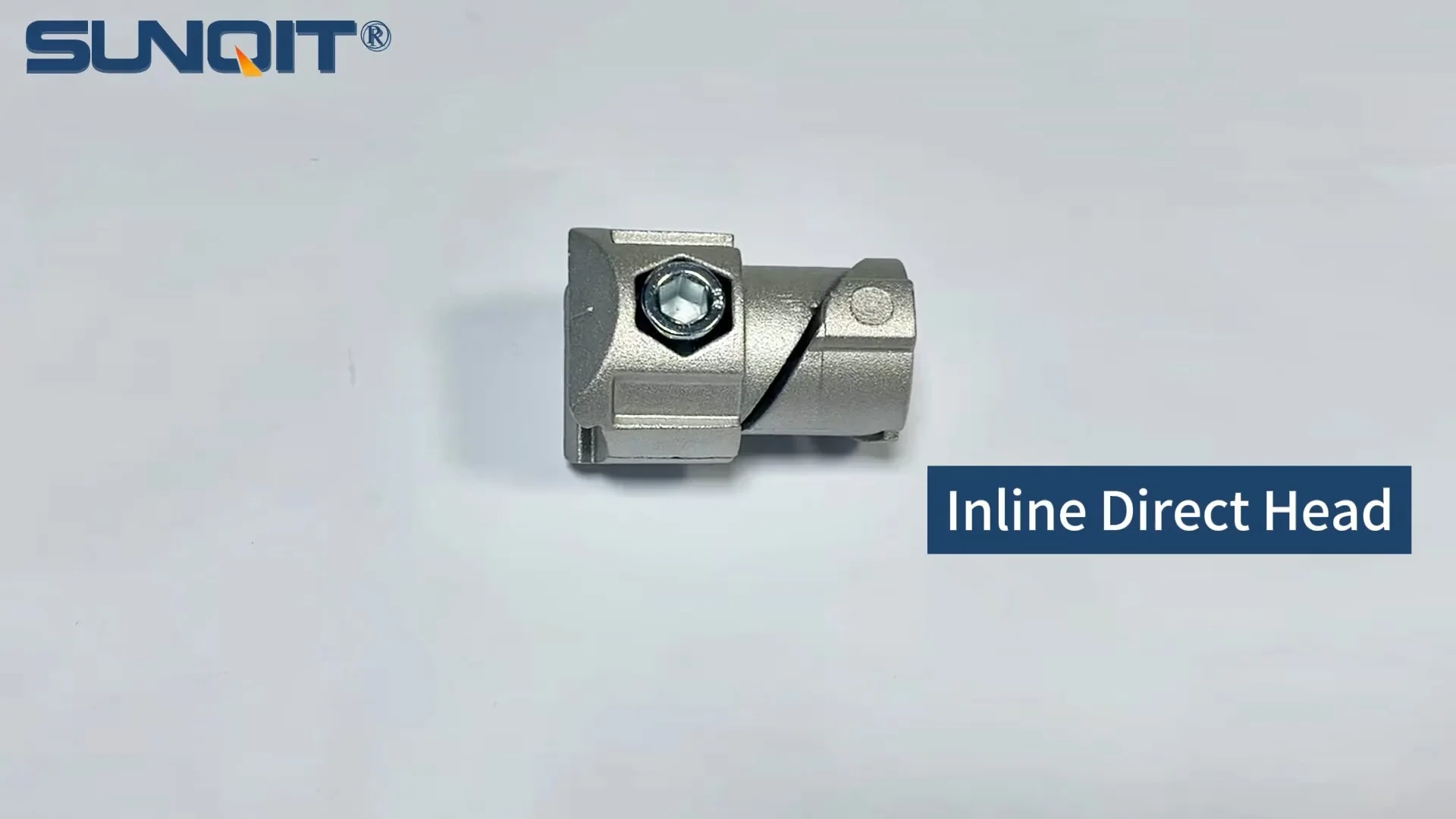
Aluminum pipe joint inside connection used for two pcs 28pcs aluminum pipe connection in straight angle,it connects two pcs pipe from inside.
Let's start with a scene we've all seen—or maybe even lived through. Picture Maria, a third-shift assembly line worker at a small electronics factory. For eight hours a day, she stands at her workbench, hunched slightly forward, hands moving in repetitive arcs to attach tiny components to circuit boards. The bench is fixed at waist height, and the surface is flat, so she's constantly craning her neck to see the fine details. By the end of her shift, her lower back aches, her shoulders feel tight, and her wrists throb. "I just need to stretch more," she tells herself, but deep down, she knows the bench isn't doing her any favors. Sound familiar? Whether in manufacturing, labs, garages, or workshops, the workbench is the unsung hero of daily productivity—but when it's poorly designed, it becomes a silent enemy of worker health.
Ergonomics, the science of designing workspaces to fit the human body, isn't just a buzzword. It's about reducing strain, preventing injury, and making sure people can do their best work without sacrificing their well-being. And while we often focus on big-ticket items like ergonomic chairs or anti-fatigue mats, the smallest components can make the biggest difference. Today, we're diving into one such component: the
internal rotatary aluminum joint
. It might not sound glamorous, but this unassuming piece of hardware is revolutionizing how we build and use
workbench
setups—especially in industries that rely on flexibility and adaptability, like manufacturing, laboratories, and small-scale production.
Why Workbenches Matter More Than You Think
Before we get into the weeds of joints and hardware, let's take a step back. Think about your own workspace—whether it's a desk in an office, a counter in a kitchen, or a bench in a workshop. How much of your day is spent interacting with that surface? For many people, it's 70% or more. Now multiply that by 5 days a week, 50 weeks a year. That's thousands of hours spent in one spot, doing repetitive tasks. If that spot isn't designed with your body in mind, the cumulative effect can be devastating: chronic back pain, carpal tunnel syndrome, neck strain, and even reduced productivity (because it's hard to focus when you're uncomfortable).
In industrial settings, the stakes are even higher. A
lean pipe workbench
in a factory might be used by multiple workers per shift, each with different heights, arm lengths, and job duties. One person might need to stand to assemble large parts; the next might need to sit to sort small components. A rigid, one-size-fits-all bench forces everyone to adapt to it, rather than the other way around. And that's where the problem lies: traditional workbench joints—often fixed steel or plastic connectors—lock the bench into a single configuration. Want to adjust the height? You'll need a wrench, a helper, and 20 minutes of downtime. Need to tilt the surface to reduce glare? Forget it. The bench is what it is, and you just have to deal with it.
Real Talk:
A 2023 study by the National Institute for Occupational Safety and Health (NIOSH) found that workers using adjustable workbenches reported 32% less musculoskeletal pain than those using fixed benches. The difference? The ability to tweak height, angle, and layout to fit their bodies and tasks. And at the heart of that adjustability? Joints that can move, lock, and adapt—like the internal rotatary aluminum joint.
What Even Is an Internal Rotatary Aluminum Joint?
Let's break it down. First, it's
aluminum
—lightweight, strong, and resistant to rust, which matters in environments where moisture or chemicals are present (looking at you, labs and food processing plants). Second, it's
rotary
—meaning it can pivot or rotate, allowing the connected pipes or profiles to move relative to each other. Third, it's
internal
—the rotating mechanism is housed inside the joint itself, which protects it from dust, debris, and accidental damage (unlike external hinges, which can get jammed or broken).
Imagine a simple scenario: you're building a workbench using
aluminum lean pipe
(lightweight aluminum tubes) and aluminum profiles. To connect two pipes at a corner, you need a joint. A traditional fixed joint would lock those pipes at 90 degrees—forever. But an internal rotatary aluminum joint? It lets you swivel one pipe up, down, left, or right, then lock it in place with a simple twist or lever. Want the shelf to tilt 15 degrees forward so parts slide toward you? Done. Need to raise the work surface by 6 inches to accommodate a taller worker? Just adjust the joint and lock it. No tools, no hassle, no downtime.
These joints come in various designs—some allow 360-degree rotation, others pivot along a single axis, and many have built-in locking mechanisms (like cam levers or set screws) to keep the configuration stable once adjusted. They're also compatible with a range of
aluminum profile accessories
, like brackets, clamps, and extensions, which means you can add tool holders, monitor arms, or even small shelves that adjust right along with the bench itself.

Traditional Joints vs. Internal Rotatary Aluminum Joints: A Side-by-Side Comparison
| Feature | Traditional Fixed Joints (Steel/Plastic) | Internal Rotatary Aluminum Joints |
|---|---|---|
| Adjustability | None—locked in place once installed. Requires tools and disassembly to reconfigure. | Full range of motion (rotation, tilting, height adjustment). Locks securely in seconds, no tools needed. |
| Weight | Heavy (steel) or flimsy (plastic). Steel joints add unnecessary bulk to the bench. | Lightweight aluminum—makes the entire workbench easier to move and adjust, even for one person. |
| Durability | Steel can rust; plastic can crack or warp under heavy loads. Prone to jamming if debris gets in hinges. | Aluminum resists corrosion and warping. Internal mechanism is protected from dust/debris, reducing jamming. |
| Ergonomic Impact | Forces workers to adapt to a fixed setup, increasing strain and injury risk. | Adapts to workers' needs—adjusts for height, posture, and task, reducing strain and fatigue. |
| Cost Over Time | Cheaper upfront, but costly long-term (downtime for reconfiguration, workers' compensation claims for injuries). | Slightly higher upfront cost, but saves money via reduced downtime, fewer injuries, and longer bench lifespan. |

How Internal Rotatary Aluminum Joints Boost Ergonomics: 5 Key Benefits
1. Adjustability: One Bench, a Thousand Configurations
Let's start with the most obvious benefit: adjustability. A workbench with internal rotatary aluminum joints isn't just a flat surface—it's a canvas. Need to raise the height from 34 inches to 40 inches for a tall worker? Loosen the joint, slide the pipe up, lock it. Want to tilt the top surface 10 degrees backward to reduce glare on a sunny afternoon? Twist the joint, set the angle, done. Even better, these adjustments are quick—we're talking 30 seconds, not 30 minutes. That means a single workbench can go from assembly station to packing station to inspection station in minutes, without disrupting workflow.
For example, consider a
workbench e (single deck-without caster)
—a basic, no-frills setup. Add internal rotatary joints, and suddenly it's a chameleon. In the morning, Maria uses it standing up to assemble circuit boards, with the surface tilted slightly to keep her wrists straight. After lunch, Juan sits down to test the boards, lowering the bench to elbow height and flattening the surface for stability. No more switching between benches or straining to adapt—one bench, two workers, zero compromise.
2. Reducing Repetitive Strain: Your Wrists (and Back) Will Thank You
Repetitive motion injuries are the silent killers of productivity. Think about how many times a day you twist your wrist, bend your neck, or lean forward to reach something on your workbench. Now multiply that by years. Over time, those small, repeated movements add up to inflammation, nerve damage, and chronic pain. The internal rotatary aluminum joint fights back by letting you position tools, materials, and the work surface itself exactly where you need them—so you don't have to reach, strain, or twist.
For instance, a lab technician pipetting samples all day needs their hands to stay in a neutral position (not bent up or down) to avoid wrist strain. With a traditional bench, they might have to angle their hands awkwardly to reach the pipette rack. But with a bench using internal rotatary joints, they can tilt the rack holder to align with their natural wrist position. Similarly, a mechanic working on car parts can adjust the height of the bench so they're not hunching over—keeping their spine straight and reducing lower back pressure. It's the difference between "I can't wait to go home" and "I feel good enough to finish this project early."
3. Flexibility for Changing Tasks (Because Work Rarely Stays the Same)
In today's fast-paced work environments, flexibility isn't a nice-to-have—it's a necessity. A factory might switch from producing one product to another overnight; a workshop might take on a custom order that requires a completely different setup. Traditional workbenches, with their fixed joints, can't keep up. You either waste time rebuilding the bench or make do with a suboptimal setup, which hurts both quality and speed.
Aluminum lean pipe
workbenches with internal rotatary joints, on the other hand, thrive on change. Let's say a small manufacturer gets a rush order for a new gadget that requires assembling 100 units by the end of the day. The team can quickly reconfigure their workbench: add a second tier using adjustable brackets (connected via internal rotatary joints) to hold extra parts, tilt the main surface to make assembly easier, and even attach a small roller track (using
aluminum profile accessories
) to slide completed units to the packing area. No need for new equipment—just a few tweaks, and the bench adapts. That's lean manufacturing in action, and it's all possible because the joints allow for quick, tool-free changes.
4. Built to Last: Durability That Supports Ergonomics Long-Term
Ergonomics isn't just about adjustability—it's about reliability. A joint that breaks or slips mid-task isn't just frustrating; it's dangerous. Imagine leaning on a tilted workbench surface when the joint suddenly gives way. That's a recipe for injury. Internal rotatary aluminum joints solve this with their robust design. Aluminum is strong enough to handle heavy loads (up to 200 lbs per joint in some cases), and the internal locking mechanisms—often spring-loaded or cam-action—hold their position firmly, even under repeated use.
Compare that to plastic joints, which can warp in heat or crack under stress, or steel joints that rust and seize up over time. An aluminum joint, with its corrosion-resistant finish and protected internal mechanism, stays smooth and reliable for years. That means workers can trust the bench to stay adjusted, reducing the mental stress of "will this hold?" and letting them focus on the task at hand.
5. Inclusivity: One Bench for All Bodies
Workplaces are diverse—and so are the people in them. A workbench that's comfortable for a 6'2" worker might be agony for someone who's 5'2". Traditional benches, with their fixed heights and angles, exclude people who don't fit the "average" mold. Internal rotatary aluminum joints, by contrast, make workbenches inclusive. Need the bench higher? Lower? Tilted? It's all possible. This isn't just about comfort—it's about equity. Everyone deserves a workspace that lets them do their best work, regardless of their size or physical abilities.
Story Time:
A small electronics manufacturer in Texas recently upgraded their workbenches to include internal rotatary aluminum joints. One of their workers, a 5'1" woman named Lina, had struggled for years with back pain from hunching over a bench that was too tall. After the upgrade, she adjusted the bench to her height in seconds. "I went home that night and realized my back didn't hurt for the first time in months," she said. "I didn't even know how much pain I was in until it was gone." That's the power of ergonomics done right.
Beyond the Joint: How Aluminum Profile Accessories Complete the Ergonomic Puzzle
A joint is only as good as the system it's part of. That's where
aluminum profile accessories
come in. These add-ons—think tool holders, monitor mounts, shelf brackets, and material racks—work hand-in-hand with internal rotatary joints to create a fully customized workspace. For example, a tool holder attached via a rotatable bracket can be positioned right next to your dominant hand, so you don't have to reach across the bench. A monitor arm with a rotatable joint can be tilted to reduce eye strain, whether you're sitting or standing. Even small touches, like adjustable footrests or tiltable keyboard trays, become possible when the underlying joints support flexibility.
Take
material rack b (3 row and 3 floor)
—a common storage solution in warehouses. Traditionally, the shelves are fixed, so you might have to bend down to reach the bottom shelf or stretch up for the top one. But with internal rotatary joints and compatible accessories, each shelf can be tilted or adjusted in height. Suddenly, the bottom shelf rises to waist level when you need it, and the top shelf lowers—no more bending or stretching. It's these small, thoughtful adjustments that turn a functional workspace into a joyful one.
Why Lean Pipe Workbenches and Internal Rotatary Joints Are a Match Made in Ergonomic Heaven
You've probably heard of "lean manufacturing"—the philosophy of minimizing waste and maximizing efficiency. What does that have to do with ergonomics? Everything. A lean workspace is one where there's no unnecessary movement, no wasted time, and no frustration. A
lean pipe workbench
, built with aluminum lean pipe and internal rotatary joints, embodies this philosophy. It's lightweight (so it can be moved if needed), modular (so you can add or remove components), and adaptable (so it changes with your workflow). When you combine that with ergonomic adjustability, you get a workspace that's both efficient and kind to the human body. No more walking across the room to grab tools—you can position them right where you need them. No more waiting for a specific bench to free up—one bench does it all. It's lean, it's ergonomic, and it's a game-changer for productivity.
The Bottom Line: Investing in Joints = Investing in People
At the end of the day, workbenches are about people. They're where ideas become products, where problems get solved, and where careers are built. The internal rotatary aluminum joint might seem like a small part of that equation, but small parts have a way of making big differences. It's the difference between dreading work and looking forward to it. Between missing days due to injury and showing up energized. Between a workplace that sees workers as replaceable and one that sees them as valuable assets worth investing in.
So the next time you walk into a workshop, factory, or lab, take a look at the workbenches. Notice the joints. Are they fixed and rigid, or do they move and adapt? The answer might tell you everything you need to know about how that company values its people. And if you're in the position to upgrade your own workspace, remember: it's not just about buying a better bench. It's about buying better days, healthier bodies, and a more productive, inclusive future. And it all starts with a simple, brilliant invention: the internal rotatary aluminum joint.