- Company Articles
- Products and Technology
- Product knowledge
- How Internal Straight Aluminum Joints Reduce Assembly Time in Lean Production

How Internal Straight Aluminum Joints Reduce Assembly Time in Lean Production
Related Product
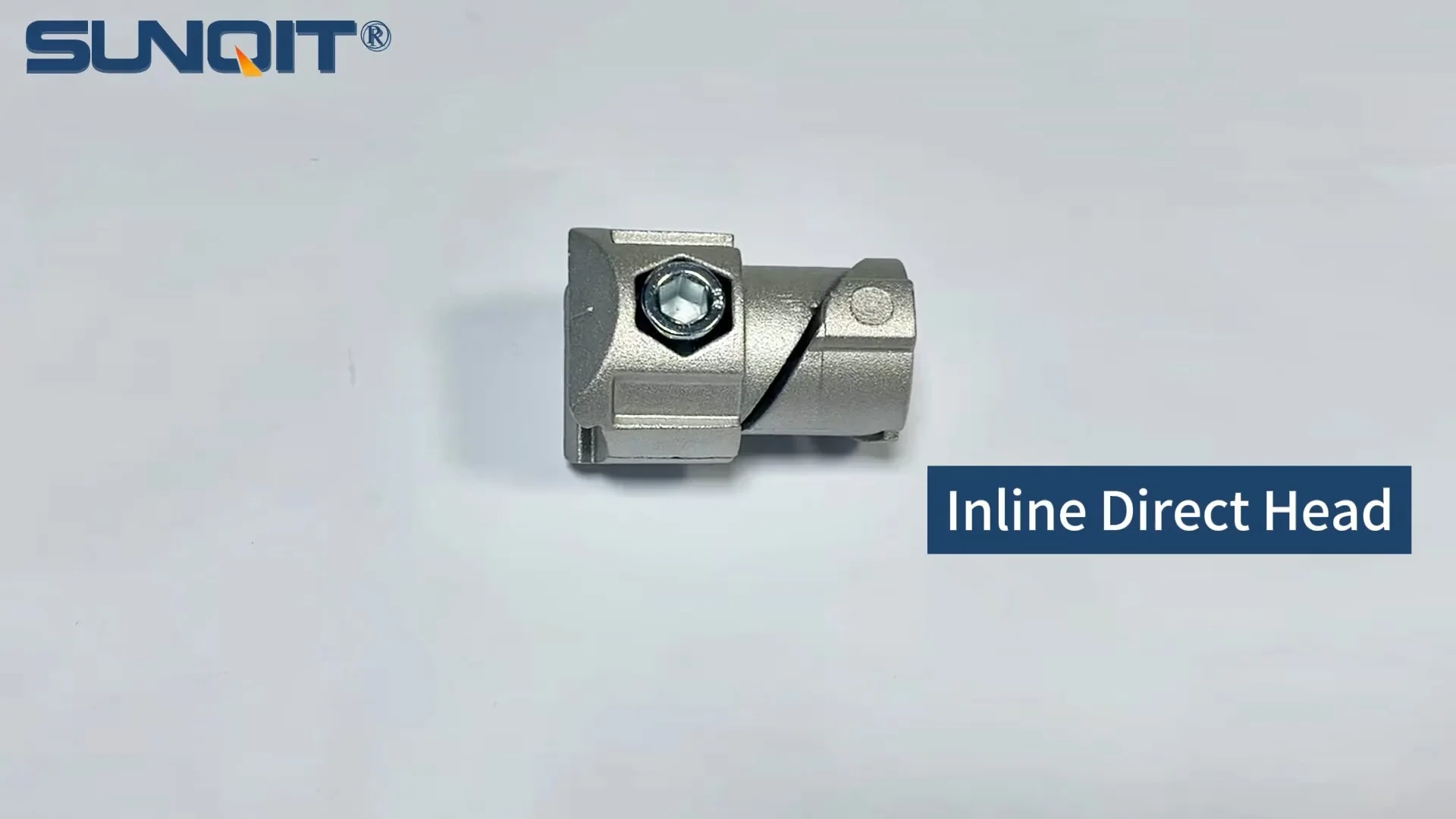
Internal straight aluminum joint
Aluminum pipe joint inside connection used for two pcs 28pcs aluminum pipe connection in straight angle,it connects two pcs pipe from inside.
In the world of lean production, every second counts. Whether you're running a bustling electronics manufacturing plant, a busy logistics warehouse, or a precision automotive assembly line, the goal is simple: eliminate waste, streamline processes, and keep operations moving like a well-oiled machine. But if there's one area that often sneaks under the radar as a hidden bottleneck, it's assembly time—especially when it comes to building the structures that keep your workflow intact: workbenches, material racks, roller tracks, and production lines. These aren't just static pieces of equipment; they're the backbone of your operation. And if putting them together takes hours (or even days), you're not just losing time—you're losing the agility that makes lean production so powerful.
For years, manufacturers and facility managers have grappled with clunky, time-consuming assembly methods. Traditional joints—think bolted steel connections, welded frames, or even basic plastic connectors—often require specialized tools, precise measurements, and a fair amount of elbow grease. Miss a hole alignment, and you're stuck re-drilling. Over-tighten a bolt, and you risk damaging the frame. Need to reconfigure a workbench for a new product line? Good luck taking it apart without stripping screws or bending pipes. It's a process that eats into productivity, frustrates workers, and leaves little room for the "continuous improvement" that lean production demands.
Enter the internal straight aluminum joint—a small but mighty component that's quietly revolutionizing how lean systems come together. Designed with precision, simplicity, and speed in mind, these joints are changing the game for anyone who builds or reconfigures production structures. In this article, we'll dive into how these unassuming connectors slash assembly time, why they're a perfect fit for lean environments, and how they stack up against older, slower alternatives. Whether you're a production manager looking to cut setup time, a facility engineer tasked with optimizing workflows, or just curious about the tools that make lean systems tick, this is the story of how a better joint leads to a better bottom line.
The Hidden Cost of Slow Assembly in Lean Systems
Before we jump into the solution, let's first understand the problem: why does assembly time matter so much in lean production? Lean isn't just about working faster—it's about working smarter. It's about identifying "muda," the Japanese term for waste, and rooting it out wherever it hides. And make no mistake: time spent fumbling with tools, reworking misaligned parts, or waiting for a structure to be built is muda. It's time that could be spent producing goods, serving customers, or iterating on process improvements.
Consider a common scenario: your team needs to set up a new lean pipe workbench for a rush order. The design is straightforward: aluminum pipes, a few shelves, and some caster wheels for mobility. With traditional joints, here's how the timeline might play out: first, you gather the pipes, joints, bolts, and a power drill. Then, you measure and mark each connection point (easy to mess up if someone's tired or distracted). Next, you line up the pipes with the joints, hold them steady (often requiring a second person), and start drilling. If the holes don't align perfectly—and they rarely do—you spend 10 minutes adjusting. Tighten the bolts too much, and you crack a plastic joint; too loose, and the workbench wobbles, risking product damage or worker injury. By the time you're done, what should have taken an hour has stretched into three. Multiply that by multiple workbenches or a full production line, and suddenly you're looking at days of lost productivity.
Worse, traditional assembly methods often lock you into rigid structures. Lean production thrives on adaptability—if a product design changes, or demand shifts, you need to reconfigure your workspace quickly. But with welded frames or bolted steel joints, that flexibility goes out the window. Taking apart an old setup means cutting welds, stripping rusted bolts, or even scrapping the entire structure and starting over. That's not just time wasted; it's material waste, too—another form of muda that lean systems are designed to eliminate.
The kicker? Most teams accept this as "just part of the job." They assume building production structures has to be slow, tedious, and error-prone. But what if it didn't? What if there was a way to snap together a lean pipe workbench in 30 minutes instead of 3 hours? To reconfigure a roller track in 10 minutes flat? To build a material rack so quickly that your team can prototype a new workflow on a Tuesday and have it up and running by Thursday? That's where internal straight aluminum joints come in.
What Are Internal Straight Aluminum Joints, Anyway?
At first glance, internal straight aluminum joints might not look like much—small, cylindrical, and often made of high-grade aluminum alloy. But their simplicity is intentional. Unlike traditional external joints that clamp around the outside of pipes or profiles, internal straight joints are designed to fit inside aluminum pipes or extruded profiles, creating a tight, secure connection from the inside out. Think of them as the "hidden glue" that holds your lean system together—without the mess, wait time, or tools.
Here's how they work: most aluminum extrusion profiles (the sleek, T-slotted rails you see in modern workbenches and racks) have hollow interiors with precise dimensions. Internal straight joints are engineered to slide into these profiles, with built-in mechanisms—like spring-loaded tabs, friction-fit collars, or twist-to-lock levers—that grip the inner walls of the pipe or profile. Once inserted, they create a rigid connection that can support weight, resist lateral movement, and stay stable even under the vibrations of a busy production floor. And the best part? You don't need a single tool to install them. No drills, no wrenches, no tape measures. Just slide, twist, or press—and you're done.
But these joints aren't one-trick ponies. They're designed to work seamlessly with other aluminum profile accessories, from end caps and shelf brackets to roller track guides and caster mounts. This compatibility means you can build entire systems—workbenches, material racks, roller conveyors—using the same joint, reducing the need for multiple types of connectors and simplifying your inventory. It's a level of consistency that traditional joints, which often require custom parts for different pipe sizes or materials, just can't match.
Let's break down the anatomy of a typical internal straight aluminum joint. Most feature a central core made of lightweight but strong aluminum alloy (often 6063 or 6061, known for their durability and corrosion resistance). On either end, you'll find expandable sections or locking tabs that engage with the inner walls of the aluminum pipe or profile. Some models include rubber gaskets or O-rings to enhance grip and dampen vibrations, while others have precision-machined grooves that align with the T-slots of extrusion profiles, adding an extra layer of stability. The result? A connection that's not just fast to make, but also surprisingly robust—capable of supporting hundreds of pounds without bending or slipping.

Key Design Features That Slash Assembly Time
So, what exactly makes internal straight aluminum joints so much faster than their predecessors? It's not just one feature—it's a combination of smart engineering choices that add up to significant time savings. Let's unpack the design elements that turn hours of assembly into minutes.
Tool-Less Connection: No Wrenches, No Drills, No Hassle
If there's one thing that slows down assembly more than anything else, it's tools. Traditional joints—whether bolted, clamped, or screwed—demand specific tools: socket wrenches, hex keys, power drills, or even welding torches. Each tool adds steps: fetching it from the toolbox, adjusting settings, cleaning bits, and (inevitably) hunting for the one size that fits. With internal straight aluminum joints, all that disappears. Most models use a simple "twist-and-lock" or "push-to-engage" mechanism. For example, some joints have a rotating collar that expands small metal tabs when turned, gripping the inside of the pipe. Others use a spring-loaded plunger that clicks into place when pressed. Either way, the process takes seconds: align the joint with the pipe, insert, twist or push until you hear a click, and you're done. No tools, no fuss, no lost time.
This tool-less design isn't just faster—it's also more accessible. New employees, temporary workers, or team members without specialized training can assemble structures with confidence, reducing reliance on skilled labor for setup tasks. In a lean environment, where cross-training and flexibility are key, this is a game-changer. Need to reconfigure a workbench during a shift change? A line worker can handle it in 15 minutes, no engineer required.
Precision Fit: No Measuring, No Misalignment
Anyone who's built something with traditional joints knows the frustration of misaligned holes. You measure twice, drill once, only to find the bolt still won't thread because the joint shifted. With internal straight aluminum joints, misalignment is practically impossible. These joints are machined to tight tolerances, designed to fit specific aluminum pipe or profile sizes (like 20mm, 30mm, or 40mm diameters). The inner walls of the aluminum profiles are also precision-extruded, ensuring a consistent, uniform fit. When you slide the joint into the profile, it seats perfectly the first time, every time. No measuring, no marking, no second-guessing. It's like putting together a high-quality puzzle where every piece fits exactly as it should.
This precision also reduces the need for "fudge factors" during assembly. Traditional joints often require shims, washers, or extra bolts to compensate for slight gaps or bends. With internal straight joints, the connection is tight from the start, so you spend less time adjusting and more time building. And because the fit is consistent, the finished structure is sturdier, too—no wobbling shelves or sagging roller tracks, even under heavy loads.
Durable and Reusable: Build, Break Down, Repeat
Lean production isn't just about building—it's about rebuilding. As your needs change, you'll take apart old structures and repurpose their components into new ones. Traditional joints don't handle this well. Bolted connections strip threads; plastic clamps crack when disassembled; welded frames are impossible to reuse. Internal straight aluminum joints, though, are built to be taken apart and put back together again and again. The materials—high-grade aluminum and reinforced plastics—are tough enough to withstand repeated use without losing their grip or structural integrity. Slide the joint out, reinsert it into a new pipe, and it locks just as securely as the first time. This reusability cuts down on waste (no more tossing bent or broken connectors) and makes reconfiguration faster than starting from scratch.
Imagine needing to shift a roller track from one side of the production line to another. With traditional roller track connectors, you'd likely need to cut the track, remove rusted bolts, and replace damaged parts. With internal straight joints? Disassemble the track in 20 minutes, move the pieces to the new location, and reassemble in another 20. Total time: under an hour. That's the difference between a day-long project and a coffee-break task.
Compatibility with Aluminum Extrusion Profiles: One System, Endless Possibilities
Internal straight aluminum joints aren't designed in a vacuum—they're part of a larger ecosystem of aluminum extrusion profiles. These profiles, with their T-slotted sides and hollow cores, are the building blocks of modern lean systems. They're lightweight, strong, and infinitely customizable, with accessories like shelves, brackets, and hooks that slide into the T-slots. Internal straight joints are engineered to work with these profiles, meaning you can mix and match components without worrying about compatibility. Want to build a lean pipe workbench with a roller track shelf? Use the same internal straight joints to connect the workbench legs and the roller track rails. Need to add a material rack to the side? Just slide a joint into the T-slot of the workbench frame and attach the rack posts. This "one system" approach eliminates the need to source different connectors for different parts of your setup, simplifying inventory and speeding up assembly.

Real-World Applications: Where Time Savings Add Up
Numbers and design features are one thing—but seeing how internal straight aluminum joints work in real life is where their impact truly hits home. Let's look at three common scenarios where these joints turn slow, frustrating assembly into quick, painless setup: lean pipe workbenches, roller track systems, and aluminum extrusion profile workstations.
Example 1: Lean Pipe Workbench Assembly
A mid-sized electronics manufacturer needs to build 10 new workbenches for a smartphone assembly line. Each workbench is 6 feet long, 3 feet deep, with a plywood top, a lower shelf, and caster wheels for mobility. With traditional steel pipe joints and bolts:
- Each workbench requires 16 joints (4 legs, 4 side rails, 4 front/back rails, 4 shelf supports).
- Each joint takes 5 minutes to align, bolt, and tighten (including tool setup and hole alignment checks).
- Total time per workbench: 16 joints × 5 minutes = 80 minutes. For 10 workbenches: 800 minutes (13+ hours).
- Additional time: Fixing misaligned holes (average 2 per workbench: 10 minutes each → 200 minutes total), plus installing casters (15 minutes per bench → 150 minutes total).
- Grand total: ~1,150 minutes (19 hours).
With internal straight aluminum joints:
- Same 16 joints per workbench, but each takes 30 seconds to insert and lock (no tools, no alignment issues).
- Total time per workbench: 16 joints × 0.5 minutes = 8 minutes. For 10 workbenches: 80 minutes (1.3 hours).
- Additional time: Casters snap into pre-drilled holes on the leg joints (5 minutes per bench → 50 minutes total).
- Grand total: ~130 minutes (2.1 hours).
Time saved: 16.9 hours —enough to build the workbenches in a single morning instead of two full days. And because the joints are reusable, if the manufacturer needs to shorten the workbenches later for a new phone model, disassembly and reconfiguration take another 30 minutes per bench—no new parts needed.
Example 2: Roller Track Installation for Material Flow
A logistics warehouse wants to install a 50-foot roller track to move packages from the receiving dock to the sorting area. The track needs to have three 90-degree turns and connect to a manual sorting station. With traditional roller track connectors (bolted steel brackets and plastic guides):
- Track sections are 5 feet long, requiring 10 sections + 3 turn connectors = 13 connections.
- Each connection requires 4 bolts, washers, and a wrench (10 minutes per connection, including aligning the track to ensure smooth rolling).
- Total connection time: 13 × 10 minutes = 130 minutes.
- Additional time: Securing the track to the floor (drilling brackets, 20 minutes), testing for jams (30 minutes), and adjusting for level (20 minutes).
- Grand total: ~200 minutes (3.3 hours).
With internal straight aluminum joints and aluminum roller track profiles:
- 13 connections, each made by sliding the internal joint into the track ends and twisting to lock (1 minute per connection).
- Total connection time: 13 × 1 minute = 13 minutes.
- Additional time: Track clips into floor-mounted aluminum profiles (5 minutes), testing is quick (10 minutes) since the joints ensure straight alignment.
- Grand total: ~28 minutes.
Time saved: 2.7 hours —the track is up and running before lunch, instead of tying up a team for half the day. And if the warehouse expands next year, adding 20 more feet of track takes just 4 minutes (4 new sections × 1 minute per connection).
Beyond the Big Projects: Smaller Tasks, Cumulative Savings
It's not just large-scale builds where internal straight aluminum joints shine. Even small, daily tasks add up. For example, a quality control inspector needs a small parts bin rack mounted to their workbench. With traditional brackets, that might take 20 minutes (drilling holes, mounting screws). With internal straight joints, they can slide a short aluminum profile into the workbench's T-slot, attach a bin bracket with a twist-lock joint, and be done in 2 minutes. Multiply that by 10 similar tasks across a facility in a week, and you're saving 3 hours—time that can be redirected to value-adding work, like process audits or employee training.
How Internal Straight Joints Stack Up to the Competition
You might be thinking, "Aren't there other fast-assembly joints out there?" It's true—there are plenty of connectors marketed as "quick" or "tool-less." But internal straight aluminum joints stand out for their combination of speed, strength, and flexibility. Let's compare them to three common alternatives to see why they're the top choice for lean production.
| Joint Type | Time per Connection | Tools Required | Reusability | Weight Capacity | Best For |
|---|---|---|---|---|---|
| Traditional Steel Bolted Joints | 5–10 minutes | Wrench, drill, measuring tape | Low (bolts strip, threads wear) | High (but heavy) | Static, heavy-duty structures (rarely reconfigured) |
| Plastic Snap-Fit Joints | 2–3 minutes | None | Medium (plastics crack over time) | Low (light loads only) | Temporary displays, light shelving |
| External Aluminum Clamp Joints | 3–4 minutes | Hex key (for tightening clamp) | Medium (clamps loosen with vibration) | Medium | Semi-permanent structures (occasional reconfiguration) |
| Internal Straight Aluminum Joints | 30 seconds–1 minute | None | High (reusable 50+ times) | High (up to 200 lbs per joint) | Lean systems, frequent reconfiguration, heavy loads |
The table tells the story: internal straight aluminum joints are faster than every alternative, require no tools, and hold up to heavy use—even with repeated disassembly. Plastic snap-fit joints might be tool-less, but they can't handle the weight of a fully loaded lean pipe workbench. External aluminum clamps save time compared to bolts, but they still need a hex key and often loosen over time, requiring re-tightening. Traditional steel joints are strong but slow and rigid—antithetical to lean's need for adaptability.
Another key advantage? Internal straight joints don't add bulk. External clamps or bolted brackets stick out from the pipe, taking up space and creating snags for materials or workers. Internal joints sit flush inside the profile, keeping surfaces smooth and safe—an important detail in busy production areas where safety and ergonomics matter.
Beyond Time: Other Ways Internal Straight Joints Boost Lean Systems
While cutting assembly time is the headline benefit, internal straight aluminum joints deliver a host of other advantages that align perfectly with lean production principles. Let's explore how they contribute to waste reduction, cost savings, and a more adaptable workplace.
Reduced Material Waste (Muda of Defects)
Lean production categorizes "defects" as a form of waste—and misassembled joints are a common defect. A bent bolt, a cracked plastic connector, or a misaligned frame all require rework or replacement. Internal straight aluminum joints, with their precision fit and durable materials, drastically reduce these defects. Because they lock into place correctly the first time, there's no need to redo connections. And since they're reusable, you're not throwing away broken parts after a single use. Over time, this cuts down on material costs and keeps your supply closet from overflowing with "spare" connectors.
Lower Labor Costs (Muda of Waiting)
Time saved on assembly translates directly to labor savings. If a team of two workers spends 19 hours building workbenches with traditional joints (as in our earlier example), that's 38 labor hours. With internal straight joints, the same team spends 2.1 hours—saving 35.9 hours. At an average labor cost of $25/hour, that's $897 saved on just 10 workbenches. Multiply that across all the structures you build or reconfigure in a year, and the savings add up to tens of thousands of dollars—money that can be invested in training, new equipment, or process improvements.
Faster Response to Change (Muda of Overproduction)
In lean, "overproduction" isn't just making too many products—it's also building structures or systems before they're needed. If assembly takes too long, teams often pre-build extra workbenches or racks "just in case," tying up space and resources. With internal straight joints, you can build exactly what you need, when you need it. Need a new material rack for a sudden rush order? Build it in 30 minutes instead of a day. This "just-in-time" assembly prevents overproduction of structures and keeps your facility floor free of unused equipment.
Improved Ergonomics (Muda of Motion)
Bending over to drill bolts, straining to hold heavy steel pipes, or kneeling to align joints—these are all forms of "motion waste" that tire workers and increase injury risk. Internal straight aluminum joints are lightweight (aluminum is 1/3 the weight of steel), and their tool-less design means less reaching, lifting, and repetitive motion. Workers can assemble structures standing up, with one hand, reducing strain on backs, shoulders, and wrists. Happier, healthier workers are more productive—and that's a win for any lean system.
Conclusion: The Future of Lean Assembly Is Here
In the end, lean production is about more than just cutting costs—it's about creating a workplace that's agile, responsive, and built for continuous improvement. Internal straight aluminum joints might seem like small components, but they embody that philosophy perfectly. By slashing assembly time, eliminating tool reliance, and enabling endless reconfiguration, they turn the act of building and rebuilding into a competitive advantage.
Think about it: What could your team accomplish with an extra 10, 20, or 50 hours a month—time previously spent wrestling with bolts and misaligned joints? Maybe you'd launch that new product line faster. Maybe you'd finally implement that 5S organization project you've been putting off. Maybe you'd reduce overtime and let workers go home earlier, boosting morale. The possibilities are as endless as the structures you can build with these joints.
As lean production continues to evolve, the tools we use to build our workspaces will evolve with it. Internal straight aluminum joints are more than a trend—they're a glimpse into the future: a future where assembly is quick, painless, and adaptable. A future where your team spends less time building structures and more time improving the processes that make your business thrive. And in that future, every second saved is a step closer to perfection.
So the next time you're staring at a pile of pipes and joints, dreading the hours of assembly ahead, remember: there's a better way. Internal straight aluminum joints aren't just connectors—they're time machines. And in lean production, time is the most valuable resource of all.