- Company Articles
- Products and Technology
- Technology Sharing
- How Internal Straight Aluminum Joints Support Circular Economy in Manufacturing

How Internal Straight Aluminum Joints Support Circular Economy in Manufacturing
Related Product
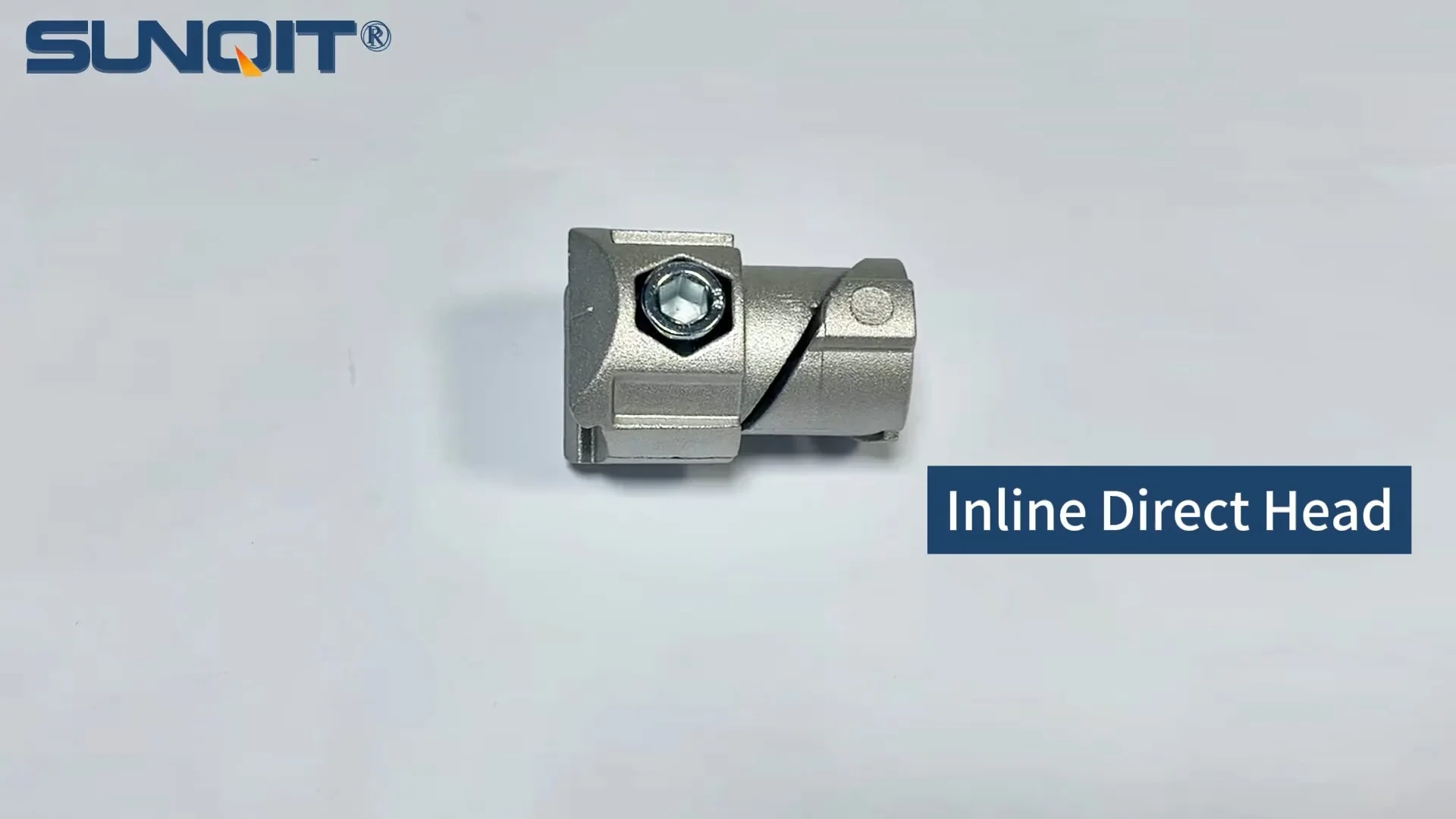
Internal straight aluminum joint
Aluminum pipe joint inside connection used for two pcs 28pcs aluminum pipe connection in straight angle,it connects two pcs pipe from inside.
The Shift to Circularity: Why Manufacturing Can't Afford to Stay Linear
Walk through a traditional manufacturing facility, and you'll likely encounter a familiar sight: workbenches bolted to the floor, conveyor systems welded into place, and material racks built as permanent fixtures. These structures are designed to last—at least until the next production line overhaul, product redesign, or facility expansion. When that day comes, most of these "permanent" systems end up in landfills, replaced by new ones built from scratch. It's a linear model: take raw materials, make products, use them briefly, then dispose of them. But in an era of resource scarcity, rising material costs, and growing environmental regulations, this "take-make-dispose" approach is no longer sustainable.
Enter the circular economy—a system that aims to eliminate waste by keeping resources in use for as long as possible, extracting maximum value from them, and then recovering and regenerating materials at the end of their service life. For manufacturing, this means rethinking everything from product design to production processes. And one of the most impactful ways to embrace circularity? Modular manufacturing systems. These flexible setups, built from interchangeable components, are designed to adapt, reuse, and recycle—reducing waste and cutting costs in the process. At the center of this modular revolution lies a component that's easy to overlook but impossible to replace: the internal straight aluminum joint.
Modular Manufacturing: The Foundation of Circular Production
Modular manufacturing isn't new, but its adoption has accelerated as companies seek ways to align profitability with sustainability. Unlike traditional fixed systems, modular setups use standardized, interchangeable parts that can be assembled, disassembled, and reconfigured with minimal effort. Think of it like building with advanced Lego blocks: instead of gluing the pieces together, you connect them with joints that allow for quick adjustments. This flexibility isn't just about convenience—it's a cornerstone of circularity.
At the heart of any modular system are its connectors. These small components determine how easily parts can be joined, adjusted, and reused. For years, manufacturers relied on plastic connectors or welded steel joints. Plastic connectors are cheap but prone to wear, cracking, or deformation under heavy loads, making them difficult to reuse. Welded steel joints are durable but permanent; once welded, they can't be disassembled without cutting, rendering the entire structure obsolete when changes are needed. This is where aluminum joints, particularly internal straight aluminum joints, game the system.
Aluminum, by nature, is a circular material. It's lightweight, strong, and infinitely recyclable—recycling aluminum uses just 5% of the energy required to produce new aluminum, and it retains 95% of its original strength. When paired with a smart joint design, like the internal straight aluminum joint, it becomes a powerful tool for building systems that support reuse, reduce waste, and lower environmental impact.

What Is an Internal Straight Aluminum Joint? The Unsung Hero of Modularity
Let's start with the basics: an internal straight aluminum joint is a connector designed to join two or more aluminum pipes or profiles in a straight line, often with the joint mechanism hidden inside the pipe. Unlike external joints, which clamp around the outside of pipes, internal joints fit snugly inside the aluminum profile, creating a cleaner, more streamlined connection. But their real value lies in their functionality.
These joints are typically made from high-grade aluminum alloys, such as 6061-T6, known for their strength, corrosion resistance, and machinability. They feature internal threading or cam mechanisms that allow for tool-free or low-tool assembly—meaning workers can tighten or loosen them with simple hand tools, no welding or specialized equipment required. This design ensures a secure hold (many can support loads of 50-100 kg per joint) while still allowing for easy disassembly when needed.
Compatibility is another key advantage. Internal straight aluminum joints are engineered to work with standard aluminum profile sizes, such as the popular 2020, 3030, and 4040 series (named for their width and height in millimeters). This standardization means components from different manufacturers can often be mixed and matched, reducing reliance on single suppliers and increasing flexibility. Whether you're building a workbench, a flow rack, or a material trolley, these joints ensure the structure can be taken apart, reconfigured, and repurposed as needs change.

How Internal Straight Aluminum Joints Drive Circular Economy Principles
To understand how these joints support circularity, let's break down the three core principles of the circular economy—reduce, reuse, recycle—and see how internal straight aluminum joints contribute to each.
1. Reduce: Minimizing Material Waste from the Start
Traditional manufacturing setups often require over-engineering to account for future needs. A welded steel workbench, for example, might be built with extra support beams "just in case" production volumes increase, leading to unnecessary material use. Modular systems, by contrast, are built to exact specifications—and because they're reconfigurable, there's no need for over-engineering.
Internal straight aluminum joints enable precise, on-demand assembly. If a workbench needs an extra shelf six months down the line, you don't need to build a new one—you simply add a section using the same joints and aluminum profiles. This reduces the need for excess materials upfront, cutting down on waste before it's even generated. Studies show that modular systems using aluminum joints can reduce initial material consumption by 20-30% compared to fixed steel setups, as components are sized to current needs, not hypothetical future ones.
2. Reuse: Extending the Lifespan of Manufacturing Assets
The average lifespan of a fixed manufacturing structure is 5-7 years, after which it's often scrapped during facility upgrades. Modular systems, built with internal straight aluminum joints, can last 15+ years—often outliving multiple product lines—because they're designed to be reused. When a production line is retired, the workbenches, flow racks, and trolleys can be disassembled, and their components (pipes, joints, panels) can be reassembled into new structures for the next project.
Consider a electronics manufacturer that shifts from producing smartphones to tablets. The assembly workbenches, originally designed for small phone components, might need to be wider to accommodate larger tablet screens. With welded steel benches, this would require replacing the entire setup. With aluminum modular benches using internal straight joints, workers can simply disassemble the existing benches, add longer aluminum profiles, and reassemble them to the new dimensions. The joints, pipes, and even accessories like roller tracks or caster wheels are reused, avoiding the waste of scrapping the old system.
This reuse isn't limited to the same facility, either. Components can be transferred between plants, sold to other manufacturers, or repurposed for non-production uses (e.g., storage racks in warehouses). Internal straight aluminum joints make this possible because they create connections that are strong enough for daily use but easy enough to undo when it's time to repurpose.
3. Recycle: Closing the Loop When Reuse Isn't Possible
Even the most durable components eventually reach the end of their usable life. When that happens, aluminum's recyclability shines. Unlike plastic joints, which degrade over time and often end up in landfills, or steel joints that may be coated in paints or chemicals that complicate recycling, internal straight aluminum joints are made from pure aluminum alloys (or alloys with minimal additives). This makes them easy to recycle—simply melt them down and reuse the material to make new joints, profiles, or other aluminum products.
The numbers tell the story: aluminum has a recycling rate of over 90% in manufacturing, far higher than steel (about 60%) or plastic (less than 10%). When a modular system built with aluminum joints is finally retired, nearly 100% of its components can be recycled, with minimal loss of material value. This closes the loop, ensuring that the resources used to create the system are never truly "wasted."
Beyond Sustainability: The Business Case for Internal Straight Aluminum Joints
Circular economy benefits are compelling, but for manufacturers, the bottom line matters too. Fortunately, internal straight aluminum joints deliver here as well, offering cost savings that often offset their higher initial price tag (compared to plastic or low-grade steel joints) within 1-2 years.
| Metric | Fixed Steel Setup | Modular Aluminum Setup (w/ Internal Straight Joints) |
|---|---|---|
| Initial Material Cost | Lower (steel is cheaper upfront) | Higher (aluminum + precision joints) |
| Installation Time | Long (requires welding, painting) | Short (tool-free assembly) |
| Reconfiguration Cost | High (scrap + new materials) | Low (reuse 80-90% of components) |
| Maintenance Cost | High (rust, welding repairs) | Low (corrosion-resistant, replaceable joints) |
| Waste Disposal Cost | High (scrapping entire structures) | Low (recycle/reuse components) |
| 10-Year Total Cost | $150,000 (example) | $90,000 (example) |
The table above, based on industry data from modular manufacturing suppliers, illustrates the total cost of ownership (TCO) advantage of aluminum modular systems. While the initial material cost is higher, savings from faster installation, lower reconfiguration costs, minimal maintenance, and reduced waste disposal add up. For example, a mid-sized automotive parts manufacturer reported saving $45,000 over five years after switching to aluminum modular workbenches with internal straight joints, primarily due to reusing 75% of components during three production line changes.
Additionally, aluminum's lightweight nature reduces shipping and handling costs. A modular aluminum workbench weighs 40-50% less than a steel equivalent, cutting transportation emissions and making on-site assembly easier (no need for heavy lifting equipment). This not only saves money but also aligns with corporate sustainability goals, which are increasingly important to customers, investors, and regulators.
Case Study: How a Medical Device Manufacturer Cut Waste by 60% with Aluminum Modular Systems
The Challenge: Rigid Setups Struggle with Rapid Product Iteration
A leading medical device manufacturer based in the U.S. was facing a problem common in fast-paced industries: their production lines couldn't keep up with product design changes. Every 12-18 months, the company introduced updated versions of its diagnostic equipment, requiring changes to assembly workbenches, material flow racks, and testing stations. Their existing steel welded setups took 4-6 weeks to design and install, and when changes were needed, 80% of the steel components ended up in scrap yards. Waste disposal costs were rising, and the company was missing sustainability targets set by its parent corporation.
The Solution: Internal Straight Aluminum Joints and Aluminum Profiles
In 2022, the manufacturer partnered with a modular system supplier to overhaul its production floor using aluminum extrusion profiles (4040 and 3030 series) and internal straight aluminum joints. The goal was to build a flexible system that could be reconfigured in days, not weeks, and reduce waste. The new setup included:
- Workbenches with aluminum honeycomb panels, assembled using internal straight joints for easy height/width adjustments.
- Flow racks with roller tracks (using aluminum guide rails and plastic roller track guide rails) for material transport, connected via aluminum joints to allow repositioning.
- Mobile trolleys with caster wheels, built from the same aluminum profiles and joints, for moving components between stations.
The Results: 60% Less Waste, 40% Faster Reconfigurations
Within 18 months, the results were clear: When the company launched a new product line in early 2023, the existing workbenches were disassembled and reassembled into the new configuration in just 3 days, using 90% of the original components (only new aluminum profiles were added for length). Waste from the reconfiguration dropped from 800 kg (with steel setups) to 320 kg—a 60% reduction. The company also saved $75,000 in material costs by reusing components, and installation time for new lines fell from 6 weeks to 2 weeks, reducing downtime and lost production.
Perhaps most notably, when the company recycled its old steel setups, it recovered just $2,000 from scrap metal. In contrast, when a small batch of aluminum joints and profiles reached the end of their lifespan (after 5 reconfigurations), they were recycled for $3,500—nearly double the return—thanks to aluminum's higher scrap value.
Challenges and Considerations: Making the Switch to Aluminum Modular Systems
While the benefits are clear, adopting internal straight aluminum joints and aluminum profile systems isn't without challenges. The most common barrier is initial cost: aluminum extrusion profiles and precision joints can cost 30-50% more upfront than welded steel or plastic systems. For manufacturers operating on tight margins, this can be a tough sell. However, as the case study shows, the TCO often favors aluminum over time, thanks to reusability and lower maintenance.
Another consideration is worker training. While modular systems are designed to be user-friendly, assembling them requires a different skill set than welding or bolting fixed structures. Workers need to learn how to properly align joints, torque connections to the right specifications, and safely disassemble components. Most suppliers offer training programs, but there's still a learning curve.
Finally, compatibility can be an issue if a manufacturer already uses a mix of legacy systems. Aluminum profiles come in different sizes and slot designs (T-slot, V-slot), and not all joints work with all profiles. Choosing a standardized system (e.g., sticking to 4040 series aluminum profiles and compatible internal straight joints) from a reliable supplier can mitigate this risk.
The Future: Internal Straight Aluminum Joints and the Next Wave of Circular Manufacturing
As the circular economy moves from buzzword to business imperative, the role of modular systems and components like internal straight aluminum joints will only grow. Here are three trends shaping their future:
1. Integration with Smart Manufacturing (Industry 4.0)
Modular aluminum systems are increasingly being paired with IoT sensors and smart technology. Workbenches built with internal straight aluminum joints can now include embedded sensors to monitor weight loads, vibration, or usage patterns, providing data to optimize layouts further. For example, if a sensor detects a workbench is consistently underloaded, it can be disassembled and repurposed to a high-traffic area—maximizing resource use.
2. Advanced Aluminum Alloys and Joint Designs
Suppliers are developing new aluminum alloys that are even stronger and lighter, allowing joints to support higher loads with smaller profiles. Some are also experimenting with "self-locking" internal joints that automatically tighten under load, reducing the need for manual adjustments. These innovations will make modular systems viable for heavier industries, like automotive and aerospace, where load capacity was once a barrier.
3. Circular Supply Chains for Aluminum Components
Manufacturers are starting to demand "closed-loop" supply chains for aluminum components. This means suppliers take back old joints and profiles, recycle them, and use the recycled aluminum to produce new components. Some suppliers already offer take-back programs, and as regulations around extended producer responsibility (EPR) grow, this will become standard practice.
Conclusion: Small Joints, Big Impact on Circularity
The internal straight aluminum joint may be small, but its impact on manufacturing's shift to circularity is enormous. By enabling modular, reusable systems, it addresses the linear economy's biggest flaws: waste, short lifespans, and resource inefficiency. When paired with aluminum's natural recyclability, it creates a closed-loop model where manufacturing assets are not just used—but reused, repurposed, and eventually recycled, with minimal loss of value.
For manufacturers looking to reduce costs, meet sustainability goals, and stay agile in a fast-changing market, the choice is clear: modular systems built with internal straight aluminum joints and aluminum profiles aren't just a trend—they're the future of circular manufacturing. As the medical device manufacturer learned, the investment pays off in lower waste, faster innovation, and a healthier bottom line. And in a world where "sustainable" and "profitable" are no longer competing priorities, that's a win-win.