- Company Articles
- Products and Technology
- Product knowledge
- How Internal Straight Aluminum Joints Support Modular Lean Pipe Structures

How Internal Straight Aluminum Joints Support Modular Lean Pipe Structures
Related Product
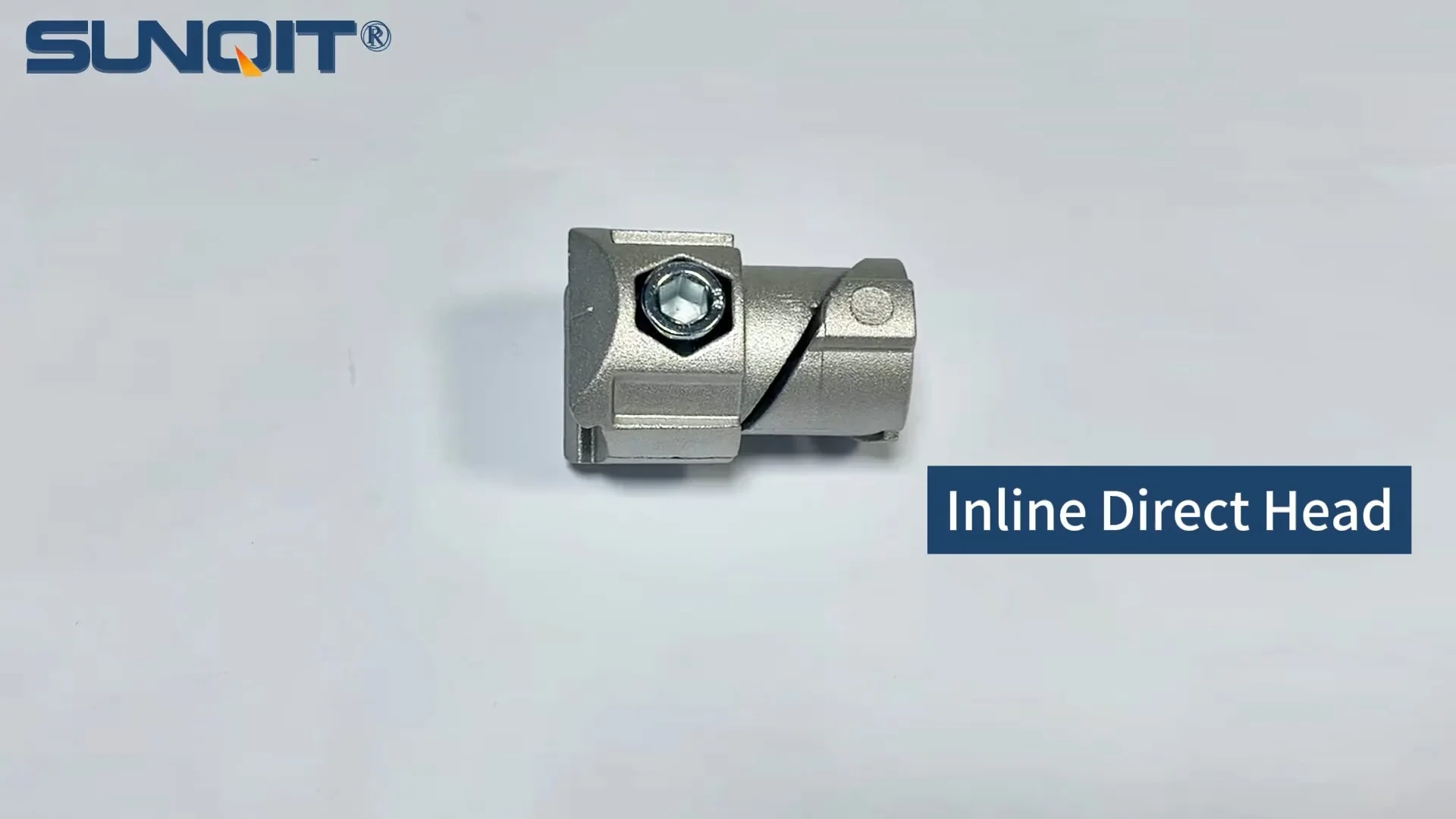
Internal straight aluminum joint
Aluminum pipe joint inside connection used for two pcs 28pcs aluminum pipe connection in straight angle,it connects two pcs pipe from inside.
The backbone of flexible, scalable, and efficient manufacturing systems
Introduction: The Evolution of Manufacturing Flexibility
In the fast-paced world of modern manufacturing, the ability to adapt is no longer a luxury—it's a necessity. Production lines that once thrived on rigid, one-size-fits-all structures now struggle to keep up with shifting consumer demands, shorter product lifecycles, and the need for rapid innovation. Enter lean manufacturing: a philosophy built on eliminating waste, optimizing flow, and continuous improvement. At the heart of lean principles lies modularity—the idea that systems should be easy to reconfigure, scale, and repurpose without overhauling entire operations.
Modular lean pipe structures have emerged as a game-changer in this space. Lightweight, durable, and highly adaptable, these systems—often constructed from aluminum lean pipe and a variety of connectors—allow factories, warehouses, and assembly plants to build everything from workbenches and material racks to full production lines that can be adjusted in hours, not weeks. But if modular lean pipe structures are the "body" of this flexible system, then the joints that hold them together are the "skeleton." And among these joints, one component stands out for its quiet efficiency: the internal straight aluminum joint .
You might not notice it at first glance, but this unassuming connector is what turns a collection of aluminum pipes and accessories into a cohesive, functional system. It's the reason a workbench can be extended by adding a few extra pipes, or a material rack can be reconfigured to hold new inventory sizes overnight. In this article, we'll explore how internal straight aluminum joints act as the unsung heroes of modular lean pipe structures, supporting everything from basic workstations to complex production assemble lines. We'll dive into their design, benefits, and real-world impact, showing why they've become indispensable for manufacturers aiming to stay agile in an ever-changing market.
What Are Modular Lean Pipe Structures, and Why Do They Matter?
Before we zoom in on internal straight aluminum joints, let's take a step back to understand the bigger picture: modular lean pipe structures. At their core, these are systems built from lightweight, interchangeable components—primarily pipes, joints, and accessories—that can be assembled, disassembled, and reconfigured with minimal effort. Unlike traditional steel structures, which are heavy, welded, and difficult to modify, modular systems are designed for flexibility.
The "lean" in their name ties directly to lean manufacturing principles. These structures help reduce waste in several ways: they minimize excess inventory by adapting to storage needs, cut down on production downtime during reconfigurations, and eliminate the need for custom-built equipment that quickly becomes obsolete. For example, a manufacturer producing smartphones might use a modular assembly line that can be adjusted to accommodate a new model's slightly larger screen size by simply repositioning a few aluminum lean pipes and joints—no need to replace the entire line.
Central to these structures is aluminum lean pipe —a lightweight, corrosion-resistant material that balances strength and maneuverability. Aluminum is ideal for modular systems because it's significantly lighter than steel (reducing the physical effort required to assemble and reconfigure), yet strong enough to support the weight of tools, components, and products in most manufacturing settings. It also resists rust, making it suitable for use in environments where moisture or chemicals are present, such as automotive or food processing plants.
But aluminum lean pipe alone isn't enough. To build a functional structure—whether a workbench, a conveyor, or a material rack—you need a way to connect the pipes securely. This is where joints come in. Joints are the critical link that transforms individual pipes into stable, load-bearing structures. And among the many types of joints available, internal straight aluminum joints offer unique advantages that make them a top choice for modular systems.

Meet the Internal Straight Aluminum Joint: Design and Functionality
Imagine walking into a busy factory. You see workbenches lined with tools, conveyor belts moving components from station to station, and material racks stacked with parts—all made from sleek aluminum pipes. If you look closely at where the pipes connect, you might notice small, unobtrusive joints that seem to "disappear" into the structure. Chances are, those are internal straight aluminum joints.
So, what exactly is an internal straight aluminum joint? As the name suggests, it's a connector designed to fit inside the ends of two aluminum lean pipes, creating a straight, seamless connection. Unlike external joints, which clamp around the outside of pipes (and can add bulk or create snag points), internal joints sit flush with the pipe's inner diameter, resulting in a clean, streamlined look. This internal design is key to their functionality and appeal.
Let's break down their design: most internal straight aluminum joints are cylindrical, with a diameter slightly smaller than the inner diameter of the aluminum lean pipe they're meant to connect. They're typically made from high-grade aluminum alloy, chosen for its strength, lightweight properties, and resistance to wear. Many joints feature threaded holes or set screws that, when tightened, press against the inner wall of the pipe, creating a secure, friction-based hold. Some designs also include ridges or knurling on the outer surface to enhance grip, ensuring the joint doesn't slip even under heavy loads.
The "straight" aspect is equally important. These joints are engineered to align pipes perfectly along a straight axis, which is crucial for maintaining structural integrity. A misaligned joint could cause a workbench to wobble or a conveyor to jam—issues that disrupt production and compromise safety. Internal straight joints solve this by acting as a built-in alignment tool: when inserted into two pipes, they ensure the pipes are coaxial (sharing the same central axis), creating a stable, straight connection every time.
Another key feature is their simplicity. Installing an internal straight aluminum joint requires no special tools—just a hex key or screwdriver to tighten the set screws. This ease of assembly reduces the time and labor needed to build or modify structures, which is a huge plus for manufacturers looking to minimize downtime. Compare this to welding steel pipes, which requires skilled labor, heavy equipment, and hours of work—only to result in a permanent structure that can't be changed later.
Durability is another standout trait. Aluminum alloy joints are resistant to corrosion and wear, even with repeated assembly and disassembly. Unlike plastic joints, which can crack under stress or degrade over time, aluminum joints maintain their strength and integrity, ensuring the structures they support remain stable for years. This longevity translates to cost savings, as manufacturers don't need to replace joints frequently.

How Internal Straight Aluminum Joints Support Modular Structures: 4 Key Benefits
Now that we understand what internal straight aluminum joints are, let's explore how they specifically support and enhance modular lean pipe structures. These benefits go beyond simple connectivity—they enable the flexibility, efficiency, and scalability that make modular systems so valuable in manufacturing.
1. Unmatched Flexibility for Rapid Reconfiguration
Flexibility is the cornerstone of modular systems, and internal straight aluminum joints excel here. Because they're easy to install and remove, they allow manufacturers to reconfigure their structures quickly in response to changing needs. For example, suppose a production assemble line needs to be extended to accommodate a new step in the manufacturing process. With internal straight joints, workers can simply add a few aluminum lean pipes to the existing line, secure them with joints, and have the new section up and running in under an hour.
This flexibility also shines when production needs shrink. If demand for a product drops, a manufacturer can disassemble excess workstations or material racks, storing the pipes and joints for later use. This "right-sizing" prevents wasted space and resources—a core lean principle. Traditional steel structures, by contrast, are fixed; once built, they can't be easily broken down or repurposed, leading to underused equipment and cluttered floors.
2. Compatibility with Aluminum Profile Accessories
Modular lean pipe structures are rarely just pipes and joints—they're complete systems that include aluminum profile accessories like casters, roller tracks, workbench tops, and shelf brackets. Internal straight aluminum joints play well with these accessories, creating seamless integration that enhances functionality.
For instance, adding casters to a workbench (to make it mobile) is simple: just attach a caster bracket to the bottom of the workbench's frame using internal straight joints. The same joints can connect a roller track to a material rack, allowing parts to slide smoothly from one station to the next. This compatibility means manufacturers aren't locked into a single brand or type of accessory—they can mix and match components from different suppliers, as long as they're designed for aluminum lean pipe.
Aluminum profile accessories also benefit from the internal joint's low-profile design. Since the joint sits inside the pipe, there's no bulky external hardware to interfere with accessories like clamp-on tool holders or label brackets. This clean integration keeps workspaces organized and reduces the risk of snagging on clothing or equipment—a small detail that adds up to big improvements in safety and efficiency.
3. Lightweight Strength for Safe, Maneuverable Structures
Aluminum lean pipe is already lightweight, but internal straight aluminum joints take this a step further. Because they're made from aluminum (rather than heavier steel), they keep the overall weight of the structure down. This is a huge advantage for mobile structures like turnover trolleys or portable workbenches—lighter systems are easier for workers to move, reducing the risk of strain injuries.
Don't let the lightweight nature fool you, though—these joints are surprisingly strong. High-grade aluminum alloys can support significant loads, making internal straight joints suitable for everything from small tool racks to heavy-duty assembly line workstations. For example, a workbench built with aluminum lean pipe and internal straight joints can easily hold 100+ kg of tools and components without bending or wobbling.
This balance of strength and weight also makes installation safer. Unlike steel joints, which can be heavy and awkward to handle, aluminum joints are easy to carry and position—even for a single worker. This reduces the need for team lifts or heavy machinery during assembly, lowering the risk of accidents in the workplace.
4. Cost-Efficiency Over the Long Term
At first glance, aluminum components might seem more expensive than their steel or plastic counterparts. But when you factor in their longevity, reusability, and low maintenance, internal straight aluminum joints quickly become a cost-effective choice.
Consider this: a traditional steel workbench might cost less upfront, but if your production needs change in a year, you'll have to either buy a new workbench (wasting the original investment) or pay to have it modified (which can be costly and time-consuming). With a modular system using internal straight aluminum joints, you can reconfigure the existing workbench using the same pipes and joints, avoiding the need for new equipment. Over time, this reusability leads to significant savings.
Maintenance costs are also lower. Aluminum resists corrosion, so you won't have to spend money on painting or rust treatments. The joints themselves are designed to last, with set screws that can be retightened if they loosen over time—no need for replacement. And because the system is modular, damaged components (like a bent pipe or worn caster) can be replaced individually, rather than replacing the entire structure.
Comparing Joint Types: Why Internal Straight Aluminum Joints Stand Out
To truly appreciate the value of internal straight aluminum joints, it helps to compare them to other common joint types used in modular structures. Let's take a look at how they stack up against external straight joints (which clamp around pipes) and traditional steel pipe joints.
| Feature | Internal Straight Aluminum Joint | External Straight Joint | Steel Pipe Joint |
|---|---|---|---|
| Design | Fits inside pipes; flush, streamlined profile | Clamps around pipes; bulkier external profile | Welded or threaded; fixed, permanent connection |
| Weight | Light (100–150g per joint) | Medium (200–250g per joint) | Heavy (300–400g per joint) |
| Assembly Time | Fast (2–3 minutes per joint; no special tools) | Moderate (5–7 minutes per joint; requires tightening clamps) | Slow (15–20 minutes per joint; requires welding/threading) |
| Reusability | High (can be disassembled and reused indefinitely) | Medium (clamps may wear out after multiple uses) | Low (permanent; cannot be reused once welded) |
| Snag Risk | Low (flush design; no external protrusions) | High (bulky clamps create snag points) | Medium (welds or threads may create rough edges) |
| Corrosion Resistance | High (aluminum alloy resists rust) | Medium (steel clamps may rust without coating) | Low (steel requires painting/coating to resist rust) |
| Best For | Modular, frequently reconfigured systems; clean, streamlined applications | Heavy-duty applications where external clamping is preferred | Permanent structures with no need for reconfiguration |
As the table shows, internal straight aluminum joints excel in the areas that matter most for modular lean systems: flexibility, weight, and ease of use. Their flush design eliminates snag risks, making them ideal for busy workspaces where workers and equipment are constantly moving. Their lightweight nature reduces fatigue during assembly and makes mobile structures easier to maneuver. And their quick assembly time means less downtime when reconfiguring production lines.
External joints, while strong, add bulk and weight—disadvantages in modular systems where space and mobility are key. Steel joints, meanwhile, are permanent and heavy, making them a poor fit for lean manufacturing's need for adaptability. For most modern manufacturers, internal straight aluminum joints offer the perfect balance of strength, flexibility, and cost-effectiveness.
Real-World Applications: Internal Straight Aluminum Joints in Action
To bring this all to life, let's look at a few real-world examples of how internal straight aluminum joints are used to support modular lean pipe structures in manufacturing settings.
Case Study 1: Automotive Parts Assembly Line
A mid-sized automotive parts manufacturer was struggling with a rigid assembly line that couldn't keep up with the frequent design changes in their products (e.g., new bracket shapes, different wiring harness lengths). Their old line used steel pipes welded together, and modifying it took 2–3 days of downtime—costing them thousands in lost production.
They switched to a modular system using aluminum lean pipe, internal straight aluminum joints, and aluminum profile accessories like roller tracks and workbench tops. The results were dramatic: when a new part design required the line to be extended by 2 meters, workers disassembled the end section, added two new aluminum pipes connected with internal straight joints, and reinstalled the roller track—all in just 4 hours. Downtime was reduced by 85%, and the same joints and pipes were reused for future modifications.
Case Study 2: Electronics Manufacturing Workstations
An electronics plant producing circuit boards needed workstations that could be adjusted for different operator heights and task requirements (e.g., soldering, testing, packaging). Their previous fixed-height workbenches led to ergonomic issues and worker fatigue.
They implemented modular workstations using aluminum lean pipe and internal straight joints. Each workstation's height could be adjusted by adding or removing pipe sections (connected with internal joints), and accessories like tool holders and ESD mats could be clamped directly to the pipes (thanks to the joints' flush design, which didn't interfere with clamps). Within months, worker complaints about discomfort dropped by 60%, and the plant was able to reassign workstations between shifts in minutes, rather than hours.
Case Study 3: Warehouse Material Racks
A distribution center needed material racks that could adapt to seasonal inventory fluctuations (e.g., more space for holiday stock, less in slower months). Their traditional steel racks were fixed in size, leading to wasted space during slow periods and overcrowding during peaks.
They replaced the steel racks with modular systems using aluminum lean pipe, internal straight joints, and adjustable shelving. During peak season, they added extra shelf levels by inserting pipes and joints into the existing frame; during slow season, they removed shelves and stored the pipes/joints for later use. This flexibility reduced wasted space by 35% and eliminated the need to rent additional storage during busy times.
Conclusion: The Future of Manufacturing Is Modular—And Joints Are Key
As manufacturing continues to evolve, the demand for flexible, efficient, and cost-effective systems will only grow. Modular lean pipe structures have emerged as a solution that aligns perfectly with lean principles, offering the adaptability needed to thrive in today's fast-paced market. And at the heart of these systems lies the internal straight aluminum joint—a small component with a big impact.
From their sleek, internal design that reduces snag risks to their lightweight strength and compatibility with aluminum profile accessories, internal straight aluminum joints solve many of the challenges manufacturers face when building and reconfiguring structures. They support production assemble lines that can adapt to new products, workstations that prioritize ergonomics, and material racks that scale with inventory needs—all while reducing waste, downtime, and costs.
For manufacturers looking to stay competitive, investing in modular systems with internal straight aluminum joints isn't just a smart choice—it's a necessary one. These joints aren't just connectors; they're enablers of innovation, allowing teams to experiment, adapt, and optimize without being limited by rigid equipment. As the saying goes, "The best way to predict the future is to create it"—and with internal straight aluminum joints, manufacturers have the tools to create a future that's flexible, efficient, and ready for whatever comes next.