- Company Articles
- Products and Technology
- Product knowledge
- How Is 2.0mm Stainless Steel Pipe Made? Manufacturing Process Overview

How Is 2.0mm Stainless Steel Pipe Made? Manufacturing Process Overview
Related Product
2.0mm Stainless Steel Pipe
Stainless steel pipe, lean pipe, diameter is 28mm, material is SS201 or SS304, SS201 is normally used in the market. It knows a KARAKURI, KAIZEN material for industrial plant to improve efficiency, save labor cost, standard management.
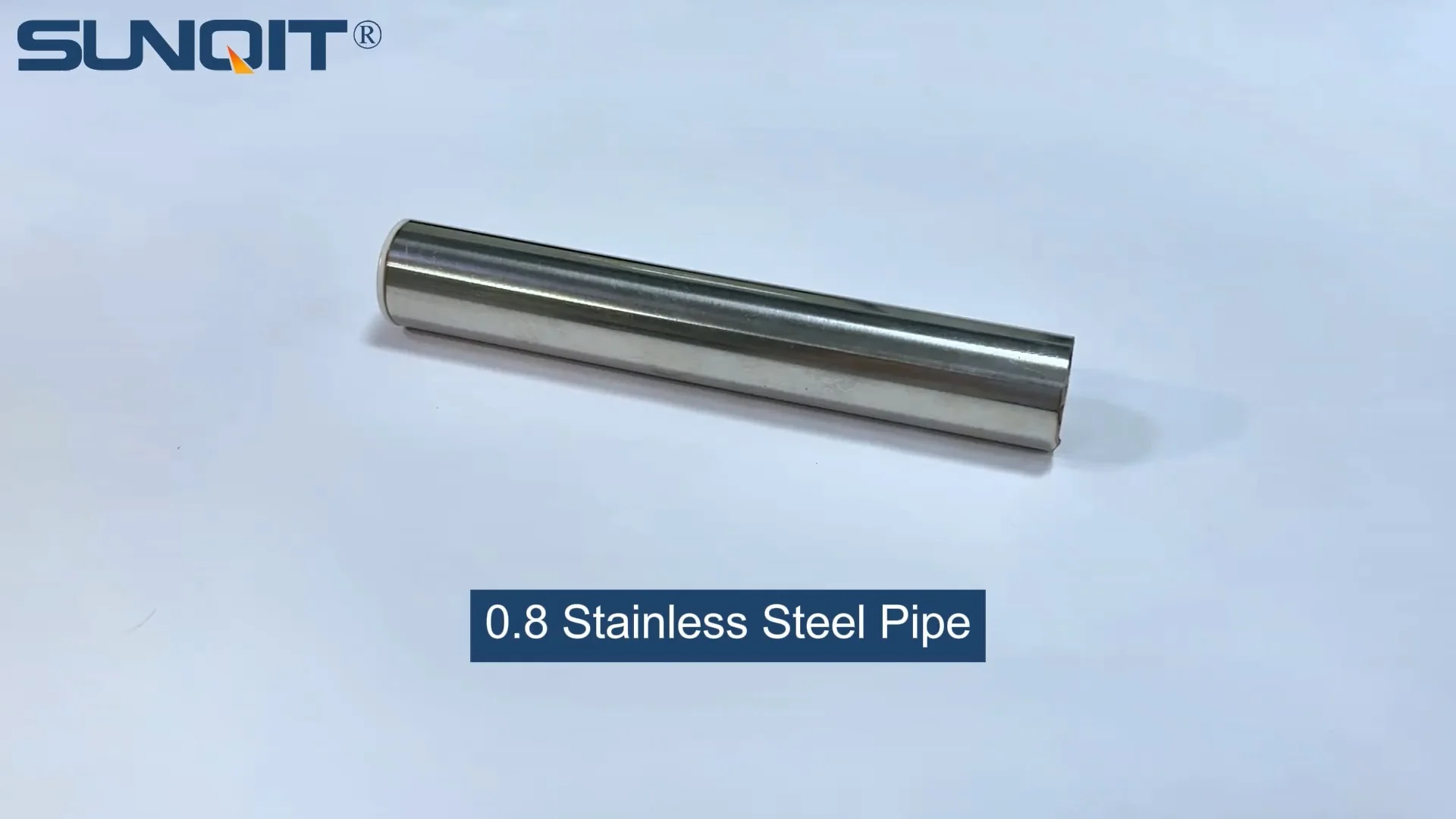
Walk into any modern factory, warehouse, or even a high-tech lab, and you'll likely spot them: sleek, durable tubes that form the backbone of workbenches, conveyor systems, and material racks. Among these, the 2.0mm stainless steel pipe stands out—a workhorse that balances strength, flexibility, and corrosion resistance. But have you ever wondered how this unassuming component goes from raw ore to a critical part of industrial setups? Let's pull back the curtain on its manufacturing journey, a blend of art, science, and relentless precision that turns molten metal into a product trusted by industries worldwide.
1. The Foundation: Raw Materials with Purpose
Every great product starts with great ingredients, and 2.0mm stainless steel pipe is no exception. The process begins with selecting the right stainless steel alloy—typically 304 or 316, chosen for their resistance to rust and ability to withstand heavy use. These alloys are more than just "steel"; they're carefully balanced mixtures of iron, chromium (at least 10.5%), nickel, and small amounts of carbon and manganese. Why chromium? It's the secret behind stainless steel's "stainless" reputation: when exposed to oxygen, it forms a thin, invisible layer of chromium oxide that acts as a shield against corrosion.
But where do these materials come from? Most often, manufacturers use a mix of virgin raw materials and recycled stainless steel scrap. Recycled scrap isn't a compromise—it's a sustainability win, reducing energy use by up to 75% compared to using all-virgin materials. Picture a pile of old stainless steel components—maybe a retired food processing tank or a worn-out medical instrument—being shredded, sorted, and sent to the furnace. This scrap, combined with fresh alloys, ensures the final pipe has the exact chemical composition needed for strength and durability.
2. Melting: Turning Chaos into Order
Next stop: the melting shop, where the magic of transformation begins. Here, the selected materials are loaded into a massive electric arc furnace (EAF), a towering structure that uses electricity to generate temperatures upwards of 1,600°C—hot enough to melt steel in a matter of hours. The furnace's electrodes plunge into the mix, creating arcs of electricity that tear through the metal, turning solid chunks into a bubbling, golden molten pool.
But melting isn't just about heat; it's about precision. Throughout the process, metallurgists monitor the molten steel's composition using spectrometers, tiny devices that analyze the light emitted by the liquid metal to check for impurities. Too much carbon? Add a dash of silicon to bind it. Not enough chromium? Toss in a chromium-rich alloy. This (fine-tuning) ensures the steel meets the strict standards of the stainless steel pipe series —because a pipe that's too brittle or prone to rust is useless in real-world applications.
Once the composition is perfect, the molten steel is poured into a ladle furnace, where it's further refined and homogenized. Think of this as stirring a giant pot of soup to make sure every spoonful tastes the same. From there, it's time to shape the metal into a form that's easier to work with: billets. These are long, cylindrical or rectangular blocks—roughly the size of a baseball bat—that will eventually be rolled into pipes.

3. Forming the Pipe: Rolling Toward Perfection
Now comes the step that gives the pipe its shape: rolling. For 2.0mm stainless steel pipe, manufacturers typically use a combination of hot rolling and cold rolling, each serving a unique purpose. Let's start with hot rolling. The billets are heated again—this time to around 1,200°C—until they're red-hot and malleable. Then, they're fed through a series of rolling mills: massive machines with rotating rollers that squeeze the billet, gradually reducing its diameter and increasing its length. Imagine rolling out dough with a rolling pin, but on an industrial scale, with each pass through the rollers inching the metal closer to its final form.
Hot rolling is fast and efficient, but it leaves the pipe with a rough surface and inconsistent thickness. That's where cold rolling comes in. After hot rolling, the pipe (now called a "hollow") is cooled and then passed through cold rolling mills. These mills use room-temperature rollers to compress the metal further, smoothing the surface and tightening the tolerances. For a 2.0mm pipe, this step is critical: even a 0.1mm deviation in thickness can affect how well it fits with lean pipe joint or supports heavy loads. Cold rolling also work-hardens the steel, making it stronger—perfect for pipes that need to withstand the rigors of daily use.
But how do they ensure the pipe is exactly 2.0mm thick? Modern mills use laser gauges that measure the pipe's thickness in real time, adjusting the rollers automatically if there's a (deviation). It's a dance of machines and sensors, working in harmony to hit that precise target. After cold rolling, the pipe is cut to rough lengths, ready for the next stage of refinement.

4. Annealing: Relieving Stress, Building Toughness
If you've ever bent a paperclip back and forth until it snaps, you know about work hardening—the metal gets brittle from stress. Cold rolling does the same to stainless steel pipe, leaving it strong but prone to cracking under pressure. That's why annealing is a non-negotiable step. Annealing is like a spa day for the pipe: it's heated to a specific temperature (around 1,050°C for 304 stainless steel), held there for a set time, and then slowly cooled. This process relaxes the metal's internal structure, relieving stress and restoring ductility—so the pipe can bend without breaking and withstand impacts without shattering.
The annealing furnace is a long, tunnel-like structure where pipes are fed through on conveyor belts. Inside, the atmosphere is carefully controlled—often with nitrogen or argon—to prevent oxidation. Oxidation would leave scale (a rough, flaky layer) on the pipe, which is why precision here matters. After annealing, the pipe is softer, more pliable, and ready for the next step: cleaning.
5. Pickling and Passivation: A Spotless Finish
Ever noticed how stainless steel looks dull and discolored after welding or heating? That's oxide scale, and it's more than just unsightly—it can compromise the pipe's corrosion resistance. Enter pickling and passivation, two steps that give the 2.0mm stainless steel pipe its signature shine and protective layer.
Pickling is the deep clean. The pipes are submerged in a bath of nitric acid (sometimes mixed with hydrofluoric acid) that dissolves scale, rust, and any remaining impurities. It's a chemical exfoliation, stripping away the "bad" layers to reveal the pure stainless steel underneath. But pickling is a balancing act: leave the pipe in too long, and the acid will eat away at the metal; too short, and scale remains. Operators monitor the bath's concentration and temperature closely, ensuring each pipe gets just the right treatment.
After pickling, the pipes are rinsed thoroughly to remove acid residue, then moved to passivation. This step enhances the chromium oxide layer we mentioned earlier. By immersing the pipe in a nitric acid solution (or sometimes citric acid for eco-friendly processes), the surface chromium reacts with oxygen to form a thicker, more durable protective film. The result? A pipe that can stand up to moisture, chemicals, and even saltwater—making it ideal for use in food processing, marine environments, or cleanrooms.
6. Cutting, Sizing, and the Final Touches
Now that the pipe is clean, strong, and corrosion-resistant, it's time to give it its final dimensions. Using precision cutting tools—like circular saws, laser cutters, or even plasma torches—the pipes are sliced into standard lengths (often 3 or 6 meters, though custom lengths are available). Laser cutting is particularly popular here for its accuracy: it can cut a 2.0mm pipe with a tolerance of ±0.1mm, ensuring every piece is identical.
But cutting leaves sharp edges, which can be dangerous and make it hard to connect pipes with lean pipe joint . That's why deburring is next. Deburring machines use rotating brushes or abrasive tools to smooth the cut ends, rounding off sharp edges and removing any metal burrs. It's a small step, but it makes a big difference in usability—imagine assembling a rack with sharp pipes versus smooth, safe ones.
Finally, the pipes undergo a final inspection. Each one is checked for straightness (using rolling tables to spot bends), surface defects (like pits or scratches), and dimensional accuracy (thickness, diameter, length). Pipes that pass are then packaged—often in bundles wrapped with protective plastic—to prevent scratching during shipping. Those that don't? They're recycled back into the process, ensuring nothing goes to waste.
7. Beyond the Pipe: Fitting into the Bigger Picture
A 2.0mm stainless steel pipe rarely works alone. In most industrial setups, it's part of a system—connected to other pipes, workbenches, or roller track via lean pipe joint . These joints, often made of zinc-plated steel or aluminum, are designed to fit snugly over the pipe's end, allowing for quick assembly without welding. Think of them as the "Lego blocks" of industrial infrastructure: twist, lock, and you've got a custom workbench or a conveyor system in minutes.
Take roller tracks, for example. These systems use 2.0mm stainless steel pipes as supports, with rollers mounted along their length to move materials smoothly. The pipe's strength ensures it can handle the weight of boxes or components, while its corrosion resistance keeps it looking new even in dusty or humid warehouses. Without the precision of the pipe's manufacturing process—those tight tolerances, that smooth surface—the rollers might jam, or the track might sag under load. It's a reminder that even the smallest component plays a role in keeping industries running.
8. The Stainless Steel Pipe Series: More Than Just 2.0mm
The 2.0mm pipe is just one star in the stainless steel pipe series , which includes thicknesses like 0.8mm, 1.0mm, 1.2mm, and 1.5mm. Each thickness has its niche: 0.8mm pipes are lightweight and ideal for temporary structures, while 1.5mm pipes strike a balance between weight and strength for mid-load applications. But 2.0mm? It's the sweet spot for heavy-duty use—strong enough to support workbenches loaded with tools, yet not so thick that it's hard to cut or assemble.
| Thickness | Common Alloys | Typical Applications | Key Advantage |
|---|---|---|---|
| 0.8mm | 304 | Light-duty racks, temporary partitions | Lightweight, easy to maneuver |
| 1.2mm | 304, 316 | Assembly line workbenches, small material trolleys | Balances weight and basic strength |
| 1.5mm | 304, 316 | Medium-load conveyor systems, storage racks | Durable for daily use, corrosion-resistant |
| 2.0mm | 304, 316 | Heavy-duty workbenches, roller tracks, industrial shelving | Maximum strength without excess weight |
9. Why It Matters: The Impact of Quality Pipes
At first glance, a 2.0mm stainless steel pipe might seem like a simple product. But its manufacturing process is a testament to the value of precision. A pipe with inconsistent thickness could bend under load; one with poor passivation might rust in a damp warehouse; a rough surface could wear out lean pipe joint prematurely. By investing in quality manufacturing—from raw material selection to final inspection—producers ensure that these pipes don't just meet standards, they exceed them.
And the impact? It's felt in every industry that relies on efficiency and reliability. A pharmaceutical plant using 2.0mm stainless steel pipes in its roller track systems can trust that its delicate medical supplies won't be contaminated by rust. A car factory can count on its workbenches, built with these pipes, to withstand years of heavy tool use. Even a small workshop benefits from the pipe's durability, avoiding costly replacements down the line.
10. The Future: Innovation in Stainless Steel Pipe Manufacturing
Like all industries, stainless steel pipe manufacturing is evolving. Today, we're seeing trends toward greener processes—using more recycled materials, switching to acid-free passivation, and reducing energy use in furnaces. There's also a push for smarter manufacturing, with AI-powered sensors monitoring every step of the process to predict defects before they happen. Imagine a system that alerts operators if the rolling mill is about to produce a pipe with uneven thickness—saving time, materials, and money.
Another trend? Customization. As industries demand more specialized solutions, manufacturers are offering pipes with unique finishes (brushed, polished, or colored), custom lengths, and even pre-drilled holes for easier assembly. And with the rise of modular industrial setups, the 2.0mm stainless steel pipe is becoming even more versatile—paired with lean pipe joint and accessories to create everything from ergonomic workstations to automated conveyor systems.
Conclusion: From Molten Metal to Industrial Backbone
The next time you see a 2.0mm stainless steel pipe—whether it's holding up a workbench in a garage or moving products along a roller track in a factory—take a moment to appreciate its journey. It's a story of raw materials transformed by fire, shaped by precision, and refined by care. It's a story of craftsmen and engineers who understand that even the smallest component can make a big difference in how the world works.
In the end, the 2.0mm stainless steel pipe is more than just a tube. It's a symbol of industrial progress—a product that bridges the gap between nature's resources and human ingenuity. And as manufacturing techniques continue to advance, one thing is clear: this humble pipe will remain a cornerstone of industry, quietly supporting the innovations of tomorrow.