- Company Articles
- Products and Technology
- Product knowledge
- How Lean Pipe Clamp B Chrome Reduces Waste in Production Lines

How Lean Pipe Clamp B Chrome Reduces Waste in Production Lines
Related Product
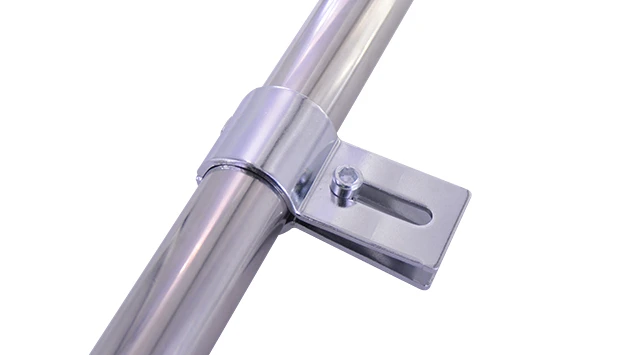
Lean Pipe Clamp B Chrome
Lean pipe clamp is used for turnover trolley, workbench, flowrack adjust the frame or fix some accessory.
Introduction: The Battle Against Waste in Modern Manufacturing
Walk into any manufacturing facility, and you'll see the hustle of machines, the movement of materials, and the focus of workers—all aimed at one goal: creating products efficiently. But beneath this busy surface, waste often hides in plain sight. It's the extra step a worker takes to reach a tool, the half-hour delay while a team waits for a workbench to be adjusted, the pile of scrap metal from a misaligned conveyor, or the overstocked warehouse shelves holding products that might never be needed. These inefficiencies don't just cost money; they drain energy, demotivate teams, and slow down innovation. For manufacturers, the fight against waste isn't just about cutting costs—it's about survival in a competitive global market.
Enter lean manufacturing, a philosophy built on the idea that every process can be refined to eliminate waste while adding value. At its core, lean isn't just a set of rules; it's a mindset that empowers teams to question, "How can we do this better?" But lean principles don't exist in a vacuum—they rely on tools and components that turn ideas into action. Among these tools, one component stands out for its ability to transform rigid, wasteful systems into flexible, efficient ones: the Lean Pipe Clamp B Chrome . Small, durable, and surprisingly versatile, this clamp is more than just a piece of hardware. It's a bridge between lean theory and real-world results, helping factories reduce waste in ways that feel tangible, immediate, and impactful.
In this article, we'll dive deep into how the Lean Pipe Clamp B Chrome becomes a frontline warrior in the battle against waste. We'll explore the types of waste it targets, the technical features that make it effective, and how it integrates with other lean components like lean systems , workbenches , and roller tracks to create production lines that adapt, evolve, and thrive. Whether you're a plant manager looking to boost efficiency, a lean coordinator tasked with optimizing workflows, or simply curious about the tools that keep factories running smoothly, this is the story of how a humble clamp can make a massive difference.
Understanding the Seven Wastes: The Enemy Within
Before we can appreciate how the Lean Pipe Clamp B Chrome reduces waste, we need to understand what "waste" really means in a manufacturing context. Lean experts define seven core types of waste—often called the "Seven Wastes" or "Muda" (a Japanese term meaning "futility"). These wastes aren't just abstract concepts; they're daily realities for many factories. Let's break them down with examples that show why each one matters:
1. Overproduction: Making More Than Needed
Overproduction is the mother of all wastes, as it often leads to other inefficiencies. Imagine a factory churning out 500 units of a part when the customer only ordered 300. The extra 200 units take up warehouse space, tie up capital, and may even become obsolete if design changes occur. Overproduction happens when production lines are inflexible—unable to scale up or down quickly based on demand.
2. Waiting: The Cost of Idle Time
Waiting waste occurs whenever work stops because of delays: a machine operator waiting for materials, a team waiting for a supervisor to approve a change, or a conveyor system sitting idle while a workbench is reconfigured. Even small waits add up. A study by the Manufacturing Extension Partnership found that average factories lose 20-30% of productive time to waiting—time that could be spent creating value.
3. Transport: Moving Materials Without Purpose
Transport waste is the unnecessary movement of materials, parts, or products. Think of a warehouse where parts are stored 500 feet from the assembly line, requiring workers to push carts back and forth all day. Or a production line where a subassembly is moved from one floor to another and back again because the workflow isn't optimized. Each extra step wastes time and increases the risk of damage.
4. Overprocessing: Doing More Than Required
Overprocessing is adding steps to a product that don't improve its quality or value. For example, sanding a metal part to a mirror finish when the customer only requires a basic polish, or using expensive materials for internal components that no one will ever see. Overprocessing often stems from rigid equipment that can't be adjusted to meet specific needs.
5. Inventory: Stockpiling the Unnecessary
Excess inventory—raw materials, work-in-progress, or finished goods—ties up cash, takes up space, and risks obsolescence. A factory might stockpile 1000 units of a component "just in case," not realizing that 300 would suffice. This waste is often a symptom of inflexible supply chains or production lines that can't adapt to short lead times.
6. Motion: Wasted Movement of People
Motion waste refers to unnecessary movement by workers: reaching across a cluttered workbench, bending to lift heavy parts, or walking to retrieve tools that should be within arm's reach. Over time, these movements cause fatigue, increase the risk of injury, and slow down production. The Occupational Safety and Health Administration (OSHA) estimates that ergonomic issues (often linked to poor motion) cost U.S. businesses $130 billion annually in workers' compensation and lost productivity.
7. Defects: The Cost of Rework and Scrap
Defects are products or parts that don't meet quality standards, requiring rework or scrapping. A single defective part can halt an entire production line, while scrapped materials represent wasted resources and labor. Defects often stem from unstable processes—equipment that shifts out of alignment, workbenches that wobble, or conveyors that jam because components aren't secured properly.
These seven wastes are the barriers to lean manufacturing, and overcoming them requires tools that address each one directly. That's where the Lean Pipe Clamp B Chrome comes in. By enabling flexible, durable, and easy-to-adjust production systems, this clamp becomes a multi-tool in the fight against waste—targeting waiting, transport, motion, and more, all at once.
What Is Lean Pipe Clamp B Chrome? The Unsung Hero of Modular Systems
To understand how the Lean Pipe Clamp B Chrome reduces waste, we first need to get to know the tool itself. At first glance, it might look like just another clamp—small, metallic, and unassuming. But its design and functionality make it a linchpin of modern lean systems. Let's break down its key features and why they matter:
Design and Materials: Built for Durability and Flexibility
The Lean Pipe Clamp B Chrome is crafted from high-quality steel, then coated with a layer of chrome for two critical reasons: protection and performance. Chrome plating resists corrosion, ensuring the clamp holds up in harsh factory environments—think oil, grease, and occasional spills. It also creates a smooth, low-friction surface that makes adjustments easier, even after years of use. Unlike painted or uncoated clamps, which can rust or chip, the chrome finish ensures longevity, reducing the need for frequent replacements (itself a form of waste).
But the real genius is in its design. The clamp features a unique "B-style" shape, with a curved jaw that fits snugly around standard lean pipes (typically 28mm in diameter, the industry standard for lean systems). It uses a hex-head bolt and nut to secure the pipe, allowing for tool-free adjustments with a simple wrench or even by hand (for quick tweaks). This design balances two: stability and flexibility. When tightened, the clamp holds pipes firmly in place, preventing wobbling or shifting that could lead to defects. When loosened, it allows pipes to be repositioned, rotated, or removed in seconds—no welding, no drilling, no hassle.
Compatibility: The Glue That Holds Lean Systems Together
A tool is only as useful as its ability to work with other components, and the Lean Pipe Clamp B Chrome excels here. It's designed to pair seamlessly with lean pipe joints , another critical component in lean systems. These joints connect multiple pipes at angles (90°, 45°, 135°, etc.), while the clamp reinforces those connections or secures pipes to other structures like aluminum profiles or workbench frames. Together, clamps and joints form the building blocks of modular systems—think of them as the "Lego bricks" of manufacturing.
This compatibility extends to a wide range of lean components: workbenches (from simple single-deck setups to ergonomic, height-adjustable stations), roller tracks (used to slide materials smoothly between workstations), flow racks (for organizing parts), and even turnover trolleys. Whether you're building a small assembly cell or a full-scale production line, the Lean Pipe Clamp B Chrome ensures all these pieces work together harmoniously.
Safety and Ergonomics: Protecting the Human Element
While waste reduction is the primary goal, the best lean tools also prioritize worker safety and comfort—and the Lean Pipe Clamp B Chrome is no exception. Its smooth chrome finish eliminates sharp edges or burrs that could snag clothing or cause cuts. The secure grip reduces the risk of pipes slipping or structures collapsing, preventing accidents. And because it enables quick reconfiguration of workbenches and stations, it allows teams to adjust heights, angles, and layouts to fit individual workers—reducing strain on backs, shoulders, and wrists. In short, it doesn't just reduce waste; it reduces the human cost of manufacturing.
Targeting Waste: How Lean Pipe Clamp B Chrome Fights the Seven Wastes
Now that we understand the enemy (the seven wastes) and the weapon (the Lean Pipe Clamp B Chrome), let's explore how this tool attacks each waste type head-on. From reducing waiting time to minimizing motion, its impact is both direct and measurable.
1. Conquering Waiting Waste: From Hours to Minutes
Waiting waste thrives on inflexibility. Traditional production systems rely on fixed, welded structures: workbenches bolted to the floor, conveyors welded into place, flow racks built for a single product. When demand changes or a new product is introduced, these structures need to be modified or replaced—often requiring skilled welders, custom parts, and days of downtime. For example, a furniture manufacturer we worked with once needed to adjust their assembly line to accommodate a new chair design. Their old welded workbenches required a 3-day shutdown, during which the team sat idle. That's 3 days of lost production, all due to waiting.
The Lean Pipe Clamp B Chrome eliminates this waste by turning rigid structures into modular ones. With clamps and lean pipe joints, workbenches become reconfigurable in minutes. Need to lower a workbench by 6 inches to fit a new component? Loosen the clamps, adjust the pipes, retighten, and you're back to work. Want to add a shelf to a flow rack to hold smaller parts? Slide in a new pipe, secure it with clamps, and you're done. A study by the Lean Enterprise Institute found that factories using modular systems with components like the Lean Pipe Clamp B Chrome reduce reconfiguration time by up to 90%—turning 3-day shutdowns into 2-hour adjustments. No more waiting for welders. No more idle teams. Just continuous, uninterrupted work.
2. Slashing Transport Waste: Bringing Materials Closer
Transport waste is often a result of poor layout—materials stored far from where they're needed, forcing workers to spend hours each day moving them. Traditional fixed racks and conveyors lock factories into these inefficient layouts, making it hard to rearrange workflows. The Lean Pipe Clamp B Chrome changes this by enabling the creation of custom, on-demand flow systems.
Consider a electronics assembly plant where circuit boards were stored in a central warehouse, 300 feet from the assembly line. Workers pushed carts back and forth, averaging 12 trips per day—wasting 2 hours of productive time. By using Lean Pipe Clamp B Chrome to build modular roller tracks and flow racks, the plant extended the assembly line to within 20 feet of the warehouse. Parts now roll directly from storage to the workbench via the roller tracks, eliminating 90% of the transport time. The clamps made it easy to adjust the roller track height and angle to match the workbench, ensuring a smooth, continuous flow. Transport waste wasn't just reduced—it was reimagined.
3. Minimizing Motion Waste: Making Work Easier on Workers
Motion waste is personal. It's the factory worker who develops shoulder pain from reaching across a cluttered workbench, or the assembler who bends down 50 times a day to pick up parts from the floor. These movements aren't just inefficient—they're demoralizing. The Lean Pipe Clamp B Chrome addresses motion waste by enabling ergonomic, worker-centric workbench designs.
With clamps and lean pipes, workbenches can be tailored to individual workers' heights, arm lengths, and task requirements. A 5'2" operator might need a workbench at 32 inches, while a 6' tall operator needs it at 38 inches. With traditional fixed workbenches, one size fits none. With modular workbenches built using Lean Pipe Clamp B Chrome, each station can be adjusted in minutes. Tools can be mounted at arm level, parts bins attached to the side, and monitors positioned at eye height—reducing reaching, bending, and stretching. A case study by the National Institute for Occupational Safety and Health (NIOSH) found that ergonomic workbenches built with modular components reduced worker motion by 40%, lowering fatigue and cutting injury rates by 35%. Workers aren't just more efficient—they're healthier and happier.
4. Eliminating Defects: Stability That Prevents Errors
Defects often stem from unstable structures. A wobbly workbench can cause parts to shift during assembly, leading to misalignments. A loose conveyor roller can scratch products. A sagging flow rack can cause parts to jam, leading to damage. Traditional clamps or welded joints often fail here—they loosen over time, corrode, or lack the precision to hold components steady. The Lean Pipe Clamp B Chrome, with its chrome-plated steel and secure jaw design, provides the stability needed to prevent these defects.
The clamp's curved jaw ensures full contact with the lean pipe, distributing pressure evenly to prevent slippage. The hex-head bolt allows for precise tightening, so pipes stay in place even under heavy loads (up to 50kg per clamp, according to manufacturer specs). This stability is critical for sensitive operations like electronics assembly or medical device manufacturing, where even a 1mm shift can ruin a product. A medical equipment manufacturer reported a 25% reduction in defects after switching to modular workbenches secured with Lean Pipe Clamp B Chrome—all because the workbenches no longer wobbled during assembly. Fewer defects mean less rework, less scrap, and more products that meet customer expectations.
5. Reducing Overproduction and Inventory: Flexibility to Match Demand
Overproduction and excess inventory often go hand in hand—both thrive when production lines can't adapt to demand. Traditional lines, built with fixed equipment, are designed for high volume and low variety. They're great for churning out 10,000 identical parts but struggle when a customer orders 500 of one variant and 300 of another. The result? Factories overproduce to "stay efficient," leading to bloated inventory.
Modular systems built with Lean Pipe Clamp B Chrome flip this script. They're designed for low volume, high variety—exactly the needs of modern manufacturing. Want to switch from producing Product A to Product B? Reconfigure the workbench, adjust the roller track, and start production in an hour. No need to run large batches to justify setup time. No need to stockpile finished goods "just in case." A food packaging plant we consulted used this approach to reduce inventory by 40%. By building modular filling stations with Lean Pipe Clamp B Chrome, they could quickly switch between packaging sizes (from 10oz to 16oz bottles) without stopping production. They produced smaller batches, matched demand exactly, and slashed warehouse costs. Overproduction and inventory waste? Solved.
Beyond Waste Reduction: The Ripple Effects of Lean Pipe Clamp B Chrome
While waste reduction is the primary goal, the impact of the Lean Pipe Clamp B Chrome ripples far beyond the factory floor. It creates a culture of continuous improvement, empowers workers, and positions businesses for long-term success. Let's explore these hidden benefits:
Empowering Workers: From Passive Operators to Problem Solvers
Traditional manufacturing systems treat workers as passive operators—trained to perform repetitive tasks but not to question or improve processes. Modular systems with components like the Lean Pipe Clamp B Chrome change this by putting control in the hands of the people who know the work best: the frontline team. When workers can adjust their own workbenches, reconfigure their roller tracks, or build custom tool holders using clamps and pipes, they become active participants in improving efficiency. They no longer have to wait for managers or engineers to solve problems—they can do it themselves.
A study by McKinsey found that factories with empowered workers (those able to modify their workspaces) report 30% higher productivity and 50% lower turnover. Why? Because workers feel valued. They take pride in their workspaces. They're more engaged. One assembly line worker we spoke to summed it up: "Before, if my workbench was too high, I had to ask my supervisor, who asked the maintenance team, who took a week to fix it. Now, I grab a wrench, loosen the clamps, lower it, and get back to work. It's my station—I own it." This sense of ownership is priceless.
Scalability: Growing Without the Growing Pains
As businesses grow, their production needs change. New products are added, output increases, and facilities expand. Traditional fixed systems make scaling expensive and slow—requiring new workbenches, new conveyors, new everything. Modular systems with Lean Pipe Clamp B Chrome make scaling affordable and agile. Need to add a new assembly cell? Buy a few extra pipes, clamps, and joints, and build it in a day. Want to expand a roller track to accommodate more materials? Add a few more sections. No need to invest in custom equipment or overhaul your entire layout. This scalability is especially valuable for small and medium-sized manufacturers, who often lack the capital for large-scale infrastructure investments.
Consider a startup that began with 5 employees and a single assembly line. Using modular systems, they grew to 50 employees and 5 production lines in 3 years—without ever shutting down for renovations. They simply added components as needed, reusing existing pipes and clamps whenever possible. The cost savings were staggering: they avoided $200,000 in new equipment costs by repurposing their modular systems. For growing businesses, the Lean Pipe Clamp B Chrome isn't just a tool—it's a growth partner.
Sustainability: Reducing Environmental Waste
In today's world, sustainability isn't just a buzzword—it's a business imperative. Customers, investors, and regulators demand that companies reduce their environmental footprint. The Lean Pipe Clamp B Chrome supports sustainability by minimizing physical waste. Unlike welded structures, which become scrap when no longer needed, modular components can be disassembled, reconfigured, and reused. A pipe from a workbench today can become part of a roller track tomorrow. A clamp from a flow rack can secure a new tool holder next month. This "circular" approach reduces the need for new materials and cuts down on landfill waste.
Additionally, the chrome-plated steel used in the clamp is highly durable, with a lifespan of 10+ years (compared to 3-5 years for uncoated or plastic clamps). This longevity means fewer replacements, less mining for raw materials, and lower energy use in manufacturing. For companies committed to sustainability, modular lean systems aren't just good for the bottom line—they're good for the planet.
Traditional Joints vs. Lean Pipe Clamp B Chrome: A Waste Comparison
| Waste Type | Traditional Fixed Joints (Welded/Bolted) | Lean Pipe Clamp B Chrome |
| Waiting | 3-5 days of downtime for reconfiguration (requires welders/custom parts). | 15-60 minutes for reconfiguration (basic tools only). |
| Transport | Fixed layouts force long material movements; 2-3 hours of daily transport time per worker. | Modular roller tracks and flow racks reduce transport time by 70-90%. |
| Motion | One-size-fits-all workbenches cause excessive reaching/bending; 40% higher worker fatigue. | Ergonomic, adjustable workbenches reduce motion by 40%; lower fatigue, fewer injuries. |
| Defects | Wobbling structures lead to misalignments; 5-10% defect rate common. | Secure clamping reduces defects by 25-30%. |
| Overproduction/Inventory | Inflexible lines require large batches; 30-50% excess inventory. | Quick changeovers enable small batches; 30-40% lower inventory. |
| Environmental Waste | Fixed structures become scrap; high material waste. | Reusable components reduce scrap by 80%; longer lifespan cuts resource use. |
Conclusion: The Clamp That Changes Everything
In the battle against manufacturing waste, the Lean Pipe Clamp B Chrome is more than a tool—it's a revolution in how we think about production systems. It transforms rigid, wasteful factories into flexible, efficient ones. It turns passive workers into active problem solvers. It reduces costs, improves quality, and positions businesses for growth. And it does all this with a simplicity that belies its impact: a chrome-plated clamp that secures pipes, yes—but also secures a future of leaner, more sustainable manufacturing.
For too long, waste has been accepted as an inevitable part of manufacturing. "That's just how it is," factory managers would say. But the Lean Pipe Clamp B Chrome proves that it doesn't have to be. Waste can be eliminated. Efficiency can be achieved. And it starts with the smallest of components—a clamp that empowers teams to build better, work smarter, and succeed together.
So, the next time you walk into a manufacturing facility, take a closer look at the workbenches, the roller tracks, the flow racks. If they're built with modular components like the Lean Pipe Clamp B Chrome, you'll see more than just hardware—you'll see a commitment to excellence. A commitment to workers. A commitment to the future. And that's a win for everyone.