- Company Articles
- Products and Technology
- Technology Sharing
- How Lean Pipe Clamp Chrome Reduces Assembly Line Downtime

How Lean Pipe Clamp Chrome Reduces Assembly Line Downtime
Related Product
Lean Pipe Clamp Chrome
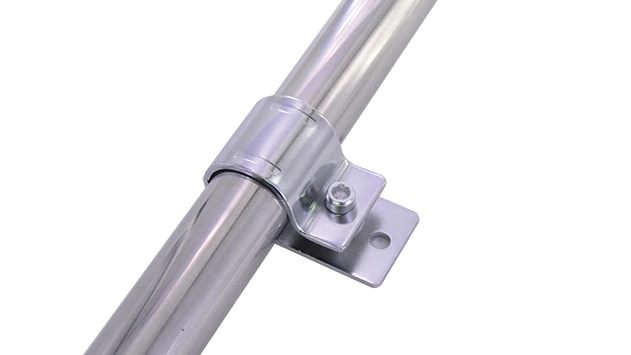
Lean pipe clamp is used for rack system hang monitor or other panel for workbenck, flowrack in production daily use.
Imagine standing on the floor of a busy manufacturing plant at 9 a.m. The air hums with the rhythm of machines, workers move with purpose, and products glide along conveyors toward completion. Then—suddenly—a clatter. A workbench wobbles, a flow rack jams, or a conveyor grinds to a halt. Within minutes, the line stalls. Workers gather, tools in hand, while managers check watches and sigh. This isn't just a momentary pause; it's downtime—and in manufacturing, downtime is money slipping through your fingers. But what if there was a small, unassuming component that could slash those frustrating delays? Enter the lean pipe clamp chrome —a quiet hero in the world of lean manufacturing that's changing how assembly lines stay efficient.
The Hidden Cost of Downtime: Why Every Minute Matters
Before diving into how lean pipe clamp chrome solves downtime, let's talk about why downtime hurts so much. For most manufacturers, even a single hour of halted production can cost thousands of dollars in lost output, overtime pay, and missed deadlines. Over a month, those hours add up to lost revenue, strained client relationships, and demoralized teams. The root causes? Often, it's the little things: loose connections that cause structures to fail, corroded parts that break unexpectedly, or rigid setups that can't adapt when production needs change. Traditional pipe clamps, for example—made of uncoated steel or flimsy plastic—rust, slip, or crack under pressure. Tightening them takes tools and time, and reconfiguring a workbench or flow rack? That might as well be a full-day project. But lean pipe clamp chrome is designed to tackle these issues head-on, turning "why is this breaking again?" into "we haven't had a problem in weeks."
What Is Lean Pipe Clamp Chrome, Anyway?
If you're new to lean manufacturing, you might be wondering: What makes this clamp different? At its core, a lean pipe clamp chrome is a connecting component used to build modular structures like workbenches, flow racks, conveyors, and material trolleys. It's part of the broader family of lean pipe and accessories , designed to work seamlessly with lean pipe joint and other modular parts. What sets it apart is its chrome-plated finish and smart design. Unlike rough, uncoated steel clamps that corrode in humid factories or plastic clamps that snap under weight, chrome-plated clamps are smooth, durable, and built to last. They're also surprisingly simple: no welding, no complicated tools, just a intuitive twist or clamp mechanism that lets workers assemble, adjust, and disassemble structures in minutes.
Think of it as the "Swiss Army knife" of assembly line components. Need to build a workbench for small-parts assembly? Use lean pipe clamp chrome to connect aluminum profiles and a wooden top. Want a flow rack for moving boxes? Pair it with roller tracks and lean pipe joints to create a sturdy, gravity-fed system. And when production needs shift—say, you need to widen that workbench or add a shelf to the flow rack? Just loosen the clamp, adjust, and retighten. No calls to maintenance, no waiting for a custom part, no downtime.

5 Key Features of Lean Pipe Clamp Chrome That Slash Downtime
To understand why lean pipe clamp chrome is a game-changer, let's break down its most impactful features. Each one addresses a common cause of downtime, turning inefficiencies into opportunities for smooth, uninterrupted production.
1. Chrome Plating: Durability That Stands Up to the Factory Floor
Factories are tough environments. There's moisture from cleaning, oil from machines, and constant wear from daily use. Traditional steel clamps rust quickly under these conditions; within months, they're pitted, sticky, and prone to slipping. Every time a rusted clamp loosens, a workbench or flow rack becomes unstable, and suddenly you're stopping production to fix it. Lean pipe clamp chrome solves this with its protective chrome layer. Chrome resists corrosion and wear, so even after years of exposure to humidity and oil, the clamp stays smooth and tight. One automotive parts manufacturer in Michigan reported that after switching to chrome-plated clamps, they replaced 90% fewer clamps annually—meaning fewer unexpected breakdowns and less time spent on repairs.
2. Tool-Free Adjustments: Reconfigure in Minutes, Not Hours
Here's a scenario we've all seen: A production supervisor walks over and says, "We need to retool Line 3 for the new product by noon." The old setup uses welded steel frames or clamps that require wrenches, screwdrivers, and a team of two. By the time they're done, it's 2 p.m., and two hours of production are lost. Lean pipe clamp chrome changes this. Most models feature a hand-tightenable design—just twist a knob or flip a lever to loosen, adjust, and retighten. No tools, no hassle, no waiting. A electronics plant in California recently shared that reconfiguring a workbench for smartphone assembly used to take 2 hours with traditional clamps. With lean pipe clamp chrome? Their team does it in 15 minutes. That's 1 hour and 45 minutes of saved production time per reconfiguration .
3. Secure Grip: No More "Mystery Loosening"
There's nothing more frustrating than tightening a clamp in the morning, only to find it loose by afternoon. Traditional clamps often slip because their grip is uneven or their materials wear down, leading to wobbly workbenches or misaligned roller tracks. A wobbly workbench might not seem critical—until a worker spills parts, or a machine vibrates itself off balance. Lean pipe clamp chrome, however, is engineered for a snug, consistent hold. Many models use a serrated inner surface that bites into the lean pipe, creating friction that resists slipping even under vibration. A food packaging plant in Texas reported that after switching to these clamps, incidents of "mystery loosening" on their flow racks dropped by 85%. No more sudden jams, no more mid-shift adjustments—just steady, reliable performance.
4. Compatibility: Works Seamlessly with Your Existing Lean System
Downtime doesn't just happen when parts break—it also happens when new components don't play well with old ones. If you've ever tried to attach a new clamp to a legacy lean pipe joint or aluminum profile, you know the struggle: mismatched sizes, awkward angles, or parts that just won't connect. Lean pipe clamp chrome is designed to be a team player. It works with standard lean pipes (both steel and aluminum), aluminum profiles, and most lean pipe joints on the market. This means you don't have to replace your entire setup to upgrade—just swap out the clamps and keep rolling. A medical device manufacturer in Minnesota, for example, kept their existing aluminum profiles but replaced old plastic clamps with lean pipe clamp chrome. The result? Their flow racks and conveyors now integrate perfectly, with no more "Frankensteined" connections that jam or break.
5. Low Maintenance: "Set It and Forget It" Peace of Mind
Maintenance is a necessary evil in manufacturing, but that doesn't mean it has to be a time-suck. Traditional clamps demand constant attention: lubricating rusted parts, tightening loose screws, or replacing cracked plastic. Each of these tasks takes workers away from production and risks unplanned downtime. Lean pipe clamp chrome, with its chrome plating and durable design, is practically maintenance-free. Wipe it down occasionally to remove dust, and that's it. No lubrication, no regular tightening, no replacement parts needed for years. A furniture manufacturer in North Carolina calculated that switching to these clamps reduced their maintenance hours by 60%—time that's now spent building chairs instead of fixing clamps.
The Proof in the Numbers: Traditional Clamps vs. Lean Pipe Clamp Chrome
Still skeptical? Let's put it all together with hard data. Below is a comparison of traditional clamps (uncoated steel or plastic) and lean pipe clamp chrome, based on real-world feedback from manufacturers who've made the switch.
| Feature | Traditional Clamps | Lean Pipe Clamp Chrome |
|---|---|---|
| Time to Reconfigure a Workbench | 2–3 hours (requires tools and 2 workers) | 15–20 minutes (1 worker, no tools) |
| Annual Replacement Rate | 30–50% (rust, cracks, or slipping) | Less than 5% (chrome resists wear and corrosion) |
| Downtime Caused by Loose/Broken Clamps | 10–15 hours/month | 1–2 hours/month |
| Compatibility with Lean Systems | Limited (often fits only one pipe/joint type) | High (works with lean pipes, aluminum profiles, and most lean pipe joints) |
| Total Cost Over 3 Years (Including Replacement and Downtime) | $12,000–$15,000 (for a mid-sized line) | $4,000–$6,000 (same line) |
Real-World Success: How Manufacturers Cut Downtime with Lean Pipe Clamp Chrome
Numbers tell a story, but real-life examples make it tangible. Let's look at two manufacturers who turned to lean pipe clamp chrome and saw dramatic results.
Case Study 1: Electronics Plant Cuts Downtime by 40% with Flow Rack Upgrades
A mid-sized electronics manufacturer in Oregon produces circuit boards for smartphones. Their assembly line relied on a series of flow racks to move components from station to station. The problem? The flow racks used plastic clamps that frequently cracked under the weight of component bins. Every time a clamp broke, the roller track misaligned, jamming the flow of parts. Workers had to stop, remove the broken clamp, and replace it—taking 30–45 minutes per incident. On bad days, this happened 3–4 times, eating up 2+ hours of production.
In 2023, they switched to lean pipe clamp chrome. The results were immediate: The chrome-plated clamps held the roller tracks firmly in place, even with heavy bins. Over six months, they reported zero clamp breakages and only two minor adjustments (each taking 5 minutes). Total downtime from flow rack issues dropped from 8 hours/month to 3 hours/month—a 40% reduction. "It's like night and day," said the plant manager. "Our workers used to dread flow rack duty; now they barely think about it."
Case Study 2: Automotive Supplier Slashes Workbench Reconfiguration Time by 85%
A tier-1 automotive supplier in Ohio builds brake assemblies. Their production needs change weekly, as different car models require different parts and tools. To keep up, they needed workbenches that could be quickly adjusted for height, width, and shelf placement. The problem? Their old steel clamps required wrenches and two workers to loosen/tighten. Reconfiguring a single workbench took 2 hours, and with 10 workbenches on the line, this often meant an entire day of downtime when switching production runs.
After switching to lean pipe clamp chrome, reconfiguration became a one-person job. Workers simply twist the clamp knobs by hand, adjust the pipes, and retighten—no tools, no help needed. A single workbench now takes 15 minutes to reconfigure, and 10 workbenches take just 2.5 hours instead of 8. Over a year, this saved them 280 hours of downtime—time that translated to 1,400 more brake assemblies produced and $140,000 in additional revenue.
Beyond Clamps: Building a Fully Lean System
While lean pipe clamp chrome is a star player, it's even more powerful when paired with other lean components. For example, combining it with lean pipe joint creates rock-solid connections that handle heavy loads without slipping. Add aluminum profiles, and you get lightweight yet sturdy structures that are easy to move. Integrate roller tracks (with, yes, more lean pipe clamp chrome) and you've got a flow system that keeps materials moving smoothly. It's not just about one part—it's about building a system where every component works in harmony to minimize downtime.
Take workbenches, for instance. A well-built lean workbench uses chrome clamps to attach aluminum pipes to a sturdy top, with adjustable shelves and tool holders. When a worker needs a taller shelf or a wider surface, they adjust the clamps in minutes. No waiting for a custom workbench, no production delays. It's flexibility built into the system, and it's why lean manufacturing has become the gold standard for efficiency.
Is Lean Pipe Clamp Chrome Right for Your Plant? 3 Signs It's Time to Upgrade
Wondering if it's worth investing in lean pipe clamp chrome? Ask yourself these questions:
- Do you spend more than 5 hours/month fixing loose or broken clamps? If yes, the time savings alone will pay for the upgrade.
- Does reconfiguring workbenches, flow racks, or conveyors take half a day or more? Lean pipe clamp chrome cuts that time to minutes.
- Are rusted or corroded clamps a common sight in your facility? Chrome plating eliminates this problem, extending the life of your structures.
If you answered "yes" to any of these, it's time to make the switch. The initial cost of lean pipe clamp chrome is higher than cheap plastic or uncoated steel clamps, but the long-term savings—from reduced downtime, lower maintenance, and fewer replacements—make it a no-brainer. As one manufacturer put it: "We spent $2,000 on new clamps and saved $20,000 in downtime in the first year. That's a 10x return—you can't beat that."
Final Thoughts: Small Clamps, Big Impact
In the world of manufacturing, it's easy to focus on the big stuff: faster machines, bigger factories, smarter robots. But sometimes, the smallest components make the biggest difference. Lean pipe clamp chrome might not have the flash of a new conveyor system or the power of a high-tech robot, but it solves a problem that plagues every assembly line: downtime. By resisting corrosion, enabling tool-free adjustments, and working seamlessly with other lean components, it turns frustrating delays into smooth, uninterrupted production.
So the next time your line stalls because of a loose clamp or a broken connection, ask yourself: What if we never had to deal with this again? With lean pipe clamp chrome, that "what if" becomes "what is." It's not just a clamp—it's a shortcut to efficiency, a shield against downtime, and a tool that lets your team do what they do best: build great products, faster than ever.