- Company Articles
- Products and Technology
- Technology Sharing
- How Lean Pipe Clamps Contribute to Lean Manufacturing Principles

How Lean Pipe Clamps Contribute to Lean Manufacturing Principles
Related Product
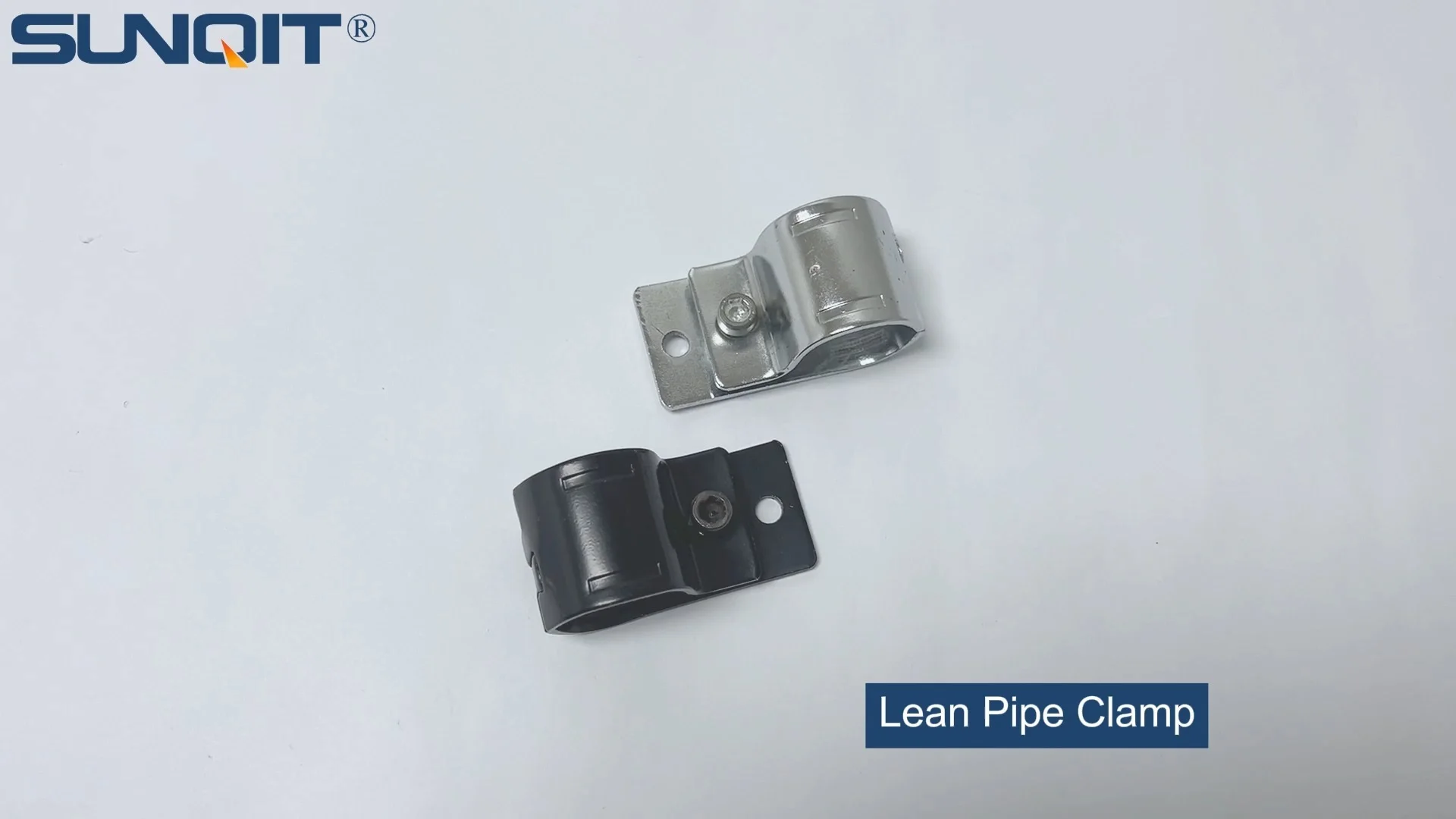
Lean Pipe Clamp
Lean pipe clamp is used for rack system hang monitor or other panel for workbenck, flowrack in production daily use.
In the fast-paced world of manufacturing, where efficiency and adaptability can make or break a business, lean manufacturing has emerged as more than just a buzzword—it's a philosophy that drives success. At its core, lean manufacturing is about eliminating waste, streamlining processes, and fostering continuous improvement. But here's the thing: you can't build a lean system on big, rigid machines alone. Sometimes, the smallest components play the biggest roles. Enter lean pipe clamps —unassuming yet powerful tools that act as the backbone of flexible, efficient, and waste-free production environments. In this article, we'll explore how these simple clamps embody lean principles, supporting everything from lean pipe workbenches to flow racks and beyond, and why they're indispensable for any manufacturer aiming to thrive in today's dynamic market.
Understanding Lean Manufacturing: The Basics
Before diving into the role of lean pipe clamps, let's ground ourselves in what lean manufacturing really means. Developed from the Toyota Production System, lean principles focus on five key areas: value (what the customer actually pays for), value stream (the steps to deliver that value), flow (ensuring continuous movement of products), pull (producing only what's needed), and perfection (striving for constant improvement). Waste—known as "muda" in Japanese—is the enemy here, and it comes in many forms: overproduction, waiting, unnecessary transportation, excess inventory, defects, unused talent, and overprocessing. The goal? Minimize these wastes to create a system that's not just efficient, but resilient.
Now, imagine trying to build such a system with fixed, one-size-fits-all equipment. A traditional workbench bolted to the floor, a conveyor belt that can't adjust its height, a storage rack that can't expand or shrink—these rigid setups are breeding grounds for waste. They lock you into outdated processes, make it hard to adapt to new products, and turn even small changes into time-consuming, costly projects. This is where lean pipe clamps step in: they're the "glue" that holds flexible, modular systems together, making it possible to design workspaces that evolve with your needs.
Eliminating Waste: How Lean Pipe Clamps Cut Through Muda
Waste reduction is the cornerstone of lean manufacturing, and lean pipe clamps excel at targeting some of the most stubborn types of waste. Let's break it down with real-world examples.
Waste of Waiting: From Downtime to Uptime
Picture this: A manufacturing line needs to switch from producing Product X to Product Y. Product Y is slightly taller, so the lean pipe workbench where assembly happens is now too low. In a traditional setup, you'd need a team of engineers, maybe even a welder, to modify the workbench—or worse, buy a new one. That could take days, during which the line sits idle (waste of waiting). But with lean pipe clamps, the solution is simple: loosen the clamps, adjust the height of the aluminum or steel pipes, retighten, and you're back to work in minutes. No downtime, no extra labor, no unnecessary costs. The clamps turn what was once a major disruption into a minor tweak.
Waste of Transportation: Streamlining Material Flow
Another common waste is unnecessary transportation—moving materials farther than needed, or handling them more times than required. Flow racks , which use gravity to move products from storage to the assembly line, are a classic lean solution to this. But flow racks are only effective if they're positioned correctly: at the right height, angle, and distance from the workers. Lean pipe clamps make it easy to adjust these racks on the fly. For example, if a worker at a downstream station is consistently reaching too far for parts, you can use clamps to reposition the flow rack's legs, bringing it inches closer. Suddenly, each pick takes 2 seconds less, adding up to hours of saved time over a shift. No need for heavy machinery or permanent modifications—just a few turns of a clamp, and the flow is smoother.
Waste of Inventory: Right-Sizing Storage with Clamps
Excess inventory is a silent killer of profitability, tying up cash and taking up valuable space. Lean systems aim to produce and store only what's needed, when it's needed. But how do you adjust storage capacity without rebuilding your warehouse? Lean pipe clamps make modular storage a reality. A basic rack built with lean pipes and clamps can be expanded by adding more pipe sections (secured with clamps) when demand spikes, or downsized by removing sections when inventory drops. Compare this to a traditional metal shelf: if you need more space, you have to buy a whole new unit, which sits idle during slow periods. With clamps, your storage grows and shrinks with your needs, eliminating the waste of excess space and unused equipment.

Flexibility: The Secret to Adapting in a Changing Market
In today's manufacturing landscape, change is constant. New product designs, shifting customer demands, shorter product lifecycles—your production system needs to keep up, or you'll get left behind. This is where the flexibility of lean pipe clamps truly shines. Unlike welded or bolted joints, clamps create connections that are strong but temporary, allowing you to reconfigure your workspace with minimal effort. Let's look at how this plays out in two key areas: lean pipe workbenches and material handling systems.
Lean Pipe Workbenches: Workspaces That Grow with Your Team
A workbench isn't just a table—it's a command center for your operators. The tools, parts, and equipment they need should be within arm's reach, and the layout should support the specific tasks at hand. But what if your team starts assembling a new product with different tools? Or if you cross-train workers and need the bench to accommodate multiple tasks? With a traditional workbench, you're stuck. With a lean pipe workbench built using clamps, you can add tool holders, adjust the height, or even reposition the entire bench by swapping out pipe sections. For example, if an operator needs a larger surface area for a bulky component, you can unclamp the side rails, add an extra aluminum profile, and reclamp—all in 15 minutes. No need for a custom-built bench; your existing setup adapts.
Flow Racks and Conveyors: Adapting to New Products
Flow racks and conveyors are critical for keeping materials moving through your facility, but their effectiveness depends on matching the size, weight, and shape of the products they handle. A flow rack designed for small electronic components won't work for larger, heavier parts—unless it's built with lean pipe clamps. By adjusting the spacing between the rollers (using clamps to secure new brackets), or changing the angle of the rack (by raising or lowering one end with clamp-adjustable legs), you can repurpose the same rack for different products. Similarly, a simple conveyor made with lean pipes and clamps can have its height or length modified to align with new assembly stations. This flexibility means you're not throwing away equipment every time your product line changes—you're reusing what you have, which is the epitome of lean thinking.

Fostering Continuous Improvement: Empowering Your Team with Clamps
Lean manufacturing isn't just about tools and equipment—it's about culture. The principle of "perfection" relies on empowering workers to identify problems and suggest improvements (a practice known as "kaizen"). But how can your team contribute to improvement if they can't make even small changes to their work environment? Lean pipe clamps lower the barrier to entry, turning every operator into a potential innovator.
Consider this scenario: Maria, an assembly line worker, notices that the parts bin on her lean pipe workbench is positioned too low, causing her to bend over repeatedly (a waste of motion). With traditional setups, she might have to fill out a request, wait for maintenance, and hope the change gets approved. With clamps, she can simply loosen the clamp holding the bin, raise it to a more comfortable height, and retighten—all on her own, in less than a minute. Not only does this eliminate her discomfort (reducing the risk of injury), but it also makes her feel valued: her input matters, and she has the power to improve her workspace. Multiply this across your team, and you've created a culture where continuous improvement isn't a top-down mandate, but a daily habit.
Clamps also make it easy to test new ideas without risking major investments. Suppose your team wants to try a new assembly sequence that requires the workbench to be rotated 90 degrees. With clamps, you can reposition the bench, run a trial shift, and if it doesn't work, move it back—no harm done. This "fail fast, learn fast" approach is key to kaizen, and it's only possible with flexible tools like lean pipe clamps.

Cost-Effectiveness: Getting More Value for Your Money
At this point, you might be thinking: "Flexibility and waste reduction sound great, but isn't all this modular equipment expensive?" The truth is, lean pipe clamps are surprisingly cost-effective, especially when compared to traditional fixed equipment. Let's break down the numbers:
- Lower upfront costs: A lean pipe workbench built with pipes, clamps, and aluminum profiles costs a fraction of a custom metal workbench. Traditional workbenches are often over-engineered for "worst-case" scenarios, while lean systems let you start small and add components as needed.
- Reduced replacement costs: Lean pipe clamps are durable, often made from steel or high-grade aluminum, so they last for years. And if a clamp does wear out, you can replace just that clamp—not the entire system. Compare this to a welded joint: if it breaks, you have to replace the whole pipe or workbench.
- Minimal labor costs for changes: As we've discussed, reconfiguring a lean system with clamps takes minutes, not days. You don't need specialized labor (like welders or electricians), so you save on maintenance and modification fees.
Over time, these savings add up. A study by the Lean Enterprise Institute found that manufacturers using modular lean systems report up to 30% lower equipment costs and 25% faster setup times compared to those using traditional fixed equipment. For small and medium-sized businesses, in particular, this affordability makes lean manufacturing accessible—you don't need a massive budget to start eliminating waste.
Traditional vs. Lean: A Comparison Table
| Aspect | Traditional Manufacturing Setup | Lean Pipe Clamp Setup | Key Benefit |
|---|---|---|---|
| Flexibility | Fixed; requires complete replacement for changes | Modular; reconfigurable in minutes with clamps | Adapts to new products and processes without downtime |
| Waste Reduction | Prone to overproduction, waiting, and excess inventory | Minimizes waste via adjustable storage, flow, and workspaces | Lower operational costs and higher efficiency |
| Worker Empowerment | Workers have little control over workspace design | Clamps enable workers to make quick, impactful changes | Fosters a culture of continuous improvement (kaizen) |
| Cost | High upfront and replacement costs | Lower initial investment and minimal ongoing costs | Better ROI over time |
Real-World Impact: A Hypothetical Case Study
Let's put this all together with a hypothetical example. Meet Acme Electronics, a small manufacturer of circuit boards. Acme was struggling with two major issues: long changeover times between product models (up to 4 hours) and high rates of defects due to awkward workbench layouts. Their traditional setup included fixed steel workbenches, welded storage racks, and a conveyor system that couldn't adjust its speed or height. Waste was everywhere: operators waited for changeovers, parts were transported across the factory floor unnecessarily, and defects piled up due to uncomfortable working positions.
Acme decided to invest in a lean system centered around lean pipe clamps, aluminum profiles, and modular components. They replaced their fixed workbenches with lean pipe workbenches, installed adjustable flow racks for parts storage, and added a flexible conveyor system built with lean pipes and clamps. The results were striking:
- Changeover time dropped from 4 hours to 45 minutes: By reconfiguring workbenches and flow racks with clamps instead of rebuilding them.
- Defect rates fell by 20%: Workers adjusted their workbench heights and tool positions using clamps, reducing errors caused by fatigue.
- Material transportation waste decreased by 25%: Flow racks were repositioned closer to assembly lines, cutting down on walking time.
- Worker satisfaction scores rose by 35%: Teams felt empowered to shape their workspaces, leading to higher engagement.
Acme's story isn't unique. Manufacturers of all sizes are discovering that lean pipe clamps aren't just a tool—they're a catalyst for transformation. By enabling flexibility, reducing waste, and empowering workers, these small components help build lean systems that are not just efficient, but human-centered.
Conclusion: Lean Pipe Clamps—Small Tools, Big Results
Lean manufacturing is about more than just cutting costs; it's about building a system that can thrive in an unpredictable world. And in that system, lean pipe clamps are the unsung heroes. They turn rigid workspaces into flexible ecosystems, transform wasteful processes into streamlined flows, and empower workers to drive continuous improvement. Whether you're building a lean pipe workbench , designing a flow rack , or overhauling your entire production line, clamps provide the adaptability you need to stay competitive.
So, if you're ready to embrace lean principles, start small. Invest in a set of lean pipe clamps, build a modular workbench, and see how quickly your team finds ways to improve it. You'll be amazed at how much waste you can eliminate, how much flexibility you can gain, and how much closer you'll be to building the perfect, ever-evolving system that lean manufacturing promises. After all, in the world of lean, the smallest changes often lead to the biggest results—and lean pipe clamps are proof of that.