- Company Articles
- Products and Technology
- Product knowledge
- How Lean Pipe Fixed Clamps Enhance Workplace Safety in Manufacturing

How Lean Pipe Fixed Clamps Enhance Workplace Safety in Manufacturing
Related Product
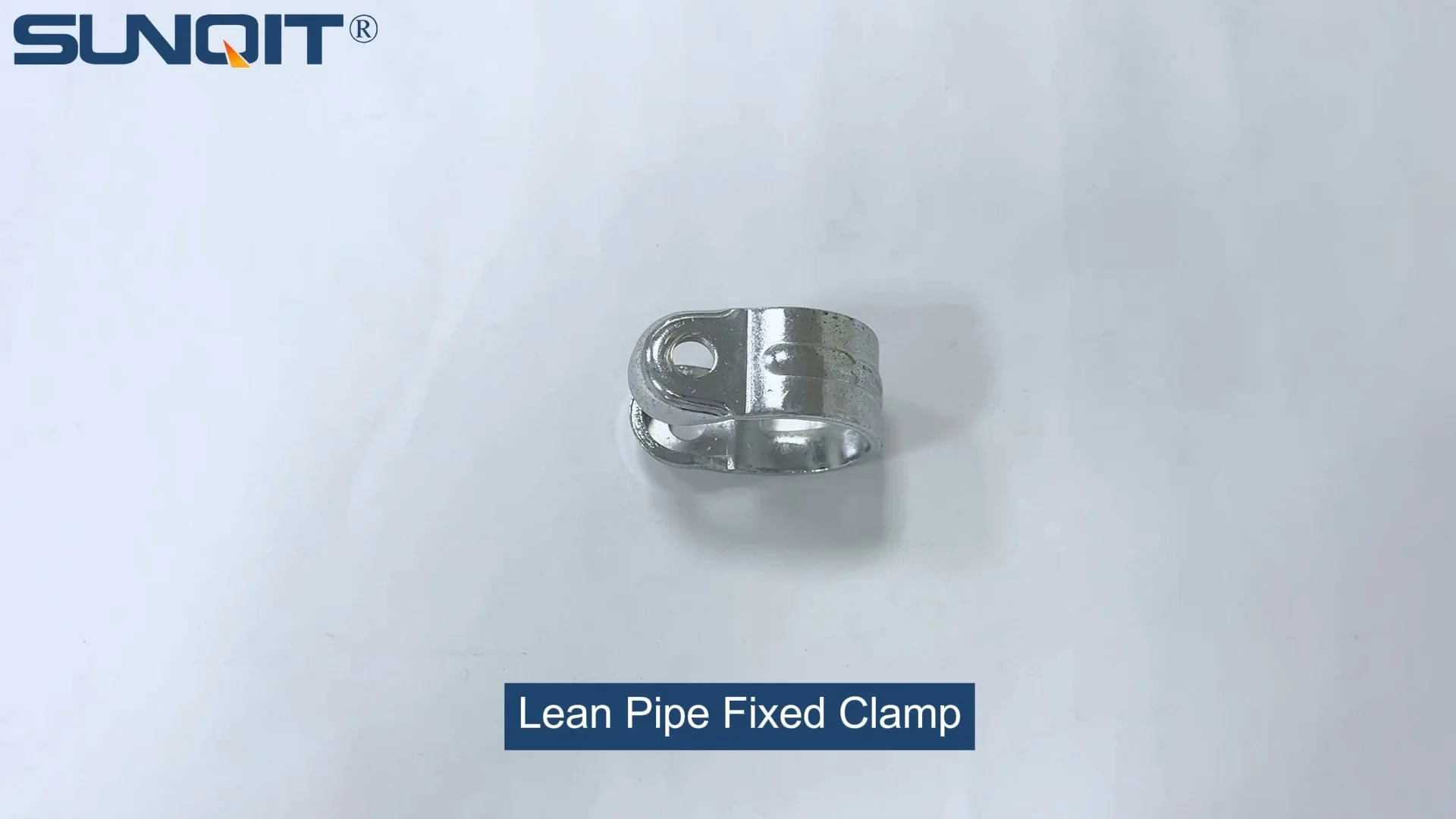
Lean Pipe Fixed Clamp
Lean pipe fixed clamp is used for pipe connector fixing the correct position during workbench flow rack hand trolley assemble work.
Walk into any manufacturing plant, and you'll immediately sense the energy: the rhythmic hum of machinery, workers moving with purpose between stations, and materials flowing seamlessly from one process to the next. In this dynamic environment, where precision and speed are paramount, there's an unsung hero quietly ensuring everything runs smoothly—and safely. It's not the flashy automated robots or the high-tech monitoring systems, though those play their part. Instead, it's a small but critical component: the lean pipe fixed clamp. While it might not grab headlines, this unassuming piece of hardware is a cornerstone of workplace safety, preventing accidents, reducing strain, and creating a more secure environment for everyone on the floor.
Manufacturing safety is a multifaceted challenge. According to the Occupational Safety and Health Administration (OSHA), slips, trips, and falls are among the top causes of workplace injuries, often stemming from unstable equipment, cluttered workspaces, or poorly secured machinery. Add to that the risk of ergonomic strain from awkward postures, or material handling accidents due to faulty material flow systems, and it's clear that even minor instability can have major consequences. This is where lean pipe fixed clamps step in. Designed to secure lean pipes—versatile, modular tubes used in everything from workbenches to material racks—these clamps provide the stability that transforms chaotic workspaces into organized, safe zones. In this article, we'll explore how lean pipe fixed clamps enhance safety, their role in integrating with other components like lean pipe joints and roller tracks, and why they're an indispensable part of modern manufacturing safety strategies.
What Are Lean Pipe Fixed Clamps, Anyway?
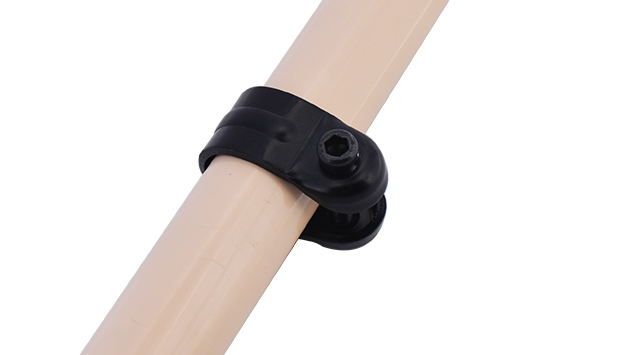
Before diving into their safety benefits, let's start with the basics: what exactly is a lean pipe fixed clamp? At its core, it's a device designed to securely fasten lean pipes together or to other structures, ensuring a rigid, stable connection. Lean pipes themselves are typically made of steel, aluminum, or stainless steel, coated in plastic or rubber to resist corrosion and reduce friction. They're the building blocks of modular systems—think workbenches, material racks, conveyor supports, and turnover trolleys—that manufacturers rely on for flexibility and adaptability. But without a strong clamp holding them in place, these pipes can shift, wobble, or even come loose, turning a functional workstation into a hazard.
Lean pipe fixed clamps come in various designs, but their primary job is consistent: to eliminate movement at the joint. Unlike some adjustable clamps that allow for rotation or sliding (useful in certain contexts but less so for stability), fixed clamps lock pipes into position, creating a solid framework. They're often made of durable materials like galvanized steel or aluminum, with rubberized or textured interiors to grip pipes tightly without damaging them. Some feature bolts or levers for easy installation and adjustment, but once tightened, they stay put—even under the vibrations of heavy machinery or the stress of daily use.
To put it simply: if lean pipe systems are the skeleton of a manufacturing workspace, fixed clamps are the ligaments holding the bones together. Without them, the skeleton would be weak, prone to collapse, and dangerous to those around it. Now, let's explore how this "ligament" function directly impacts workplace safety.
Stability: The Foundation of Workplace Safety
Stability might not sound glamorous, but in manufacturing, it's the bedrock of safety. An unstable workbench can cause tools to slide off, injuring workers below. A wobbly material rack might tip over, spilling heavy parts and blocking walkways. Even a slightly loose roller track can jam, leading to material backups that force workers to reach awkwardly or climb over obstacles—both recipes for injury. Lean pipe fixed clamps address these risks by ensuring every component of the workspace stays exactly where it's supposed to be.
Consider a typical assembly line workbench. It's loaded with tools, components, and maybe a computer for tracking production. If the lean pipes forming its frame aren't properly clamped, the bench might sway as workers lean on it or place heavy items on it. Over time, this movement can loosen screws, crack wooden or metal surfaces, or even cause the bench to collapse. With fixed clamps, however, the pipes are locked rigidly at joints, distributing weight evenly across the structure. Workers can lean, push, or pull without worrying about the bench shifting, and tools stay secure on the surface. This stability doesn't just prevent accidents—it also boosts confidence. When workers trust their equipment, they focus better, make fewer mistakes, and move more efficiently, reducing the risk of distraction-related injuries.
Another critical area is material handling. Many manufacturing facilities use lean pipe-based turnover trolleys or racks to move parts between stations. These trolleys are often loaded with heavy items—think engine components, electronic assemblies, or raw materials. If the trolley's frame isn't secured with fixed clamps, the weight can cause the pipes to bend or the joints to separate, leading to the trolley tipping over. This isn't just a safety hazard for the worker pushing it; falling materials can crush feet, block emergency exits, or damage other equipment. Fixed clamps ensure the trolley's frame remains rigid, even when fully loaded, keeping the center of gravity stable and preventing tipping.
Vibration is another hidden enemy of stability. Manufacturing floors are noisy places, with machines thumping, drills whirring, and conveyors rumbling. Over time, these vibrations can loosen even the tightest connections—unless they're secured with fixed clamps. Unlike adjustable clamps, which might gradually slip under constant shaking, fixed clamps maintain their grip, ensuring that roller tracks stay aligned, workbenches stay level, and racks stay upright. This resistance to vibration is especially crucial in industries like automotive or aerospace, where precision tools and sensitive components can't afford to shift even a millimeter.
Working in Tandem: Clamps, Joints, and the Lean Ecosystem
Lean pipe fixed clamps don't work alone. They're part of a larger ecosystem of components, including lean pipe joints, roller tracks, and caster wheels, all designed to work together for safety and efficiency. Understanding how these components interact helps highlight just how vital clamps are to the system.
Take lean pipe joints, for example. These are the connectors that allow pipes to be joined at angles—90 degrees for corners, 45 degrees for slopes, or T-junctions for branching structures. While joints provide the flexibility to design custom workspaces, they rely on fixed clamps to maintain rigidity. A joint might connect two pipes, but without a clamp to lock them in place, the joint itself can rotate or slide, weakening the structure. Fixed clamps act as a secondary lock, ensuring the joint stays positioned correctly even under stress. For instance, a T-joint in a material rack might connect a vertical support pipe to a horizontal shelf pipe. Without a fixed clamp, the horizontal pipe could sag under the weight of materials, causing the shelf to tilt. The clamp prevents this by pinching the joint and pipe together, creating a solid bond.
Then there are roller tracks—another common feature in manufacturing, used to slide materials smoothly from one station to the next. Roller tracks are often mounted on lean pipe frames, and their alignment is critical. If the frame shifts, the track can become misaligned, causing materials to jam or slide off the side. Fixed clamps secure the frame's vertical and horizontal pipes, ensuring the track remains level and straight. This alignment isn't just about efficiency; a jammed roller track can force workers to manually pull or push materials, leading to strained backs or crushed fingers. By keeping the track stable, fixed clamps eliminate these unnecessary risks.
Caster wheels, which allow trolleys and mobile workbenches to move, are another key partner for fixed clamps. Casters are great for flexibility, but they can make a structure top-heavy if not balanced. Fixed clamps ensure the trolley's frame is rigid, so the weight is distributed evenly across the casters. This prevents the trolley from wobbling as it moves, reducing the risk of it tipping over when turning or hitting a bump. Additionally, many casters have brakes to lock them in place when the trolley is stationary. When combined with fixed clamps, these brakes create a double layer of security: the clamps keep the frame stable, and the brakes keep the trolley from rolling unexpectedly.
| Component | Role in Safety | How Fixed Clamps Enhance Its Function |
|---|---|---|
| Lean Pipe Joints | Connect pipes at angles; enable modular design | Lock joints in place, preventing rotation/slippage under stress |
| Roller Tracks | Facilitate smooth material flow between stations | Keep track frames stable, ensuring alignment and preventing jams |
| Caster Wheels | Allow mobility for trolleys/workbenches | Distribute weight evenly, reducing tipping risk when moving/stopped |
| Workbench Surfaces | Provide stable platforms for assembly/inspection | Prevent bench wobbling, securing tools/components on the surface |

Ergonomics: Safety Beyond "Not Falling Apart"
Safety isn't just about preventing catastrophic accidents like collapses or falls—it's also about reducing chronic injuries caused by poor ergonomics. Repetitive strain injuries (RSIs), back pain, and carpal tunnel syndrome are all too common in manufacturing, often stemming from awkward work postures or excessive reaching. Lean pipe fixed clamps play a surprisingly important role in ergonomic safety by enabling the creation of customizable, worker-friendly workspaces.
One of the biggest advantages of lean pipe systems is their modularity. Unlike fixed, welded workbenches, lean pipe structures can be adjusted to fit the worker, not the other way around. Need a workbench higher for a tall employee? Lower for someone in a seated position? With lean pipes and fixed clamps, you can adjust the height in minutes. The key here is that once adjusted, the fixed clamps lock the new position in place, ensuring the bench doesn't sink or shift over time. This stability allows workers to maintain neutral postures—feet flat on the floor, elbows at 90 degrees, shoulders relaxed—reducing strain on the neck, back, and wrists.
Material access is another ergonomic concern. If components are stored too high or too low, workers have to stretch or bend repeatedly, increasing the risk of back injuries. Lean pipe material racks, secured with fixed clamps, can be designed with shelves at optimal heights—typically between waist and shoulder level—so workers can grab parts without overreaching. The clamps ensure the shelves stay level and don't sag under the weight of materials, maintaining this optimal height over time. Similarly, roller tracks mounted on lean pipe frames can be angled slightly to allow materials to flow gently to the worker, reducing the need to lift heavy items onto the track.
Even small adjustments matter. For example, a lean pipe-based tool holder clamped to a workbench can keep frequently used tools within arm's reach, eliminating the need to twist or bend to grab them. Without fixed clamps, the tool holder might rotate or slide, forcing the worker to adjust it repeatedly or reach further. Over a full shift, those extra movements add up, increasing fatigue and injury risk. Fixed clamps keep the holder in place, turning a minor convenience into a major ergonomic win.

Real-World Impact: Safety Success Stories
To truly understand the value of lean pipe fixed clamps, let's look at real-world examples. Consider a mid-sized electronics manufacturer that recently switched from traditional wooden workbenches to lean pipe workbenches secured with fixed clamps. Before the switch, their old wooden benches were prone to warping, causing tools to slide off and workers to strain their backs reaching for items on uneven surfaces. The company recorded an average of 12 minor injuries per month—mostly cuts from falling tools or strains from awkward postures.
After installing lean pipe workbenches with fixed clamps, the transformation was dramatic. The clamps kept the benches rigid and level, so tools stayed in place, and workers could adjust the height to their comfort. Within six months, injury rates dropped by 75%, to just 3 per month. Workers reported less fatigue, and production speed increased slightly as they spent less time retrieving fallen tools or adjusting their posture. The plant manager noted, "We didn't realize how much time we were wasting on preventable injuries until we fixed the root cause: unstable workspaces. The fixed clamps were a small investment that paid off in safer, happier, and more productive teams."
Another example comes from the automotive industry, where a manufacturer was struggling with roller track jams on their assembly line. The tracks, mounted on older metal frames, would frequently misalign due to vibration, causing car parts to get stuck. Workers would then have to climb onto the tracks to free the jammed parts, putting them at risk of falls or being hit by moving equipment. After retrofitting the frames with lean pipes and fixed clamps, the tracks stayed aligned even under heavy vibration. Jams decreased by 90%, and the need for workers to climb onto the tracks was eliminated. The plant's safety director commented, "We used to hold monthly safety meetings about track jams. Now, it's a non-issue. The clamps keep everything locked in place, and our workers no longer have to put themselves in danger to keep the line moving."
These stories aren't anomalies. Across industries—from food processing to pharmaceuticals—manufacturers are reporting similar results after integrating fixed clamps into their lean pipe systems. The common thread? Stability leads to fewer accidents, better ergonomics, and a culture of safety where workers feel valued and protected.
Best Practices: Maximizing Safety with Fixed Clamps
While lean pipe fixed clamps are powerful tools for safety, they're not a "set it and forget it" solution. To maximize their effectiveness, manufacturers should follow these best practices:
- Choose the right clamp for the job: Not all clamps are created equal. Consider the pipe material (steel, aluminum, stainless steel), diameter, and load capacity. A clamp designed for lightweight aluminum pipes might not hold up on a heavy steel rack. Consult with your lean pipe supplier to ensure compatibility.
- Inspect regularly: Even the best clamps can loosen over time, especially in high-vibration environments. Schedule weekly inspections to check for loose bolts, worn rubber grips, or signs of corrosion. Tighten or replace clamps immediately if they show damage—don't wait for an accident to happen.
- Train staff on proper installation: A clamp is only as good as its installation. Ensure workers know how to tighten clamps to the manufacturer's specifications—over-tightening can damage pipes, while under-tightening leaves them loose. Provide torque wrenches if needed to ensure consistent tightness.
- Label weight limits: Lean pipe structures have weight limits, and fixed clamps are part of that equation. Label racks, shelves, and trolleys with their maximum load capacity, and enforce these limits strictly. Overloading can bend pipes or strip clamps, compromising safety.
- replace worn components: Clamps, like all hardware, wear out. Rubber grips lose their texture, bolts rust, and metal parts fatigue. Create a replacement schedule based on usage—for high-traffic areas like assembly lines, replace clamps every 12–18 months; for lower-traffic areas, every 2–3 years.
By following these practices, manufacturers can ensure their lean pipe fixed clamps continue to enhance safety for years to come.
Beyond Clamps: Building a Culture of Safety
Lean pipe fixed clamps are a powerful tool, but they're just one part of a holistic safety strategy. To truly create a safe workplace, manufacturers need to combine physical safeguards with a culture that prioritizes safety at every level. This means training workers to identify hazards, encouraging them to report loose clamps or unstable structures, and involving them in designing safer workspaces. After all, the people using the equipment every day are often the best judges of what works—and what doesn't.
When workers see that their employer is investing in small but critical components like fixed clamps, it sends a clear message: "Your safety matters." This builds trust and engagement, making workers more likely to follow safety protocols and speak up about potential issues. In turn, this creates a positive feedback loop: safer workspaces lead to happier workers, who then contribute to even safer practices.
Conclusion: The Unsung Hero of Manufacturing Safety
In the fast-paced world of manufacturing, it's easy to focus on the latest technology or the biggest machines. But as we've explored, sometimes the most impactful safety solutions are the smallest ones. Lean pipe fixed clamps might not be glamorous, but they play a vital role in creating stable, ergonomic, and efficient workspaces that protect workers from injury and help companies thrive.
From preventing falls and tipping to reducing ergonomic strain, these unassuming clamps are the backbone of a safe manufacturing environment. They work in tandem with lean pipe joints, roller tracks, and caster wheels to create systems that adapt to workers' needs while maintaining unwavering stability. And when paired with best practices like regular inspections and worker training, they become a cornerstone of a culture where safety isn't just a rule—it's a way of life.
So the next time you walk through a manufacturing plant, take a moment to look at the lean pipe structures around you. The workbenches, the racks, the trolleys—each one relies on fixed clamps to stay safe. They might be out of sight, but their impact is everywhere: in the workers who go home uninjured, in the tools that stay on the bench, and in the knowledge that even the smallest components can make the biggest difference.