- Company Articles
- Products and Technology
- Product knowledge
- How Lean Pipe Fixed Clamps Improve Workbench E Ergonomics

How Lean Pipe Fixed Clamps Improve Workbench E Ergonomics
Related Product
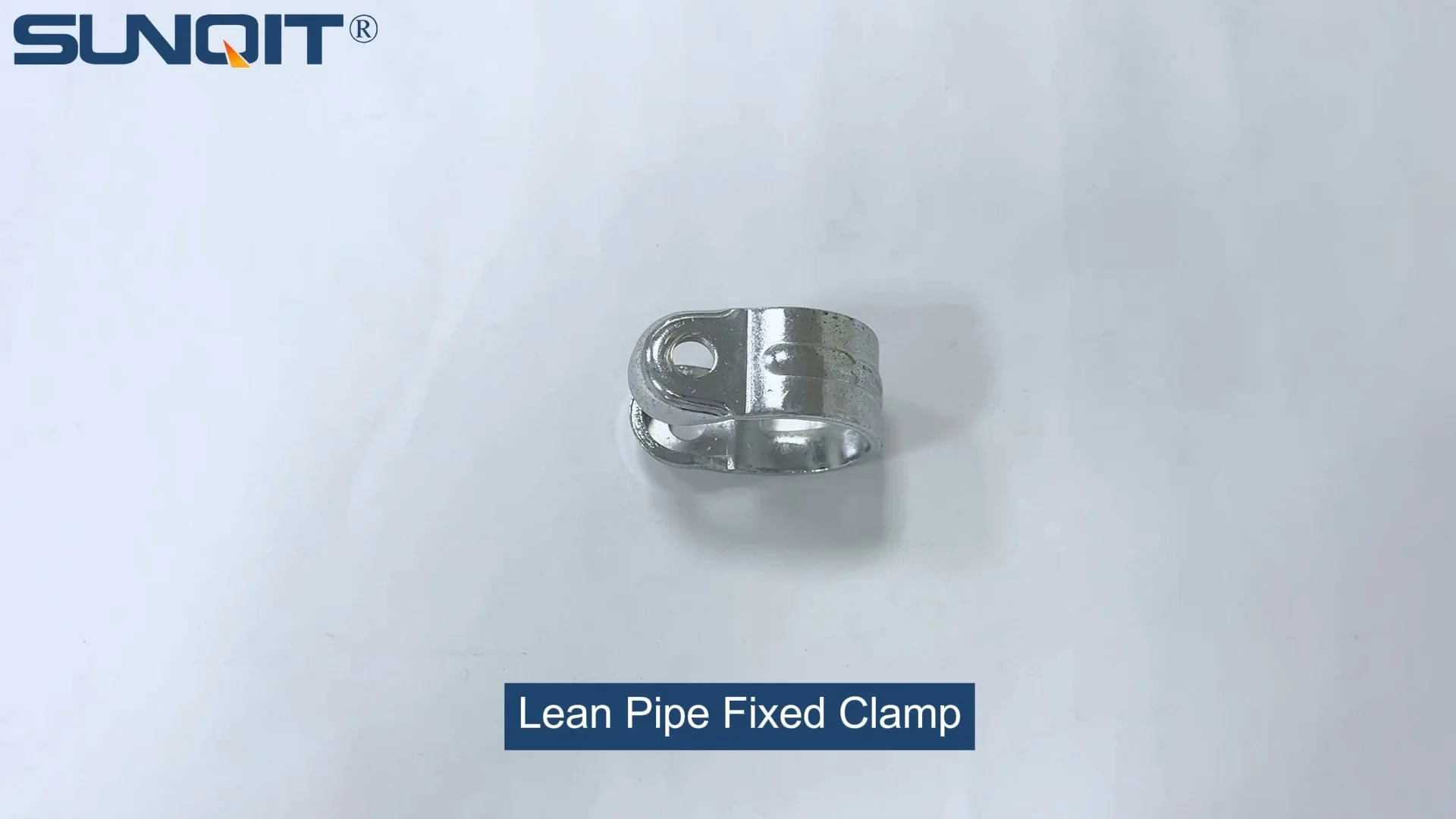
Lean Pipe Fixed Clamp
Lean pipe fixed clamp is used for pipe connector fixing the correct position during workbench flow rack hand trolley assemble work.
Walk into any busy production facility, and you'll notice one thing quickly: the workbench is the unsung hero of the operation. It's where parts are assembled, tools are organized, and ideas take shape. But not all workbenches are created equal—especially when it comes to ergonomics. That's where lean pipe fixed clamps come in. These small but mighty components are game-changers for optimizing workspaces, and when paired with a reliable setup like the Workbench E (single deck-without caster) , they transform ordinary workstations into hubs of comfort, efficiency, and productivity.
The Ergonomics Problem: Why One-Size-Fits-All Workbenches Fall Short
Think about the last time you spent hours at a desk that was too high or too low. Your shoulders ached, your back strained, and by the end of the day, you were exhausted—not from the work itself, but from fighting against an uncomfortable setup. Now imagine that same frustration, but amplified in a factory or assembly line, where workers stand for 8+ hours, handle heavy tools, and repeat precise movements hundreds of times daily. Ergonomics isn't just about comfort; it's about safety, productivity, and long-term health.
Traditional workbenches often come with fixed heights, rigid structures, and limited customization options. A Workbench E (single deck-without caster) , for example, is a solid, reliable foundation—sturdy, single-deck, and designed for stability. But without the right accessories, it can still feel like a one-size-fits-all solution in a world where workers come in all shapes and sizes, and tasks vary from day to day. That's where lean pipe fixed clamps step in: they turn rigidity into flexibility, making it possible to adapt the workbench to the worker, not the other way around.
What Are Lean Pipe Fixed Clamps, Anyway?
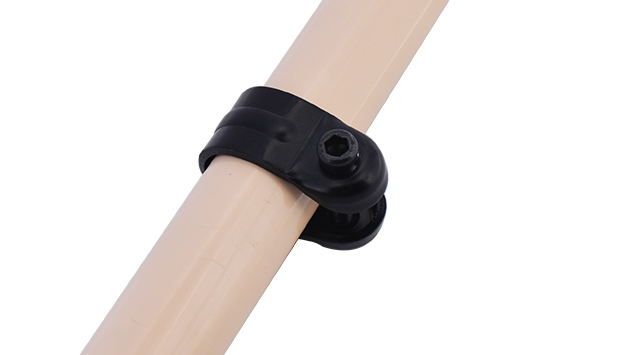
If you're new to lean manufacturing or workspace optimization, you might be wondering: What exactly is a lean pipe fixed clamp? Let's break it down. Lean pipes—also known as flexible tubes—are lightweight, durable tubes (often made of steel with a plastic coating, or aluminum for added strength) used to build modular structures. They're the backbone of lean systems, allowing teams to create everything from workbenches to material racks. Lean pipe fixed clamps are the connectors that hold these pipes together. Unlike rotating or swiveling joints, fixed clamps lock pipes in place, providing stability while still allowing for easy adjustments when needed.
Picture this: You're building a shelf above your Workbench E to store frequently used tools. Using a lean pipe joint , you connect two pipes at a 90-degree angle, but you need to that shelf doesn't wobble when you place a heavy toolbox on it. That's where a fixed clamp comes in—it tightens securely around the pipes, creating a rigid connection that can withstand daily use. But here's the kicker: if tomorrow you need that shelf to be 6 inches higher to accommodate taller equipment, you can loosen the clamp, adjust the pipe, and re-tighten it. No drilling, no welding, no hassle. It's the best of both worlds: stability when you need it, flexibility when you don't.
5 Ways Lean Pipe Fixed Clamps Transform Workbench E Ergonomics
Now that we know what lean pipe fixed clamps are, let's dive into how they specifically improve the ergonomics of a Workbench E (single deck-without caster) . We'll focus on five key benefits that make a tangible difference in day-to-day work life.
1. Custom Height Adjustments: No More "One-Size-Fits-Nobody"
The average height of a workbench is around 36 inches, but what if your tallest worker is 6'4" and your shortest is 5'2"? A fixed height forces the taller worker to hunch and the shorter one to stretch—both recipes for chronic pain. With lean pipe fixed clamps, you can add adjustable legs or risers to your Workbench E. By attaching pipes to the base of the workbench (using clamps to lock them in place), you can raise or lower the entire surface in increments as small as an inch. Suddenly, every worker can set their bench to elbow height—where their arms rest comfortably, reducing strain on shoulders and wrists.
Even better, this isn't a one-time adjustment. If a new team member joins or tasks change (e.g., switching from assembly to packaging, which might require a lower surface), you can reposition the clamps and pipes in minutes. It's like having a custom workbench for every shift, without the cost of buying multiple benches.
2. Modular Accessory Mounting: Tools Where You Need Them
Ever wasted 10 minutes a day searching for a wrench that fell off the back of your workbench? Or strained your neck reaching across the bench to grab a screwdriver? Ergonomics is also about reducing unnecessary movement—and that means keeping tools, parts, and materials within arm's reach. Lean pipe fixed clamps make it easy to add custom accessories to your Workbench E: tool holders, part bins, monitor arms, or even cup holders (yes, hydration matters too!).
For example, using a combination of lean pipes, fixed clamps, and aluminum profile (a lightweight, rigid material perfect for building brackets), you can mount a tool board directly above the workbench, at eye level. No more bending or stretching—just grab what you need and get back to work. And if next month you switch to a new task that requires different tools, you can reposition the clamps, remove the tool board, and install a parts feeder instead. It's modularity at its finest.
3. Stability That Doesn't Sacrifice Flexibility
One common misconception about modular systems is that they're "flimsy" compared to fixed, welded structures. But with lean pipe fixed clamps , that couldn't be further from the truth. These clamps are designed to grip pipes tightly, creating connections that can support heavy loads—think 50+ pounds on a shelf, or a full bin of metal parts on a side rack. For a Workbench E, which already has a solid, caster-free base, adding fixed clamps ensures that any accessories you attach (shelves, bins, tool racks) won't wobble or shift during use. That stability is crucial for precision work: when you're assembling small electronics or tightening bolts, the last thing you need is a workbench that moves under you.
But here's the beauty: stability doesn't mean permanence. If your team decides to rearrange the production line next quarter, you can loosen the clamps, disassemble the structure, and rebuild it in a new configuration. No need to buy a brand-new workbench—just reconfigure the one you have. It's sustainable, cost-effective, and adaptable to changing needs.
4. Reducing Fatigue with Custom Work Zones
Ergonomists often talk about the "golden zone"—the area between shoulder height and knee height, where reaching and lifting require the least amount of energy. Items outside this zone force workers to bend, stretch, or twist, leading to fatigue and injury over time. Lean pipe fixed clamps let you tailor your Workbench E to fit this golden zone perfectly. For example, if most of your work involves placing small parts into a machine, you can use fixed clamps to build a sloped material rack (using roller track for easy part feeding) at waist height, so parts slide directly into the golden zone. No more bending to pick up parts from the floor or stretching to reach a bin on a high shelf.
Another example: Many assembly line workers alternate between sitting and standing throughout the day (sitting reduces leg fatigue, standing reduces back strain). With fixed clamps, you can add a height-adjustable stool platform to your Workbench E. Raise it when sitting, lower it when standing—all without sacrificing stability. It's the kind of small adjustment that makes a big difference in how workers feel at the end of the day.
5. Future-Proofing Your Workspace (Even Without Casters)
The Workbench E (single deck-without caster) is intentionally designed without casters for maximum stability—but that doesn't mean it can't grow with your team. Maybe today you don't need mobility, but next year, you might want to move the workbench to a new area of the factory. While Workbench E doesn't come with casters, you can use caster accessories (like caster mounts and wheels) paired with lean pipes and fixed clamps to add mobility later. Attach a caster kit to the base using fixed clamps, and suddenly your stationary workbench becomes a mobile workstation. When you don't need mobility anymore, just remove the casters and lock the bench back in place with the clamps. It's a future-proof solution that grows with your business.

Real-World Impact: How One Factory Improved Ergonomics (and Productivity) with Fixed Clamps
Let's put this all into perspective with a real-world example. A mid-sized electronics manufacturer was struggling with high turnover and frequent worker complaints about back and shoulder pain. Their assembly line used traditional, fixed-height workbenches, and workers often had to stretch to reach parts or hunch over to assemble circuit boards. The team decided to upgrade to Workbench E (single deck-without caster) bases and add lean pipe fixed clamps to customize each station.
Here's what happened next:
- Height adjustments: Workers could now adjust their workbench height by 4-6 inches using fixed clamps and extension pipes. Complaints about shoulder strain dropped by 70% in the first month.
- Tool organization: Custom tool racks, mounted with fixed clamps and aluminum profile, reduced time spent searching for tools by 15 minutes per worker per day. That added up to 60+ extra hours of productivity per month for a team of 20.
- Stability for precision work: Fixed clamps eliminated wobble in side shelves, reducing errors in circuit board assembly by 25%. Fewer defects meant less rework and happier customers.
The best part? The entire upgrade cost a fraction of what new, custom workbenches would have cost—and the team was able to install everything themselves, with minimal downtime. It's a story we've seen time and time again: small changes (like adding lean pipe fixed clamps) lead to big results.

Choosing the Right Components: It's All About the Ecosystem
To get the most out of your Workbench E (single deck-without caster) and lean pipe fixed clamps, you'll want to pair them with the right components. Here's a quick guide to building your ergonomic ecosystem:
- Lean pipe joints: While fixed clamps are great for stability, rotating or swiveling joints add flexibility for parts that need to move (like a swing-out parts bin).
- Aluminum profile: Use this lightweight material for brackets, shelves, or tool holders—its rigid structure pairs perfectly with fixed clamps for added strength.
- Caster accessories: Even if your Workbench E doesn't have casters now, keep caster mounts and wheels on hand for future mobility needs.
- Anti-fatigue mats: Pair your ergonomic workbench with a supportive mat to reduce leg and foot fatigue during long shifts.
Remember: The goal is to build a system that works for your team. Start with the basics (Workbench E + fixed clamps), then add accessories as you identify pain points. It's a gradual process, but one that pays off in happier workers and a more efficient line.
The Bottom Line: Ergonomics Is an Investment, Not an Expense
At the end of the day, lean pipe fixed clamps are more than just hardware—they're an investment in your team. When workers feel comfortable, safe, and supported, they're more engaged, productive, and likely to stay with your company long-term. A Workbench E (single deck-without caster) is a solid foundation, but it's the little details—the clamps, the joints, the custom accessories—that turn it into a workspace where people thrive.
So if you're ready to stop treating ergonomics as an afterthought and start seeing it as a competitive advantage, consider this: Your workbench is the heart of your operation. Make sure it's working as hard as your team does. With lean pipe fixed clamps, you can build a workspace that adapts, evolves, and supports the people who make your business run. The result? A happier, healthier, and more productive team—and that's something no one can put a price on.
Ergonomic Workbench Comparison: Traditional vs. Lean Pipe Fixed Clamp Setup
| Feature | Traditional Workbench | Workbench E + Lean Pipe Fixed Clamps |
|---|---|---|
| Height Adjustability | Fixed (no adjustments possible) | Customizable (4-12 inches of adjustment via clamps/pipes) |
| Tool/Part Accessibility | Limited (tools on shelves or drawers, often out of reach) | Optimized (custom mounts with fixed clamps, tools within arm's reach) |
| Stability | High (but rigid, no room for changes) | High (fixed clamps lock connections) + flexible (easily reconfigured) |
| Cost Over Time | High (need to replace entire bench for changes) | Low (reuse components, adjust as needed) |
| Worker Satisfaction | Low (one-size-fits-all, frequent discomfort) | High (adaptable to individual needs, reduced strain) |