- Company Articles
- Products and Technology
- Solution
- How Lean Pipe Fixed Clamps Support Continuous Improvement in Lean Cells

How Lean Pipe Fixed Clamps Support Continuous Improvement in Lean Cells
Related Product
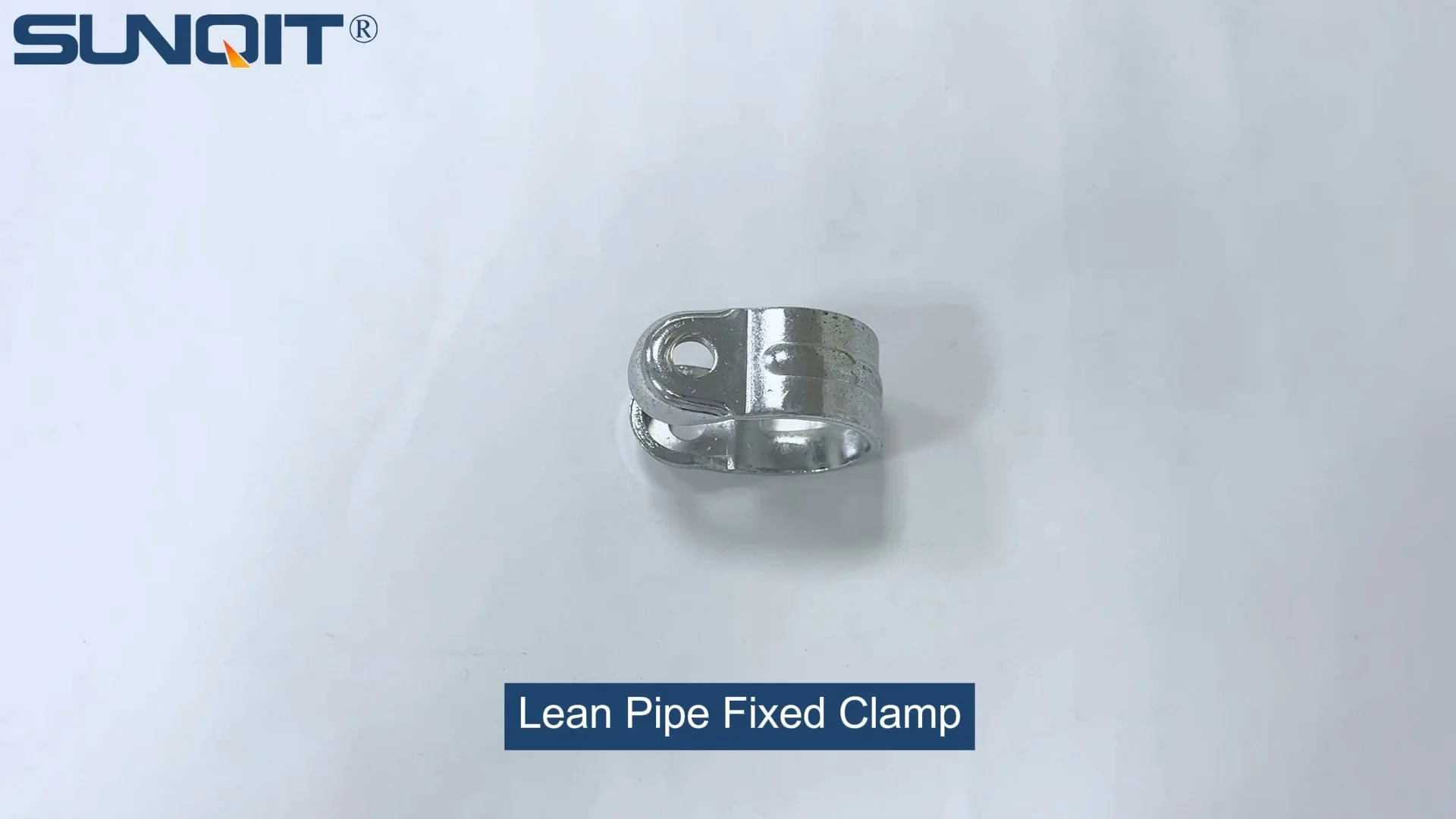
Lean Pipe Fixed Clamp
Lean pipe fixed clamp is used for pipe connector fixing the correct position during workbench flow rack hand trolley assemble work.
Introduction: The Heart of Lean Manufacturing – Lean Cells and Continuous Improvement
In the world of manufacturing, where efficiency, flexibility, and waste reduction are the cornerstones of success, lean cells have emerged as a game-changing approach. A lean cell is more than just a workspace; it's a self-contained, cross-functional unit designed to streamline production by bringing together all the tools, materials, and people needed to complete a specific task or product. At the core of every effective lean cell lies the principle of continuous improvement, or kaizen – the idea that small, incremental changes can lead to significant long-term gains in productivity, quality, and employee satisfaction.
But for continuous improvement to thrive, the physical infrastructure of the lean cell must be equally adaptable. Rigid, one-size-fits-all setups quickly become obstacles when processes evolve, new products are introduced, or team feedback highlights inefficiencies. This is where lean pipe systems step in – modular, versatile, and designed to grow and change alongside your operations. And among the unsung heroes of these systems are lean pipe fixed clamps, yet critical components that enable the flexibility and stability needed to turn kaizen from a concept into a daily reality.
In this article, we'll explore how lean pipe fixed clamps serve as the backbone of adaptable lean cells, supporting continuous improvement by enhancing flexibility, reducing waste, and empowering teams to take ownership of their workspace. We'll dive into their role within broader lean systems, examine real-world applications, and explain why choosing the right clamps and suppliers matters for long-term success.
Understanding Lean Systems: The Foundation of Adaptable Manufacturing
Before we focus on the specifics of lean pipe fixed clamps, it's important to grasp the role of lean systems in modern manufacturing. A lean system is a holistic approach to production that prioritizes the elimination of waste ( muda ) in all its forms – from excess inventory and unnecessary motion to defects and overproduction. Unlike traditional manufacturing setups, which often rely on rigid, purpose-built machinery and static workstations, lean systems are designed to be dynamic, with components that can be reconfigured, repurposed, and scaled to meet changing demands.
At the heart of many lean systems are lean pipes (also known as "lean tubes"), lightweight yet durable tubes typically made of steel, aluminum, or plastic-coated steel. These pipes are paired with a variety of joints, connectors, and accessories to build custom workbenches, flow racks, material handling trolleys, and conveyor systems. What makes lean systems so powerful is their modularity: instead of investing in expensive, specialized equipment that becomes obsolete when processes change, teams can use lean pipes and accessories to create exactly what they need – and modify it just as easily when needs shift.
Consider a lean pipe workbench, for example. In a traditional setup, a workbench might be a heavy, wooden or metal structure bolted to the floor, with fixed shelves and tool holders. If a team needs to adjust the height to reduce worker strain, add a new shelf for incoming materials, or reposition the bench to improve workflow, the process is often time-consuming, costly, and requires external help. In contrast, a lean pipe workbench is built using pipes, joints, and clamps that can be disassembled and reassembled in hours – or even minutes – with basic tools. This ability to adapt on the fly is what makes lean systems indispensable for continuous improvement.
Lean Pipe Fixed Clamps: Small Components, Big Impact
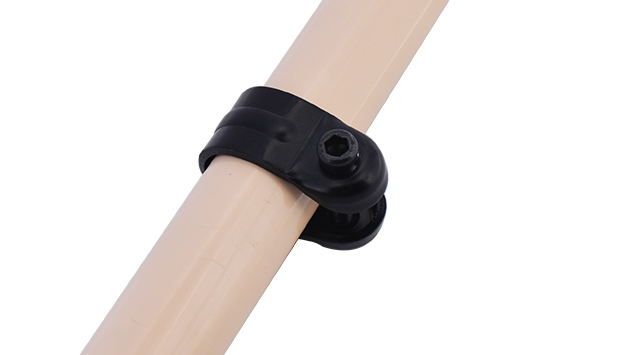
So, where do lean pipe fixed clamps fit into this picture? Simply put, these clamps are the connectors that hold the lean system together – literally and figuratively. A lean pipe fixed clamp is a mechanical device designed to secure lean pipes to joints, frames, or other structural elements, ensuring stability while still allowing for disassembly and reconfiguration. Think of them as the "glue" of the lean system, but with the added benefit of being removable and reusable.
Fixed clamps come in various designs, but most share a few key features: a durable metal body (often steel or aluminum), a clamping mechanism (such as a bolt or lever), and a design that grips the lean pipe tightly without damaging it. Some clamps are designed for specific angles (e.g., 90-degree or 45-degree connections), while others are more versatile, allowing for adjustments along the length of the pipe. Regardless of their design, the primary job of a fixed clamp is to balance two conflicting needs: stability (to ensure the structure is safe and reliable during daily use) and flexibility (to enable quick changes when improvement opportunities arise).
To appreciate their importance, consider what happens when a lean system lacks quality fixed clamps. Loose or poorly designed clamps can lead to wobbly workbenches, unstable flow racks, or even safety hazards – all of which undermine productivity and employee confidence. On the flip side, clamps that are too rigid or difficult to remove turn the modular lean system into just another static setup, defeating the purpose of investing in lean infrastructure in the first place. The right fixed clamps strike that perfect balance, providing a secure foundation that doesn't stand in the way of progress.

Flexibility: How Fixed Clamps Enable Continuous Improvement
Continuous improvement thrives on flexibility. When a team identifies a better way to arrange their workbench, a more efficient path for materials to flow, or a need to accommodate a new tool, they shouldn't have to wait weeks for engineering or maintenance to make changes. They should be able to make those adjustments themselves, quickly and confidently. This is where lean pipe fixed clamps shine – by making reconfiguration accessible to frontline teams, they put the power of improvement directly into the hands of the people who know the process best.
Let's break down three key ways fixed clamps support flexibility in lean cells:
1. Rapid Reconfiguration Without Specialized Tools
Traditional manufacturing setups often require welding, drilling, or heavy machinery to modify – tasks that are time-consuming, require specialized skills, and leave permanent marks. With lean pipe fixed clamps, reconfiguration is as simple as loosening a bolt, adjusting the pipe, and retightening the clamp. Most clamps can be adjusted with basic hand tools (like a hex key or wrench) that are readily available on the shop floor. This means a team can brainstorm a better layout in the morning, make the changes during a lunch break, and test the new setup in the afternoon – all without halting production for days on end.
For example, imagine a team assembling small electronic components on a lean pipe workbench. After a week of operation, they notice that frequently used tools are stored too far from the assembly area, leading to unnecessary motion (a form of waste). Using fixed clamps, they can quickly add a small shelf or tool rail to the workbench, positioning the tools within arm's reach. The entire process takes 30 minutes, and by the end of the day, they're already seeing reduced cycle times and less worker fatigue.
2. Scalable Structures for Growing or Shrinking Needs
As production demands fluctuate, lean cells need to scale up or down. A product that's suddenly in high demand might require additional flow racks to hold incoming materials, while a slow season might call for consolidating workspaces to free up floor space. Fixed clamps make scaling a breeze by allowing teams to add or remove sections of a structure without rebuilding it from scratch.
Take flow racks, for instance. A flow rack built with lean pipes and fixed clamps can have additional levels added by simply attaching new pipes and securing them with clamps. If the rack becomes too tall for easy access, clamps can be loosened, and the levels can be repositioned lower. This scalability ensures that the lean system grows with the business, eliminating the need to invest in entirely new equipment every time demands change.
3. Customization for Unique Processes
No two lean cells are identical, and even within the same facility, processes can vary widely. Fixed clamps enable teams to customize their workspaces to fit their unique needs, rather than forcing them to adapt to a one-size-fits-all solution. Whether it's adjusting the height of a workbench to accommodate workers of different statures, angling a flow rack to improve material flow, or adding dividers to separate components, fixed clamps provide the precision needed to tailor the workspace to the task at hand.
Consider a medical device manufacturer that produces both small, delicate parts and larger, bulkier assemblies. With fixed clamps, they can use the same base lean pipe structure to create a low, ergonomic workbench for the delicate parts and a taller, sturdier frame for the bulkier assemblies – all by adjusting the pipe lengths and clamp positions. This level of customization ensures that every process has a workspace designed to maximize efficiency and quality.

Enhancing Workflow Efficiency: Fixed Clamps and the Flow of Materials
Continuous improvement isn't just about making changes – it's about making changes that lead to tangible improvements in efficiency. One of the most critical areas for improvement in any lean cell is the flow of materials: how raw materials, work-in-progress (WIP), and finished goods move through the cell. Poor material flow leads to bottlenecks, delays, and excess inventory – all forms of waste that erode profitability.
Lean pipe fixed clamps play a key role in optimizing material flow by ensuring that structures like flow racks, conveyors, and material handling trolleys are stable, aligned, and positioned for maximum efficiency. Here's how:
Stability for Smooth Material Movement
A wobbly flow rack or misaligned conveyor can disrupt material flow, causing parts to get stuck, fall off, or require constant manual intervention. Fixed clamps prevent this by securing pipes tightly, ensuring that structures remain stable even when loaded with heavy materials. For example, a roller track (used in flow racks to allow materials to glide from one end to the other) relies on the underlying pipe frame being perfectly level. Fixed clamps keep the frame rigid, ensuring that the rollers align correctly and materials flow smoothly without jams or snags.
In a case study with a automotive parts manufacturer, a team was struggling with frequent jams on their flow rack, which held plastic components for assembly. The root cause? Loose clamps had caused the rack to warp slightly, creating uneven roller tracks. By replacing the old clamps with higher-quality fixed clamps and retightening the structure, they eliminated jams entirely, reducing downtime by 15% and improving material flow consistency.
Ergonomic Positioning to Reduce Motion Waste
Motion waste – unnecessary bending, reaching, or walking – is a common issue in manufacturing, and it's not just inefficient; it's also a leading cause of workplace injuries. Fixed clamps allow teams to position workbenches, flow racks, and tool holders at the optimal height and distance for workers, minimizing motion and reducing strain.
For example, a lean pipe workbench can be adjusted to elbow height for seated workers or waist height for standing operations, all by loosening the clamps that attach the legs to the frame. Tool rails can be mounted directly above the work surface, so tools are always within easy reach. By customizing the workspace ergonomics with fixed clamps, teams can reduce motion waste by up to 30%, according to some industry studies, leading to faster cycle times and happier, healthier employees.
Cost-Effectiveness and Sustainability: The Long-Term Benefits of Fixed Clamps
Continuous improvement isn't just about efficiency – it's also about making smart investments that deliver long-term value. Lean pipe fixed clamps contribute to cost-effectiveness and sustainability in ways that traditional manufacturing setups simply can't match, making them a cornerstone of any lean solution.
Reduced Capital Expenditure on New Equipment
One of the biggest advantages of modular lean systems is their ability to extend the life of existing equipment. Instead of replacing a workbench or flow rack when processes change, teams can reconfigure it using the same pipes, joints, and clamps. Fixed clamps are reusable, meaning they can be moved from one structure to another as needed, reducing the need to purchase new components.
Consider the cost difference: a traditional custom-built metal workbench might cost $2,000 and last 5 years before becoming obsolete. A lean pipe workbench built with fixed clamps costs around $800 initially, and because it can be reconfigured, it remains useful for 10+ years. Over time, the savings add up, freeing up capital for other improvement initiatives.
Lower Maintenance and Repair Costs
Traditional structures often require expensive repairs when they're damaged – a bent metal shelf might need to be cut off and welded back on, or a cracked wooden workbench might need to be replaced entirely. Lean pipe systems with fixed clamps are more durable and easier to repair. If a pipe gets bent, it can be swapped out with a new one in minutes, and the clamp can be reused. Clamps themselves are inexpensive to replace if they wear out, and many suppliers offer warranties on their components.
A food packaging plant, for example, uses lean pipe trolleys with fixed clamps to transport ingredients between stations. When a trolley's frame was damaged in a minor collision, the team simply replaced the bent pipe and reattached it with the existing clamps – a $20 repair that took 15 minutes. In contrast, a traditional metal trolley would have required welding or replacement, costing hundreds of dollars and taking days to fix.
Sustainability Through Reuse and Reduced Waste
In an era where sustainability is increasingly important to customers, employees, and regulators, lean systems with fixed clamps offer a greener alternative to traditional manufacturing setups. By prioritizing reuse over replacement, these systems reduce the amount of waste sent to landfills. Lean pipes are often made from recyclable materials like steel or aluminum, and clamps can be recycled at the end of their life. Additionally, the ability to reconfigure structures reduces the need for new raw materials, lowering the carbon footprint associated with manufacturing new equipment.
A consumer electronics company, for instance, estimates that by using lean pipe systems with fixed clamps, they've reduced their equipment waste by 40% over five years. Instead of scrapping old workbenches, they've repurposed them for new product lines, saving both money and resources.
Real-World Impact: Case Examples of Fixed Clamps Driving Continuous Improvement
To truly understand the value of lean pipe fixed clamps, let's look at a few real-world examples of how they've transformed lean cells and supported continuous improvement initiatives.
Case Example 1: Automotive Component Manufacturer Reduces Changeover Time by 60%
A mid-sized automotive parts manufacturer was struggling with long changeover times between product models. Each changeover required reconfiguring workbenches, flow racks, and tooling, a process that took 8 hours and often led to production delays. The team decided to transition to a lean system built with lean pipes, joints, and fixed clamps.
With fixed clamps, they could now pre-build "modules" for each product model – custom workbench setups, specialized flow rack configurations, and tool holders – that could be quickly swapped in and out. When a changeover was needed, the old modules were disassembled (by loosening clamps), and the new modules were assembled in their place. What once took 8 hours now takes just 3 hours, a 60% reduction in changeover time. The team has since been able to increase production runs by 25% and has eliminated weekend overtime to meet deadlines.
Case Example 2: Electronics Assembly Plant Improves Quality by Reducing Defects
An electronics assembly plant was experiencing a high defect rate (5%) on a new smartphone component line. Root cause analysis revealed that workers were frequently having to reach across the workbench to access small parts, leading to dropped components and misalignments. The plant's lean team proposed a reconfigured workbench with a built-in flow rack for parts, positioned directly in front of the assembly area.
Using lean pipe fixed clamps, they modified the existing workbench in a single shift, adding a low-profile flow rack with roller tracks (secured with clamps) to hold parts bins. The flow rack was angled slightly toward the worker, ensuring parts rolled forward as bins emptied, keeping them within easy reach. Within a month, defect rates dropped to 1.5%, and worker satisfaction scores improved significantly, with employees noting less stress and fatigue during shifts.
Case Example 3: Medical Device Company Enhances Compliance with Flexible Workstations
A medical device company needed to comply with strict FDA regulations that required separate workspaces for sterile and non-sterile components. Their existing setup had permanent walls separating the areas, which made it difficult to adjust workflow when production volumes changed. They turned to a lean solution using aluminum lean pipes (for easy cleaning) and fixed clamps to create modular, temporary partitions and workstations.
The partitions, built with lean pipes and fixed clamps, could be moved or reconfigured as needed, allowing the company to adjust the size of sterile and non-sterile zones based on daily production schedules. The workstations themselves were designed to be easily sanitized, with smooth surfaces and minimal crevices where bacteria could hide. Not only did this setup help the company maintain compliance, but it also reduced the time spent on cleaning by 20% and improved space utilization by 30%.
Choosing the Right Lean Pipe Fixed Clamps: Key Considerations for Success
Not all lean pipe fixed clamps are created equal, and choosing the right ones can make a big difference in the performance and longevity of your lean system. Here are the key factors to consider when selecting clamps for your lean cell:
Material and Durability
Clamps are available in a range of materials, including steel, aluminum, and plastic. Steel clamps are the most durable and are ideal for heavy-duty applications (e.g., supporting heavy flow racks or workbenches with heavy tools). Aluminum clamps are lighter and resistant to corrosion, making them a good choice for cleanrooms or environments with moisture. Plastic clamps are lightweight and inexpensive but best suited for light-duty use only.
Consider the load capacity of the clamp as well. A clamp that's too weak for the job will loosen over time, leading to instability. Look for clamps with a load rating that exceeds the maximum weight they'll need to support, and check that they're compatible with the diameter of your lean pipes (most lean pipes are 28mm or 30mm in diameter, but sizes can vary).
Ease of Adjustment
The whole point of fixed clamps is to enable quick reconfiguration, so ease of adjustment is critical. Look for clamps with user-friendly designs – for example, clamps with wing nuts or quick-release levers can be adjusted by hand, while others may require a tool. Consider how often you'll need to adjust the clamps: if reconfigurations are frequent, tool-free clamps might save time, even if they cost a bit more upfront.
Supplier Reliability
Finally, choose a reputable lean pipe supplier with a track record of quality and customer support. A reliable supplier will offer clamps that meet industry standards, provide detailed specifications and load ratings, and stand behind their products with warranties. They should also be able to help you select the right clamps for your specific application, whether you need heavy-duty steel clamps for a flow rack or lightweight aluminum clamps for a cleanroom workstation.
Avoid generic, low-cost clamps from unknown suppliers – while they may save money initially, they're more likely to fail, leading to costly downtime or safety issues. Look for suppliers who specialize in lean systems and can provide not just clamps, but also pipes, joints, and other accessories, ensuring compatibility across your entire setup.
The Future of Lean Manufacturing: Innovations in Fixed Clamp Design
As manufacturing continues to evolve, so too do the tools that support lean systems. Fixed clamps are no exception, with new innovations emerging to make them even more versatile, durable, and user-friendly. Here are a few trends to watch:
Smart Clamps with Integrated Sensors
The rise of Industry 4.0 is bringing smart technology to the shop floor, and fixed clamps are getting in on the action. Some manufacturers are developing clamps with built-in sensors that monitor tension, temperature, or vibration. These sensors can alert teams if a clamp is loosening (preventing failures before they happen) or if a structure is under excessive stress (helping to optimize load distribution). While still in the early stages, smart clamps have the potential to take predictive maintenance in lean cells to the next level.
Eco-Friendly Materials and Designs
Sustainability is driving innovation in clamp materials, with suppliers exploring recycled metals and bio-based plastics for clamp production. Additionally, modular clamp designs that are easier to disassemble and recycle at the end of their life are becoming more common, aligning with the circular economy principles that many lean manufacturers now prioritize.
Custom Clamps for Niche Applications
As lean systems expand into new industries – from aerospace to healthcare to logistics – there's a growing demand for clamps designed for niche applications. For example, clamps with antimicrobial coatings for pharmaceutical manufacturing, or high-temperature resistant clamps for use near ovens or furnaces. Suppliers are responding by offering more specialized clamp options, ensuring that lean systems can be adapted to even the most unique environments.
Conclusion: Fixed Clamps – The Unsung Heroes of Continuous Improvement
In the fast-paced world of lean manufacturing, continuous improvement is the key to staying competitive, and lean pipe fixed clamps are the quiet enablers of that improvement. These small, unassuming components play a critical role in making lean cells flexible, efficient, and adaptable – qualities that turn kaizen from a buzzword into a daily practice.
By enabling rapid reconfiguration, supporting smooth material flow, reducing costs, and empowering teams to take ownership of their workspace, fixed clamps help lean systems deliver on their promise: to eliminate waste, improve quality, and drive long-term success. Whether you're building a new lean cell from scratch or upgrading an existing setup, investing in high-quality fixed clamps and partnering with a reliable lean pipe supplier is one of the best decisions you can make for your operation.
So the next time you walk through a lean cell and see a workbench, flow rack, or trolley that seems to "just work" – stable, efficient, and perfectly tailored to the task at hand – take a closer look. Chances are, there's a lean pipe fixed clamp holding it all together, quietly supporting the continuous improvement that keeps the world of manufacturing moving forward.
Traditional vs. Lean Pipe Systems: A Comparison
| Aspect | Traditional Manufacturing Setup | Lean Pipe System with Fixed Clamps | Key Benefit of Lean Pipe Systems |
|---|---|---|---|
| Reconfiguration Time | Days to weeks (requires welding, drilling) | Minutes to hours (basic tools, no permanent changes) | Rapid adaptation to process improvements |
| Cost to Modify | High (specialized labor, new materials) | Low (reusable components, minimal labor) | Reduced capital expenditure on new equipment |
| Flexibility | Rigid (designed for one specific process) | Highly flexible (easily customized, scaled, or repurposed) | Ability to meet changing production demands |
| Waste Reduction | High (excess inventory, motion waste, overproduction) | Low (optimized flow, ergonomic design, minimal motion) | Improved efficiency and cycle times |
| Employee Engagement | Low (workers have little control over workspace) | High (teams can modify setups to fit their needs) | Increased ownership and satisfaction |
| Sustainability | Low (frequent replacement of obsolete equipment) | High (reusable components, recyclable materials) | Reduced environmental impact and waste |