- Company Articles
- Products and Technology
- Product knowledge
- How M10*56 Rubber Leveling Feet Enhance Ergonomics in Production Lines

How M10*56 Rubber Leveling Feet Enhance Ergonomics in Production Lines
Related Product
M10*56 Rubber Leveling Feet
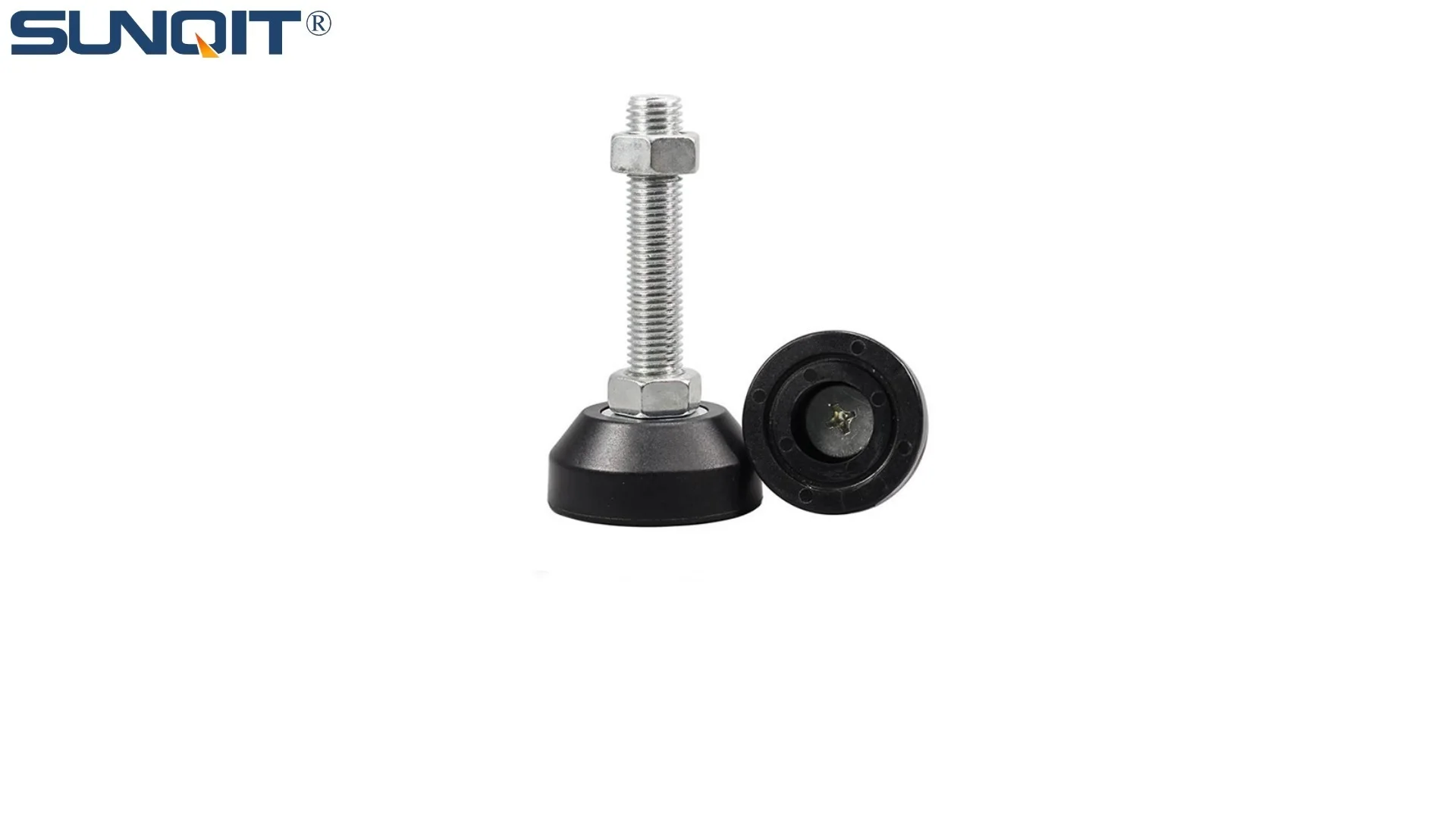
Adjustable leveling feet are designed to keep machines level when placed on uneven or sloped ground. Otherwise known as adjustable equipment feet, they are available to order in a wide variety of size and load capacity combinations.
Walk into any busy production line, and you'll notice the hum of machinery, the rhythm of workers assembling parts, and the constant flow of materials. What you might not immediately see is the silent battle many employees fight daily: the strain of working at unstable workbenches, the fatigue from vibrations, or the discomfort of poorly adjusted surfaces. These small, unaddressed issues chip away at productivity, morale, and even safety. But what if a single, unassuming component could ease that burden? Enter the M10*56 rubber leveling foot—a quiet hero in the world of industrial ergonomics. In this article, we'll explore how this simple yet ingenious tool transforms workbenches, integrates with aluminum profiles, and becomes a cornerstone of lean systems, all while prioritizing the well-being of the people who keep production lines moving.
The Hidden Cost of Poor Ergonomics in Production
Ergonomics isn't just a buzzword—it's the science of designing workspaces to fit the people who use them. When ignored, the consequences are tangible. According to the Bureau of Labor Statistics, over 2.8 million nonfatal workplace injuries and illnesses were reported in 2023, with musculoskeletal disorders (MSDs) accounting for 30% of these cases. In manufacturing, a significant portion of these MSDs stem from poorly designed workstations: uneven workbenches forcing workers into awkward postures, wobbly surfaces causing repetitive strain, and vibrations from machinery leading to chronic fatigue.
Consider Maria, an assembly line worker at a electronics plant. For years, she stood at a workbench that tilted slightly to the left—barely noticeable at first, but over time, her left shoulder ached from compensating. The bench also vibrated constantly from the nearby conveyor, making it harder to grip small components. By the end of her shift, her hands felt numb, and her productivity dipped. Stories like Maria's are common, but they're not inevitable. The right tools, like the M10*56 rubber leveling foot, can turn these struggles into solutions.
What Are M10*56 Rubber Leveling Feet, Anyway?
At first glance, M10*56 rubber leveling feet might seem like hardware. But their design is purposeful, blending simplicity with functionality. Let's break down the name: "M10" refers to the metric thread size (10mm diameter), ensuring compatibility with standard industrial threaded holes. "56mm" is the length of the threaded rod, giving ample adjustability to level surfaces even on uneven floors. The "rubber" component is the base—a soft, durable material that sits between the metal rod and the floor.
These feet are typically made with a steel or zinc-plated steel rod for strength, topped with a hexagonal nut for easy adjustment (no special tools needed—just a wrench or even a firm hand). The rubber base is often ribbed or textured to grip floors, preventing slipping even in oily or dusty factory environments. Some models include a metal washer between the nut and rubber base to distribute weight evenly, ensuring the foot doesn't sink into soft floors over time.
But why rubber? Unlike metal feet, rubber absorbs vibrations—a critical feature in production lines where nearby conveyor belts, presses, or motors create constant movement. It also reduces noise, dampening the clatter of metal-on-concrete that can contribute to workplace stress. And because rubber is non-marring, it won't scratch or damage polished floors, a bonus for facilities that prioritize cleanliness (hello, food processing or pharmaceutical plants).

Three Key Ergonomic Benefits of M10*56 Rubber Leveling Feet
Now, let's dive into how these feet directly enhance ergonomics. Their impact might seem small, but in a setting where workers spend 8+ hours a day at their stations, small improvements add up to big results.
1. Precision Adjustment: Customizing Workspaces for Every Worker
One size does not fit all in production. A workbench set to 36 inches might be perfect for a 5'4" operator but force a 6'2" colleague to hunch over, straining their lower back. M10*56 leveling feet solve this by offering up to 56mm of height adjustment. With a quick twist of the hexagonal nut, supervisors or workers themselves can raise or lower individual corners of a workbench, ensuring the surface is perfectly level and at the optimal height for the person using it.
This adjustability is especially valuable in dynamic environments where workstations are reconfigured frequently (a hallmark of lean systems). Need to repurpose a workbench from assembly to inspection? Adjust the feet to match the new operator's height. Moving a workstation to a different part of the factory with uneven flooring? Tweak the feet to stabilize it. No more "making do" with a wobbly surface—every worker gets a workspace tailored to their body.
2. Stability: Reducing Strain and Errors
A wobbly workbench isn't just annoying—it's dangerous. When tools, parts, or even the bench itself shift unexpectedly, workers tense their muscles to compensate, leading to fatigue and increased risk of repetitive strain injuries (RSIs). Loose components might slide off, causing scrap or delays. M10*56 leveling feet eliminate this by anchoring the workbench firmly to the floor.
The rubber base's grip is key here. Unlike plastic feet, which can slide on smooth concrete, or metal feet that scratch and skid, rubber creates friction that keeps the bench steady. Even when workers lean on the bench or apply force during assembly, the feet hold their position. This stability lets workers focus on their tasks, not on balancing the workstation—a mental load lifted that reduces stress and errors.
3. Vibration Dampening: A Quieter, Less Fatiguing Workday
Vibrations from nearby machinery might seem harmless, but over time, they take a toll. Constant low-level shaking can cause hand-arm vibration syndrome (HAVS), numbness, and reduced grip strength—critical issues for workers handling small parts or using precision tools. M10*56 rubber feet act as shock absorbers, absorbing these vibrations before they reach the workbench and, ultimately, the worker.
Imagine assembling tiny circuit boards next to a running conveyor. Without vibration dampening, the bench might shake just enough to make soldering or component placement tricky. With rubber feet, the tremors are muffled, making fine motor tasks easier and less tiring. Workers report less hand fatigue at the end of shifts, and facilities see fewer defects caused by shaky hands.

Integration with Workbenches and Aluminum Profiles
M10*56 rubber leveling feet don't work in isolation—they're part of a larger ecosystem of industrial furniture and tools. Two common partners in this ecosystem are workbenches and aluminum profiles, both of which benefit significantly from the addition of these feet.
Workbenches: The Heart of the Production Line
Workbenches are where the magic happens—assembly, testing, packaging, and more. But even the sturdiest workbench (like the "Workbench E (single deck-without caster)" from many suppliers) is only as good as its foundation. Without leveling feet, a heavy workbench on uneven flooring will rock, compromising both ergonomics and safety.
M10*56 feet are often pre-installed on premium workbenches, but they're also easy to retrofit. Most industrial workbenches have threaded holes in their legs, designed to accept leveling feet. Simply screw the M10*56 rod into the leg, adjust the height, and lock it in place with the nut. For workbenches without pre-drilled holes, adapters or mounting plates can be used to attach the feet securely.
The result? A workbench that stays level, even when loaded with tools, parts bins, or heavy equipment. Workers can stand comfortably, with their elbows at a 90-degree angle (the ergonomic sweet spot for assembly tasks), reducing strain on shoulders and wrists.
Aluminum Profiles: Building Flexible, Stable Structures
Aluminum profiles (like "aluminum extrusion profile" or "t-slot aluminum pipe") are the backbone of modern lean systems. Lightweight yet strong, they're used to build everything from material racks to flow racks to custom workstations. But aluminum's flexibility—its ability to be cut, joined, and reconfigured—means structures can become unstable if not properly anchored.
M10*56 rubber leveling feet are the perfect complement to aluminum profiles. Many aluminum profile accessories, such as "aluminum foot base" or "adjustable leveling feet," are designed to work with these feet. By attaching leveling feet to the bottom of aluminum profile legs, manufacturers can create modular structures that are both flexible and stable. Need to move a material rack? Disassemble the profiles, relocate, and adjust the feet to level it on the new floor. No more shimming with wood blocks or metal washers—just precise, repeatable stability.
This synergy between aluminum profiles and leveling feet is why they're a staple in lean manufacturing. Lean systems thrive on adaptability, and M10*56 feet ensure that adaptability doesn't come at the cost of ergonomics or safety.

M10*56 Feet in Lean Systems: Waste Reduction Through Ergonomics
Lean manufacturing is all about eliminating waste—whether it's excess inventory, unnecessary motion, or defects. But one often overlooked form of waste is "ergonomic waste": the time, energy, and resources lost to worker fatigue, injuries, or inefficiency caused by poor workspace design. M10*56 rubber leveling feet play a quiet but vital role in reducing this waste.
Consider the 5S methodology (Sort, Set in Order, Shine, Standardize, Sustain), a core pillar of lean systems. "Set in Order" requires that tools and workspaces are organized for maximum efficiency. A level, stable workbench is central to this—tools stay in place, parts don't roll off, and workers don't waste time searching for dropped items or readjusting their posture. M10*56 feet ensure workbenches stay "set in order" even as floors shift or workstations are moved.
Another lean principle is "respect for people," which includes prioritizing worker health and safety. By reducing RSIs and fatigue, leveling feet keep workers on the job and productive, minimizing absenteeism and turnover. A study by the Society for Human Resource Management found that companies with strong ergonomics programs report 25-50% lower injury rates and 20-50% higher productivity—clear wins for lean waste reduction.
In short, M10*56 rubber leveling feet aren't just a hardware component—they're a lean tool. They turn unstable, one-size-fits-all workspaces into optimized, worker-centric stations that eliminate waste and boost performance.
How Do M10*56 Rubber Feet Compare to Other Leveling Solutions?
Not all leveling feet are created equal. To understand why M10*56 rubber feet stand out, let's compare them to three common alternatives: fixed plastic feet, metal feet, and smaller rubber feet.
| Feature | M10*56 Rubber Leveling Feet | Fixed Plastic Feet | Metal Feet | Smaller Rubber Feet (e.g., M8*30) |
|---|---|---|---|---|
| Adjustability | Up to 56mm height adjustment | No adjustment (fixed height) | Limited (often 10-20mm) | Up to 30mm (less range) |
| Vibration Absorption | Excellent (rubber dampens vibrations) | Poor (plastic transmits vibrations) | Poor (metal amplifies vibrations) | Good, but smaller surface area reduces effectiveness |
| Stability on Uneven Floors | High (adjustable to level any surface) | Low (can't adapt to unevenness) | Medium (adjustable but less grip) | Medium (less height range limits adaptability) |
| Load Capacity | High (supports 200-500kg per foot) | Low (prone to cracking under heavy loads) | Very high (but slippery) | Medium (smaller size limits weight) |
| Compatibility with Aluminum Profiles | Excellent (M10 thread fits most profile legs) | Limited (often requires custom drilling) | Good, but threads may corrode | Requires smaller profile legs (less common) |
As the table shows, M10*56 rubber feet excel in adjustability, vibration absorption, and stability—three critical factors for ergonomics. Fixed plastic feet can't adapt to uneven floors, metal feet transmit vibrations and scratch floors, and smaller rubber feet lack the height range to level larger workbenches. For production lines prioritizing worker comfort and flexibility, M10*56 rubber feet are the clear choice.
Maintaining M10*56 Rubber Leveling Feet: Tips for Longevity
Like any tool, M10*56 rubber feet perform best with regular maintenance. Here are four simple steps to keep them in top shape:
1. Inspect Rubber Bases for Wear
Over time, the rubber base can wear down, especially in high-traffic areas or under heavy loads. Check for cracks, flattening, or loss of texture every 3-6 months. If the rubber feels hard or smooth (no grip), replace the foot—worn rubber reduces stability and vibration absorption.
2. Clean Threads and Nuts
Dust, oil, and debris can gunk up the threaded rod and nut, making adjustment difficult. Wipe threads with a dry cloth monthly, and use a small brush to clean the nut's grooves. For stubborn grime, apply a tiny amount of lubricant (like WD-40) and wipe away excess—avoid over-lubricating, as it can attract more dirt.
3. Retighten Nuts After Adjustments
When adjusting height, always retighten the hexagonal nut against the workbench leg to lock the foot in place. Loose nuts can cause the foot to gradually lower over time, destabilizing the workstation.
4. replace Damaged Rods
If the steel rod bends or the threads strip (rare, but possible under extreme loads), replace the entire foot. Bent rods can't provide stable support, and stripped threads make adjustment impossible.
The Bottom Line: Small Feet, Big Impact
M10*56 rubber leveling feet might not grab headlines, but they're the unsung heroes of ergonomic production lines. By offering precise adjustability, unbeatable stability, and vibration dampening, they transform workbenches from mere surfaces into tools that support workers' health and productivity. When paired with aluminum profiles and integrated into lean systems, they become even more powerful—enabling flexible, efficient workspaces that adapt to people, not the other way around.
For manufacturers, the message is clear: investing in ergonomic details like M10*56 leveling feet isn't a luxury—it's a smart business move. Happier, healthier workers are more productive, make fewer errors, and stay with the company longer. And in a world where every efficiency and every injury prevention counts, these small, rubber feet deliver big returns.
So the next time you walk through a production line, take a moment to look down. Chances are, under those workbenches and aluminum profile structures, M10*56 rubber leveling feet are hard at work—quietly making the daily grind a little easier, one stable, level surface at a time.