- Company Articles
- Products and Technology
- Product knowledge
- How M10*56 Rubber Leveling Feet Improve Workplace Safety in Factories

How M10*56 Rubber Leveling Feet Improve Workplace Safety in Factories
Related Product
M10*56 Rubber Leveling Feet
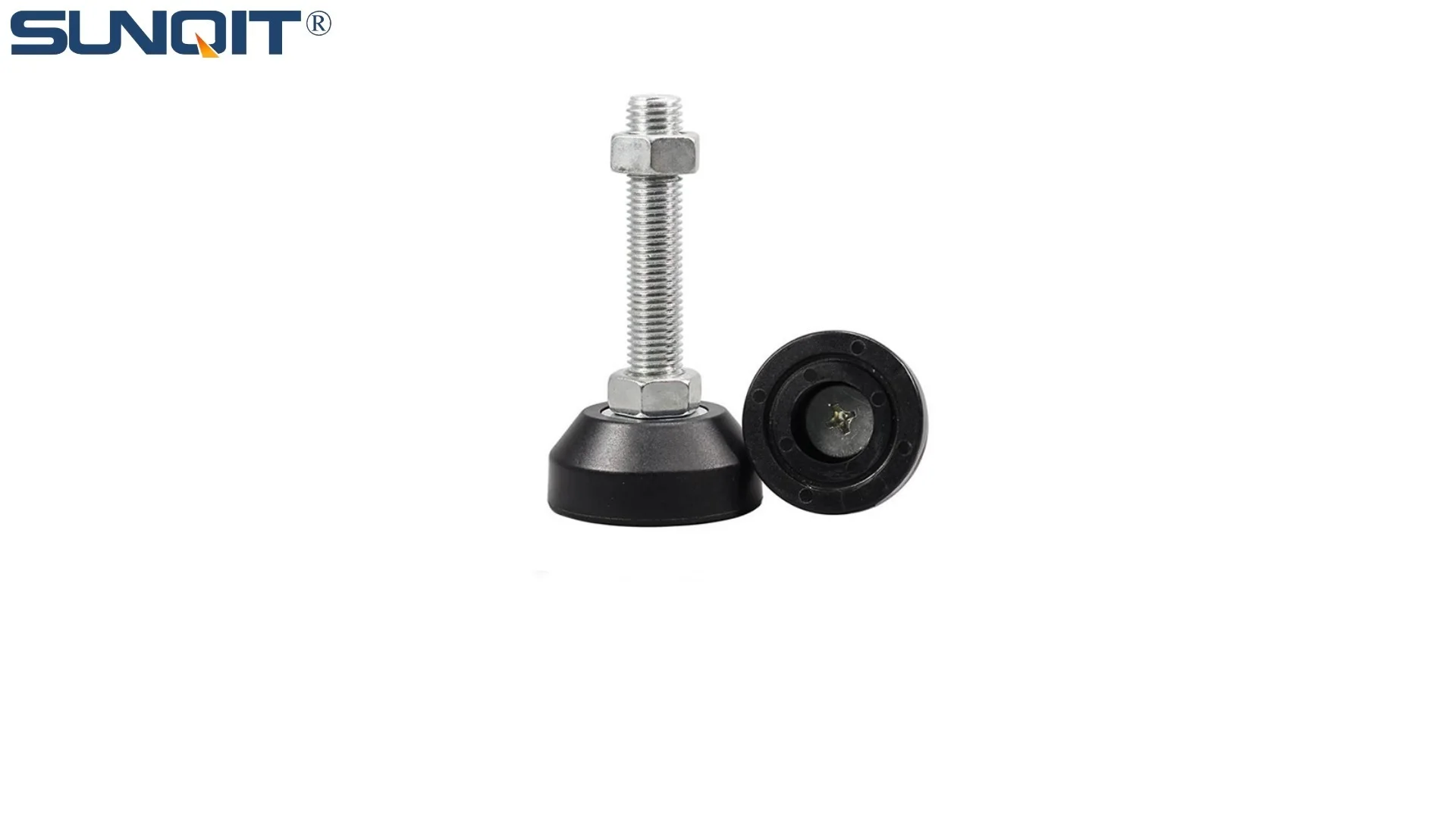
Adjustable leveling feet are designed to keep machines level when placed on uneven or sloped ground. Otherwise known as adjustable equipment feet, they are available to order in a wide variety of size and load capacity combinations.
Walk into any busy factory, and your eyes are drawn to the big stuff: the whirring conveyor belts, the towering material racks, the workers in bright safety vests assembling products with precision. It's easy to overlook the small, unassuming components that keep everything running smoothly—until something goes wrong. A workbench wobbles, a tool slips, a box teeters on an uneven shelf. These "small" issues often trace back to one overlooked detail: stability. And when it comes to stability in factory settings, few components punch above their weight quite like the M10*56 rubber leveling foot.
In this article, we'll dive into why these unassuming devices are quiet heroes of workplace safety. We'll explore how their design addresses common factory hazards, from wobbly workbenches to slippery floors, and how they integrate seamlessly with essential equipment like lean pipe workbenches and aluminum profile structures. By the end, you'll understand why investing in quality adjustable leveling feet isn't just about "leveling up" your setup—it's about protecting the people who keep your factory moving.
The Hidden Danger of Uneven Floors and Unstable Equipment
Factories are not known for perfect floors. Years of heavy machinery traffic, spills, and shifting foundations leave most factory floors uneven—sometimes by just a few millimeters, other times by centimeters. On their own, these imperfections might seem trivial. But when you stack a workbench loaded with tools, a material rack holding heavy parts, or an assembly station with delicate components on top? Suddenly, that tiny slope or bump becomes a ticking time bomb.
Consider Maria, a line worker at a electronics plant. Her workbench, a sturdy aluminum profile structure with a wooden top, had been wobbling for weeks. The factory floor near her station dipped slightly, and no matter how she adjusted the caster wheels (the ones meant for moving the bench during deep cleans), the bench still shifted when she leaned on it. One afternoon, as she reached for a precision screwdriver, the bench lurched. The screwdriver skidded off the edge, narrowly missing her foot. "I just got lucky that time," she later told her supervisor. "Next time, it could be a circuit board—or worse, my hand."
Maria's story isn't unique. According to OSHA, slips, trips, and falls are among the top causes of workplace injuries in manufacturing, often linked to unstable equipment or uneven walking surfaces. Even when injuries don't occur, unstable setups cost time: workers slow down to compensate for wobbling, tools get damaged, and products are at risk of defects. This is where adjustable leveling feet step in—not as a "luxury," but as a critical safety solution.
What Are M10*56 Rubber Leveling Feet, Anyway?
Let's start with the basics. M10*56 rubber leveling feet are small, threaded devices designed to stabilize equipment by adjusting for uneven surfaces. The "M10" refers to the thread size (10mm diameter), and "56" indicates the length of the threaded stem (56mm)—long enough to compensate for most factory floor irregularities. The base is typically made of durable rubber, while the stem is steel or zinc-plated metal for strength.
At first glance, they look like nothing more than metal bolts with rubber caps. But their design is deceptively clever. The threaded stem screws into a mounting plate or directly into the equipment (like the legs of a workbench), allowing you to twist the foot up or down to raise or lower that corner of the setup. The rubber base, often textured or grooved, grips the floor to prevent slipping, even on smooth concrete or slightly oily surfaces. Unlike caster wheels, which are great for mobility, leveling feet lock equipment in place once adjusted—turning a movable cart into a rock-solid workstation.
But why "rubber"? Rubber is ideal for factory environments because it's non-slip, shock-absorbent, and resistant to oils, chemicals, and temperature changes. Metal feet might scratch floors or slide; plastic feet can wear down quickly under heavy loads. Rubber strikes the perfect balance: it cushions vibrations (which we'll talk about later), dampens noise, and keeps equipment rooted to the spot.

5 Ways M10*56 Rubber Leveling Feet Boost Factory Safety
Now that we know what they are, let's break down exactly how M10*56 rubber leveling feet make factories safer. These aren't just "levelers"—they're multi-tasking safety tools.
1. Preventing Wobbles = Preventing Accidents
The most obvious benefit is stability. By adjusting each leveling foot to match the floor's contours, you eliminate wobble in equipment like workbenches, material racks, and assembly stations. A stable workbench means tools stay put, parts don't roll off edges, and workers don't have to waste mental energy compensating for movement. This might sound like a small relief, but fatigue from maintaining balance adds up. When a workbench is steady, Maria (from our earlier example) can focus on her task, not on keeping the bench from shifting.
Stability is especially critical for lean pipe workbenches—those modular setups made from aluminum or steel pipes and joints, popular in lean manufacturing for their flexibility. Lean benches are often customized with tool holders, shelves, and bins, all of which add weight. Without proper leveling, the bench can tilt, causing shelves to empty or bins to slide. M10*56 feet, with their strong stems and grippy rubber bases, anchor these benches firmly, even when loaded with 200+ pounds of tools and materials.
2. Rubber Grip: Slips and Spills Don't Stand a Chance
Factory floors see their share of spills—oil from machinery, water from cleaning, coolant from metalworking. Even with quick cleanup, floors can stay slightly slippery for hours. Metal or plastic leveling feet might slide on these surfaces, but rubber? Rubber's natural friction creates a strong grip, even when wet. The textured surface of most M10*56 rubber bases acts like tiny suction cups, reducing the risk of equipment sliding during a spill.
Imagine a material rack B (3 row and 3 floor) loaded with heavy turnover boxes. A coolant spill near the rack could turn the floor into an ice rink for metal feet, causing the rack to shift. But with rubber leveling feet, the rack stays anchored. The rubber compresses slightly under the weight, increasing contact with the floor and creating a barrier against slips.
3. Vibration Dampening: Protecting Workers and Products
Heavy machinery in factories creates constant vibration—from the thud of stamping presses to the hum of conveyor motors. Over time, this vibration travels through the floor and into nearby equipment. For sensitive work (like assembling circuit boards) or precision tools (like calipers), vibration can ruin accuracy. For workers, prolonged exposure to vibration (from leaning on a shaking workbench) can lead to fatigue, headaches, or even long-term nerve damage.
Rubber is a natural shock absorber. When M10*56 feet are installed, the rubber base acts as a buffer, absorbing much of the vibration before it reaches the equipment. This not only protects delicate parts but also makes workstations more comfortable for workers. John, a quality inspector at an auto parts plant, noticed the difference immediately after his inspection bench was fitted with rubber leveling feet: "The microscope doesn't shake as much anymore. I can focus longer, and my hands don't feel as tired at the end of the day."
4. Ergonomic Alignment: Reducing Strain and Injury
Ergonomics is all about fitting the workspace to the worker, not the other way around. An uneven workbench forces workers to hunch, lean, or twist to compensate—straining shoulders, backs, and necks over time. M10*56 leveling feet let you adjust the height of each corner of a workbench or station, ensuring the surface is perfectly level and at the right height for the worker. For example, a workbench E (single deck-without caster) can be raised or lowered by twisting the leveling feet, so a shorter worker doesn't have to reach up, and a taller worker doesn't have to stoop.
OSHA estimates that ergonomic injuries (like back strains and repetitive motion disorders) cost U.S. businesses over $20 billion annually. By keeping workstations level and aligned, M10*56 feet help reduce these costs—and, more importantly, keep workers healthy.
5. Compliance: Meeting Safety Standards Without the Headache
Factory safety regulations (like OSHA in the U.S. or CE standards in Europe) don't explicitly mention "leveling feet," but they do require employers to "maintain a workplace free from recognized hazards." An unstable workbench, a tipping material rack, or a slippery setup all qualify as "recognized hazards." By installing M10*56 rubber leveling feet, you're not just making the workplace safer—you're also ensuring compliance with these regulations, avoiding fines and potential legal issues.

M10*56 Rubber Leveling Feet vs. Other Options: A Safety Comparison
Not all leveling feet are created equal. Let's compare M10*56 rubber feet to other common types, focusing on how they stack up in safety.
| Feature | M10*56 Rubber Leveling Feet | Plastic Leveling Feet | Metal-Only Leveling Feet | Caster Wheels (Locked) |
|---|---|---|---|---|
| Slip Resistance | High (rubber grip, even on wet floors) | Low (smooth plastic slides easily) | Medium (metal can scratch and slide on spills) | Low (casters have small contact area; locks can fail) |
| Vibration Absorption | High (rubber dampens shocks) | Low (stiff plastic transmits vibration) | Very Low (metal conducts vibration) | Medium (some rubber on casters, but limited) |
| Load Capacity | High (steel stem + rubber base; up to 500 lbs per foot) | Low (plastic can crack under heavy weight) | High (but risk of floor damage) | Medium (casters rated for weight, but less stable when locked) |
| Floor Protection | High (rubber won't scratch or mark floors) | Medium (soft plastic, but can leave marks) | Low (metal scratches concrete and tile) | Medium (rubber wheels, but locks can dig in) |
| Safety in Uneven Areas | High (56mm stem allows precise height adjustment) | Medium (shorter stems; less adjustment range) | Medium (adjustable, but no grip benefit) | Low (casters don't adjust; wobble on uneven floors) |
The table tells the story: M10*56 rubber leveling feet excel in the areas that matter most for safety. They grip better, absorb vibration, handle heavy loads, protect floors, and adjust to uneven surfaces—all while being affordable and easy to install.

Real-World Applications: Where M10*56 Feet Make the Biggest Difference
M10*56 rubber leveling feet aren't a one-trick pony. They shine in almost every corner of a factory, from assembly lines to storage areas. Let's look at three key applications:
1. Lean Pipe Workbenches and Assembly Stations
Lean pipe workbenches are the backbone of flexible manufacturing. They're easy to customize, reconfigure, and move (with casters). But when it's time to work, they need to stay put. M10*56 feet are often paired with caster wheels on these benches—casters for mobility, leveling feet for stability during use. For example, a "workbench E (single deck-without caster)" might come with pre-drilled holes for M10*56 feet, allowing workers to bolt them on and adjust in minutes. The result? A bench that's rock-solid during assembly and easy to move when needed.
2. Material Racks and Storage Systems
Material racks, like "material rack B (3 row and 3 floor)," hold hundreds of pounds of parts, boxes, and tools. An uneven rack can lead to boxes tipping, parts spilling, or even the rack collapsing. M10*56 feet are installed at the base of each rack leg, allowing workers to adjust each corner to keep the rack perfectly vertical. This not only prevents collapses but also makes it easier to slide boxes in and out of shelves—no more jamming because the shelf is tilted.
3. ESD Workstations (Electrostatic Discharge Protection)
In electronics factories, ESD workstations protect sensitive components from static electricity. These workstations often have conductive surfaces and grounding wires. But even here, stability matters. A wobbling ESD workstation can disrupt grounding connections or cause components to fall. M10*56 feet, with their non-conductive rubber bases (some models are conductive for ESD setups), keep the workstation steady while maintaining ESD safety.
Installation and Maintenance: Keeping Your Leveling Feet (and Factory) Safe
M10*56 rubber leveling feet are easy to install, but a few best practices will ensure they work effectively for years:
- Check floor conditions first: Before installing, sweep or clean the area to remove debris that could prevent the feet from sitting flat.
- Adjust evenly: When setting up a workbench or rack, adjust each foot a little at a time, checking for wobble as you go. A spirit level can help ensure the surface is perfectly horizontal.
- Inspect regularly: Rubber bases can wear down over time, especially in high-traffic areas. Check for cracks, tears, or smooth spots (which reduce grip) every 3–6 months. replace feet with damaged bases immediately.
- Clean the threads: If you need to re-adjust feet after months of use, wipe the threaded stems clean to remove dirt and debris—this prevents jamming and ensures smooth adjustment.
Maintenance is minimal, but ignoring it can turn a safety feature into a hazard. A worn rubber base loses its grip, and a bent stem (from over-tightening) can't adjust properly. Spend a few minutes each quarter checking your leveling feet, and they'll repay you with years of safe service.
Conclusion: Small Parts, Big Impact on Safety
M10*56 rubber leveling feet might not make headlines or win design awards, but they're the unsung heroes of factory safety. By stabilizing equipment, preventing slips, absorbing vibration, and aligning workstations, they protect workers from injuries, reduce product defects, and keep factories compliant with safety standards.
The next time you walk through your factory, take a moment to look down. Under that lean pipe workbench, beside that material rack, or at the base of that assembly station—those small rubber feet are hard at work. They're a reminder that safety in manufacturing isn't just about big machines or strict protocols. Sometimes, it's the smallest components that make the biggest difference.
So, invest in quality adjustable leveling feet. Your workers, your products, and your bottom line will thank you.