- Company Articles
- Products and Technology
- Product knowledge
- How Many Flat Swivel Castor Wheels Does a Trolley Need? Weight Distribution

How Many Flat Swivel Castor Wheels Does a Trolley Need? Weight Distribution
Related Product
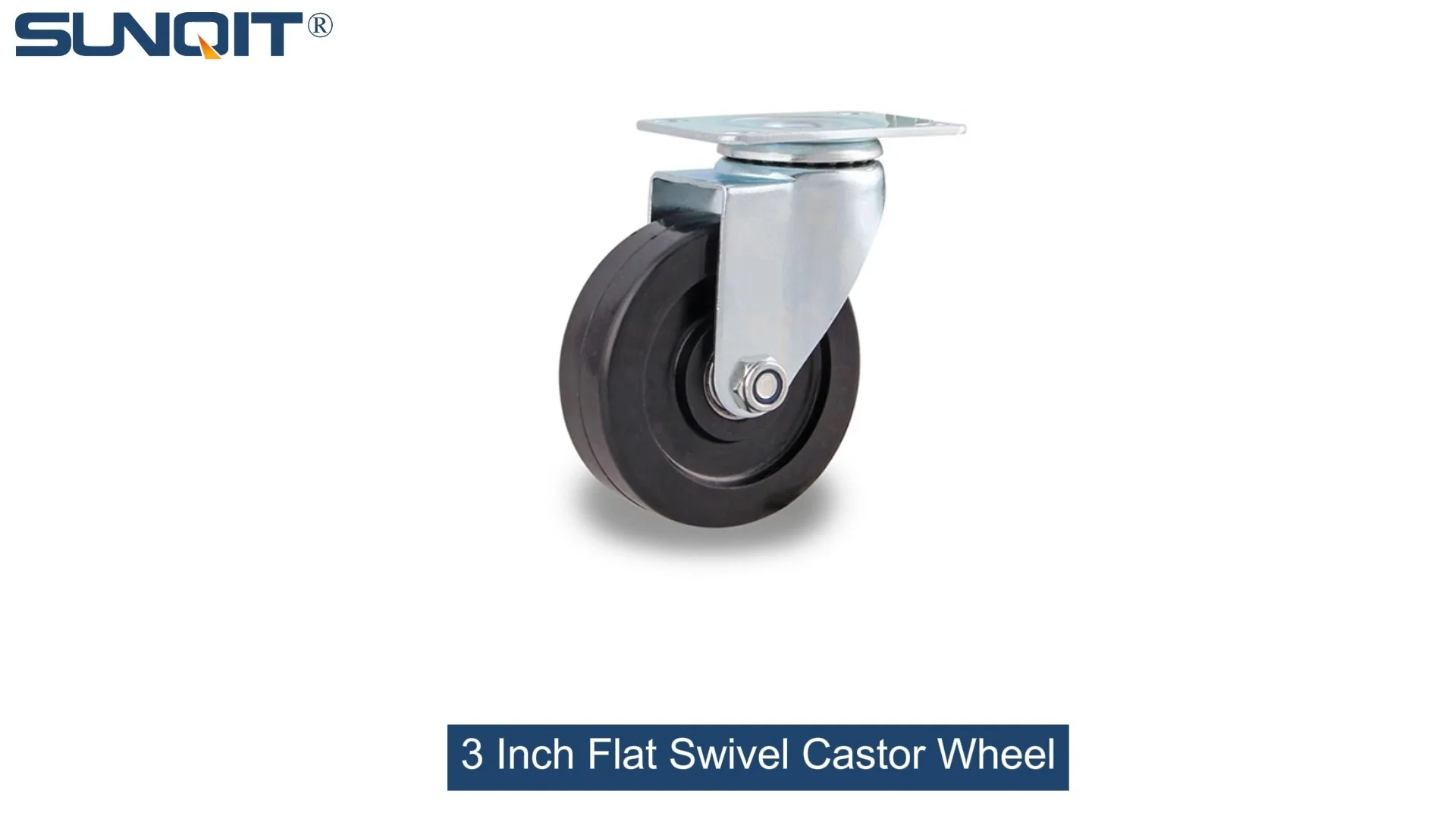
Flat Swivel Castor Wheel
Chair Casters Ball Bearing Wheels Rubber Base. Resistant to abrasion, impact and corrosion. Heavy payload can hold 70-90Kgs per pcs,which can make it works at a stable and smooth status.
Picture this: You're in a busy warehouse, pushing a trolley stacked with boxes. Halfway to the storage area, the trolley starts to wobble. One wheel feels like it's about to give way, and you're suddenly worried the whole load might tip over. Sound familiar? If so, you've experienced firsthand the consequences of poor wheel configuration and weight distribution. Today, we're diving into a question that's more critical than you might think: How many flat swivel castor wheels does a trolley really need? Spoiler: It's not just about slapping on as many wheels as possible. It's about balance, load, and understanding how each component—from the wheels themselves to the trolley's design—works together to keep things moving smoothly.
First Things First: What Are Flat Swivel Castor Wheels?
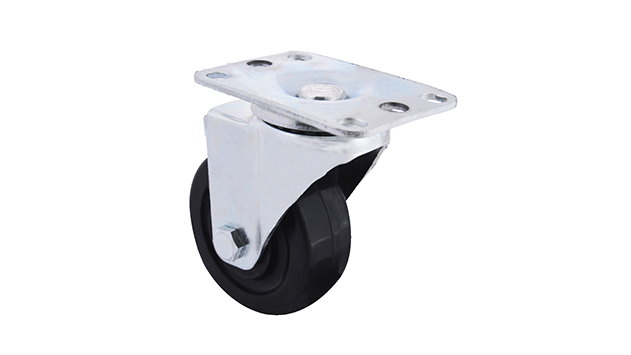
Before we get into numbers, let's make sure we're on the same page about the star of the show: flat swivel castor wheels. These aren't your average fixed wheels. A flat swivel castor wheel is designed to rotate 360 degrees, making it easy to maneuver tight corners or change direction with minimal effort. The "flat" part refers to the mounting plate—they attach directly to the bottom of the trolley (or equipment) with a flat base, which distributes weight evenly across the mounting surface. This design is a game-changer for mobility, but it also means they rely heavily on proper weight distribution to avoid issues like wheel stress or trolley instability.
And let's not forget the unsung heroes: caster accessories . Things like brake mechanisms (to lock wheels in place when loading/unloading), bearing types (ball bearings for smooth rotation, roller bearings for heavy loads), and even wheel materials (rubber for quiet operation, polyurethane for durability) all play a role in how well these wheels perform. A top-notch flat swivel castor wheel with the right accessories can handle more weight and last longer, but only if the trolley's wheel count and placement are optimized.
Why Weight Distribution Matters More Than You Think
Imagine stacking a tower of books on a small table with only two legs. Chances are, it'll tip over. The same logic applies to trolleys: uneven weight distribution is the number one cause of wobbly, unstable, or even dangerous equipment. When weight isn't spread evenly across the wheels, a few things happen:
- Excess stress on individual wheels: If one wheel bears more weight than it's rated for, it can bend, crack, or wear out prematurely. This isn't just a maintenance headache—it's a safety risk.
- Tipping hazards: A trolley with uneven weight is more likely to tip when turning or hitting a bump, especially if the load is tall (think: stacked boxes). The center of gravity shifts, and suddenly you're dealing with spilled goods or, worse, injuries.
- Poor maneuverability: Overloading one side makes the trolley harder to push or pull. You might end up straining your back or struggling to navigate through doorways.
The key here is balance. Every wheel should carry a roughly equal share of the total weight (trolley + load). To do that, you need to consider two things: the total weight the trolley will carry, and how many wheels are needed to spread that weight out safely.
Factors That Determine How Many Wheels You Need
There's no one-size-fits-all answer to "how many wheels?" It depends on a few key factors. Let's break them down:
1. Total Load Capacity (Trolley + Cargo)
First, calculate the maximum weight your trolley will ever carry. This includes the trolley's own weight (the frame, shelves, etc.) plus the heaviest load you'll put on it. For example, a lightweight turnover trolley and rack used in a retail stockroom might carry 200 kg, while a heavy-duty industrial trolley could handle 1000 kg or more.
Once you have that number, check the load rating of your chosen flat swivel castor wheels. Wheel manufacturers specify a "dynamic load capacity" (weight when moving) and "static load capacity" (weight when stationary). Always go by dynamic load capacity for trolleys, as movement adds stress. If each wheel can handle 250 kg, a 1000 kg total load would need at least 4 wheels (1000 / 250 = 4). But wait—you should always add a safety margin (10-20%) to account for uneven loading or unexpected bumps. So 1000 kg + 20% = 1200 kg, which would need 5 wheels (1200 / 250 = 4.8, rounded up to 5). Better safe than sorry!
2. Trolley Base Size and Shape
A trolley with a wide, rectangular base (like a workbench on wheels) has a larger footprint, which naturally distributes weight better. A narrow, tall trolley (like a tool cart) has a smaller base and higher center of gravity, so it needs more wheels to stay stable. As a general rule: the smaller the base area, the more wheels you need to prevent tipping.
For example, a square trolley base (1m x 1m) might be stable with 4 wheels, while a long, narrow base (2m x 0.5m) might need 6 wheels (3 on each side) to spread the weight across its length.
3. Floor Conditions
Smooth, even floors (like polished concrete in a factory) are forgiving—wheels distribute weight evenly, and there's less risk of jolts. But if your trolley will roll over rough surfaces (cracked asphalt, gravel, or even just uneven warehouse floors), you'll need more wheels to absorb shocks and prevent the load from shifting. More wheels mean more points of contact with the ground, which stabilizes the trolley on bumpy terrain.
4. Maneuverability Needs
Do you need to navigate tight spaces, like between aluminum profile shelving units in a small workshop? Swivel wheels are great for maneuverability, but too many can make the trolley "twitchy" and hard to control. A common solution is a mix: 2 fixed wheels (for straight-line stability) and 2 swivel wheels (for turning). For very heavy loads or larger trolleys, adding more swivel wheels (e.g., 4 swivel + 2 fixed) can balance stability and maneuverability.

Common Wheel Configurations: Pros, Cons, and Best Uses
Now that we've covered the factors, let's look at the most common wheel configurations and when to use them. The table below breaks down the key details:
| Number of Wheels | Configuration | Max Total Load (approx.) | Pros | Cons | Best For |
|---|---|---|---|---|---|
| 2 Wheels | 1 swivel + 1 fixed (or 2 swivel) | Up to 150 kg | Lightweight, easy to store, low cost | Unstable (tips easily), limited load capacity | Hand trucks, small tool carts, light retail trolleys |
| 4 Wheels | 2 swivel + 2 fixed (most common) | 150–800 kg | Stable, good maneuverability, versatile | Not ideal for very heavy loads or narrow bases | Warehouse trolleys, mobile workbenches, delivery carts |
| 4 Wheels (All Swivel) | 4 swivel (with brakes on 2) | 150–600 kg | Exceptional maneuverability for tight spaces | Can be "twitchy" on straight paths; needs brakes to stay still | Workshops, hospitals, small storage areas |
| 6 Wheels | 4 swivel + 2 fixed (or 6 swivel) | 800–2000 kg | High load capacity, super stable, even weight distribution | Heavier, bulkier, harder to store | Heavy-duty industrial trolleys, turnover trolley and rack with multiple shelves, large material carts |
| 8+ Wheels | Mix of swivel and fixed | 2000+ kg | Extreme load capacity, minimal wheel stress | Very large, expensive, limited maneuverability | Heavy machinery transport, oversized cargo trolleys |
Real-World Example: The Turnover Trolley and Rack
Let's put this into practice with a common piece of equipment: the turnover trolley and rack . These trolleys are workhorses in warehouses and distribution centers, used to store and transport everything from boxes to parts. A typical model might have 3 rows and 3 floors (like "Material Rack B" from some suppliers), with a total load capacity of 600 kg (trolley weight: 100 kg, cargo: 500 kg). The base is usually rectangular—say, 1.2m long x 0.8m wide.
Using our earlier formula: total load (600 kg) + 20% safety margin = 720 kg. If we choose flat swivel castor wheels rated for 200 kg each, we'd need 720 / 200 = 3.6 wheels—rounded up to 4. A 4-wheel configuration (2 swivel, 2 fixed) would work here. The base is wide enough to distribute weight evenly, and 4 wheels provide stability without making the trolley too bulky. Adding caster accessories like brakes on the swivel wheels would let workers lock the trolley in place when loading/unloading, preventing accidental movement.
Another Example: Mobile Workbench
A workbench on wheels is another common scenario. Let's say it's a sturdy aluminum profile workbench used in an assembly line, with a wooden top and storage shelves. Total load: 300 kg (workbench: 150 kg, tools and parts: 150 kg). The base is 1.5m x 0.7m—long but not overly narrow.
Total load + 20% = 360 kg. With 4 wheels rated for 100 kg each: 360 / 100 = 3.6 → 4 wheels. Here, 2 swivel (with brakes) and 2 fixed wheels would be perfect. The swivel wheels let workers move the workbench close to assembly stations, while the fixed wheels keep it steady when in use. The aluminum profile frame adds rigidity, ensuring the weight is spread evenly across the base—so the 4 wheels can handle the load without strain.

Pro Tips for Optimal Wheel Performance
Choosing the right number of wheels is just the start. Here are some extra tips to ensure your trolley (and its castor wheels) perform at their best:
- Match wheel size to load: Larger wheels (5–6 inches) handle heavy loads and rough floors better than small wheels (2–3 inches). For example, a 6-inch flat swivel castor wheel can carry more weight than a 4-inch one of the same material.
- Check wheel alignment: Misaligned wheels cause uneven wear and make the trolley hard to push. Ensure wheels are mounted straight and parallel to each other.
- Don't overload: Even with the right number of wheels, exceeding the total load capacity is a recipe for disaster. Train staff to check load limits and avoid piling on extra weight.
- Maintain caster accessories: Keep brakes clean and lubricated, replace worn bearings, and tighten loose mounting bolts. A little maintenance goes a long way in extending wheel life.
- Test before full use: Load the trolley with a test weight (equal to your max load) and push it around. Check for wobbling, uneven noise (a sign of stress), or difficulty turning. Adjust wheel count or placement if needed.
Conclusion: It's All About Balance
At the end of the day, the number of flat swivel castor wheels a trolley needs depends on balancing load capacity, stability, and maneuverability. It's not just a math problem—it's about understanding how your trolley will be used, the environment it will operate in, and the safety of everyone who interacts with it.
Whether you're using a lightweight turnover trolley and rack in a retail store or a heavy-duty mobile workbench in a factory, start by calculating your total load, then choose wheels with a suitable rating. Add a safety margin, consider your trolley's base size and floor conditions, and pick a configuration that balances swivel and fixed wheels. And don't forget the little things—caster accessories, maintenance, and proper loading—they'll make sure your trolley runs smoothly for years to come.
So the next time you see a trolley gliding effortlessly through a warehouse, or a workbench that's easy to move and rock-solid when in use, you'll know: it's all in the wheels.