- Company Articles
- Products and Technology
- Product knowledge
- How Multi-Angle Fixed Aluminum Joints Enhance Lean Manufacturing Efficiency

How Multi-Angle Fixed Aluminum Joints Enhance Lean Manufacturing Efficiency
Related Product
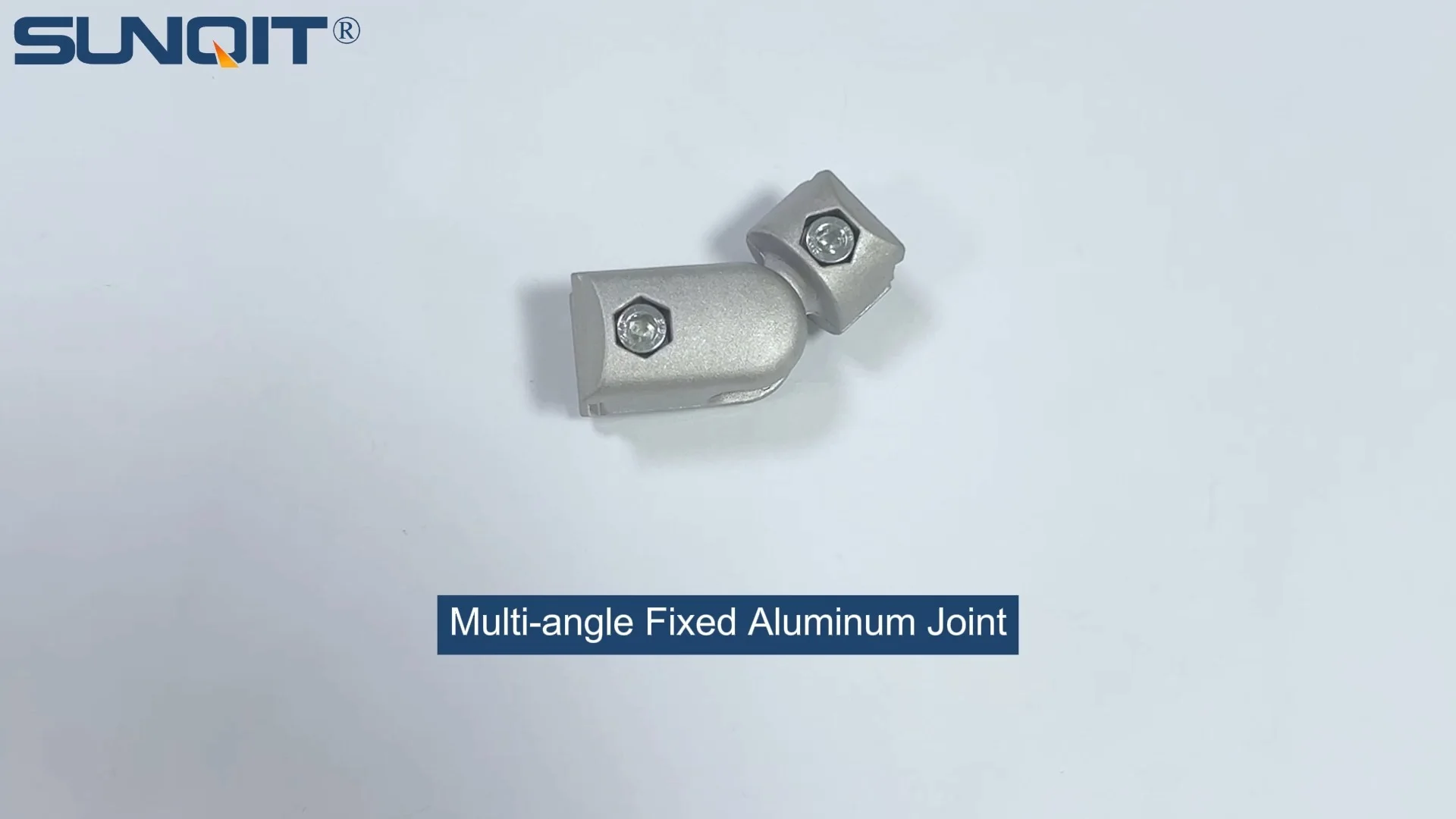
Multi-angle Fixed Aluminum Joint
Aluminum joint pipe connection for two pipe connection and work in mutiple angle.
Introduction: The Lean Manufacturing Challenge
Walk into any manufacturing facility today, and you'll likely hear the same buzzwords: "agility," "waste reduction," "continuous improvement." These aren't just trends—they're the lifeblood of staying competitive in a global market. Lean manufacturing, with its focus on minimizing waste and maximizing value, has become the gold standard for operations teams. But here's the thing: lean principles are only as effective as the tools and systems that bring them to life. A factory can map out the perfect workflow on paper, but if the physical infrastructure—workbenches, material racks, assembly lines—is rigid, slow to adapt, or prone to breakdowns, those lean goals will always feel just out of reach.
This is where the but mighty multi-angle fixed aluminum joint enters the picture. Often overlooked in favor of flashier tech, these small but versatile components are quietly revolutionizing how manufacturers build, adapt, and optimize their workspaces. In this article, we'll explore how these joints, when paired with aluminum profiles and other modular components, become the backbone of a truly efficient lean system. We'll dive into their design, their role in streamlining workflows, and why they've become a go-to solution for manufacturers aiming to do more with less.
What Are Multi-Angle Fixed Aluminum Joints, Anyway?
Let's start with the basics. Imagine trying to build a structure—say, a workbench—with traditional materials. You'd probably reach for steel pipes, welders, and bolts. The result? A sturdy but permanent setup. If tomorrow you need that workbench to be taller, wider, or reconfigured to hold new tools, you're looking at hours (or days) of cutting, welding, and repainting. That's downtime. That's waste. That's the opposite of lean.
Multi-angle fixed aluminum joints flip that script. These are precision-engineered connectors made from high-grade aluminum, designed to join aluminum pipes and profiles at (you guessed it) multiple angles—90 degrees, 45 degrees, 135 degrees, and more. Unlike welded joints or rigid steel brackets, they attach with simple screws or locking mechanisms, allowing for quick assembly and disassembly. Think of them as the "Lego blocks" of manufacturing: strong enough to support heavy loads, but flexible enough to be taken apart and rebuilt in a new configuration in minutes.
But their magic isn't just in adjustability. Aluminum's natural properties—lightweight yet durable, corrosion-resistant, and easy to handle—make these joints ideal for factory environments. They won't rust in humid conditions, they're light enough for a single worker to maneuver, and they hold up to the daily wear and tear of production lines. Plus, they're compatible with a wide range of aluminum profile accessories —wheels, brackets, guide rails—turning a basic joint into a hub for endless possibilities.

The Role of Multi-Angle Joints in Lean Systems
Lean manufacturing isn't a one-time project; it's a mindset of continuous improvement. To thrive, teams need tools that grow with them—systems that can evolve as processes improve, product lines change, or customer demands shift. Multi-angle fixed aluminum joints aren't just tools; they're enablers of this mindset. Here's how they align with core lean principles:
1. Eliminating Waste (Muda)
Waste comes in many forms: time wasted reconfiguring equipment, money wasted on disposable setups, space wasted on oversized, immovable structures. Traditional steel workbenches or material racks often end up as "waste magnets." Once built, they can't be resized, so you either live with inefficiencies or pay to replace them entirely. Aluminum joints, by contrast, are modular. A workbench built with these joints can have its height adjusted by swapping out a few pipes, or its surface extended by adding a new section with minimal tools. No welding, no cutting, no downtime. That's waste reduction in action.
2. Supporting 5S and Workplace Organization
5S—Sort, Set in Order, Shine, Standardize, Sustain—is the foundation of a lean workplace. A cluttered, disorganized shop floor slows down production and increases errors. Multi-angle joints help "Set in Order" by allowing teams to build custom storage solutions that fit their exact needs. Need a rack for small parts? Assemble a vertical structure with joints at 90-degree angles. Need a sloped flow rack for Kanban bins? Use 45-degree joints to create the perfect incline. Everything has a place, and that place can be adjusted as inventory or processes change. This isn't just about tidiness—it's about making sure every tool, part, and workstation is optimized for the people who use them.
3. Enabling Continuous Improvement (Kaizen)
Kaizen, the practice of continuous improvement, relies on small, incremental changes that add up over time. But how do you test a new workflow idea if changing your physical setup takes a week? With aluminum joints, testing becomes easy. A team might notice that parts are taking too long to move from Station A to Station B. Instead of waiting for a capital expenditure to build a new conveyor, they can use joints and aluminum pipes to prototype a temporary roller track in an afternoon. If it works, keep it; if not, disassemble it and try again. This "fail fast, adapt faster" approach is how lean cultures thrive—and aluminum joints make it possible without breaking the bank.

From Joints to Systems: Building a Lean Ecosystem
A single multi-angle joint is useful, but its true power shines when it's part of a larger ecosystem. Pair it with aluminum profiles, pipes, and accessories, and you've got a modular toolkit that can build just about anything a factory needs. Let's break down how these components work together to create efficient, lean workspaces:
Aluminum Profiles: The Backbone
Aluminum profiles are the "bones" of the system. These are extruded aluminum beams with T-slots running along their length—channels that allow joints, brackets, and accessories to be attached anywhere along the profile. They come in various sizes (like 2020, 3030, or 4040, referring to their width and height in millimeters) to support different loads. When connected with multi-angle joints, they form the framework for workbenches, racks, and even entire assembly lines.
Joints: The Connectors
Multi-angle joints are the "muscles" that hold the system together. Their ability to pivot and lock at different angles means you're not limited to straight lines. Need a corner on a workbench? Use a 90-degree joint. Need a diagonal brace for extra stability? A 45-degree joint does the trick. Some joints even allow for internal rotation, letting workers adjust the angle of a shelf or tool holder without disassembling the entire structure. This flexibility is a game-changer for ergonomics—imagine a workbench where the height of the tool rack can be tilted to reduce strain on a worker's shoulders. That's lean thinking applied to human-centric design.
Accessories: The Finishing Touches
No system is complete without the right accessories, and aluminum joint systems have plenty. Casters add mobility, turning a stationary workbench into a mobile cart that can follow a worker through their tasks. Roller tracks and guide rails transform a basic rack into a flow rack , letting materials glide smoothly from storage to assembly. Even small details like end caps (to cover sharp edges) or rubber strips (to dampen noise) contribute to a safer, more efficient workspace. And because everything is designed to work together, adding an accessory doesn't require custom fabrication—just slide it into the T-slot of an aluminum profile and tighten a screw.
| Traditional Steel/Welded Systems | Aluminum Joint & Profile Systems |
|---|---|
| Permanent, difficult to reconfigure | Modular, reconfigurable in minutes |
| Heavy; requires multiple workers to move | Lightweight; often movable by one person |
| Prone to rust and corrosion | Corrosion-resistant aluminum |
| High upfront cost (welding, labor) | Lower initial investment; reusable components |
| Long lead times for custom builds | On-demand assembly with standard parts |

Real-World Impact: How Joints Improve the Bottom Line
Let's move beyond theory and talk about results. How do multi-angle fixed aluminum joints actually translate to better efficiency and cost savings? Let's look at a hypothetical (but realistic) scenario:
The Challenge: A small electronics manufacturer produces circuit boards for medical devices. Their current assembly line uses steel workbenches with fixed shelves and welded material racks. When they launch a new, larger circuit board model, the existing workbenches are too short to accommodate the new tools, and the material racks can't hold the larger component bins. The team estimates it would take 2 weeks and $10,000 to weld new workbenches and racks—a cost they can't afford right now.
The Solution: They switch to a system built with multi-angle fixed aluminum joints and 4040 aluminum profiles. Using pre-cut profiles and joints, two workers assemble new, taller workbenches in a single day. They reconfigure the old material racks by adding 45-degree joints to create steeper shelves for the larger bins. Total cost? $3,000 for parts, and zero downtime (they built the new setup alongside the old one and swapped them out over a weekend).
The Outcome: The new workbenches reduce worker strain (adjustable height means less bending), and the reconfigured racks cut down on time spent searching for parts. Within a month, assembly time per unit drops by 15%, and the team can now reconfigure the line again if needed—no welding required. The $7,000 saved goes back into R&D, and the reduced downtime means they meet their launch deadline for the new product.
This isn't an isolated case. Manufacturers across industries—automotive, aerospace, food processing—report similar results. One automotive supplier, for example, used aluminum joints to build modular flow racks for parts delivery to the assembly line. By adjusting the angle of the racks (using 30-degree joints), they reduced the time workers spent reaching for parts by 20%. Another company replaced rigid steel trolleys with aluminum joint-based trolleys, cutting down on injuries from heavy lifting and reducing material handling time by 25%.
Choosing the Right Joints: What to Look For
Not all aluminum joints are created equal. To maximize efficiency, you'll want to consider a few key factors when selecting joints for your lean system:
1. Load Capacity
Different joints are rated for different weights. A joint used in a light-duty workbench might support 50kg, while one in a heavy-duty material rack could handle 200kg or more. Always check the manufacturer's specs to ensure the joint can support your intended load—overloading leads to instability and safety risks.
2. Angle Range
"Multi-angle" can mean different things. Some joints lock at fixed angles (90°, 45°), while others offer continuous adjustment. If you need precise, repeatable angles, fixed-angle joints are better. If you anticipate frequent adjustments, look for joints with internal rotation or sliding mechanisms.
3. Compatibility
Ensure the joints work with your aluminum profiles. Most profiles have standardized slot sizes (like 6mm or 8mm T-slots), so check that the joint's mounting hardware (screws, bolts) fits. Reputable suppliers will list compatible profile sizes on their product pages.
4. Durability
Look for joints made from high-strength aluminum alloys (like 6063-T5, a common grade for industrial use). These alloys resist deformation under stress and hold up to repeated assembly/disassembly. Avoid cheap plastic joints—they may save money upfront but will crack or wear out quickly in factory conditions.
Conclusion: Joints as the Heart of Lean Efficiency
In the world of lean manufacturing, success often comes down to the details—the small, often unglamorous choices that add up to big results. Multi-angle fixed aluminum joints are one of those details. They don't have flashy interfaces or AI-powered analytics, but they solve a fundamental problem: how to build workspaces that are as agile, adaptable, and efficient as the teams using them.
By enabling quick reconfiguration, reducing waste, and supporting continuous improvement, these joints turn static factories into dynamic ecosystems where change is not just possible but easy. They let manufacturers focus on what matters: making better products, faster, with less effort. And in a world where lean isn't just a strategy but a survival skill, that's invaluable.
So the next time you walk through a factory, take a closer look at the workbenches, the racks, the assembly lines. Chances are, if they're efficient, flexible, and built to last, there's a multi-angle fixed aluminum joint holding them together—quietly, reliably, and leanly.