- Company Articles
- Products and Technology
- Product knowledge
- How Multi-Angle Fixed Aluminum Joints Reduce Production Downtime

How Multi-Angle Fixed Aluminum Joints Reduce Production Downtime
Related Product
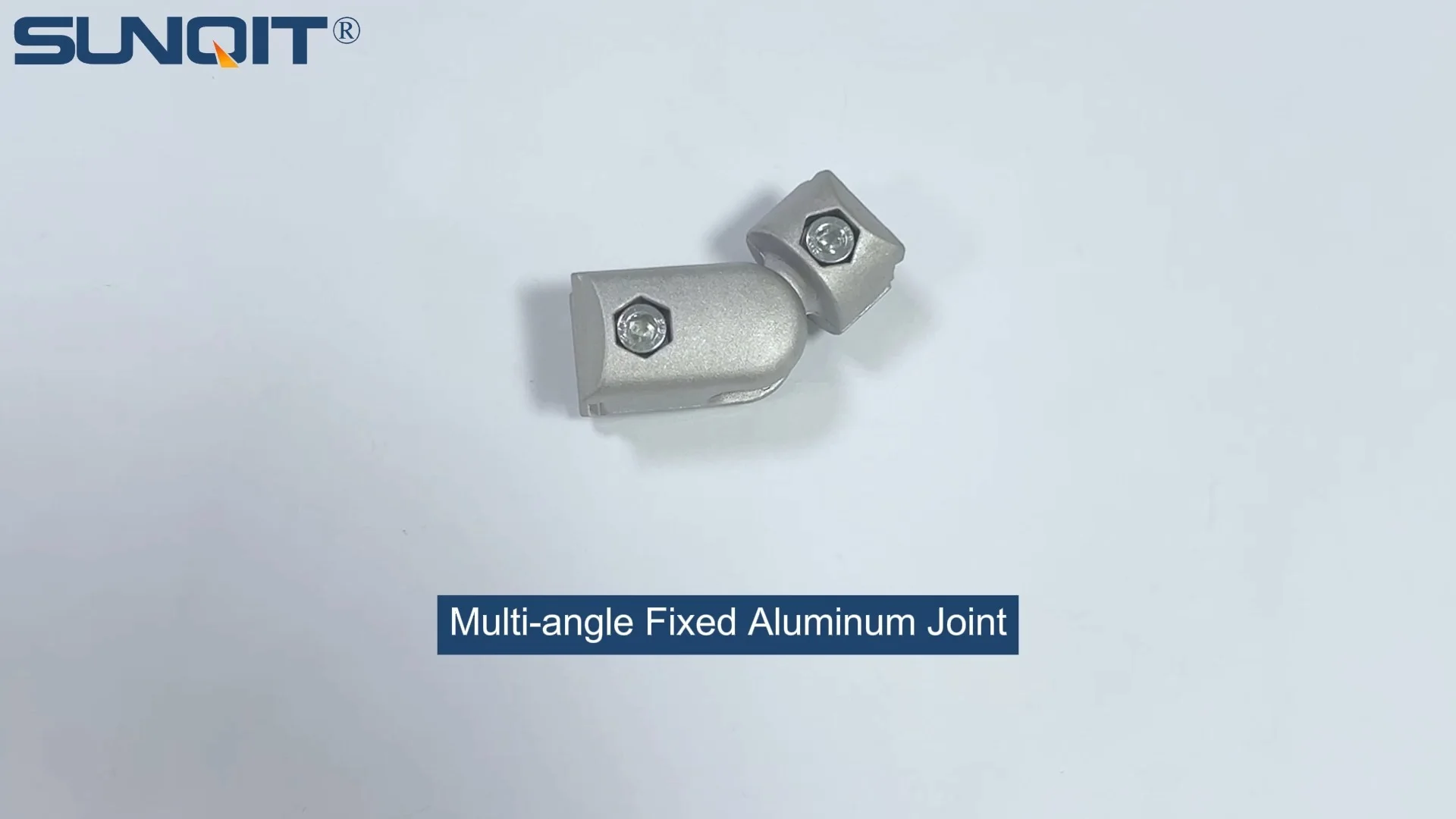
Multi-angle Fixed Aluminum Joint
Aluminum joint pipe connection for two pipe connection and work in mutiple angle.
It's 8:15 AM on a Tuesday, and Maria, the production manager at a mid-sized electronics assembly plant, is staring at her screen in frustration. The morning shift was supposed to start an hour ago, but the third-line workbench collapsed overnight—again. A rusted steel joint gave way, sending circuit boards and tools crashing to the floor. Two maintenance technicians are already on-site, welding torch in hand, but they estimate it'll take at least three hours to fix. By then, Maria knows they'll have lost nearly 200 units of production, not to mention the overtime costs piling up. "Why does this keep happening?" she mutters, scrolling through emails about similar issues last month: a seized conveyor roller track, a stuck material rack B (3 row and 3 floor) that took two days to reconfigure, and a corroded caster wheel that derailed a turnover trolley mid-shift.
Downtime isn't just a numbers problem—it's a stressor. It breaks workflows, demoralizes teams, and eats into profit margins. For manufacturers like Maria's, the average cost of unplanned downtime can hit $22,000 per minute, according to industry reports. The root cause? All too often, it's the rigid, outdated systems holding their operations together: welded steel frames, plastic joints that crack under pressure, and one-size-fits-all setups that can't keep up with shifting production needs. But what if there was a better way? What if the solution was as simple as swapping out those clunky, unreliable components for something designed to flex, adapt, and last? Enter the multi-angle fixed aluminum joint—a small but mighty innovation that's quietly revolutionizing how factories stay up and running.
The Hidden Culprit: Why Traditional Assembly Systems Fail
To understand why multi-angle fixed aluminum joints are game-changers, let's first unpack the flaws in the systems they're replacing. For decades, manufacturers relied on two main options: welded steel structures or plastic-jointed pipe setups. Both have critical weaknesses that lead directly to downtime.
Welded steel is strong, but it's also permanent. Need to adjust the height of a workbench to accommodate a new machine? You'll need to cut the welds, reposition the steel pipes, and reweld—assuming you have a skilled welder on staff. That process alone can take hours, if not days. Worse, steel rusts. In factories with humidity, coolants, or even just daily mopping, those welds and pipes corrode from the inside out. A single rusted joint can bring an entire material rack or conveyor system crashing down, as Maria witnessed.
Plastic-jointed systems (like early lean pipe setups) promised flexibility, but they traded durability for adjustability. The plastic joints, often made from nylon or polypropylene, weaken under heat, UV exposure, or heavy loads. Over time, they crack or loosen, leading to wobbly workbenches or misaligned roller tracks. And while they're easier to assemble than welded steel, reconfiguring them still requires tools, time, and patience—precious resources when you're racing to meet a deadline.
Then there's the "one-angle" problem. Most traditional joints only lock into 90-degree angles, limiting how you can design workspaces. If you need a conveyor to slope at 30 degrees to feed parts into a machine, or a workbench with a 45-degree side shelf for tools, you're out of luck. You either hack together a solution with extra brackets (which adds weak points) or resign yourself to inefficiency—both of which increase the risk of breakdowns.
Meet the Solution: What Are Multi-Angle Fixed Aluminum Joints?
Multi-angle fixed aluminum joints are exactly what their name suggests: precision-engineered connectors made from high-grade aluminum, designed to join aluminum extrusion profiles at virtually any angle—30°, 45°, 90°, 135°, or even custom angles—without a single weld. They're the backbone of modern modular assembly systems, and they're built to solve the very problems that plague traditional setups.
Let's break down what makes them special. First, the material: aluminum. Unlike steel, it's naturally resistant to rust and corrosion, so it holds up in damp or chemical-heavy environments. It's also lightweight—about 1/3 the weight of steel—making it easier to handle during assembly or reconfiguration. But don't let the weight fool you: aluminum extrusion profiles, when paired with these joints, create structures that can support hundreds of pounds. Think of it like (aerospace-grade materials) for the factory floor—strong, light, and built to last.
Then there's the "multi-angle" magic. These joints use internal clamping mechanisms, set screws, or cam locks to grip aluminum extrusion profiles securely at the exact angle you need. No welding, no drilling, no guesswork. Want a workbench with a 60-degree tilted top for ergonomic assembly? Slide the joint onto the aluminum profile, twist the locking lever, and it's locked in place. Need to adjust a flow rack to feed parts into a new conveyor? Loosen the set screws, reposition the angle, and tighten—done. It's like building with advanced Lego bricks, but for industrial use.
But their real power lies in integration. Multi-angle fixed aluminum joints aren't standalone components—they're part of a larger ecosystem. They work seamlessly with aluminum profile accessories (like end caps, rubber strips, and brackets), roller track systems, casters, and even ESD workbench surfaces for static-sensitive environments. This means you can build an entire production line—from workbenches to material racks to conveyors—using the same modular system. No more mixing and matching parts from different suppliers, no more compatibility headaches. It's a unified approach to factory design that minimizes complexity and maximizes uptime.

5 Ways Multi-Angle Fixed Aluminum Joints Slash Downtime
1. Lightning-Fast Assembly: From Hours to Minutes
Remember Maria's collapsed workbench? With traditional welded steel, replacing it would involve measuring, cutting, welding, and painting—tasks that require skilled labor and hours of work. With multi-angle fixed aluminum joints, the process is night and day. Let's walk through it: A single technician can unload the aluminum extrusion profiles and joints from the storage area (no heavy lifting needed, thanks to aluminum's light weight). Using a hex key or even just a hand lever, they'll connect the profiles at the required angles—say, 90° for the legs, 45° for the side supports, and 180° for the crossbars. The workbench top, pre-drilled to fit the aluminum profile, drops into place, and casters (if needed) snap onto the base joints. Total time? Under an hour. That's not a typo—an hour to replace a workbench that would've taken half a day with steel.
It's not just emergency repairs, either. New setups are faster, too. Building a material rack B (3 row and 3 floor) with traditional steel might take a team of two people 4-6 hours. With aluminum joints? One person can assemble it in 90 minutes. Why? Because there's no waiting for welds to cool, no sanding down rough edges, and no need for specialized tools. The joints do the work of aligning and securing the profiles, so assembly becomes a matter of "click, lock, repeat."
2. Unmatched Flexibility: Adapt in Hours, Not Days
Manufacturing isn't static. Product lines change, order volumes fluctuate, and new machinery gets added. A system that can't adapt is a system that will fail. Multi-angle fixed aluminum joints thrive on change. Let's say Maria's plant lands a big order for a new smartphone model, requiring them to reconfigure Line 3 from assembling circuit boards to testing screens. With traditional setups, this would mean disassembling the old steel workbenches (hacking through welds), ordering custom parts for the new layout, and waiting for delivery—days of downtime. With aluminum joints? They can repurpose the existing aluminum extrusion profiles and joints. Need to lower the workbench height by 6 inches? Loosen the joints, slide the legs up, retighten. Want to add a 30° angled shelf for test equipment? Grab a few extra joints and profiles, clamp them on, and you're ready. The entire reconfiguration? Done in 3 hours, start to finish.
This flexibility extends to seasonal demands, too. A toy manufacturer might need to double their packaging line capacity for the holiday season. With aluminum-jointed roller tracks and conveyors, they can quickly add extensions, adjust angles to speed up material flow, or even build temporary workstations—then disassemble and store the extra parts when the season ends. No wasted space, no wasted money, and no downtime during transitions.
3. Built to Last: Reducing Maintenance Stops
Downtime isn't just about big failures like collapsed workbenches—it's also about the small, constant interruptions: a stuck caster, a loose joint, a rusted roller. Multi-angle fixed aluminum joints minimize these headaches by design. Aluminum's corrosion resistance means they won't rust, even in humid or chemical-exposed areas. The joints themselves are precision-machined, with tight tolerances that prevent wobbling or slipping over time. Unlike plastic joints, which degrade under UV light or high temperatures, aluminum joints maintain their integrity for years. In fact, most manufacturers warranty them for 5-10 years—a testament to their durability.
Consider roller track systems, a common source of jams and slowdowns. Traditional plastic roller track guide rails (yellow or grey) can crack under heavy loads, while steel rails rust and seize. But when paired with aluminum extrusion profiles and multi-angle joints, roller tracks become far more reliable. The aluminum rails don't warp, the joints keep the track aligned, and the entire system requires minimal maintenance—just an occasional wipe-down and a quick check of the joint tightness. One automotive supplier reported a 70% reduction in roller track-related downtime after switching to aluminum joints and profiles.
4. Seamless Compatibility: A Unified System for Less Complexity
Nothing kills productivity faster than a Frankenstein's monster of production equipment—workbenches from Supplier A, material racks from Supplier B, conveyors from Supplier C, all with incompatible parts. When a component breaks, you're stuck waiting for a custom replacement, or cobbling together a fix that weakens the system. Multi-angle fixed aluminum joints eliminate this problem by standardizing on a single, universal system.
Aluminum extrusion profiles come in standard sizes (like 2020, 3030, or 4040 series), and the joints are designed to fit these profiles perfectly. That means you can mix and match components without worry. Need to add a shelf to a workbench? Use the same joints and profiles from your material rack. Want to attach a roller track to a conveyor? The connection brackets are the same as those used on your ESD workstation. This standardization reduces your parts inventory (no more stocking 10 different types of brackets) and makes repairs faster—if a joint wears out, you've got spares on hand. It also simplifies training: once your team learns to use the joint system, they can assemble or repair any part of the production line, from a simple caster wheel to a complex multi-level flow rack.
5. Supporting Lean Systems: Eliminating Waste, Boosting Flow
At its core, lean manufacturing is about eliminating waste—including the waste of time spent on rework, repairs, and inefficient workflows. Multi-angle fixed aluminum joints align perfectly with lean principles by making it easy to design systems that flow smoothly and adapt to change. For example, a lean system might require a "U-shaped" assembly line to minimize worker movement. With traditional steel, building that U-shape would involve custom bends and welds. With aluminum joints, you can angle the workbenches at 135° to create the curve, adjust the height of each station for ergonomics, and even add roller track between stations to let parts glide from one step to the next—all without wasteful delays.
They also support 5S principles (Sort, Set in Order, Shine, Standardize, Sustain). A cluttered, disorganized workspace leads to errors and delays. With modular aluminum systems, you can design workbenches with built-in tool holders (using 45° joints for angled storage), flow racks that keep parts at eye level, and labeled storage areas—all of which make it easier for teams to keep the workspace organized. When everything has a place, and the system adapts to how work is actually done, downtime from searching for tools or misplacing parts plummets.

The Numbers Don't Lie: A Side-by-Side Comparison
Still skeptical? Let's put the benefits in black and white. Below is a comparison of traditional assembly systems (welded steel or plastic-jointed) vs. multi-angle fixed aluminum joint systems, based on data from manufacturing facilities that made the switch.
| Metric | Traditional Systems | Multi-Angle Aluminum Joint Systems | Downtime Reduction |
|---|---|---|---|
| Setup Time for a Standard Workbench (2m x 1m) | 4-6 hours (welded steel); 2-3 hours (plastic joints) | 45-60 minutes | 75-85% |
| Reconfiguration Time (e.g., adjusting a flow rack for a new product) | 1-3 days (welded steel); 8-12 hours (plastic joints) | 2-4 hours | 80-95% |
| Annual Maintenance-Related Downtime | 150-200 hours | 30-50 hours | 70-85% |
| Mean Time Between Failures (MTBF) | 6-12 months (plastic joints); 2-3 years (welded steel) | 5-7 years | 150-250% |
| Labor Cost for Repairs/Assembly (per hour) | $45-60/hour (welders, skilled labor) | $20-25/hour (general maintenance staff) | 40-60% |
These numbers translate to real savings. A mid-sized factory with 50 workbenches and 20 material racks could save over $100,000 annually in downtime and labor costs alone by switching to aluminum joint systems. And that doesn't include the intangible benefits: happier teams, smoother workflows, and the ability to take on new orders without worrying about whether the production line can keep up.

Real-World Impact: From Frustration to Flow
Let's circle back to Maria. Six months after her frustrating Tuesday morning, she's standing in the same factory—but the atmosphere is unrecognizable. The plant invested in multi-angle fixed aluminum joints and aluminum extrusion profiles, and the results have been transformative. The workbenches are sturdy, with adjustable heights and angled surfaces that reduce worker fatigue. The material rack B (3 row and 3 floor) that once took days to reconfigure now takes 2 hours. The conveyor system, with its aluminum roller track and flexible joints, hasn't jammed once. Best of all, unplanned downtime has dropped from 20+ hours per month to under 5 hours. "We used to have a 'downtime log' that was pages long," Maria says, smiling. "Now, it's just a few notes about routine maintenance. My team doesn't dread coming to work anymore—they know the tools and systems will actually work for them."
Maria's story isn't unique. A automotive parts supplier in Michigan reported a 40% increase in on-time deliveries after switching to aluminum joint systems, thanks to reduced line stops. A medical device manufacturer in California cut its ESD workstation setup time by 80%, allowing it to scale production of COVID-19 test kits during the pandemic. These aren't just success stories—they're proof that the right tools can turn a struggling factory into a, resilient operation.
Beyond Downtime: The Ripple Effects of Reliability
Reduced downtime is the most obvious benefit of multi-angle fixed aluminum joints, but their impact runs deeper. When systems are reliable and flexible, teams feel empowered. They're not wasting energy fighting with equipment—they're focused on building quality products. Morale improves, which leads to lower turnover and higher productivity. Customers notice, too: on-time deliveries and consistent quality build trust, turning one-time buyers into long-term partners.
There's also the sustainability angle. Aluminum is 100% recyclable, and modular systems reduce waste by allowing components to be reused and repurposed instead of scrapped. A factory that replaces welded steel with aluminum joints isn't just saving money—it's reducing its carbon footprint. It's a win-win for the bottom line and the planet.
Conclusion: The Future of Manufacturing is Flexible
Downtime isn't inevitable. It's often the result of using outdated, rigid systems that weren't designed for the realities of modern manufacturing. Multi-angle fixed aluminum joints represent a shift toward smarter, more adaptable factories—where systems bend instead of breaking, where setup takes minutes instead of days, and where teams can focus on creating value instead of fixing problems.
For manufacturers like Maria, the choice is clear: cling to the old ways and keep paying the high cost of downtime, or invest in a modular, flexible system that grows with your business. The multi-angle fixed aluminum joint might seem like a small component, but it's the foundation of a more resilient, productive, and human-centered factory floor. And in today's fast-paced manufacturing world, that's not just an advantage—it's a necessity.