- Company Articles
- Products and Technology
- Technology Sharing
- How Multi-Angle Fixed Aluminum Joints Support Sustainable Manufacturing Goals

How Multi-Angle Fixed Aluminum Joints Support Sustainable Manufacturing Goals
Related Product
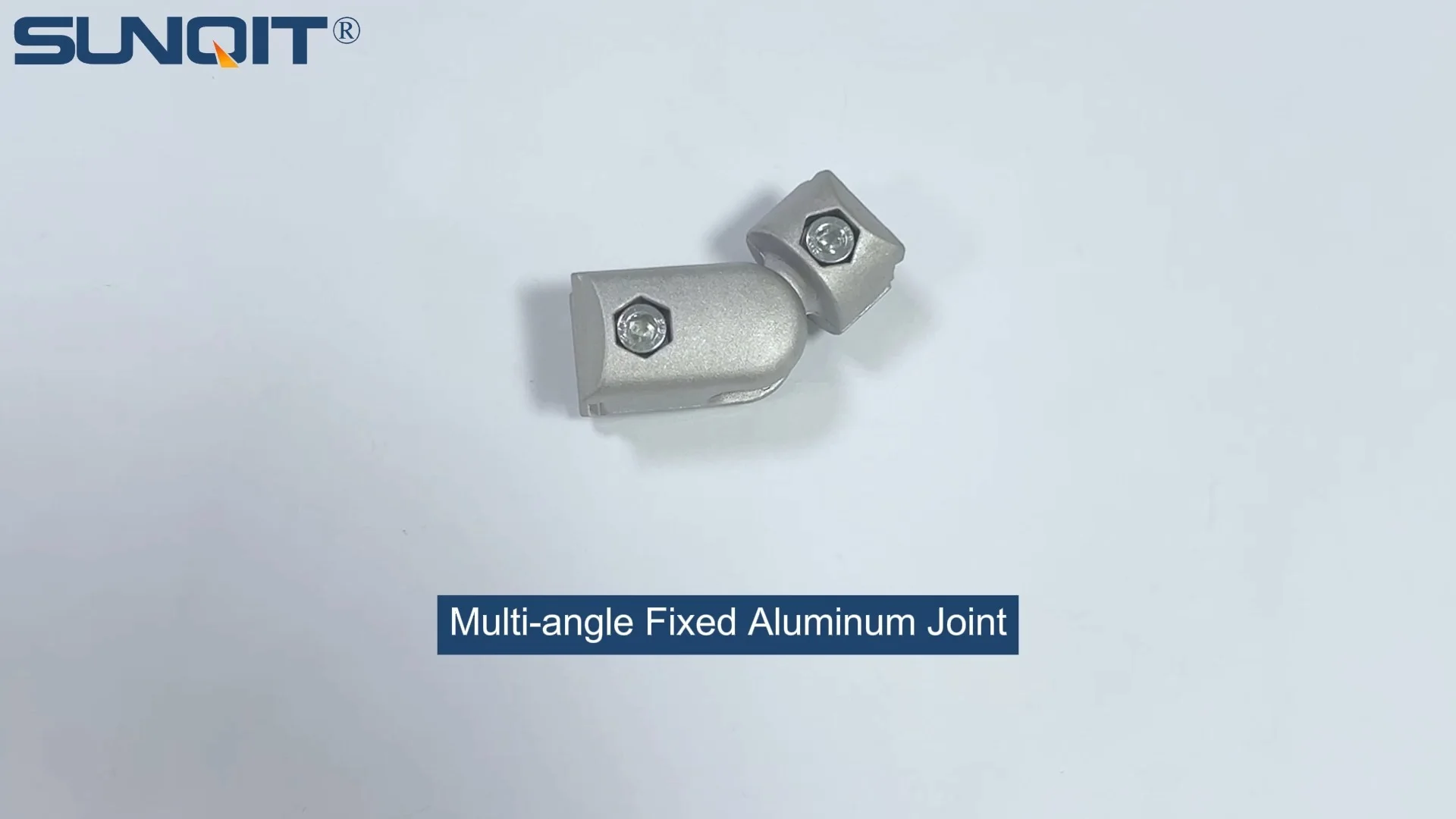
Multi-angle Fixed Aluminum Joint
Aluminum joint pipe connection for two pipe connection and work in mutiple angle.
In today's fast-paced industrial landscape, sustainability isn't just a buzzword—it's a critical pillar of long-term success. Manufacturers worldwide are rethinking every aspect of their operations, from energy use to waste reduction, in a bid to minimize environmental impact while boosting efficiency. But here's the thing: sustainability doesn't have to mean overhauls or massive investments. Sometimes, the most impactful changes come from the smallest components—like the humble connectors that hold production systems together. Enter the multi-angle fixed aluminum joint: a unassuming yet powerful tool that's quietly reshaping how factories approach sustainability, flexibility, and lean manufacturing. Let's dive into how these unassuming components are becoming unsung heroes of the sustainable manufacturing movement.
What Are Multi-Angle Fixed Aluminum Joints, Anyway?
Before we connect these joints to sustainability, let's make sure we're all on the same page about what they are. Imagine building a structure—not with nails, screws, or welding—but with modular pieces that snap together like a high-quality Lego set. That's the idea behind multi-angle fixed aluminum joints. These are precision-engineered connectors designed to link aluminum pipes, profiles, or tubes at various angles (think 30°, 45°, 90°, or 135°) without the need for permanent bonding. They're typically made from high-grade aluminum alloys, which means they're lightweight, corrosion-resistant, and built to last.
What makes them "multi-angle" is their versatility. Unlike fixed single-angle joints, these can pivot or lock into multiple positions, allowing manufacturers to create everything from simple workbenches to complex material racks with minimal effort. And because they're made of aluminum, they pair seamlessly with aluminum profiles—the lightweight, durable beams that form the backbone of modern modular production systems. Together, the joints and profiles act like building blocks, letting teams design, assemble, and reconfigure structures on the fly.
But why aluminum? Well, aluminum is a sustainability all-star. It's 100% recyclable, meaning every joint can be melted down and reused without losing quality. It's also lighter than steel, which cuts down on transportation energy, and its natural resistance to rust reduces the need for chemical coatings. When you combine that with the joint's modular design, you get a component that's not just functional, but inherently aligned with green manufacturing principles.
Sustainability Benefits: More Than Just a "Green" Label
Let's get to the heart of the matter: how do these joints actually support sustainable manufacturing goals? It's not just about using recycled materials (though that's a big part of it). It's about rethinking how production systems are built, used, and eventually retired—with minimal waste at every stage.
1. Material Efficiency: Less Waste, More Value
Traditional manufacturing setups often rely on custom-built steel structures welded or bolted into place. If a factory needs to retool for a new product, those structures are often dismantled and discarded—sending tons of steel to landfills or requiring energy-intensive recycling. Multi-angle fixed aluminum joints flip that script. Because they're modular, they allow for "build-as-you-go" designs. Need a taller workbench? Swap out a shorter aluminum profile for a longer one. Need to add a shelf to a material rack? Just attach a new joint and beam. No cutting, no welding, no waste.
Aluminum itself is also a material efficiency champion. It's stronger per pound than steel, so you can use less of it to achieve the same structural integrity. That means fewer raw materials extracted, processed, and transported—all of which shrink the carbon footprint of production systems.
2. Energy Savings: From Production to Operation
The sustainability story starts long before the joint reaches the factory floor. Producing aluminum from recycled scrap uses 95% less energy than making it from bauxite ore—a staggering statistic that alone makes aluminum joints a greener choice than steel. But the energy savings don't stop there. Because aluminum is lightweight, transporting these joints (and the structures they build) requires less fuel than hauling heavy steel components. On the factory floor, lighter structures are easier to move and reconfigure, reducing the need for energy-guzzling machinery like forklifts for minor adjustments.
Even installation saves energy. Welding steel structures emits fumes and requires electricity or gas; assembling aluminum joints with hand tools? It's quiet, clean, and uses next to no energy. For factories aiming to cut their carbon emissions, these small energy wins add up fast.
3. Longevity and Reusability: Designed to Outlast Trends
Sustainability isn't just about reducing waste today—it's about creating systems that stand the test of time. Multi-angle fixed aluminum joints are built to last. Aluminum's natural corrosion resistance means they hold up in harsh factory environments, from humid assembly lines to dusty warehouses, without rusting or degrading. Unlike plastic connectors (which can crack or warp) or steel (which needs painting or coating to prevent rust), aluminum joints require almost no maintenance. That longevity means fewer replacements, less waste, and lower long-term costs.
And when a structure does reach the end of its current use? The joints don't become trash. They're easily disassembled, cleaned, and reused in new projects. A joint that once held together a conveyor system might find a second life as part of a workstation or a material cart. This "circular" approach to component use is a cornerstone of sustainable manufacturing—turning what would be waste into a valuable resource.

Supporting Lean Systems: Waste Reduction Meets Productivity
Sustainability and lean manufacturing go hand in hand. Lean principles focus on eliminating "muda" (waste) in all forms—overproduction, excess inventory, unnecessary motion—and multi-angle fixed aluminum joints are lean champions. Here's how they help factories trim waste while boosting productivity:
Flexibility = Less Downtime, More Output
In a traditional factory, reconfiguring a production line can take days or weeks. Custom steel structures need to be cut, welded, and painted; new equipment might need to be ordered. With aluminum joints and profiles, that timeline shrinks to hours. Need to adjust the height of a workstation to fit a new machine? Loosen a few joints, reposition the beams, and lock them back in. Want to add a roller track to speed up material flow? Attach the track to existing joints with minimal effort. This flexibility means factories can adapt to changing product demands faster, reducing idle time and keeping production lines running smoothly—all while avoiding the waste of building entirely new systems.
Optimized Workflows: From Clutter to Clarity
Lean manufacturing thrives on organized, efficient workflows. A cluttered, disorganized factory floor wastes time (workers searching for tools) and increases errors (parts getting misplaced). Multi-angle fixed aluminum joints help create "visual workspaces" where every tool, part, and piece of equipment has a designated spot. For example, a custom material rack built with these joints can be designed to hold exactly the number of bins needed for a production run—no extra space, no excess inventory. Roller tracks connected with aluminum joints can guide parts directly to workers, reducing unnecessary movement. These small optimizations might seem minor, but they add up to big gains in productivity and sustainability by cutting down on wasted time and resources.
Real-World Example: A mid-sized electronics manufacturer in Ohio recently switched from steel workbenches to aluminum modular workstations using multi-angle fixed aluminum joints. Within six months, they reported a 15% reduction in production line reconfiguration time and a 20% drop in material waste from discarded tools and parts. By reusing joints and profiles when upgrading their lines, they also saved $12,000 in new equipment costs—proving that sustainability and profitability can go hand in hand.

How Do They Compare to Traditional Joints? Let's Take a Look
Still not convinced these joints are worth the switch? Let's put them head-to-head with traditional steel joints in a quick comparison. The table below breaks down key factors like sustainability, cost, and versatility:
| Factor | Multi-Angle Fixed Aluminum Joints | Traditional Steel Joints |
|---|---|---|
| Material | Recycled aluminum alloy (100% recyclable) | Steel (recyclable but energy-intensive to process) |
| Weight | Up to 60% lighter than steel | Heavy; requires machinery for handling |
| Installation Time | Tool-free or hand-tool assembly (minutes per joint) | Welding/bolting required (hours per structure) |
| Reusability | Easily disassembled and reused in new configurations | Often permanently bonded; difficult to repurpose |
| Long-Term Cost | Higher upfront cost, but lower over time (no replacement waste) | Lower upfront cost, but higher long-term (frequent replacement) |
| Sustainability Score (1-10) | 9 (recyclable, energy-efficient, waste-reducing) | 5 (recyclable but heavy, energy-heavy production) |
The takeaway? While steel joints might seem cheaper at first, aluminum joints deliver better value over time—especially for factories prioritizing sustainability and adaptability. They're an investment in a greener, more efficient future.

Beyond the Factory Floor: Future Trends in Sustainable Manufacturing
As manufacturers push for net-zero goals and circular economies, the role of modular components like multi-angle fixed aluminum joints will only grow. Here are a few trends to watch:
1. Smart Joints: Integration with Industry 4.0
Imagine joints embedded with sensors that track usage, wear, and performance. Early prototypes are already in development, allowing factories to predict when a joint might need maintenance or replacement—preventing breakdowns and reducing waste from unexpected failures. Paired with AI-driven inventory systems, these "smart joints" could also automate reordering of recycled aluminum components, creating a closed-loop supply chain.
2. Customization at Scale
3D printing is making it easier than ever to create custom joint designs for unique applications—without the waste of traditional manufacturing. Factories could soon design joints tailored to their specific needs (e.g., extra-strong joints for heavy machinery, lightweight joints for mobile workstations) and print them on-site using recycled aluminum filaments. This "localized production" would cut transportation emissions and reduce reliance on global supply chains.
3. Circular Partnerships: From Supplier to Recycler
Forward-thinking aluminum profile suppliers are already offering "take-back" programs, where old joints and profiles are collected, recycled, and turned into new components. This creates a circular system where nothing goes to waste. As more manufacturers demand these programs, we'll see a shift from "buy-and-discard" to "lease-and-recycle" models—further embedding sustainability into the manufacturing lifecycle.
Final Thoughts: Small Components, Big Impact
Sustainable manufacturing isn't about grand gestures—it's about the cumulative effect of thousands of small, intentional choices. Multi-angle fixed aluminum joints might not grab headlines, but they're a perfect example of how rethinking even the most basic components can drive meaningful change. By prioritizing material efficiency, energy savings, and reusability, these joints help factories reduce waste, cut costs, and build systems that adapt to the future—all while shrinking their environmental footprint.
So the next time you walk through a factory, take a closer look at the workbenches, material racks, and conveyor systems. Chances are, if they're built with aluminum profiles and multi-angle joints, they're not just supporting production—they're supporting a greener, more sustainable way of making things. And in a world where every ton of waste and every kilowatt of energy matters, that's something worth celebrating.