- Company Articles
- Products and Technology
- Product knowledge
- How One Side Rotatory Chrome Parallel Lean Pipe Joints Enhance Assembly Efficiency

How One Side Rotatory Chrome Parallel Lean Pipe Joints Enhance Assembly Efficiency
Related Product
Parallel Lean Pipe Joint
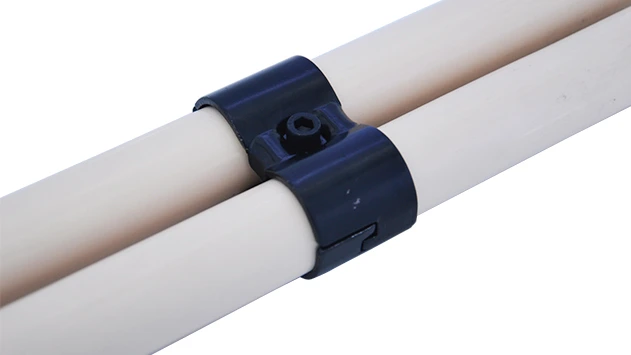
Parallel lean pipe joint used for 2 pcs 28MM lean pipe connection in parallel direction to enhance frame structure, usually for heavy payload requirement for workbench. flow rack, hand trolley.
Walk into any bustling assembly plant, and you'll hear it—the steady hum of machinery, the clink of tools, the rhythmic movement of parts. But beneath that symphony lies a silent pressure: the race to do more, faster, without sacrificing quality. For production managers, efficiency isn't just a metric on a spreadsheet; it's the difference between meeting deadlines and scrambling to catch up, between happy clients and frustrated teams, between profit and loss. And in that high-stakes world, the smallest components often hold the biggest keys to success. Today, we're diving into one such unsung hero: the one side rotatory chrome parallel lean pipe joint . It sounds technical, but its impact? Purely practical—turning rigid, slow-moving assembly lines into agile, responsive ecosystems that keep up with the pace of modern manufacturing.
The Hidden Cost of Rigidity in Assembly Structures
Let's start with a familiar scenario. Imagine a mid-sized electronics manufacturer—let's call them TechFlow Inc.—that produces everything from smartphone chargers to small circuit boards. Their assembly line runs two shifts a day, and their workbenches, material racks, and turnover trolleys are the backbone of their operation. But here's the problem: every time they switch product models (which happens 3–4 times a month), their team spends hours reconfiguring these structures. Why? Because the traditional lean pipe joints holding everything together are fixed . Welded or bolted into place, they leave no room for quick adjustments. To raise a workbench height by 6 inches for a taller operator, the team has to disassemble the entire frame, swap out pipes, and rebolt everything—wasting 2–3 hours per station. For a line with 10 workbenches, that's an entire shift lost to reconfiguration, not production.
Then there's the issue of wear and tear. TechFlow's old joints were made of uncoated steel, which rusted quickly in the humid factory air. Within 6 months, some joints became stiff, making even minor adjustments a struggle. The maintenance team was constantly replacing corroded parts, adding to downtime. And when a sudden rush order came in—requiring a temporary material rack to hold extra components—they had to build it from scratch using new pipes and joints, since the existing ones couldn't be repurposed. Rigidity, it turned out, wasn't just slowing them down; it was costing them money, morale, and opportunities.
Enter the One Side Rotatory Chrome Parallel Lean Pipe Joint: A Design Built for Adaptability
So, what if there was a joint that could cut reconfiguration time from hours to minutes? That could withstand the damp factory air without rusting? That let workers adjust, adapt, and repurpose structures on the fly? That's exactly what the one side rotatory chrome parallel lean pipe joint brings to the table. Let's break down what makes it different—starting with its name, which hints at its superpowers.
"One Side Rotatory": The Freedom to Adjust Without Disassembly
Traditional lean pipe joints are fixed in two ways: the angle at which they connect pipes (say, 90 degrees for a corner) and their position along the pipe. To change either, you have to loosen bolts, slide the joint, retighten, and hope it stays in place. The "one side rotatory" design flips this script. One end of the joint stays fixed to a pipe, while the other end rotates 360 degrees around its axis. This means if you need to adjust the angle of a parallel pipe—say, tilting a section of a roller track to improve material flow—you don't have to take anything apart. Just loosen a single setscrew, rotate the joint to the desired angle, and retighten. It's like having a hinge that lets you pivot one pipe relative to another, all while keeping the connection strong and stable.
"Chrome": Durability That Stands Up to the Factory Floor
The chrome plating isn't just for shine (though it does look sleek). Chrome adds a hard, corrosion-resistant layer to the joint's steel core, protecting it from moisture, oil, and chemicals common in manufacturing environments. At TechFlow, after switching to chrome joints, their maintenance logs showed a 70% drop in joint replacements due to rust. The chrome also reduces friction during rotation, so even after months of use, adjusting the joint feels as smooth as the first day. No more struggling with stiff, corroded parts—just a quick twist, and you're back to work.
"Parallel": Keeping Structures Aligned, Stable, and Ready for Work
Many assembly structures—think workbench frames, turnover trolley and rack sides, or the rails of a roller track—rely on parallel pipes for stability. Misaligned pipes can lead to wobbly workbenches, stuck rollers, or trolleys that veer off course. The "parallel" design of these joints includes built-in alignment markers and a locking mechanism that ensures pipes stay perfectly parallel once set. When TechFlow built their first new workbench with these joints, the team noticed immediately: no more shimming to level the surface, no more uneven weight distribution. The parallel alignment kept the workbench steady, even when operators leaned on it or placed heavy tools on top.

How It Works: From Box to Bench in 15 Minutes (Yes, Really)
Let's walk through a real example: building a basic assembly workbench using one side rotatory chrome parallel lean pipe joints. Traditional setup with fixed joints might take two people 2 hours. With these joints? One person can do it in under 30 minutes. Here's how:
- Layout the pipes: Start with four vertical pipes (legs) and four horizontal pipes (top frame). No need to measure angles yet—you'll adjust later.
- Attach the joints: Slide a one side rotatory joint onto the top of each vertical pipe. Tighten the setscrew just enough to hold it in place (not fully—you need to rotate it).
- Align the horizontals: Take a horizontal pipe and connect it to the rotating end of two vertical joints. Rotate the joints until the horizontal pipe is level and parallel to the floor. Once aligned, fully tighten the setscrews on both joints.
- Repeat and reinforce: Add the remaining horizontal pipes, using the alignment markers to ensure they're parallel to each other. For extra stability, add diagonal braces with fixed joints (since diagonals rarely need adjustment).
- Adjust on the fly: Notice the workbench is too low? Loosen the joints on two legs, rotate them up by 10 degrees, and retighten. Done. No disassembly, no new parts.
This speed isn't just about convenience—it's about agility. When TechFlow needed to reconfigure their workbenches for a new circuit board model, they used to schedule it for the night shift, paying overtime. Now, they can do it during a 15-minute break between shifts. "It's like going from a flip phone to a smartphone," their production manager joked. "You wonder how you ever lived without it."

The Efficiency Boost: Numbers That Tell the Story
At this point, you might be thinking, "Okay, it's faster and more durable—but does it actually improve the bottom line?" Let's look at TechFlow's results six months after implementing one side rotatory chrome parallel lean pipe joints across their assembly line:
- Reconfiguration time: From 3 hours per workbench to 45 minutes—a 75% reduction.
- Downtime: Monthly downtime for structure adjustments dropped from 8 hours to 1 hour.
- Maintenance costs: Joint replacement costs fell by 65% (thanks to the chrome coating).
- Throughput: With more time spent producing and less on setup, they increased daily output by 12%.
- Worker satisfaction: A survey showed 83% of operators felt less frustrated with "clunky" equipment, leading to a 10% drop in turnover.
| Feature | Traditional Fixed Joints | One Side Rotatory Chrome Parallel Joints |
|---|---|---|
| Installation Time (per joint) | 10–15 minutes (tightening multiple bolts) | 2–3 minutes (single setscrew) |
| Adjustability | Requires full disassembly; limited angles | 360° rotation; no disassembly needed |
| Durability (in humid environments) | Prone to rust; 6–8 month lifespan | Chrome coating; 2–3 year lifespan |
| Best For | Static, long-term structures (rarely reconfigured) | Dynamic environments (frequent product changes) |
Beyond the Joint: Building a Leaner System
While the one side rotatory chrome parallel lean pipe joint is a star player, it's even more powerful when paired with other lean components. TechFlow, for example, combined these joints with aluminum profile accessories like quick-connect brackets and lightweight honeycomb panels for workbench surfaces. The result? A modular system where every part works in harmony—pipes, joints, panels, and even casters (for mobile trolleys) can be mixed and matched to create exactly what's needed, when it's needed.
Take their turnover trolley and rack fleet. By using the rotatory joints to connect the trolley's vertical and horizontal pipes, they could adjust the shelf heights to fit different-sized component bins. Adding swivel casters with brake locks (another key accessory) made the trolleys easy to maneuver around the assembly line, reducing the time workers spent walking to fetch materials. And when a new, larger bin was introduced, they simply rotated the joints, raised the shelves, and locked them in place—no new trolley needed.
The Future of Assembly: Adaptability as the New Standard
In a world where consumer demands shift overnight and product lifecycles grow shorter, assembly lines can't afford to be static. Rigid structures, fixed joints, and "set it and forget it" mindsets are relics of a slower era. Today, the most successful manufacturers are those that can pivot quickly—reconfiguring a workbench for a new product, repurposing a trolley for a rush order, or adjusting a roller track to fix a bottleneck—without missing a beat.
The one side rotatory chrome parallel lean pipe joint isn't just a tool; it's a symbol of this new era. It's proof that even the smallest components can drive big change—turning frustration into efficiency, downtime into productivity, and rigid systems into flexible, responsive engines of growth. For TechFlow, it was the missing piece in their lean puzzle. For you? It might just be the key to unlocking the next level of efficiency in your assembly line.
So, the next time you walk your production floor, take a look at those joints holding everything together. Are they holding you back? Or could they be the first step toward a leaner, faster, more adaptable future? The answer, as TechFlow discovered, might be just a rotation away.