- Company Articles
- Products and Technology
- Product knowledge
- How One Side Rotatory Parallel Lean Pipe Joints Improve Warehouse Logistics Efficiency

How One Side Rotatory Parallel Lean Pipe Joints Improve Warehouse Logistics Efficiency
Related Product
Parallel Lean Pipe Joint
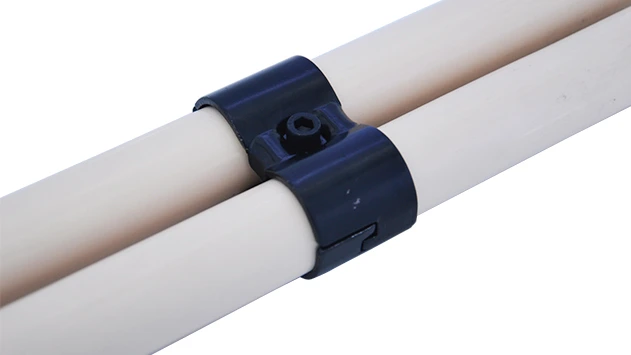
Parallel lean pipe joint used for 2 pcs 28MM lean pipe connection in parallel direction to enhance frame structure, usually for heavy payload requirement for workbench. flow rack, hand trolley.
In the fast-paced world of supply chains, warehouses are the unsung heroes that keep products moving from manufacturers to consumers. Yet, for all their importance, many warehouses struggle with hidden inefficiencies: bottlenecks at packing stations, wasted time reconfiguring workspaces, and disjointed material flow that slows down order fulfillment. What if the key to unlocking smoother, faster, and more adaptable warehouse operations lies in a small but mighty component? Enter the one side rotatory parallel lean pipe joint—a unassuming part that's quietly revolutionizing how warehouses design, build, and adapt their workflows. In this article, we'll explore how this innovative joint transforms rigid, static structures into dynamic, efficiency-boosting systems, and why it's becoming a must-have for modern warehouse managers.
The Backbone of Modern Warehouses: Lean Pipe Systems
Before diving into the specifics of the one side rotatory parallel lean pipe joint, let's first understand the foundation it's built on: lean pipe systems. Born from the principles of lean manufacturing—a philosophy focused on minimizing waste and maximizing value—lean pipe systems (also called flexible pipe systems) are modular frameworks made from lightweight, durable pipes and connectors. Unlike traditional fixed structures (think welded steel racks or bolted workbenches), lean pipe systems are designed to be adaptable . They're the Swiss Army knife of warehouse equipment: a single set of pipes and joints can be reconfigured into workbenches, flow racks, roller tracks, turnover trolleys, or material racks, depending on the day's needs.
At the heart of these systems is the "lean pipe" itself—typically a steel or aluminum tube coated in plastic (like PE) for durability and grip. But the real magic lies in the joints that connect these pipes. For decades, fixed joints dominated the market: rigid, one-angle connectors that locked pipes into static shapes. While they worked for basic setups, they limited flexibility. If a warehouse needed to adjust a workbench height, reangle a flow rack, or expand a roller track, workers often had to disassemble the entire structure, buy new parts, or even weld new connections—costing time, money, and productivity. This is where the one side rotatory parallel lean pipe joint steps in, turning "fixed" into "flexible" and "permanent" into "adaptable."
Meet the Game-Changer: One Side Rotatory Parallel Lean Pipe Joint
So, what exactly is a one side rotatory parallel lean pipe joint? In simple terms, it's a connector designed to join two parallel lean pipes while allowing one side to rotate freely . Unlike fixed joints that lock pipes at a strict 90°, 45°, or 180° angle, this joint features a rotating mechanism on one end, letting users adjust the angle of the connected pipes with ease—no tools, no welding, no hassle. Picture a hinge that lets a door swing, but instead of a door, it's two parallel pipes that can tilt, pivot, or reposition to fit the task at hand.
Design That Delivers: Key Features of the Joint
The one side rotatory parallel lean pipe joint may look simple, but its design is packed with purpose. Here's what makes it stand out:
- Rotatory Freedom: The star feature is its ability to rotate on one side (usually 180° or more), allowing parallel pipes to tilt upward, downward, or sideways. This is a game-changer for structures like flow racks, where adjusting the angle of roller tracks can speed up or slow down material flow based on product weight or size.
- Parallel Pipe Compatibility: Unlike joints that connect pipes at intersecting angles, this joint is optimized for parallel setups—think the side rails of a workbench, the support bars of a flow rack, or the frames of a roller track. It keeps pipes aligned while adding movement, ensuring stability even as angles change.
- Tool-Free Assembly: Most models use a clamping mechanism or quick-lock lever, so workers can adjust the angle in seconds. No wrenches, no screws, no need to call in maintenance—just a quick twist or flip to lock the joint in place.
- Durable Materials: Built to withstand the daily grind of warehouses, these joints are often made from high-strength aluminum or steel, with corrosion-resistant coatings to handle dust, moisture, and heavy loads. Some even use reinforced plastic components for lightweight flexibility without sacrificing strength.
- Universal Fit: Designed to work with standard lean pipe sizes (common diameters include 28mm or 30mm), they seamlessly integrate with existing lean pipe systems. This means warehouses don't have to replace their entire setup—just swap out old fixed joints for these rotatory ones.
Why Rotation Matters: The Problem with Fixed Joints
To appreciate the value of the one side rotatory joint, let's consider the limitations of traditional fixed joints. Imagine a warehouse using a fixed-joint flow rack to store small electronic components. The rack is angled at 5° to let products glide toward pickers—but when the warehouse starts storing heavier items (like small appliances), the 5° angle is too steep; products slide too fast, risking damage. With fixed joints, the only solution is to disassemble the rack, buy new fixed joints set at 2°, and rebuild—a process that could take hours. With a one side rotatory parallel joint? A worker simply tilts the roller track to 2°, locks the joint, and the rack is ready in 5 minutes. That's the difference between downtime and productivity.

5 Ways One Side Rotatory Parallel Joints Boost Warehouse Efficiency
Now that we understand what the joint is, let's explore how it transforms warehouse operations. From reducing setup time to minimizing waste, here are five key benefits:
1. Unmatched Flexibility: Adapt to Changing Needs in Minutes
Warehouses rarely stay the same. Seasonal demand spikes, new product lines, or shifts in order volume can turn yesterday's efficient layout into today's bottleneck. One side rotatory parallel joints thrive in this dynamic environment. Need to reconfigure a workbench for a new product line? Rotate the side rails to add extra shelving. Expanding a roller track to accommodate longer boxes? Adjust the joint angles to create a gentle curve instead of a sharp turn. Even small changes—like tilting a flow rack to reduce product jams—can be done on the fly, ensuring the warehouse layout always matches the task at hand.
Consider a third-party logistics (3PL) warehouse that handles multiple clients with varying needs. One week, they're packing small cosmetics; the next, bulky kitchen appliances. With fixed workbenches, they'd need separate stations for each client. With one side rotatory joints, a single workbench can be adjusted: lower the height for cosmetics (to reduce bending), add tilted roller tracks for appliances (to slide them into boxes), and then reset for the next client—all in under 30 minutes. This flexibility cuts down on the need for redundant equipment, saving space and reducing costs.
2. Time Savings: From Hours of Setup to Minutes
In warehouses, time is money—and traditional fixed joints are notorious time-wasters. Building a basic flow rack with fixed joints might take two workers 2-3 hours (measuring, aligning, tightening bolts). Disassembling and rebuilding it? Another 2 hours. With one side rotatory parallel joints, assembly time drops by up to 60%. The rotatory feature eliminates the need for precise angle measurements—if the pipes aren't perfectly aligned, a quick twist of the joint fixes it. Tool-free locking means workers don't waste time hunting for wrenches or screwdrivers. Even complex structures, like multi-tiered material racks, can be built or reconfigured in a fraction of the time, letting teams focus on higher-value tasks like order picking or quality control.
3. Reduced Waste: Maximize the Lifespan of Your Equipment
Lean manufacturing teaches us to avoid "waste of materials," and one side rotatory parallel joints excel here. Traditional fixed joints often become obsolete when a structure is reconfigured—if you built a workbench with 90° fixed joints, those joints can't be reused in a 45° angle flow rack. As a result, warehouses end up with bins of unused joints, adding to landfill waste and supply costs. Rotatory joints, by contrast, are multipurpose . A joint used in a workbench today can be repurposed in a roller track tomorrow or a turnover trolley next week. Their durability (often rated for 10,000+ rotations) ensures they stand the test of time, even with frequent reconfiguration. Over time, this reduces the need to purchase new parts, cutting both costs and environmental impact.
4. Improved Ergonomics: Safer, Happier Workers
Warehouse work is physically demanding, and poor ergonomics—like awkward bending, reaching, or lifting—leads to fatigue, injuries, and high turnover. One side rotatory parallel joints help create ergonomic workspaces that adapt to people , not just products. For example, a packing workbench with rotatory joints can be adjusted to match a worker's height, reducing strain on their back and shoulders. A flow rack can be tilted so products slide to waist level, eliminating the need to bend down or stretch up. Even roller tracks can be angled to reduce the force needed to push heavy items, making tasks easier and safer. Happier, healthier workers are more productive, and lower injury rates mean fewer disruptions to workflow—another win for efficiency.
5. Smoother Material Flow: Eliminating Bottlenecks in Roller Tracks and Flow Racks
Material flow is the lifeblood of warehouse logistics. When products get stuck on a roller track, pile up in a flow rack, or require manual lifting to move between stations, it creates bottlenecks that slow down the entire operation. One side rotatory parallel joints tackle this by ensuring material flow is consistent and adaptable . In roller tracks, they allow for gentle curves or slight inclines that keep products moving smoothly, even around corners. In flow racks, they let workers adjust the tilt to match product weight—steeper for light items (like clothing), shallower for heavy ones (like tools)—preventing jams and spills. The result? Fewer delays, faster order processing, and a warehouse that feels like a well-oiled machine.

Real-World Impact: Case Studies in Efficiency
To see the one side rotatory parallel lean pipe joint in action, let's look at two hypothetical (but realistic) warehouse scenarios:
Case Study 1: E-Commerce Fulfillment Center
Before: A mid-sized e-commerce warehouse handling 5,000 orders/day struggled with seasonal spikes. During the holidays, they needed to expand their packing stations from 10 to 15, but their fixed-joint workbenches took 4 hours each to assemble. By the time they were ready, the holiday rush was in full swing, and workers were overwhelmed by backlogs.
After: The warehouse switched to lean pipe workbenches with one side rotatory parallel joints. When the next holiday season hit, they assembled 5 new workbenches in just 2 hours (thanks to tool-free joints and quick reconfiguration). They also adjusted existing workbenches to include tilted roller tracks (using rotatory joints) for faster packing. The result? Order processing time dropped by 25%, and they met their holiday targets with no overtime.
Case Study 2: Automotive Parts Warehouse
Before: A warehouse storing automotive parts (ranging from small screws to large engine components) used fixed-angle flow racks. Workers often complained that small parts slid too fast (risking damage) and large parts got stuck (requiring manual lifting). Rebuilding the racks for different parts took a full day, so they rarely bothered—leading to inefficiencies and frustration.
After: They retrofitted their flow racks with one side rotatory parallel joints. Now, workers can adjust the rack angle in seconds: steeper for small, lightweight screws; shallower for heavy engine parts. They also added rotatory joints to their roller tracks, creating curved paths that guide parts directly to assembly lines. Material handling time decreased by 30%, and worker complaints dropped by 40%.
Traditional vs. One Side Rotatory: A Comparison
| Feature | Traditional Fixed Joints | One Side Rotatory Parallel Joints |
|---|---|---|
| Flexibility | Limited to pre-set angles (90°, 45°, etc.); no adjustment after assembly. | Rotates 180°+ on one side; parallel pipes can tilt/adjust to any angle. |
| Assembly Time | 2-3 hours for a basic structure (requires tools, precise measurements). | 30-60 minutes for the same structure (tool-free, no measurements needed). |
| Reusability | Low; tied to specific angles/structures. | High; can be repurposed in workbenches, flow racks, roller tracks, etc. |
| Ergonomic Benefits | None; fixed height/angle can cause strain. | High; adjusts to worker height/task, reducing fatigue and injury risk. |
| Cost Over Time | Higher; frequent need to buy new joints for reconfiguration. | Lower; reusable, durable, and reduces downtime. |
Choosing the Right One Side Rotatory Parallel Lean Pipe Joint
Not all rotatory joints are created equal, so it's important to choose the right one for your warehouse's needs. Here are key factors to consider:
- Material: Aluminum joints are lightweight and corrosion-resistant (ideal for humid environments), while steel joints offer extra strength for heavy loads. For ESD (electrostatic discharge) sensitive areas (like electronics warehouses), look for ESD-safe coatings.
- Rotation Range: Most joints rotate 180°, but some offer 360° rotation for maximum flexibility. Consider how much adjustment you'll need—flow racks may only need 30°-60°, while workbenches could benefit from 180°.
- Load Capacity: Check the joint's weight rating (e.g., 50kg, 100kg). Ensure it can handle the heaviest products your warehouse moves.
- Compatibility: Confirm the joint fits your existing lean pipe size (common diameters: 28mm, 30mm, 40mm). Most suppliers offer adapters if you have mixed sizes.
- Locking Mechanism: Look for secure, tool-free locks (like lever clamps or twist locks) that stay tight even with vibration or frequent use.
The Future of Warehouse Logistics: Small Parts, Big Impact
As warehouses evolve to meet the demands of e-commerce, same-day delivery, and global supply chains, adaptability will only grow more critical. The one side rotatory parallel lean pipe joint is more than just a connector—it's a symbol of this shift toward flexibility, efficiency, and worker-centric design. By turning static structures into dynamic, reconfigurable systems, it empowers warehouses to do more with less: less time, less money, and less waste.
Looking ahead, we can expect even more innovation in lean pipe technology. Imagine joints with built-in sensors that alert managers when a structure needs reconfiguration, or smart locks that sync with warehouse management software to auto-adjust layouts based on real-time order data. For now, though, the one side rotatory parallel lean pipe joint is already proving that great things come in small packages. It's a reminder that in logistics, sometimes the smallest components make the biggest difference.
So, the next time you walk through a warehouse, take a closer look at the racks, workbenches, and roller tracks. Chances are, the smooth, efficient flow you see is powered by a humble joint working behind the scenes—turning "good enough" into "great."