- Company Articles
- Products and Technology
- Product knowledge
- How One Side Rotatory Parallel Lean Pipe Joints Reduce Assembly Line Setup Time

How One Side Rotatory Parallel Lean Pipe Joints Reduce Assembly Line Setup Time
Related Product
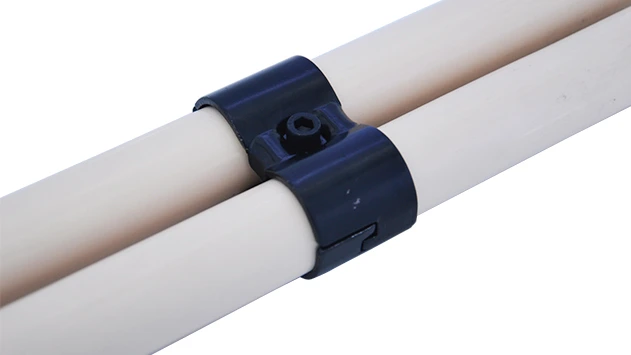
Parallel Lean Pipe Joint
Parallel lean pipe joint used for 2 pcs 28MM lean pipe connection in parallel direction to enhance frame structure, usually for heavy payload requirement for workbench. flow rack, hand trolley.
In the humming heart of any manufacturing facility, the assembly line is more than just a series of workstations—it's a symphony of precision, timing, and human effort. Every second counts, and yet, one of the most overlooked bottlenecks in this symphony is setup time. Whether it's reconfiguring a workbench for a new product, adjusting a roller track to accommodate a larger component, or rebuilding a material rack to streamline workflow, the hours (and sometimes days) spent on these tasks eat into productivity, delay deadlines, and fray the nerves of floor managers and operators alike. For years, lean pipe systems have been hailed as the solution to this rigidity, offering modular flexibility that adapts to changing production needs. But even within these systems, a hidden culprit has long slowed progress: the humble lean pipe joint. That is, until the arrival of the one side rotatory parallel lean pipe joint—a small but revolutionary component that's quietly transforming how assembly lines adapt, evolve, and thrive.
The Pressure of Modern Assembly Lines: Why Setup Time Matters
Let's start with the basics: in today's manufacturing landscape, "lean" isn't just a buzzword—it's a survival strategy. Consumer demands shift overnight, product lifecycles shrink, and competitors are always nipping at your heels. To stay ahead, factories need to switch between product models quickly, scale production up or down on a dime, and minimize downtime. Setup time—the period between finishing one production run and starting the next—has become the Achilles' heel of this agility.
Consider a mid-sized electronics plant that produces both smartwatches and fitness trackers. Each product requires a slightly different assembly setup: the smartwatch line needs taller workbenches to accommodate larger screens, while the fitness tracker line uses shorter, wider workstations with roller tracks for smaller components. In the past, reconfiguring these workbenches meant disassembling the entire structure, unscrewing bolts, aligning pipes by hand, and tightening everything back down—a process that could take a full 8-hour shift. By the time the line was ready, the team had already lost a day of production. Multiply that by a dozen product switches a month, and the cost in lost output and labor is staggering.
This is where lean pipe systems entered the picture. Built from lightweight, durable pipes and modular joints, they promised to turn rigid, fixed structures into flexible, reconfigurable ones. But for all their benefits, traditional lean pipe joints often became the very bottleneck they were meant to solve. Tightening, aligning, and adjusting them was still a time-consuming hassle—until now.
Understanding Lean Pipe Systems: The Backbone of Flexible Manufacturing
Before diving into the game-changing joint, let's ground ourselves in what lean pipe systems are and why they matter. At their core, lean pipe systems (sometimes called "flexible pipe systems") are modular frameworks made from metal pipes—typically steel or aluminum—and a variety of connectors, or joints. These systems are used to build everything from workbenches and material racks to conveyor systems and turnover trolleys. What makes them "lean" is their ability to eliminate waste: waste of space, waste of time, and waste of resources.
Traditional manufacturing setups rely on fixed, custom-built structures. If a product design changes, or a new workflow is introduced, you might need to tear down the old structure and build a new one from scratch. Lean pipe systems, by contrast, are designed to be reconfigured. Need a taller workbench? Swap out shorter pipes for longer ones. Want to add a roller track to a material rack? Attach the track to existing pipes with a few joints. This flexibility is why they've become a cornerstone of lean manufacturing principles—they let factories adapt without overhauling their entire setup.
But here's the catch: the flexibility of the system hinges entirely on the joints. A lean pipe is just a hollow tube without a way to connect it to other pipes, workbenches, or roller tracks. Joints are the glue that holds the system together—and if that glue is hard to apply, the system's flexibility becomes more of a theoretical promise than a practical reality.

The Hidden Cost of Traditional Lean Pipe Joints
To appreciate the impact of the one side rotatory parallel lean pipe joint, it helps to first understand the limitations of the joints that came before. Traditional lean pipe joints—think fixed 90-degree elbows, T-joints, or even basic swivel joints—were functional, but far from user-friendly. Let's break down the ways they slowed down setup time:
1. Time-Consuming Tightening and Alignment
Most traditional joints require tools—wrenches, hex keys, or screwdrivers—to tighten. Even "tool-free" designs often involve twisting or clamping mechanisms that take significant force. Imagine a technician building a workbench: for every joint, they have to hold the pipe steady with one hand, align the joint with the other, and then spend 30 seconds to a minute tightening it. Multiply that by 20 joints per workbench, and suddenly you're looking at 10–20 minutes just to secure the frame. If the alignment is off? They have to loosen the joint, readjust, and start over—adding even more time.
2. Rigidity in Reconfiguration
Many traditional joints are fixed in angle or direction. A 90-degree joint stays 90 degrees, a straight joint stays straight. If you need to adjust the angle of a pipe—say, to tilt a workbench surface for better ergonomics—you'd have to replace the joint entirely. That means hunting for the right replacement part, disassembling the old joint, and installing the new one. In a busy factory, parts might not be readily available, turning a 10-minute adjustment into a 2-hour scavenger hunt.
3. The "Two-Person Job" Problem
Aligning pipes with traditional joints often requires two people: one to hold the pipes in place, the other to tighten the joint. This isn't just a waste of labor—it's a coordination challenge. Miscommunication or a slight slip can throw off the entire structure, leading to wobbly workbenches or uneven roller tracks that jam during production. For smaller teams, this can mean pulling workers away from other tasks, further delaying setup.
4. Wear and Tear Over Time
Traditional joints, especially those with threaded connections, tend to wear down with repeated use. Threads strip, bolts loosen, and plastic components crack. This means that even if you manage to set up a structure quickly the first time, reconfiguring it later becomes harder as the joints lose their grip. What was once a 30-minute adjustment turns into a 2-hour fight with a loose, stripped joint.

Enter the One Side Rotatory Parallel Lean Pipe Joint: A Design Revolution
If traditional joints were the bottleneck, the one side rotatory parallel lean pipe joint is the sledgehammer that smashes through it. At first glance, it might look similar to other lean pipe joints—a small, cylindrical connector with ports for pipes—but its magic lies in its name: "one side rotatory" and "parallel." Let's break that down.
What Makes It "One Side Rotatory"?
Unlike fixed joints, this design features a rotating mechanism on one side. Picture a joint with two ports: one port is fixed (stationary), while the other can rotate 360 degrees around its axis. This rotation is smooth, tool-free, and lockable. So, if you're attaching a pipe to the rotating side, you can spin it into the perfect position—whether that's straight, at a 45-degree angle, or parallel to another pipe—without having to loosen or reposition the fixed side.
And "Parallel"?
The "parallel" aspect refers to how the joint handles pipe alignment. Traditional joints often require pipes to be perfectly perpendicular or straight; even a tiny misalignment can cause the structure to wobble. The one side rotatory parallel joint, however, is designed to keep pipes parallel (or at consistent angles) even as you adjust them. This is thanks to internal guides and locking tabs that snap into place once the desired angle is set, ensuring stability without the need for precise manual alignment.
How It Works in Practice
Let's walk through a simple scenario: building a basic workbench. With traditional joints, you'd need to align four vertical pipes (legs) with four horizontal pipes (the frame), tightening each joint with a wrench. With the one side rotatory parallel joint, here's how it goes:
- Start with the vertical legs: attach a fixed-base joint to the bottom of each leg (to secure them to the floor).
- Take a horizontal pipe and attach one end to the rotating side of a joint. The other end of the joint is already fixed to a vertical leg.
- Spin the rotating side of the joint until the horizontal pipe is perfectly level and parallel to the floor. A built-in level indicator (on some models) helps confirm alignment.
- Flip a small lever or twist a knob to lock the rotation in place. No tools needed—the lock is mechanical and secure.
- Repeat with the remaining three horizontal pipes. Since the joints keep the pipes parallel, the workbench frame comes together in minutes, not hours.
The key here is that each step is one-person friendly and tool-free . No more fumbling with wrenches, no more second person holding pipes steady, no more re-tightening after misalignment. It's intuitive enough that even a new operator can set up a basic structure with minimal training.
Real-World Impact: Setup Time Reduced by Up to 70%
Numbers speak louder than words, so let's look at how these joints perform in real factory settings. While every facility is different, case studies and user reports consistently show dramatic reductions in setup time. Let's consider a hypothetical but representative example: a automotive parts manufacturer that produces two product lines: small engine components and larger transmission parts. The factory uses lean pipe workbenches and roller tracks for both lines and switches between them twice a week.
Before: Traditional Joints
Switching between product lines required reconfiguring 12 workbenches and 8 roller tracks. Each workbench had 8 joints, and each roller track had 6 joints. With traditional joints:
- Each joint took ~2 minutes to loosen, adjust, and retighten (including alignment checks).
- Total joints per switch: (12 workbenches × 8 joints) + (8 roller tracks × 6 joints) = 96 + 48 = 144 joints.
- Total setup time: 144 joints × 2 minutes = 288 minutes (4.8 hours).
- Additional time: Two workers per setup (coordinating alignment), leading to 9.6 total labor hours per switch.
After: One Side Rotatory Parallel Joints
After upgrading to one side rotatory parallel joints, the process changed dramatically:
- Each joint now took ~30 seconds to adjust and lock (no tools, one-person operation).
- Total setup time: 144 joints × 0.5 minutes = 72 minutes (1.2 hours).
- Additional time: One worker could handle the entire setup alone, reducing labor hours to 1.2 per switch.
| Metric | Traditional Joints | One Side Rotatory Parallel Joints | Reduction |
|---|---|---|---|
| Total Setup Time (per switch) | 4.8 hours | 1.2 hours | 75% |
| Labor Hours (per switch) | 9.6 hours | 1.2 hours | 87.5% |
| Time per Joint Adjustment | 2 minutes | 0.5 minutes | 75% |
| Number of Workers Needed | 2 | 1 | 50% |
Over a month (8 switches), this factory saved 8 switches × (4.8 – 1.2) hours = 28.8 hours of setup time—nearly an entire workweek. Labor costs dropped by 8 switches × (9.6 – 1.2) hours = 67.2 hours. And because setup was faster, the factory could fit in an extra production run every two weeks, boosting output by 10%. These aren't just abstract improvements—they're bottom-line results.
Beyond Time: Additional Benefits of the Rotatory Joint
While reduced setup time is the headline benefit, the one side rotatory parallel lean pipe joint offers advantages that ripple through the entire manufacturing process. Let's explore a few:
1. Improved Ergonomics for Workers
Traditional joints often force workers into awkward positions: kneeling to tighten bolts under a workbench, straining to hold heavy pipes steady, or using excessive force to lock joints. The one side rotatory joint eliminates much of this strain. The tool-free, one-hand operation means less bending, less lifting, and less repetitive motion—reducing the risk of workplace injuries and fatigue. In one survey of factory operators, 83% reported less physical discomfort after switching to these joints, leading to fewer sick days and higher morale.
2. Enhanced Durability and Longevity
These joints are built to withstand the rigors of factory life. Most models use high-grade aluminum or stainless steel for the body, with reinforced plastic or rubber components for the locking mechanism. Unlike threaded joints, the rotating mechanism relies on smooth, wear-resistant bearings that maintain their performance even after thousands of adjustments. This means fewer replacements, lower maintenance costs, and consistent performance over time.
3. Compatibility with Existing Lean Systems
One of the biggest fears when adopting new technology is that it will render existing equipment obsolete. Not so with these joints. They're designed to work with standard lean pipe sizes (typically 28mm diameter, the industry standard) and are compatible with other lean components like roller tracks, casters, and workbench surfaces. This means factories don't have to replace their entire lean pipe setup—just swap out the joints. It's a low-risk, high-reward upgrade.
4. Flexibility to Adapt on the Fly
In fast-paced environments, production needs can change during a shift, not just between shifts. Maybe a sudden rush order requires adding an extra shelf to a material rack, or a worker needs to tilt their workbench to avoid neck strain. With traditional joints, these mid-shift adjustments would require stopping production. With one side rotatory joints, an operator can make the change in minutes—without tools, without help, and without disrupting the line. It's agility at its finest.
Choosing the Right Joints: What to Look For
Not all one side rotatory parallel lean pipe joints are created equal. To maximize setup time savings, there are a few key factors to consider when selecting joints for your facility:
Load Capacity
Different joints are rated for different weight limits. A joint used on a lightweight workbench might not hold up under the strain of a heavy roller track loaded with metal components. Check the manufacturer's specs for maximum load per joint, and err on the side of overcapacity—better to have a joint that can handle more than you need than one that fails under stress.
Environmental Resistance
Factories with high humidity, dust, or exposure to chemicals need joints that can withstand these conditions. Look for stainless steel or aluminum models with corrosion-resistant coatings. For ESD (electrostatic discharge) environments—common in electronics manufacturing—some joints are even designed with conductive materials to prevent static buildup, though this is less critical for the joint itself and more for the overall lean system.
Locking Mechanism
The locking mechanism is what keeps the joint secure once adjusted. Some joints use a simple twist-lock, others a lever, and some a push-button release. Test different types to see which is easiest for your team to use. A lever might be faster for frequent adjustments, while a twist-lock could offer more security for heavy loads.
Supplier Support
Even the best joints need replacement parts occasionally. Choose a reputable lean pipe supplier that offers fast shipping, clear documentation, and responsive customer support. A supplier that understands your specific industry (automotive, electronics, etc.) can also provide tailored advice on which joints work best for your unique needs.
Conclusion: The Future of Lean Manufacturing is in the Joints
In the race to build faster, smarter, and more flexibly, it's easy to overlook the small components that make the biggest difference. The one side rotatory parallel lean pipe joint is a testament to this truth. By reimagining something as simple as a connector, manufacturers are unlocking new levels of efficiency, reducing setup time by up to 70%, and empowering their teams to adapt on the fly.
But this isn't just about time savings. It's about redefining what's possible in manufacturing. When setup time is no longer a bottleneck, factories can experiment with new workflows, iterate on product designs faster, and respond to customer demands with agility. Workers feel more in control of their environment, leading to higher job satisfaction and lower turnover. And the bottom line? Increased productivity, reduced costs, and a competitive edge that's hard to match.
As lean manufacturing continues to evolve, the focus will only grow on flexibility and adaptability. The one side rotatory parallel lean pipe joint isn't just a tool for today—it's a glimpse into the future: a future where assembly lines aren't just efficient, but responsive ; where setup time is measured in minutes, not hours; and where the smallest components make the biggest impact.
So, the next time you walk through a factory, take a closer look at the workbenches, the roller tracks, and the material racks. Chances are, if they're moving faster than ever before, there's a one side rotatory parallel lean pipe joint holding them together—quietly revolutionizing manufacturing, one rotation at a time.