- Company Articles
- Products and Technology
- Product knowledge
- How One Side Rotatory Parallel Lean Pipe Joints Support Continuous Improvement in Production

How One Side Rotatory Parallel Lean Pipe Joints Support Continuous Improvement in Production
Related Product
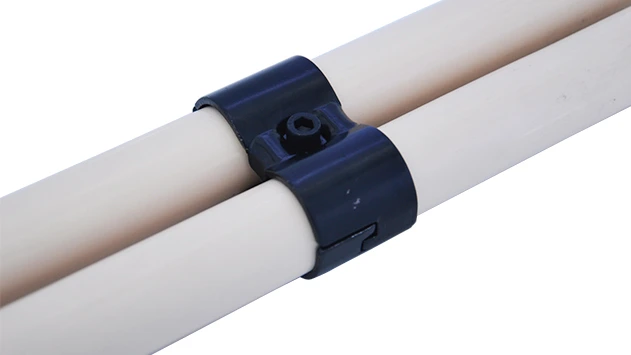
Parallel Lean Pipe Joint
Parallel lean pipe joint used for 2 pcs 28MM lean pipe connection in parallel direction to enhance frame structure, usually for heavy payload requirement for workbench. flow rack, hand trolley.
Walk into any modern manufacturing facility, and you'll likely hear the hum of machines, the rhythm of assembly lines, and the quiet focus of teams working to make things better—faster, smoother, more efficiently. At the heart of this energy lies a principle that's become the backbone of successful operations: continuous improvement . It's not just a buzzword; it's the daily practice of tweaking, adjusting, and evolving processes to eliminate waste, boost productivity, and keep up with ever-changing customer demands. But here's the thing about continuous improvement: it doesn't happen by accident. It relies on tools and systems that can keep up with the pace of change. And sometimes, the smallest components make the biggest difference.
Today, we're diving into one such unsung hero: the one side rotatory parallel lean pipe joint . If you're in manufacturing, you've probably seen lean pipe systems—those modular, metal structures that form workbenches, material racks, and assembly lines. They're the chameleons of the factory floor, adaptable to almost any task. But what makes them truly powerful isn't just the pipes themselves; it's the joints that hold them together. And among these joints, the one side rotatory parallel variety stands out as a game-changer for teams committed to continuous improvement. Let's unpack why.
Lean Systems: The Foundation of Flexible Manufacturing
Before we get into the nitty-gritty of joints, let's take a step back and talk about lean systems . At their core, lean systems are all about creating more value with less waste. Think of it as trimming the fat from production processes—eliminating unnecessary steps, reducing idle time, and ensuring every resource (time, materials, labor) is used to its fullest potential. But lean isn't a one-and-done project; it's a mindset. To make it work, you need tools that can adapt as your processes evolve. That's where lean pipe comes in.
Lean pipe —also known as "flexible pipe" or "kitchen pipe" in some circles—is exactly what it sounds like: lightweight, durable pipes (often steel or aluminum, sometimes coated in plastic) that can be easily connected with joints to build just about anything. Workbenches, flow racks, conveyor systems, material trolleys—the list goes on. What makes lean pipe so integral to lean systems is its modularity. Unlike fixed, custom-built equipment, lean pipe structures can be disassembled, reconfigured, and repurposed in hours (or even minutes), making them perfect for teams that need to pivot quickly.
But here's the catch: the flexibility of a lean pipe system is only as good as its joints. Traditional fixed joints do the job, but they're rigid. Want to adjust the height of a workbench? You'll need to take it apart, swap out parts, and rebuild. Need to reangle a roller track to improve material flow? Good luck—those joints are locked in place. That's where the one side rotatory parallel lean pipe joint enters the picture. It's designed to add a new level of flexibility, turning static structures into dynamic tools that can evolve right alongside your processes.
Meet the One Side Rotatory Parallel Lean Pipe Joint: Small Part, Big Impact
Let's get up close with this joint. Picture a standard lean pipe joint: a metal connector that clamps two pipes together at a fixed angle (90 degrees, 45 degrees, etc.). Now, imagine a joint that can rotate on one side while keeping the other side fixed—allowing the connected pipe to swivel, tilt, or pivot without losing stability. That's the one side rotatory parallel joint in a nutshell. Its design is deceptively simple: a rotating mechanism on one end, a secure clamp on the other, and often a chrome-plated finish to resist corrosion and wear (hence the "chrome" in its full name: one side rotatory straight lean pipe joint chrome ).
But why does rotation matter? Let's break it down. In manufacturing, even small adjustments can lead to big gains. Maybe an assembly line worker needs their workbench surface tilted 15 degrees to reduce strain on their wrists. Or a material handler wants a roller track angled slightly downward to let parts glide more smoothly. With a fixed joint, these changes would require tools, time, and sometimes even new parts. With a one side rotatory joint? You loosen a bolt, adjust the angle, retighten, and you're done. No disassembly, no downtime, no hassle.
Another key feature: the "parallel" aspect. These joints are engineered to keep pipes aligned in parallel planes, even when rotated. That might sound technical, but it's crucial for stability. If you're building a multi-level material rack, for example, you need the shelves to stay level and evenly spaced, even after adjustments. The parallel design ensures that rotation doesn't throw off the structure's balance—a must for safety and reliability.

From Workbenches to Roller Tracks: Real-World Applications
To truly appreciate the value of one side rotatory parallel lean pipe joints, let's look at how they're used in two common factory floor setups: lean pipe workbenches and roller tracks. These are workhorses of production, and their efficiency directly impacts a team's ability to improve processes over time.
Case 1: The Adaptive Lean Pipe Workbench
A lean pipe workbench is more than just a table. It's a command center for assembly, testing, or packaging—customized with tool holders, shelves, and bins to keep everything within arm's reach. But here's the problem: no two tasks are exactly alike. A worker assembling small electronics might need a lower bench with extra lighting, while someone packaging larger parts could benefit from a higher surface and more under-shelf storage. With traditional joints, you'd need separate workbenches for each task, or spend hours reconfiguring one.
Enter the one side rotatory parallel joint. Let's say a team switches from assembling smartphones to tablets—suddenly, the workbench needs taller side rails to hold larger components. With rotatory joints, the team can adjust the rail height in minutes: loosen the joint bolts, pivot the rails upward, lock them in place, and they're ready to go. No need to buy a new bench or take apart the old one. Even better, if a worker prefers the bench at a slight angle to reduce back strain, the rotatory joints let them tilt the surface without compromising stability. This kind of adaptability turns the workbench from a static piece of furniture into a tool that can be tailored to the person using it—boosting comfort, reducing fatigue, and ultimately, improving focus and productivity.
Real-Life Scenario: A Day in the Life of a Mobile Workbench
At a mid-sized automotive parts plant, the morning shift uses a lean pipe workbench to assemble sensor modules. They need the bench low (30 inches) with a tool tray on the left. By afternoon, the same bench is repurposed for inspecting larger wiring harnesses. Using one side rotatory joints, the team raises the bench to 36 inches, swings the tool tray to the right (to make space for a magnifying lamp), and tilts the surface 5 degrees to let harnesses lie flat. Total time to reconfigure: 12 minutes. Before rotatory joints? They'd need two separate benches, costing $800 extra and taking up valuable floor space.
Case 2: Roller Tracks That Keep Up with Changing Flows
Roller tracks are the arteries of material handling—they move parts from one station to the next, reducing the need for manual lifting and carrying. But getting the angle and alignment right is critical. If a track is too steep, parts might slide too fast and get damaged; too shallow, and they might get stuck, causing bottlenecks. Traditional roller tracks, built with fixed joints, are set in stone once installed. If your production line changes—say, you start manufacturing a heavier part that needs a gentler slope—you're stuck with a track that no longer works.
One side rotatory parallel joints solve this problem. Let's say a beverage bottling plant uses roller tracks to move empty bottles from storage to the filling line. In summer, they bottle more 16-ounce bottles (lighter, can handle a steeper track). In winter, demand shifts to 24-ounce bottles (heavier, need a shallower slope). With rotatory joints, the maintenance team can adjust the track angle seasonally in under an hour. They simply loosen the joints, pivot the track to the desired slope, and retighten. No cutting pipes, no welding, no downtime. The track adapts to the load, keeping the line moving smoothly year-round.
Even better, these joints work seamlessly with other roller track components, like plastic guide rails or swivel roller balls. If a track needs a curve to navigate around a new machine, the rotatory joints can be combined with flexible connectors to create a smooth bend—no need for custom-fabricated parts. This level of flexibility ensures that roller tracks, a critical part of the value stream, never become a barrier to improvement.

Why Rotatory Joints Drive Continuous Improvement: The Ripple Effect
So far, we've talked about how one side rotatory parallel lean pipe joints make reconfiguration faster and easier. But their impact on continuous improvement goes much deeper. Let's break down the ripple effects:
1. They Empower Teams to Experiment (Without Fear)
Continuous improvement thrives when frontline teams feel empowered to suggest changes. But if trying a new idea requires hours of reconfiguring equipment (or worse, asking for approval and waiting weeks), people stop suggesting ideas. Rotatory joints lower the "cost" of experimentation. A team member might think, "What if we angle the workbench shelf to make tools easier to grab?" With rotatory joints, they can test the idea in 10 minutes. If it works, great—they keep it. If not, they adjust back. This culture of "quick wins" builds momentum, turning everyone into a problem-solver.
2. They Reduce Waste (The Lean Way)
Waste comes in many forms: overproduction, waiting, unnecessary motion. Rotatory joints attack several types of waste at once. For example, "waiting waste" is reduced because reconfiguring equipment takes minutes instead of hours. "Motion waste" is cut when workbenches or material racks are adjusted to fit a worker's body, reducing reaching and bending. Even "inventory waste" is minimized—instead of stockpiling extra benches or tracks for different tasks, one adaptable structure does the job. Over time, these small reductions add up to big savings.
3. They Future-Proof Your Facility
Customer demands change. New products are launched. Old ones are phased out. A factory that can't adapt to these shifts gets left behind. Lean pipe systems with rotatory joints are built for the long haul. They're not tied to a single product or process. Today, they support smartphone assembly; tomorrow, they can be reconfigured for smartwatch production. This adaptability extends the lifespan of your equipment, reducing the need to invest in new structures every time your business evolves.
Traditional Joints vs. Rotatory Joints: A Quick Comparison
Still not convinced that rotatory joints are worth the investment? Let's put them head-to-head with traditional fixed joints in a table. We'll focus on the factors that matter most for continuous improvement:
| Feature | Traditional Fixed Joints | One Side Rotatory Parallel Joints |
|---|---|---|
| Adjustability | Limited to pre-set angles; requires disassembly to change. | 360-degree rotation on one side; parallel alignment maintained; no disassembly needed. |
| Reconfiguration Time | 1-2 hours (including disassembly/reassembly). | 5-15 minutes (simple bolt adjustment). |
| Cost Over Time | Higher: May require extra parts/benches for different tasks. | Lower: One structure adapts to multiple tasks; reduces need for new equipment. |
| Employee Engagement | Low: Teams hesitate to suggest changes due to hassle. | High: Teams feel empowered to test improvements quickly. |
| Support for Continuous Improvement | Reactive: Adjustments happen only when absolutely necessary. | Proactive: Small, frequent tweaks are easy to implement. |
The takeaway? Traditional joints get the job done, but they're a barrier to the kind of quick, iterative changes that drive continuous improvement. Rotatory joints, on the other hand, turn "what if?" into "let's try it"—and that's where real progress happens.
Choosing the Right Supplier: Quality Matters
Not all one side rotatory parallel lean pipe joints are created equal. To get the most out of them, you need to partner with a reliable lean pipe supplier that prioritizes quality and compatibility. Here's what to look for:
- Material Durability: Look for joints made from high-grade steel with a chrome plating (like the "chrome" in one side rotatory straight lean pipe joint chrome). Chrome resists rust and wear, ensuring the joints hold up to daily use and frequent adjustments.
- Load Capacity: Check the weight rating. A joint that works for a lightweight workbench might not hold up to a heavy-duty material rack. Most reputable suppliers list load specs clearly.
- Compatibility: Ensure the joints fit standard lean pipe sizes (often 28mm or 30mm diameter). Some suppliers offer custom sizes, but sticking to standard ensures you can mix and match with other lean pipe accessories.
- Ease of Use: The best joints require minimal tools—ideally, just a hex key or wrench—to adjust. Avoid joints with complicated locking mechanisms that slow down reconfiguration.
Remember, investing in quality joints isn't just about upfront cost. A cheap joint might save you $5 today, but if it bends under load or seizes up after a few adjustments, you'll end up replacing it—and losing valuable production time in the process.
Conclusion: Small Joints, Big Results for Continuous Improvement
Continuous improvement isn't about grand overhauls or expensive new machines. It's about the small, daily changes that add up to better processes, happier teams, and stronger bottom lines. The one side rotatory parallel lean pipe joint embodies this spirit. It's a small component, but it unlocks a level of flexibility and adaptability that makes continuous improvement not just possible, but easy.
Whether you're building a lean pipe workbench that can adapt to shifting tasks, a roller track that adjusts to different part weights, or an assembly line that evolves with new products, these joints are the quiet enablers of progress. They turn "we can't" into "we can try," and "this is how we've always done it" into "what if we try this instead?"
So the next time you walk through your facility, take a closer look at the lean pipe structures around you. The joints holding them together might seem, but they could be the key to unlocking your team's full potential for continuous improvement. And that's a return on investment that goes far beyond the cost of a few metal connectors—it's the kind of progress that keeps your business competitive, agile, and ready for whatever the future brings.