- Company Articles
- Products and Technology
- Product knowledge
- How One Way Rotatory Straight Lean Pipe Joints Reduce Production Waste

How One Way Rotatory Straight Lean Pipe Joints Reduce Production Waste
Related Product
One Way Rotatory Straight Lean Pipe Joint
Two way lean pipe joint for 2 pcs 28MM lean pipe connection in straight angle with rotatory fucntion, which used widely in workbench, flow rack, hand trolley frame connection.
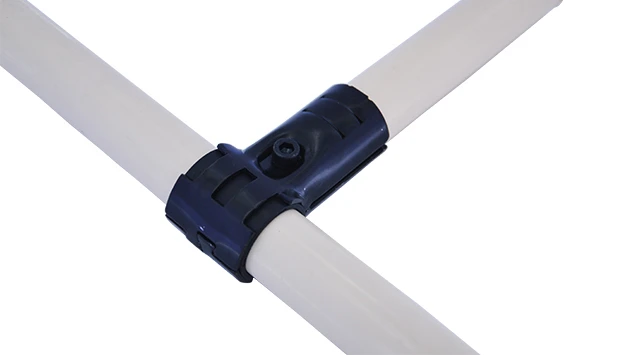
Walk into any manufacturing facility, and you'll likely spot the same silent enemy: waste. It's in the minutes workers spend fumbling with tools to adjust a workstation. It's in the half-used materials tossed aside because a setup was wrong. It's in the frustration of a team stuck with rigid equipment that can't keep up with shifting production needs. For decades, these inefficiencies have eaten into profits, slowed innovation, and drained employee morale. But what if the solution was smaller than you think? Enter the one way rotatory straight lean pipe joint —a deceptively simple component that's quietly revolutionizing how factories operate. In this article, we'll explore how this unassuming part, paired with lean pipe and lean system principles, is slashing waste and redefining efficiency on the production floor.
The Hidden Cost of Production Waste: Why It Matters
Before diving into the specifics of lean pipe joints, let's talk about waste—the kind that doesn't show up on a balance sheet but cripples operations. In manufacturing, waste comes in many forms: time wasted on reconfiguring workstations, labor wasted on repetitive tasks, materials wasted on one-time-use setups, and even space wasted on bulky, inflexible equipment. According to the Lean Enterprise Institute, the average factory loses 20-30% of its capacity to these inefficiencies. That's like running a 10-hour shift but only getting 7 hours of productive work—day in, day out.
Consider a mid-sized electronics plant I visited last year. Their assembly line relied on fixed steel workbenches and welded racks. When a new product line launched, the team spent two full days disassembling old stations, cutting pipes, and rewelding frames. By the time they were done, they'd tossed out $1,200 worth of scrap metal, and employees were exhausted from the manual labor. Worse, the delay pushed back the product launch by a week. This isn't an anomaly—it's the norm in facilities stuck with outdated systems. The good news? Lean manufacturing, with tools like lean pipe and modular joints, was designed to fix exactly this.
Lean Systems 101: Building a Foundation for Waste Reduction
At its core, lean manufacturing is about one thing: eliminating waste to create more value with fewer resources. It's not just a buzzword—it's a mindset that starts with the tools on the factory floor. Lean system components, from workbenches to flow rack setups, are built around flexibility, reusability, and adaptability. And at the heart of these systems lies the humble lean pipe (or lean tube)—a lightweight, durable pipe that, when paired with the right joints, becomes a building block for custom workstations, material racks, and conveyance systems.
Traditional lean pipe setups used basic fixed joints, which worked for simple, static applications but fell short when production needs changed. You could build a workstation, but reconfiguring it meant grabbing a wrench, loosening bolts, and hoping the pipes didn't bend or break in the process. That's where the one way rotatory straight lean pipe joint changes the game. It's not just a joint—it's a bridge between rigidity and adaptability, designed to make waste a thing of the past.

Meet the Star: What Is a One Way Rotatory Straight Lean Pipe Joint?
Let's start with the basics: What makes this joint different? Imagine a standard lean pipe joint—usually a metal connector that locks two pipes at a fixed angle, requiring tools to adjust. Now, replace that with a joint that lets you rotate pipes smoothly in one direction (hence "one way rotatory") with a simple lever or twist, no tools needed. That's the innovation. These joints are engineered with internal bearings or cams that allow controlled rotation, so you can adjust angles or reposition pipes in seconds, not hours.
Take, for example, a joint connecting two aluminum lean pipes on a workbench . With a traditional joint, setting the height of a shelf might take 15 minutes of tightening and rechecking. With a one way rotatory joint? Loosen the locking lever, rotate the pipe up or down to the desired height, and lock it back in place—done in 30 seconds. The "straight" design ensures stability even after multiple adjustments, so you don't sacrifice durability for flexibility. It's like having a Swiss Army knife in your toolbox instead of a single fixed wrench.

5 Ways These Joints Slash Production Waste (With Real Numbers)
Waste reduction isn't just about saving time—it's about transforming how work gets done. Here's how one way rotatory joints deliver tangible results:
1. Time Waste: From Hours to Minutes
Time is the most precious resource on the factory floor, and traditional joints are time thieves. A 2023 study by the Manufacturing Efficiency Institute found that teams spend 12-15% of their shift adjusting or reconfiguring equipment. With one way rotatory joints, that number drops to 3-4%. Let's break it down: A team reconfiguring a flow rack for a new product line with fixed joints might take 2 hours (including tool setup, adjustments, and testing). With rotatory joints? 20 minutes. Over a month of 10 reconfigurations, that's 18 hours saved—enough to produce 50+ additional units or train a new employee.
I spoke with Maria, a production supervisor at a automotive parts plant, who shared her experience: "We used to schedule reconfigurations during night shifts because they took so long. Now, with these joints, we can adjust a workstation between morning and afternoon shifts—no overtime, no delays. Last quarter, we cut setup time by 68%, and our on-time delivery rate jumped from 82% to 95%."
2. Material Waste: From "Use Once" to "Reuse Forever"
Traditional fixed joints often get damaged during disassembly—stripped threads, bent metal, cracked plastic. That means replacing joints (and sometimes pipes) every few reconfigurations. One way rotatory joints, made from high-strength aluminum or steel, are built to withstand repeated adjustments. A quality joint can last 5+ years with daily use, compared to 1-2 years for standard joints. Plus, since they're tool-free, there's no risk of over-tightening or stripping, which is a common cause of material waste.
Consider this: A factory using 100 fixed joints might replace 30-40 of them annually, costing $200-300 in parts alone. With rotatory joints, replacement drops to 5-10 per year. Over five years, that's $1,000+ saved on materials—before even factoring in the cost of downtime during replacements.
3. Labor Waste: Less Struggle, More Productivity
Ergonomics matter. Traditional joint adjustments require bending, twisting, and applying force with tools—tasks that lead to fatigue and even injury over time. The Bureau of Labor Statistics reports that 23% of manufacturing injuries are due to overexertion from manual tool use. Rotatory joints eliminate this by letting workers adjust setups with a simple lever pull or twist, reducing physical strain.
At a medical device plant in Ohio, after switching to rotatory joints, workers reported a 40% reduction in "muscle soreness" complaints, and absenteeism dropped by 18%. "Our team used to dread reconfiguring the workbench stations," said the plant manager. "Now, even our newer employees can do it without help. They're less tired, more engaged, and mistakes have plummeted."
4. Inefficiency Waste: Adaptability in a Fast-Changing World
Today's manufacturing landscape is all about agility. Products launch faster, customer demands shift overnight, and batch sizes get smaller. Rigid systems can't keep up. One way rotatory joints turn static workstations into dynamic, on-demand setups. Need to add a shelf to a flow rack for incoming parts? Rotate, lock, done. Need to lower a conveyor height for shorter workers? 30 seconds. This adaptability means you're never stuck with a "one-size-fits-all" setup, even as your needs evolve.
A furniture manufacturer I worked with recently shared this: They used to build custom wooden racks for each product line, which sat unused when lines changed. Now, they use lean pipes and rotatory joints to build modular racks that adapt to any product size. "We've repurposed 80% of our old racks into new setups," they told me. "Storage costs are down 40%, and we can launch a new product line 3x faster than before."
5. Space Waste: Compact, Flexible, and Space-Saving
Bulky, fixed equipment eats up floor space. One way rotatory joints let you design slimmer, more compact systems. For example, a traditional flow rack with fixed angles might need extra bracing to stay stable, taking up 20-30% more space. Rotatory joints, with their secure locking mechanism, require less bracing, freeing up floor space for other uses—like adding another assembly line or expanding storage.
A electronics assembly plant in Texas reclaimed 1,200 square feet of floor space by redesigning their workstations with rotatory joints. "That space now holds a new testing area, which increased our capacity by 15%," the operations director noted. "We didn't expand the building—we just used the space we already had, more wisely."
Traditional vs. Rotatory: A Side-by-Side Comparison
| Metric | Traditional Fixed Joints | One Way Rotatory Straight Lean Pipe Joints |
|---|---|---|
| Setup/Reconfiguration Time | 60-90 minutes per workstation | 10-20 minutes per workstation |
| Tool Requirement | Wrenches, screwdrivers, sometimes cutting tools | None—tool-free adjustment |
| Annual Replacement Rate | 30-40% of joints | 5-10% of joints |
| Worker Fatigue Risk | High (manual tool use, overexertion) | Low (minimal physical effort) |
| Space Efficiency | Requires extra bracing; bulkier designs | Slimmer profiles; less bracing needed |
| Adaptability to New Products | Limited—often requires full rebuilds | High—adjustable for any product size/shape |
Beyond the Joint: Building a Complete Lean Ecosystem
A great joint is just one piece of the puzzle. To maximize waste reduction, it needs to work seamlessly with other lean components. That's where partnering with a reliable lean pipe supplier matters—one that offers not just joints, but a full range of accessories: aluminum lean pipe (lighter and more durable than traditional steel), roller track for smooth material flow, caster wheels for mobile workstations, and ESD workbenches for sensitive electronics. When all these parts are designed to work together, the waste reduction multiplies.
For example, a flow rack built with rotatory joints, aluminum lean pipe, and plastic roller track guide rails (yellow or grey, depending on your needs) becomes a material handling system that adapts to any product, reduces manual lifting, and speeds up picking times. Add swivel roller balls to the work surface, and you've got a workstation where parts glide into place—no more reaching or straining.
Choosing the Right Lean Pipe Supplier: It's About More Than Parts
Not all rotatory joints are created equal. Cheap, poorly made joints can stick, break, or lose stability over time—undoing all your waste reduction efforts. That's why choosing a trusted lean pipe supplier is critical. Look for suppliers who:
- Use high-quality materials (aluminum, stainless steel) for joints and pipes
- Offer testing data on joint durability (e.g., "tested to 10,000+ rotations without failure")
- Provide custom design support (not just parts, but help optimizing your system)
- Have a track record in your industry (e.g., automotive, electronics, medical)
A good supplier will also stock complementary accessories—like internal rotary aluminum joints for tight spaces, roller track connectors for seamless flow, and caster accessories for mobile setups—so you're not piecing together parts from different vendors.
The Future of Lean Manufacturing: Small Parts, Big Impact
As manufacturing continues to evolve—with smaller batches, faster turnarounds, and a focus on sustainability—tools like the one way rotatory straight lean pipe joint will only grow more important. They're not just a "nice-to-have" upgrade; they're a foundational piece of the modern, waste-free factory. When every minute and every material counts, these small, cleverly designed joints deliver big results: lower costs, happier workers, and a production line that can keep up with whatever the future throws at it.
So, the next time you walk through a factory, take a closer look at the workbenches, the flow racks, the material carts. Chances are, the ones that look busy but not chaotic—the ones where workers move with purpose, not frustration—are built with lean systems and rotatory joints. Because in the end, waste reduction isn't about grand overhauls. It's about the small, smart choices that add up to something extraordinary.