- Company Articles
- Products and Technology
- Product knowledge
- How One Way Rotatory Straight Lean Pipe Joints Support Continuous Improvement

How One Way Rotatory Straight Lean Pipe Joints Support Continuous Improvement
Related Product
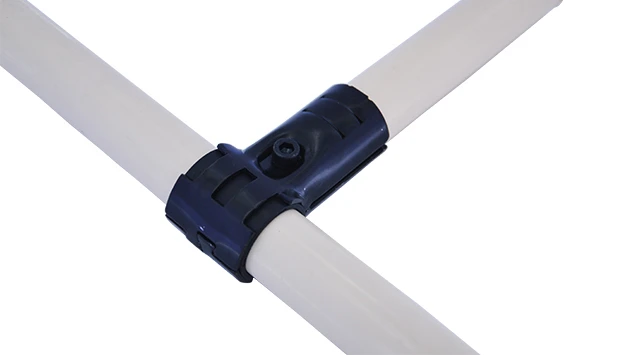
One Way Rotatory Straight Lean Pipe Joint
Two way lean pipe joint for 2 pcs 28MM lean pipe connection in straight angle with rotatory fucntion, which used widely in workbench, flow rack, hand trolley frame connection.
Walk into any thriving manufacturing facility today, and you'll likely notice something beyond the hum of machinery or the precision of assembly lines: a culture of constant evolution. Workers adjust workbenches to fit a new product, teams rearrange flow racks to cut down on walking time, and supervisors tweak workstation layouts to reduce fatigue. This isn't chaos—it's continuous improvement, the heartbeat of lean manufacturing. And while tools like Kaizen boards and PDCA cycles get a lot of attention, there's a quieter hero in this story: the humble components that make adaptability possible. Among these, the one way rotatory straight lean pipe joint stands out as a small but mighty enabler of the flexibility modern factories depend on.
In this article, we'll explore how these unassuming joints—with their chrome-plated durability and clever rotational design—play a pivotal role in supporting continuous improvement. We'll dive into their design, practical applications in workbenches and flow racks, real-world impact, and why they've become indispensable for teams striving to do better, faster, and smarter every day.
The Need for Adaptability in Modern Manufacturing
Gone are the days of static production lines churning out identical products for decades. Today's market demands customization, rapid product launches, and responsiveness to shifting consumer needs. A smartphone manufacturer might switch from assembling 6-inch screens to 6.7-inch models in weeks; a medical device company could scale up production of a critical component overnight during a health crisis. In this environment, rigidity is the enemy.
Continuous improvement—often rooted in the Japanese philosophy of Kaizen—thrives on the idea that even small, incremental changes add up to significant gains. But for these changes to happen, the physical workspace must be as adaptable as the teams using it. Imagine a scenario where reconfiguring a workbench to accommodate a new tool requires weeks of waiting for custom metal fabrication, or adjusting a flow rack to speed up material handling means hiring contractors to weld new supports. In such cases, even the best Kaizen ideas die on the vine due to logistical roadblocks.
This is where lean pipe systems come into play. Built from modular components like pipes, joints, and accessories, these systems allow teams to build, modify, and rebuild workspaces in hours or days, not weeks. And at the center of this modular revolution? Joints that balance stability with flexibility—none more crucial than the one way rotatory straight lean pipe joint.
Understanding Lean Pipe Systems: Beyond the Basics
Before we zoom in on the one way rotatory joint, let's set the stage with lean pipe systems themselves. Also known as "flexible pipe systems," these are built using lightweight yet sturdy pipes (often steel, aluminum, or stainless steel) and a variety of connectors. Unlike traditional fixed structures—think bolted steel workbenches or welded shelving—lean pipe systems are designed to be reconfigured with minimal tools and expertise. Need to raise a workbench height by 6 inches? Swap out shorter pipes for longer ones. Want to add a shelf to a flow rack? Attach a few joints and a crossbar. It's like building with industrial-grade Legos, but for factories.
The magic of these systems lies in their components. Pipes provide the structure, accessories like roller tracks and caster wheels add functionality, but joints are the linchpin. They're the points where pipes connect, dictating how much a structure can move, rotate, or adapt. Fixed joints, for example, lock pipes at 90-degree angles, great for stability but limiting when changes are needed. Swivel joints allow rotation, but not always in controlled ways. Then there's the one way rotatory straight lean pipe joint—a specialized connector designed to offer both rigidity when needed and controlled rotation when improvement calls.

Anatomy of a Hero: The One Way Rotatory Straight Lean Pipe Joint
At first glance, a one way rotatory straight lean pipe joint might look like any other metal connector. But a closer look reveals thoughtful engineering tailored to the demands of continuous improvement. Let's break down its key features:
Chrome-Plated Durability
Most high-quality one way rotatory joints come with a chrome plating, and for good reason. Factories are tough environments—oils, coolants, and occasional impacts are part of daily life. Chrome resists corrosion, ensuring the joint won't rust or degrade even in damp or messy conditions. This durability means the joint can withstand repeated reconfigurations without weakening, a must for systems that might be adjusted monthly (or weekly) during Kaizen events.
Controlled Rotation: One Way, One Purpose
The "one way" in the name is critical. Unlike fully swiveling joints that rotate 360 degrees (which can lead to instability), these joints rotate in a single, controlled direction—often 180 degrees or less. This design offers two benefits: first, it prevents accidental movement. A workbench arm, for example, won't swing into a worker's path if bumped. Second, it allows for intentional, repeatable adjustments. Need to tilt a material shelf slightly to let gravity feed parts into a workstation? Rotate the joint to the desired angle, and it stays put until you decide to adjust it again.
Compatibility with Lean Pipes
These joints are engineered to fit standard lean pipe diameters (typically 28mm or 30mm), making them easy to integrate with existing systems. Whether your factory uses steel, aluminum, or stainless steel pipes, a quality one way rotatory joint will clamp securely without damaging the pipe's surface—a small detail that matters when you're disassembling and reassembling components regularly.
Tool-Free Adjustments (or Minimal Tools)
Continuous improvement shouldn't require a trip to the tool crib. Many one way rotatory joints feature hand-tightened bolts or quick-release levers, allowing workers to adjust angles or reposition components without wrenches or screwdrivers. This "anyone can do it" accessibility is key: frontline employees—the ones closest to the work—can make changes themselves, rather than waiting for maintenance teams. It's empowerment through hardware.

Supporting Continuous Improvement: Practical Applications
To understand how these joints drive continuous improvement, let's look at their real-world applications. From lean pipe workbenches to flow racks, ESD workstations to roller tracks, they quietly enable the adjustments that turn good processes into great ones.
1. Lean Pipe Workbenches: Ergonomics on Demand
Workbenches are the command centers of manufacturing. A poorly designed bench leads to strained backs, wasted motion, and frustrated workers—all enemies of continuous improvement. One way rotatory joints transform static benches into ergonomic powerhouses. Consider a scenario in an electronics assembly plant:
A team of assemblers has been struggling with a new circuit board that requires more precise soldering. The existing workbench has a fixed tool tray positioned 12 inches from the edge, forcing workers to lean forward for hours. Using one way rotatory joints, the team can pivot the tool tray outward by 3 inches, bringing tools within easy reach. No need for new benches—just a 15-minute adjustment. Post-change, worker fatigue reports drop by 40%, and soldering errors decrease by 15%. That's Kaizen in action, made possible by a joint that lets the bench adapt to the worker, not the other way around.
Or take a packaging station where workers alternate between small boxes (requiring a lower table height) and large crates (needing a higher surface). With fixed joints, the bench height is set in stone. With one way rotatory joints, paired with adjustable pipe legs, the team can raise or lower sections of the bench in minutes, reducing bending and lifting injuries. Over time, these small tweaks add up to a workforce that's happier, healthier, and more engaged in suggesting further improvements.
2. Flow Racks: Speeding Up Material Flow
Flow racks are the arteries of a factory, moving materials from storage to production lines. Their efficiency depends on aligning with the pace of assembly—too slow, and workers wait; too fast, and parts pile up. One way rotatory joints help fine-tune this balance by allowing racks to be reangled or reconfigured to match changing production schedules.
Imagine a automotive parts supplier that traditionally produced 500 door handles per day. A new contract requires ramping up to 800, but the existing flow rack feeds parts to the assembly line at a trickle. By using one way rotatory joints to adjust the angle of the rack's roller tracks (tilting them slightly steeper), gravity does more work, moving parts faster. The team also adds a second "lane" to the rack using the same joints, doubling throughput without replacing the entire structure. The result? The supplier meets the new demand with no additional floor space and a 20% reduction in material handling time.
In another example, a bakery packaging line switches from plastic to paper boxes, which are lighter and slide more easily. The existing flow rack causes boxes to jam because the angle is too steep. With one way rotatory joints, workers tilt the racks back by 5 degrees, slowing the flow just enough to prevent jams. The fix takes 20 minutes and saves hours of downtime—proving that adaptability isn't just about big changes, but quick, precise ones.
3. ESD Workstations: Protecting Sensitive Electronics (and Flexibility Too)
For industries like semiconductor manufacturing or medical device production, ESD (Electrostatic Discharge) workstations are non-negotiable. These specialized setups prevent static electricity from damaging sensitive components. But ESD protection shouldn't mean sacrificing adaptability. One way rotatory joints shine here by allowing adjustments without compromising ESD safety.
A semiconductor plant recently introduced a new microchip that requires a larger testing fixture. The ESD workstation's static-dissipative tabletop has a fixed shelf above it, leaving no room for the new fixture. Using one way rotatory joints with ESD-safe chrome plating, the team swings the shelf upward by 90 degrees, creating vertical space. The joints maintain the workstation's grounding continuity (critical for ESD protection) while providing the extra room needed. The alternative? Buying a new $5,000 workstation. Instead, the team spends $20 on replacement joints and is back to work the same day.
4. Roller Tracks: Smoothing the Path for Continuous Flow
Roller tracks are the unsung heroes of material handling, letting parts glide from one process to the next. But their effectiveness depends on alignment—even a slight misangle can cause jams or slowdowns. One way rotatory joints ensure tracks stay in sync with shifting production needs.
A food packaging facility processes both cans (heavy, rigid) and pouches (light, flexible). Cans require a straight roller track for stability, while pouches need a gentle curve to prevent tearing. With one way rotatory joints, the maintenance team can pivot sections of the track between straight and curved configurations in under an hour, switching between product lines seamlessly. Before, changing over required manually swapping entire track sections, taking 4 hours and risking damage to expensive rollers. Now, changeover time is cut by 75%, and the team can run smaller batches of specialty pouches without disrupting can production—a win for both flexibility and efficiency.
Fixed vs. Rotatory: A Comparison of Joint Capabilities
To truly appreciate the value of one way rotatory straight lean pipe joints, it helps to see how they stack up against fixed joints, the traditional choice for stability. The table below compares key factors that matter for continuous improvement:
| Feature | Fixed Lean Pipe Joints | One Way Rotatory Straight Lean Pipe Joints |
|---|---|---|
| Flexibility | Low: Angles fixed during assembly; require disassembly to reconfigure. | High: Controlled rotation allows on-the-fly angle adjustments without disassembly. |
| Kaizen Event Utility | Limited: Changes require tools, time, and often new components. | High: Enables quick trials of layout changes during Kaizen workshops (e.g., adjusting workbench height in 10 minutes). |
| Ergonomic Adaptability | Low: Static positions can't accommodate workers of different heights or tasks. | High: Rotation allows tilting/swinging components to fit individual worker needs. |
| Durability | High: No moving parts to wear out; ideal for permanent structures. | High: Chrome plating and reinforced rotation points withstand repeated adjustments. |
| Best For | Stable, long-term setups with minimal changes (e.g., dedicated production lines for legacy products). | Dynamic environments with frequent product changes, small batches, or ongoing Kaizen efforts. |
Case Study: How One Manufacturer Boosted Productivity with Rotatory Joints
ABC Electronics: Reducing Changeover Time by 60% with Joint Adjustments
Background: ABC Electronics, a mid-sized manufacturer of smartphone chargers, was struggling with long changeover times between charger models. Each new model required reconfiguring workbenches, tool holders, and flow racks—a process that took 8 hours and often delayed production starts.
Challenge: The team wanted to cut changeover time to under 3 hours to meet demand for smaller, more frequent batches. Their existing setup relied heavily on fixed joints, which meant disassembling and rebuilding sections of workbenches and racks for each model change.
Solution: Over six months, ABC gradually replaced fixed joints with one way rotatory straight lean pipe joints on 12 key workstations and 8 flow racks. They focused on high-changeover areas: tool trays, component bins, and roller track feeds.
Results:
• Changeover time dropped from 8 hours to 3 hours (a 62.5% reduction).
• Workers reported 35% less frustration during model switches, as adjustments no longer required heavy tools or help from maintenance.
• The team began holding weekly "micro-Kaizen" sessions, using the joints to test small layout tweaks (e.g., moving a bin 2 inches left to reduce reaching). Over three months, these tweaks added up to a 9% increase in daily charger output.
Quote from the Floor: "Before, changing over felt like a punishment—we'd spend half the day taking apart benches and hoping we had the right parts," said Maria, an assembly line lead. "Now, with these rotatory joints, I can swing the tool tray out, adjust the roller track angle, and be ready for the new model before my coffee gets cold. It's not just faster—it makes us feel like we can actually improve things, instead of just tolerating them."
Choosing Quality: Why Not All Joints Are Created Equal
Not every one way rotatory straight lean pipe joint will deliver the benefits we've discussed. Cheaply made joints—with thin chrome plating, loose tolerances, or flimsy rotation mechanisms—can become liabilities. They might rust, slip during use, or break after a few adjustments, undoing the gains of adaptability. When selecting joints for your facility, keep these factors in mind:
Material Quality
Look for joints made from high-grade steel with a thick chrome plating (at least 0.0005 inches). This ensures resistance to corrosion and wear, even in humid or oily environments. Avoid joints with plastic components in high-stress areas—they may crack under heavy loads.
Load Capacity
Check the manufacturer's specs for maximum load capacity. A joint used on a workbench holding 50 lbs of tools needs a different rating than one supporting a flow rack loaded with 300 lbs of parts. Overloading leads to premature failure and safety risks.
Smooth Rotation, Secure Locking
The joint should rotate smoothly but lock firmly in position when adjusted. Wiggle room during use is dangerous—imagine a tool tray that slowly dips downward as you work. Test joints before buying: rotate them through their range, then apply pressure to ensure they stay put.
Compatibility
Ensure the joint fits your existing lean pipes. Most use standard diameters (28mm is common), but double-check measurements. Mismatched joints will clamp poorly, leading to instability.
Supplier Reliability
Work with suppliers who specialize in lean manufacturing components, not general hardware stores. Reputable suppliers offer warranties, technical support, and replacement parts—critical if a joint fails during a busy production run. They'll also help you select the right joint for your specific application (e.g., ESD-safe joints for electronics, heavy-duty joints for automotive).
The Future of Lean: Where Joints Meet Industry 4.0
As factories embrace Industry 4.0—with IoT sensors, AI-driven analytics, and smart automation—the role of physical adaptability becomes even more critical. Smart factories generate reams of data on inefficiencies: a workstation where workers spend 15% of their time walking, a flow rack with parts that sit idle for 2 hours daily. To act on this data quickly, teams need workspaces that can evolve as fast as the insights do.
One way rotatory straight lean pipe joints are poised to play a key role in this future. Imagine a scenario where IoT sensors detect that a flow rack's current angle is causing parts to jam 12 times per shift. The maintenance team receives an alert, heads to the rack, and uses a one way rotatory joint to adjust the angle by 5 degrees—all while the line is still running. The sensors confirm the jams stop, and the data is logged to inform future layout designs. This closed loop of data → insight → physical adjustment is the future of continuous improvement, and it starts with components that make adjustment frictionless.
Even as automation takes over repetitive tasks, the human element of Kaizen remains irreplaceable. Workers on the floor will always notice small inefficiencies that sensors miss—a tool that's just out of reach, a shelf that blocks natural light, a track that makes a distracting noise. Empowering these workers with adaptable tools like one way rotatory joints ensures that their insights translate into action, keeping the spirit of continuous improvement alive in the age of smart manufacturing.
Conclusion: Small Components, Big Impact
Continuous improvement isn't about grand gestures or expensive software. It's about the daily, incremental changes that make work better—for the people doing it and the products they create. One way rotatory straight lean pipe joints embody this philosophy in steel and chrome. They're not flashy, but they're foundational, turning static workspaces into canvases for innovation.
From ergonomic workbenches that adapt to each worker to flow racks that keep pace with shifting demand, these joints enable the small, powerful adjustments that define Kaizen. They reduce the friction of change, making it easier for teams to experiment, learn, and grow. In doing so, they don't just support continuous improvement—they make it possible.
So the next time you walk through a factory and see a workbench that's been tilted for better access, a flow rack with a new angle, or a workstation that looks just a little different than last month, take a closer look. Chances are, there's a one way rotatory straight lean pipe joint holding it all together—quietly, reliably, and always ready for the next improvement.