- Company Articles
- Products and Technology
- Product knowledge
- How Parallel Fixation Aluminum Pipe Joints Support Lean Manufacturing Principles

How Parallel Fixation Aluminum Pipe Joints Support Lean Manufacturing Principles
Related Product
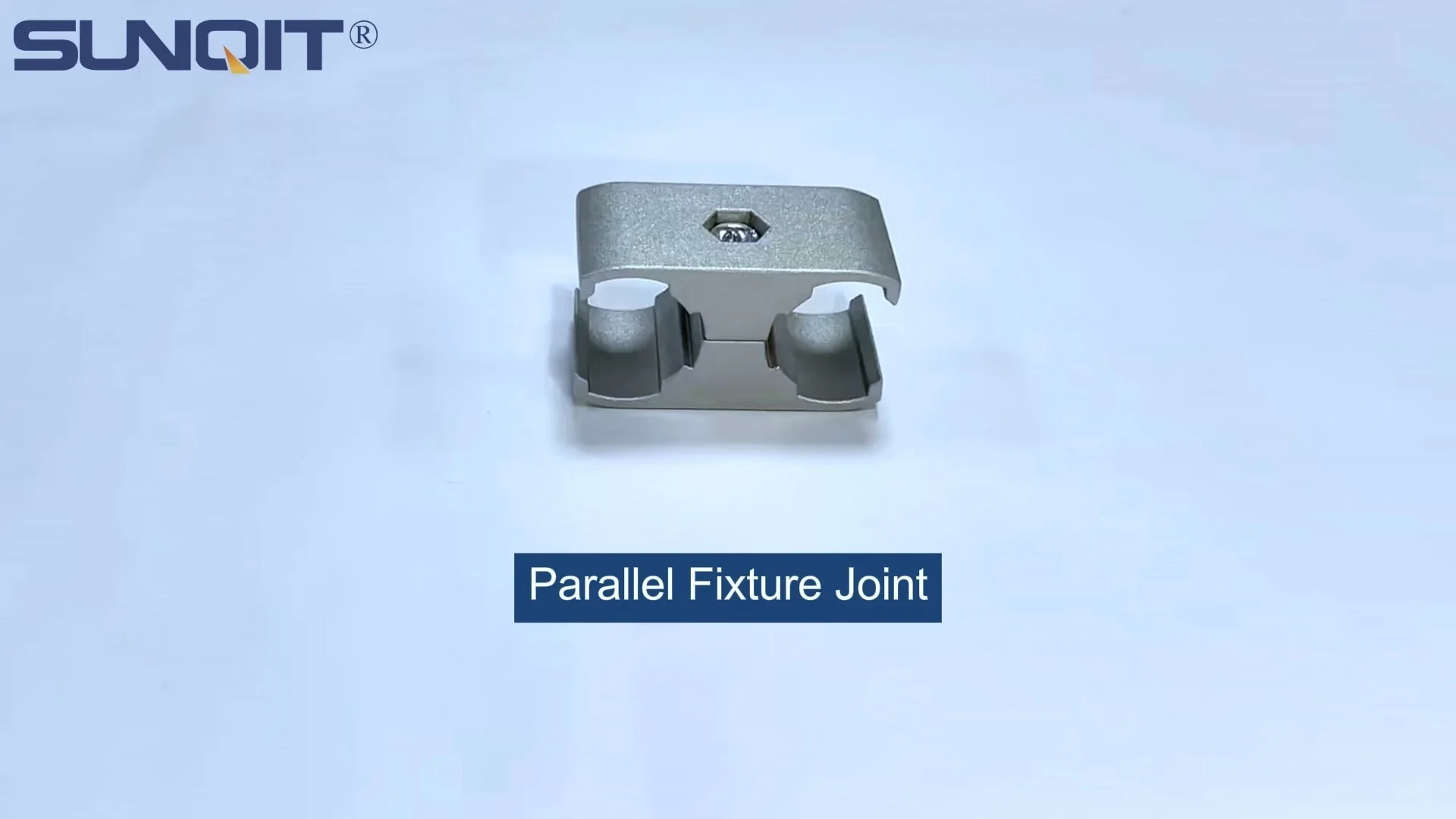
Parallel Fixation Aluminum Pipe Joint
Aluminum parallel joint for two pcs 28mm aluminum pipe connected by parallel direction.
In the fast-paced world of manufacturing, where efficiency is king and waste is the enemy, lean principles have become more than just a buzzword—they're the backbone of successful operations. But here's the thing: lean manufacturing isn't just about cutting costs or speeding up production. It's about creating systems that adapt, evolve, and empower teams to do their best work. And that's where the right tools come in. Today, we're diving into a unsung hero of modern lean systems: parallel fixation aluminum pipe joints . These unassuming components might not grab headlines, but they're quietly revolutionizing how factories build, adapt, and optimize their workflows. Let's explore how these joints align with core lean principles, and why they've become a go-to for manufacturers aiming to stay agile in an ever-changing market.
First Things First: What Are Parallel Fixation Aluminum Pipe Joints?
Before we connect them to lean, let's break down what these joints actually are. Imagine you're building a structure—say, a workbench or a material rack. Traditionally, you might weld steel pipes together, drill holes, or use bulky, permanent fasteners. But parallel fixation aluminum pipe joints change the game. These are lightweight, durable connectors designed to join aluminum pipes (or aluminum profiles ) quickly and securely—no welding, no heavy tools, no permanent commitments.
At their core, these joints are engineered for flexibility. They typically feature a clamping mechanism that tightens around the aluminum pipe, creating a strong hold while allowing for easy adjustments. Most are made from high-grade aluminum or reinforced plastic, striking a balance between strength and weight. And here's the kicker: they're modular. That means you can mix and match pipes, joints, and accessories (like brackets, casters, or panels) to build just about anything—from a simple workbench to a complex flow rack—then reconfigure it later when your needs change. No more scrapping an entire structure because a product design shifts or production demands increase. With these joints, your infrastructure becomes as adaptable as your team.
A Quick Refresher: The Core Principles of Lean Manufacturing
To understand why these joints matter, let's revisit the seven core principles of lean manufacturing (as defined by James Womack and Daniel Jones in their seminal work, Lean Thinking ). These principles aren't just guidelines—they're a mindset focused on eliminating waste, building value, and fostering continuous improvement:
- Eliminate Waste (Muda): Identify and cut out activities that don't add value—like excess inventory, unnecessary motion, or waiting time.
- Build Quality In (Jidoka): Stop production when a problem occurs to prevent defects from piling up.
- Create Knowledge: Capture and share insights from workers to drive improvement.
- Defer Commitment: Delay decisions until the last responsible moment, allowing for flexibility as circumstances change.
- Deliver Fast: Shorten lead times to respond quickly to customer demands.
- Respect People: Empower workers to contribute ideas and take ownership of their processes.
- Optimize the Whole: Focus on the entire system, not just individual processes, to avoid suboptimization.
Now, let's see how parallel fixation aluminum pipe joints align with these principles—starting with one of the most critical for modern manufacturing: deferring commitment.

Supporting Lean Principle #4: Defer Commitment (and Embrace Flexibility)
In manufacturing, uncertainty is a given. Customer orders fluctuate, product designs evolve, and new regulations crop up. Lean's "defer commitment" principle encourages manufacturers to avoid locking into rigid systems that can't adapt. Enter parallel fixation aluminum pipe joints. Unlike welded steel structures, which are fixed in place once built, these joints let you pivot quickly.
Consider a scenario: A electronics manufacturer produces two phone models, each requiring a specific assembly workbench with tool holders, bins, and cable management. With traditional wooden or welded steel workbenches, switching between models means either buying two separate benches (wasting space and money) or spending hours reconfiguring a single bench (wasting labor). But with aluminum pipes and parallel fixation joints, the same bench can be transformed in minutes. Loosen the joints, adjust the pipe lengths, reposition the tool holders, and you're ready for the next model. No new equipment, no downtime—just a system that bends, not breaks, with demand.
This flexibility also shines during product development. When prototyping a new device, engineers often need to tweak assembly line setups weekly (or even daily). With these joints, they can build temporary racks or workstations, test them, and modify on the fly. There's no need to wait for the maintenance team to weld new parts or order custom components. The team takes ownership of their space, deferring final "commitment" to a layout until the design is locked in. That's lean in action: reducing risk by avoiding premature investments in fixed infrastructure.

Supporting Lean Principle #1: Eliminating Waste (Muda)
Waste is the arch-nemesis of lean, and it comes in many forms: overproduction, excess inventory, unnecessary motion, defects, and more. Parallel fixation aluminum pipe joints attack waste from multiple angles, starting with material waste . Traditional steel structures are often overbuilt—you weld a frame, and if it's not right, you cut it up and start over, scrapping metal in the process. Aluminum joints, by contrast, are reusable. If a rack is no longer needed, you can disassemble it, repurpose the pipes and joints for a new project, and minimize scrap.
Then there's labor waste . Think about the time it takes to build a welded steel workbench: measuring, cutting, welding, grinding, painting. That's hours (or days) of skilled labor. With parallel fixation joints? A team can assemble a basic workbench in under an hour using just a hex key. No welding certification required, no waiting for paint to dry. This slashes setup time, letting workers focus on value-adding tasks (like assembling products) instead of building infrastructure. And when production needs change, reconfiguring takes minutes, not hours—eliminating the "waiting" waste that plagues rigid systems.
Even space waste gets addressed. Aluminum is lightweight, so structures built with these joints are easier to move (especially with caster wheels, another common accessory). This means factories can optimize floor layouts dynamically, freeing up space that would otherwise be cluttered with underused, fixed equipment. For example, a seasonal product line's material rack can be disassembled and stored during off-seasons, making room for other operations. No more permanent structures hogging valuable square footage year-round.

Supporting Lean Principle #7: Optimize the Whole (Not Just the Parts)
Lean isn't about optimizing one process at the expense of another—it's about making the entire system run smoother. Parallel fixation aluminum pipe joints excel here because they're part of a larger lean system . They don't just connect pipes; they connect workflows. Let's take a flow rack as an example. A flow rack uses gravity to move materials from the back to the front, ensuring workers always have easy access to parts. With traditional wooden or metal racks, adjusting the angle of the rollers (to control material speed) or adding/removing shelves requires drilling new holes or sawing wood—disrupting the entire flow. But with aluminum pipes and parallel fixation joints, you can tweak the rack's angle, add dividers, or extend shelves in minutes. This keeps the material flow steady, reduces worker motion (no bending or reaching for hard-to-reach parts), and ensures the entire production line—from receiving to assembly—runs more efficiently.
Another example: cross-functional collaboration. In many factories, maintenance, production, and engineering teams work in silos. Maintenance builds a rack, production uses it, and if it's not right, production waits for maintenance to fix it. But with modular aluminum systems, production teams can take ownership. A line worker might notice that a workbench is too low, causing back strain. Instead of filing a request and waiting days, they can grab a few extra pipes and joints, adjust the height themselves, and get back to work. This empowers frontline employees to solve problems, breaking down silos and optimizing the whole system—one small adjustment at a time.
Comparing Traditional vs. Parallel Fixation Aluminum Joints: A Quick Table
Still on the fence? Let's put traditional joints head-to-head with parallel fixation aluminum pipe joints to see how they stack up against lean principles:
| Feature | Traditional Steel Welded Joints | Parallel Fixation Aluminum Pipe Joints |
|---|---|---|
| Reconfiguration Time | Hours to days (requires welding/cutting) | Minutes to hours (hex key adjustment) |
| Material Waste | High (scrapped steel when reconfigured) | Low (pipes/joints reusable across projects) |
| Labor Requirements | Skilled welders/technicians | Any worker (minimal training needed) |
| Flexibility for Change | Very low (permanent once built) | Very high (adapt to new products/volumes) |
| Support for Continuous Improvement | Limited (hard to test new layouts) | High (easy to prototype and iterate) |
Real-World Impact: How Manufacturers Are Using These Joints Today
Let's ground this in real life. Take a mid-sized automotive parts manufacturer I worked with a few years back. They were struggling with frequent product changes—each new car model required different tooling, and their welded steel workbenches couldn't keep up. Setup time for new lines was averaging 48 hours, leading to missed deadlines and frustrated workers. They switched to aluminum pipes and parallel fixation joints, and the results were striking: setup time dropped to 4 hours, material waste from scrapped benches fell by 70%, and employee satisfaction scores rose (workers loved being able to adjust their stations). Within six months, they'd recouped the investment in the new system through faster production and reduced waste.
Another example: a medical device company that needed strict ESD (electrostatic discharge) control on their assembly lines. They used aluminum profile workbenches with parallel fixation joints, adding ESD-safe panels and grounding accessories. When they launched a smaller device line, they simply reconfigured existing benches instead of buying new ESD workstations—saving $30,000 in equipment costs. And because the joints are compatible with a range of accessories, they could add custom cable management and tool trays without redesigning the entire bench.
Choosing the Right Partner: The Role of a Lean System Supplier
Of course, to get the most out of parallel fixation aluminum pipe joints, you need more than just the joints themselves—you need a partner who understands lean systems. A good lean system supplier won't just sell you parts; they'll work with you to design solutions that align with your specific goals. Look for suppliers who offer a full ecosystem: pipes, joints, accessories (casters, panels, rollers), and even design support. They should understand your production challenges and help you build modular systems that grow with you. After all, lean is about optimization, and that starts with choosing the right tools and partners.
Wrapping Up: More Than Just Joints—Enablers of Lean Culture
At the end of the day, parallel fixation aluminum pipe joints are more than just hardware. They're enablers of a lean culture. By making it easy to adapt, reduce waste, and empower workers, they turn abstract lean principles into tangible actions. They let manufacturers stop fighting rigid infrastructure and start focusing on what matters: building great products, serving customers, and staying competitive in a fast-moving world.
So, if you're looking to inject more lean into your operations, don't overlook the small stuff. Sometimes, the most powerful tools are the ones that let you build, adapt, and grow—one joint at a time.