- Company Articles
- Products and Technology
- Product knowledge
- How Parallel Lean Pipe Joint Chrome Reduces Material Waste in Production

How Parallel Lean Pipe Joint Chrome Reduces Material Waste in Production
Related Product
Parallel Lean Pipe Joint Chrome
Parallel lean pipe joint used for 2 pcs 28MM lean pipe connection in parallel direction to enhance frame structure, usually for heavy payload requirement for workbench. flow rack, hand trolley.
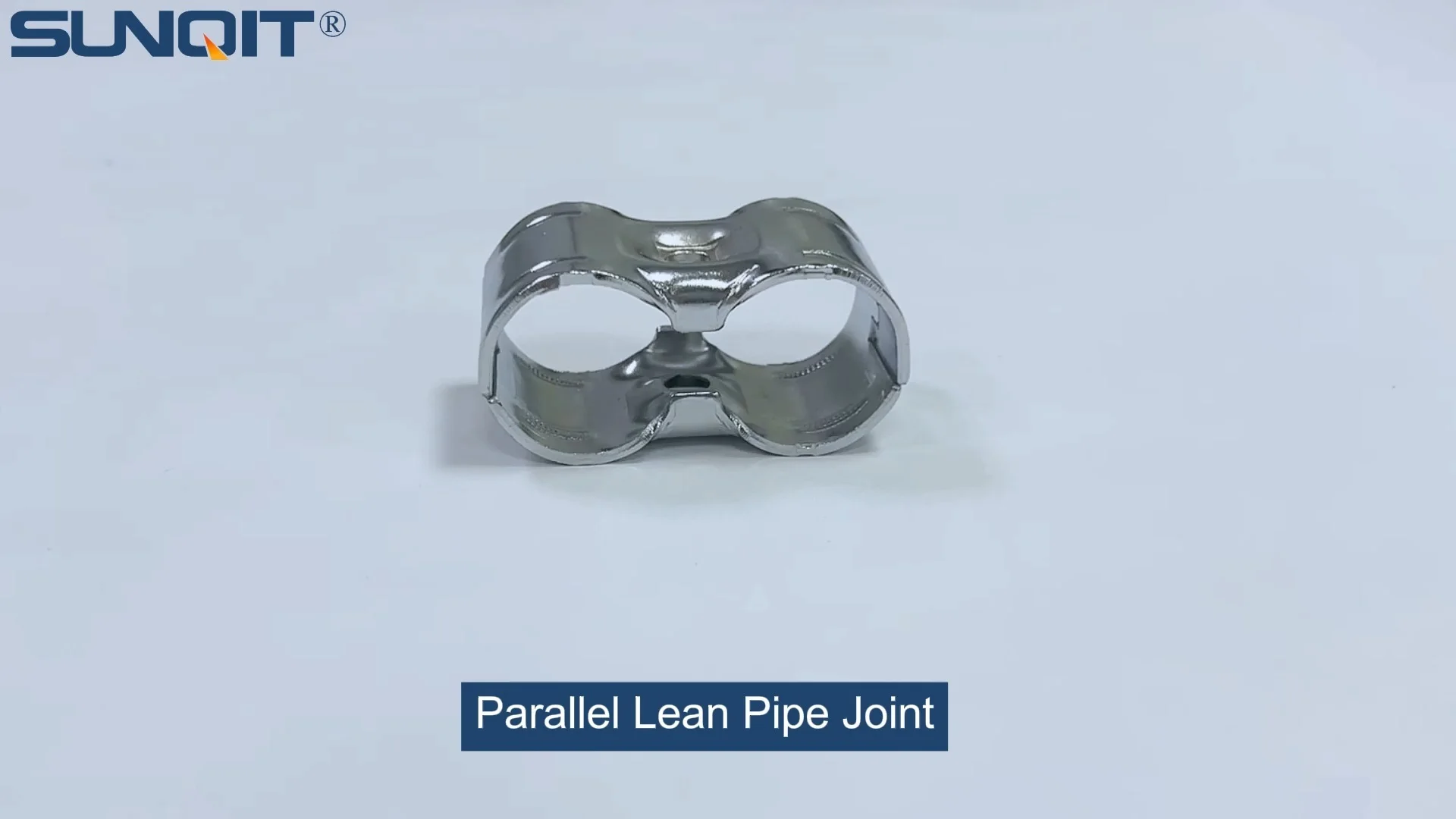
In the fast-paced world of manufacturing, every scrap of material, every minute of downtime, and every misstep in assembly can eat into profits. For small and medium-sized factories, in particular, material waste isn't just a financial burden—it's a threat to competitiveness. Whether it's excess metal from cutting pipes to the wrong length, broken components from ill-fitting joints, or entire workbenches and racks that become obsolete when production lines change, waste has long been the silent drain on efficiency. But what if there was a way to build production setups that adapt, reuse, and minimize waste from the ground up? Enter the parallel lean pipe joint chrome —a small but mighty component that's quietly revolutionizing how manufacturers approach modular assembly, from lean pipe workbenches to flow racks and beyond.
The Hidden Cost of "One-Size-Fits-All" Production Setups
Traditional production environments often rely on fixed, custom-built structures. A workbench might be welded from steel pipes, a flow rack bolted together with permanent fasteners, or a material handling system cut to exact dimensions for a specific product. At first glance, this seems efficient: it's tailored to the task at hand. But here's the problem: production lines rarely stay the same. A new product model, a shift in demand, or a process improvement can render these "perfect" setups useless. Suddenly, that welded workbench is too short for the new assembly steps, or the flow rack's fixed shelves can't accommodate larger components. The result? The old structure is dismantled, its materials sent to scrap, and a new one built from scratch. Each time this happens, pounds of metal, plastic, and labor go to waste—all while the factory foots the bill for new materials and downtime.
Material waste in manufacturing isn't just about the obvious scraps, either. It includes the "hidden" waste of over-engineering: using thicker pipes than necessary because adjustable joints can't support lighter materials, or buying extra components "just in case" because a rigid system leaves no room for error. Even the time spent measuring, cutting, and fitting fixed structures adds up—time that could be spent producing goods instead of building tools to produce them.
Modular Systems: The First Step Toward Waste Reduction
In recent years, lean manufacturing principles have pushed the industry toward modularity—the idea that production systems should be flexible, reusable, and easy to reconfigure. Modular systems, built from standardized components, let factories adapt quickly to changes without rebuilding from scratch. At the heart of these systems are components like lean pipes, aluminum profiles, and roller tracks, which can be combined to create everything from workbenches to conveyor systems. But modularity is only as effective as the joints that hold these components together. A weak joint, a non-adjustable connector, or a part that only works with one type of pipe can turn a "flexible" system into a rigid hassle. That's where the parallel lean pipe joint chrome comes in: it's designed to be the backbone of truly waste-free modular assembly.
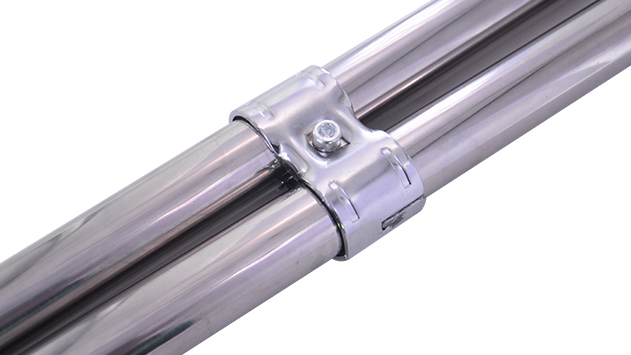
What Is a Parallel Lean Pipe Joint Chrome?
At its core, the parallel lean pipe joint chrome is a connector designed to link lean pipes, aluminum profiles, and other modular components in parallel configurations—think of it as the "cornerstone" of a workbench frame, the "bridge" between flow rack levels, or the "hinge" that lets a roller track adjust to new angles. What sets it apart? First, the chrome plating: not only does it resist corrosion and wear, extending the joint's lifespan, but it also ensures a smooth, precise fit with pipes and profiles, reducing the need for excessive force (and thus, damage) during assembly. Second, its parallel design: unlike traditional T-joints or elbow joints that lock components into fixed angles, parallel joints are engineered to hold two or more pipes in straight, side-by-side alignment while still allowing for (fine adjustments). This makes them ideal for building stable, evenly spaced structures like workbench frames or flow rack supports.
But perhaps the most critical feature is compatibility. Parallel lean pipe joint chrome works seamlessly with a range of materials, from standard lean pipes (often coated in plastic or stainless steel) to aluminum profiles—the lightweight, durable alternative that's gaining popularity in modern factories. It also pairs with roller track connectors, making it easy to integrate into material flow systems where precision alignment is key to preventing jams and product damage. In short, it's a universal connector for a universal problem: how to build less, reuse more, and waste nothing.

5 Ways Parallel Lean Pipe Joint Chrome Cuts Material Waste
So, how exactly does this small joint make such a big difference in reducing waste? Let's break it down into five key benefits that directly impact a factory's bottom line and sustainability goals.
1. No More "Cut-to-Waste" Pipe Lengths
One of the biggest sources of material waste in traditional setups is cutting pipes to exact lengths. Measure wrong, and that pipe is ruined—tossed aside as scrap. Even if you measure right, a slight change in the design (e.g., a workbench that needs to be 6 inches longer) means cutting a new pipe and wasting the old one. Parallel lean pipe joint chrome eliminates this problem by allowing pipes to be adjusted incrementally. Because the joint can slide along the pipe (within reason) and lock into place, you don't need to cut pipes to precise lengths upfront. Instead, you can leave pipes slightly longer and trim them later if needed—or, better yet, reuse them in another setup when the current one is reconfigured. This "measure twice, cut once (or never)" approach slashes the amount of pipe scrap piling up in the factory yard.
2. Reusability: The Anti-Waste Superpower
The chrome-plated joint's durability is its secret weapon for reusability. Unlike plastic joints that crack under stress or welded connections that break when disassembled, these metal joints can withstand repeated assembly, disassembly, and reassembly without losing strength. Imagine a lean pipe workbench used for assembling smartphones today. When the factory shifts to tablets next quarter, instead of scrapping the entire workbench, workers can simply loosen the parallel lean pipe joints, adjust the height and width, and reattach the pipes to fit the new product. The same joints, pipes, and even aluminum profile accessories can be repurposed—no new materials needed. Over time, this reusability adds up: a single set of joints can build dozens of different structures over their lifespan, turning what would be tons of waste into long-term value.
3. Precision Fitting = Less Damage, Fewer Replacements
Ever tried to force a square peg into a round hole? In manufacturing, ill-fitting joints cause more than frustration—they cause damage. A loose joint leads to a wobbly workbench, which can scratch products or even cause tools to fall and break. A tight joint, forced into place with a hammer, can crack the pipe or strip the threads, rendering both the joint and the pipe useless. Parallel lean pipe joint chrome, with its smooth chrome finish and precision engineering, fits snugly without force. The chrome plating reduces friction, making assembly easier, while the parallel design ensures even weight distribution across the joint. This means fewer broken pipes, fewer cracked joints, and fewer trips to the supply closet for replacements. Less damage equals less waste—and less money spent on replacement parts.
4. Compatibility with Aluminum Profiles: Lightweight, Strong, and Efficient
Aluminum profiles have become a favorite in modular systems thanks to their strength-to-weight ratio—they're lighter than steel but just as sturdy, meaning less material is needed to build a stable structure. Parallel lean pipe joint chrome plays well with aluminum profiles, allowing factories to mix and match materials for maximum efficiency. For example, a flow rack might use aluminum profiles for the vertical supports (to save weight) and lean pipes for the horizontal roller tracks (for durability). The joint connects them seamlessly, so there's no need for special adapters or extra hardware. Using aluminum profiles also reduces waste in shipping and handling: lighter structures require less fuel to transport, and their modularity means fewer parts are needed overall. It's a win-win for the factory and the planet.
5. Faster Assembly, Less Labor Waste (Yes, Labor Is a Form of Waste Too!)
While we've focused on material waste, labor waste is just as critical. Time spent fumbling with complicated joints, measuring and remeasuring, or waiting for welding equipment is time not spent producing goods. Parallel lean pipe joint chrome speeds up assembly with its "click-and-lock" design (no welding or specialized tools required). Workers can assemble a basic lean pipe workbench in minutes instead of hours, and reconfigure it just as quickly. Faster assembly means less downtime when production lines change, and less labor cost overall. And because the joints are so easy to use, there's less room for error—no more wasted time fixing mistakes caused by misaligned components.
Case Study: How a Small Electronics Factory Cut Waste by 40% with Parallel Lean Pipe Joint Chrome
To see these benefits in action, let's look at a real-world example: a small electronics manufacturer in Guangdong, China, that produces circuit boards for smartphones. Before adopting modular systems, the factory relied on custom-built wooden workbenches and steel flow racks. When they introduced a new circuit board model with a larger size, the old workbenches were too narrow, and the flow racks couldn't accommodate the bigger components. The factory was scrapping nearly 200 pounds of wood and steel every month, not to mention spending $5,000 on new materials and losing two days of production each time they reconfigured.
In 2023, they switched to a modular system built around lean pipe workbenches and flow racks, using parallel lean pipe joint chrome as the primary connector. The results were striking: within six months, material waste dropped by 40%. The workbenches, now adjustable, were widened by simply adding a few extra lean pipes and repositioning the parallel joints—no new workbench needed. The flow racks, which previously required cutting steel shelves to size, now used aluminum profiles and roller tracks connected by the chrome joints, allowing the team to adjust shelf heights in minutes. Even the scrap pipe pile shrank: instead of cutting pipes to exact lengths, they bought standard 6-foot pipes and trimmed them only when necessary, reusing the offcuts in smaller projects like tool holders.
The factory manager summed it up: "Before, we were building tools to make products. Now, we're building tools that make themselves. The parallel joints turned our production floor into a puzzle we can rearrange—no waste, no stress, just results."
Beyond Workbenches: Flow Racks and Roller Tracks
While lean pipe workbenches are a common application, parallel lean pipe joint chrome shines in flow racks and roller track systems—critical components of material handling where waste often goes unnoticed. Flow racks, which use gravity to move components from the loading end to the assembly line, rely on perfectly aligned roller tracks to prevent jams and ensure smooth flow. A misaligned track can cause components to get stuck, leading to damaged parts (waste) and halted production (more waste). Parallel lean pipe joint chrome, with its ability to hold roller tracks in straight, parallel alignment, eliminates this risk. The joints ensure each roller track is spaced evenly and angled correctly, so components glide smoothly without snags.
Roller tracks themselves benefit from the joint's adjustability. If a factory starts using larger boxes, the roller track width can be increased by loosening the joints and adding a few extra inches of pipe—no need to replace the entire track. This adaptability is a game-changer for facilities that handle multiple product sizes, reducing the need for dedicated tracks for each item. Over time, this translates to fewer tracks built, fewer materials used, and a more streamlined warehouse floor.
Traditional vs. Parallel Lean Pipe Joint Chrome: A Waste Comparison
To put the waste reduction in perspective, let's compare a traditional welded steel workbench with a modular workbench built using parallel lean pipe joint chrome, lean pipes, and aluminum profiles. The table below estimates the material waste over a 3-year lifespan, assuming the workbench is reconfigured twice (a common scenario in dynamic production environments).
| Category | Traditional Welded Workbench | Modular Workbench with Parallel Lean Pipe Joint Chrome |
|---|---|---|
| Initial Material Usage | 100 lbs of steel pipe (welded, cut to exact length) | 60 lbs (40 lbs lean pipe + 20 lbs aluminum profile) |
| Waste from Cutting | 15 lbs (scrap from imprecise cuts) | 3 lbs (minimal scrap, pipes reused in reconfigurations) |
| Waste After Reconfiguration (2x) | 200 lbs (entire workbench scrapped twice) | 0 lbs (pipes, joints, and profiles reused) |
| Replacement Parts | 50 lbs (broken welds, bent pipes) | 5 lbs (occasional joint replacement due to wear) |
| Total 3-Year Waste | 365 lbs | 8 lbs |
The numbers speak for themselves: the modular workbench produces less than 3% of the waste of the traditional version. Over three years, that's 357 fewer pounds of metal going to scrap—all while saving the factory money on materials, labor, and downtime.
Sustainability: The Long-Term Impact of Less Waste
In an era where consumers and regulators demand greener practices, reducing material waste isn't just good for the bottom line—it's good for the planet. Every pound of metal saved means less mining, less energy used in production, and less landfill space occupied. Parallel lean pipe joint chrome, by enabling reusability and efficiency, plays a small but vital role in making manufacturing more sustainable. Factories that adopt modular systems with these joints can lower their carbon footprints, qualify for green certifications, and even attract eco-conscious customers. It's a reminder that waste reduction and sustainability aren't separate goals—they're two sides of the same coin.
Conclusion: Small Joint, Big Change
Material waste in production is a problem that feels overwhelming, but it's not insurmountable. It starts with rethinking the tools we use to build the systems that build our products. Parallel lean pipe joint chrome may be a small component, but it represents a big shift in mindset: from "build once, use once" to "build once, use forever." By prioritizing adjustability, reusability, and compatibility, this joint cuts waste at every stage—from initial assembly to reconfiguration to long-term use.
For factories tired of watching materials go to waste, of paying for new parts every time production changes, or of falling behind more agile competitors, the solution is clear: start small. Invest in modular components like parallel lean pipe joint chrome, lean pipe workbenches, and aluminum profiles. Build systems that adapt, not systems that break. In the end, the real measure of efficiency isn't how much you produce—it's how little you waste while producing it. And with the right joints holding it all together, the possibilities for a leaner, greener, and more profitable factory are endless.