- Company Articles
- Products and Technology
- Product knowledge
- How Parallel Lean Pipe Joint One Side Rotatory Chrome Improves Ergonomics in Workstations

How Parallel Lean Pipe Joint One Side Rotatory Chrome Improves Ergonomics in Workstations
Related Product
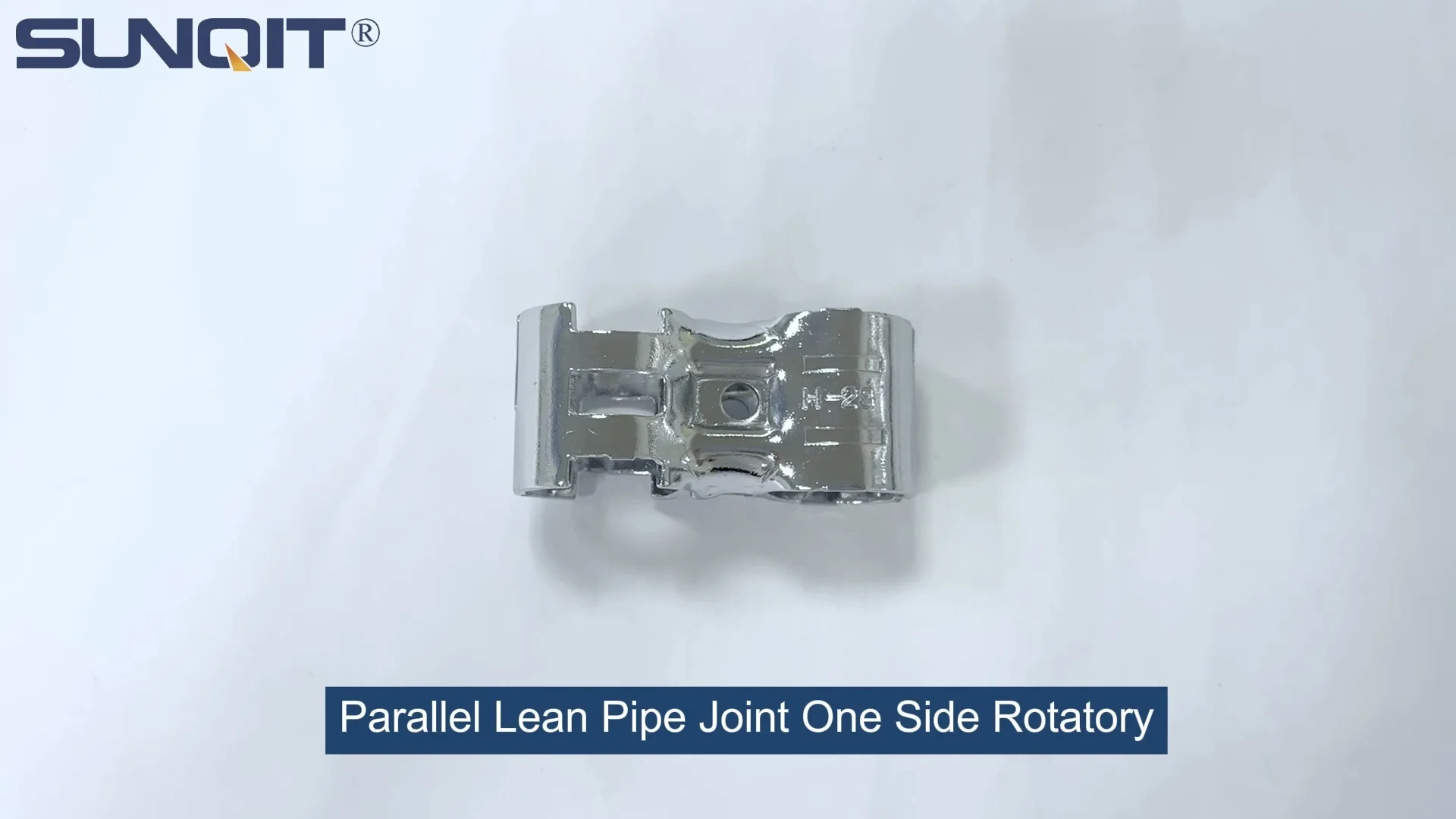
Parallel Lean Pipe Joint One Side Rotatory Chrome
Parallel rotatory lean pipe joint, for 2 pcs 28mm pipe conenction in parallel direction with one side rotatory function.
Walk into any busy production facility, warehouse, or assembly line, and you'll notice something universal: workers hunched over workbenches, stretching to reach tools, or straining to adjust materials. These small, repeated movements might seem trivial, but over time, they add up—leading to fatigue, discomfort, and even chronic injuries. Ergonomics, the science of designing workspaces to fit the people who use them, isn't just a buzzword here; it's the difference between a team that feels energized at 4 PM and one that's counting the minutes until the shift ends. And in the world of lean manufacturing, where efficiency and continuous improvement are king, ergonomics isn't an afterthought—it's the foundation of a truly optimized system. Today, we're diving into a yet powerful component that's quietly revolutionizing workstation design: the Parallel Lean Pipe Joint One Side Rotatory Chrome. Let's unpack how this small but mighty part is transforming workbenches, reducing strain, and making lean systems work for people, not against them.
The Hidden Cost of "Good Enough" Workstations
For decades, workstations were built with a "one-size-fits-all" mindset. A workbench was a flat surface at a fixed height; tools were stored in drawers that might be too high or too low; materials were stacked in racks that required twisting or bending to access. Managers assumed workers would "adapt"—after all, that's what humans do best, right? But adaptation has a cost. The Bureau of Labor Statistics reports that musculoskeletal disorders (MSDs) account for nearly 30% of all workplace injuries, with overexertion and repetitive motion as leading causes. These injuries don't just hurt employees—they cost companies billions in lost productivity, workers' compensation claims, and turnover.
Consider a typical assembly line worker, let's call her Priya. She spends 8 hours a day attaching small components to circuit boards on a fixed-height lean pipe workbench. The bench is set to 36 inches, which works for her colleague Raj (who's 6'2") but leaves Priya (5'4") hunched over, her elbows bent at an awkward angle. By midday, her shoulders ache, and she's developed a habit of propping her wrist on the edge of the bench to relieve strain—only to develop tendonitis a few months later. Meanwhile, the materials she needs are stored on a flow rack positioned 18 inches to her right, so every 10 minutes, she twists her torso to grab a new part. By Friday, her lower back is throbbing, and she's dreading Monday. This isn't just Priya's problem; it's a system problem. A workstation that doesn't adjust to its user isn't "lean"—it's wasteful, squandering human potential and creating unnecessary inefficiencies.
Lean Systems: Efficiency Meets Humanity
Lean manufacturing, born from the Toyota Production System, is often associated with buzzwords like "just-in-time," "kaizen," and "waste reduction." But at its core, lean is about respect for people. It recognizes that the most valuable asset in any operation isn't the machinery or the inventory—it's the team members who keep things running. A true lean system doesn't just streamline processes; it empowers workers to do their best work with minimal friction. That's where ergonomics comes in. When workstations are designed to fit the human body, workers move more efficiently, make fewer mistakes, and stay engaged longer. The result? Less waste (in the form of injuries, errors, and downtime) and more value (higher quality, faster throughput, and happier teams).
But here's the catch: traditional lean tools—like fixed lean pipe workbenches or rigid flow racks—often fall short of this human-centered ideal. Lean pipe systems, which use modular pipes and joints to build custom workspaces, were a step forward. They allowed for quick assembly and reconfiguration, but early joint designs were limited. Fixed-angle joints meant that once a workbench or rack was built, adjusting its height, angle, or layout required disassembling and rebuilding—time-consuming and impractical for daily use. Workers needed a way to tweak their stations on the fly, adapting to different tasks, different body types, and even different times of day (we all slouch a little more after lunch, right?). Enter the Parallel Lean Pipe Joint One Side Rotatory Chrome.

Meet the Game-Changer: Parallel Lean Pipe Joint One Side Rotatory Chrome
At first glance, the Parallel Lean Pipe Joint One Side Rotatory Chrome looks like any other lean pipe joint—a small, metal connector designed to link lean pipes together. But its magic lies in its name: "one side rotatory." Unlike fixed joints that lock pipes at a set angle (90°, 45°, etc.), this joint features a rotating mechanism on one end, allowing the connected pipe to swivel, tilt, or pivot smoothly. The chrome finish adds durability, resisting rust and wear even in busy, high-moisture environments like factories or warehouses. But let's break down why this matters for ergonomics.
Imagine Priya's workstation again. Her lean pipe workbench is built with standard fixed joints, so the surface height is locked in. But if her bench used Parallel Lean Pipe Joint One Side Rotatory Chrome joints at the legs, she could adjust the height with a simple twist—raising it when standing, lowering it when sitting (if her task allows for seated work). The rotating joint lets her fine-tune the height by inches, not just preset increments, so it fits her body perfectly. Now, her elbows rest at a comfortable 90° angle, her shoulders stay relaxed, and she's not straining to see the components on the bench. That's the first win: adjustability.
But the benefits don't stop there. Think about tool racks attached to the workbench. With a fixed joint, a tool holder might be stuck at a 45° angle, forcing Priya to reach up or down to grab her screwdriver. With a rotatory joint, she can swing the tool rack closer, position it at eye level, or tilt it so the handles face her—eliminating that awkward stretch. Materials on a flow rack? If the rack's side rails use rotatory joints, she can angle the entire rack toward her, reducing the need to twist her torso. Every movement becomes smoother, more intuitive, and less stressful on her body.

How It Works: The Mechanics Behind the Rotation
Let's get a little technical (but not too much—promise). The Parallel Lean Pipe Joint One Side Rotatory Chrome is designed with a central pivot point on one end, while the other end remains fixed. Inside the rotating end, a precision bearing allows for smooth, 360° rotation (or a limited range, depending on the model), while a locking mechanism lets users set the angle once they find the perfect position. The chrome plating isn't just for looks—it's a protective layer that prevents corrosion, ensuring the joint keeps rotating smoothly even after years of use. Most models are compatible with standard 28mm lean pipes (the industry standard), so they can retrofit into existing lean systems without needing to replace entire workbenches or racks.
Installation is straightforward, too. Like most lean pipe joints, it uses a setscrew or clamp to attach to the pipe, requiring only a hex key or wrench to tighten. This means maintenance teams or even workers themselves can swap out fixed joints for rotatory ones in minutes, without specialized tools or downtime. For facilities running 24/7 operations, this quick swap is a game-changer—no need to shut down a line to upgrade workstations.
Key Features That Drive Ergonomic Wins
- Smooth Rotation: The bearing system ensures the joint moves without jerking, so workers can adjust positions gently, avoiding sudden strain.
- Locking Mechanism: Once adjusted, the joint locks securely, so the workstation stays stable during use—no wobbly surfaces or unexpected movements.
- Chrome Durability: Resists scratches, rust, and chemical exposure, making it ideal for harsh industrial environments.
- Modular Compatibility: Works with standard lean pipes and other lean pipe accessories (like clamps, brackets, and tool holders), so it integrates seamlessly into existing lean systems.
- Lightweight Design: Despite its strength, the joint is lightweight, so it doesn't add unnecessary bulk to workstations, keeping them easy to move or reconfigure.
From Theory to Practice: Real-World Ergonomic Improvements
Numbers and features tell part of the story, but let's ground this in real scenarios. Let's visit three different workplaces where the Parallel Lean Pipe Joint One Side Rotatory Chrome has made a tangible difference.
1. The Electronics Assembly Line: Reducing Wrist Strain
A mid-sized electronics manufacturer was struggling with high turnover on its circuit board assembly line. Exit interviews revealed that workers cited "constant wrist pain" as a top reason for leaving. The line used fixed-height lean pipe workbenches with tool trays mounted at a 45° angle, requiring workers to bend their wrists upward to use soldering irons and screwdrivers—a classic recipe for repetitive strain injury (RSI).
The facility's lean coordinator, Marcus, decided to test the Parallel Lean Pipe Joint One Side Rotatory Chrome. He swapped out the fixed joints on the tool tray mounts with rotatory ones, allowing workers to tilt the trays to a neutral angle—where their wrists stayed straight, not bent. Within two weeks, workers reported a 60% reduction in wrist discomfort. After three months, turnover on the line dropped by 40%, and error rates (which often spike when workers are in pain) decreased by 15%. "It was like night and day," Marcus said. "We weren't just fixing a workstation—we were showing our team we cared about their bodies."
2. The Warehouse Picking Station: Cutting Torso Twists
A large distribution center had a picking station where workers sorted small packages into bins mounted on flow racks. The racks were positioned perpendicular to the conveyor belt, so pickers had to twist their torsos 90° to grab packages and place them in bins—a motion repeated hundreds of times per shift. Back pain was so common that the warehouse kept a first-aid kit stocked with pain relievers.
The solution? Installing Parallel Lean Pipe Joint One Side Rotatory Chrome joints on the flow rack legs. Now, instead of being fixed in place, the racks could swivel toward the conveyor, reducing the twist angle from 90° to just 30°. Workers no longer had to contort their spines; they simply reached forward, grabbed the package, and placed it in the bin. After six months, reported back injuries dropped by 75%, and pick rates increased by 10%—because workers weren't pausing to stretch or rub sore muscles.
3. The Automotive Repair Shop: Adapting to Different Tasks
An auto repair shop used lean pipe workbenches to organize tools and parts for mechanics. The problem? A mechanic working on a car's engine needs a higher work surface than one rebuilding a transmission. Fixed-height benches meant mechanics either stooped over or stood on tiptoes, depending on the task. The shop manager, Lina, replaced the bench legs' fixed joints with rotatory ones, allowing each bench to adjust in height by 12 inches. Now, mechanics can lower the bench when sitting to work on small parts, raise it when standing to access engine components, and even tilt the surface slightly to keep parts from rolling off. "Our guys used to joke that the benches were built for robots, not humans," Lina laughed. "Now, they actually argue over who gets the 'magic bench' with the rotating joints."
Why Chrome? The Durability Factor in Ergonomic Design
You might be wondering: why chrome? Couldn't a plastic or painted joint work just as well? In short: no. Chrome plating adds a hard, corrosion-resistant layer to the joint, which is critical in industrial settings. Workstations get dirty—oils, grease, cleaning chemicals, and even moisture from workers' hands can eat away at unprotected metal, causing rust. A rusted joint doesn't rotate smoothly; it sticks, squeaks, or locks up entirely. If a rotatory joint stops rotating, it becomes just another fixed joint—and all those ergonomic benefits vanish.
Chrome also resists scratches and dents, which is important in high-traffic areas where carts, forklifts, or tools might bump into the workstation. A scratched plastic joint could crack over time, but chrome holds up. This durability means the joint has a longer lifespan—up to 5-7 years in busy environments—so companies get more value from their investment. When you're trying to build a sustainable lean system, longevity matters; replacing joints every year isn't just costly, it's a waste of time and resources.
How It Fits into the Broader Lean Ecosystem
The Parallel Lean Pipe Joint One Side Rotatory Chrome isn't a standalone solution—it's part of a larger lean system. Lean manufacturing is about eliminating waste, and ergonomic waste (strained movements, fatigue, injuries) is just as harmful as overproduction or excess inventory. By making workstations adjustable, this joint helps eliminate that waste, creating a more efficient, more human-centric workflow.
For example, a lean pipe workbench equipped with rotatory joints can adapt to multiple tasks throughout the day. In the morning, it might be a high-standing surface for assembly work; in the afternoon, lowered to a seated position for quality inspection; in the evening, reconfigured with tilted racks for material storage. This flexibility reduces the need for multiple workstations (another form of waste) and lets teams maximize space in tight facilities.
It also aligns with the lean principle of "respect for people" by giving workers control over their environment. When employees can adjust their workstation to fit their body, they feel valued—and valued employees are more engaged, more productive, and more likely to contribute ideas for improvement. That's the heart of kaizen: continuous improvement driven by the people who do the work. A rotatory joint doesn't just change a workbench; it changes the mindset from "adapt to the system" to "the system adapts to you."
Traditional Joints vs. Rotatory Chrome: A Side-by-Side Comparison
| Feature | Traditional Fixed Lean Pipe Joints | Parallel Lean Pipe Joint One Side Rotatory Chrome |
|---|---|---|
| Adjustability | Fixed angles only (e.g., 90°, 45°); no on-the-fly changes | 360° rotation on one side; infinite angle adjustments |
| Ergonomic Impact | Forces workers to adapt to the workstation; higher risk of strain | Workstation adapts to workers; reduces awkward movements |
| Durability | Varies by material; painted or uncoated joints may rust or scratch | Chrome-plated for corrosion and scratch resistance; longer lifespan |
| Reconfiguration Ease | Requires disassembly and reassembly; time-consuming | Adjustable in seconds; no disassembly needed |
| Cost Over Time | Lower upfront cost, but higher long-term costs (replacements, injuries) | Slightly higher upfront cost, but lower long-term costs (durability, reduced injuries) |
Beyond the Joint: Building a Holistic Ergonomic Workstation
The Parallel Lean Pipe Joint One Side Rotatory Chrome is a star player, but it works best when paired with other ergonomic tools. Here are a few complementary components that enhance its impact:
- Adjustable Leveling Feet: These attach to the bottom of lean pipe workbench legs, letting workers fine-tune height even on uneven floors—no more wobbling benches.
- ESD Workbenches: For electronics manufacturing, electrostatic discharge (ESD) workbenches protect sensitive components while the rotatory joints ensure worker comfort.
- Swivel Caster Wheels: Adding casters with brakes to the workbench base lets workers move the entire station (adjusted to their height) around the facility, reducing walking time.
- Aluminum Profiles: Lightweight, strong aluminum profiles can replace heavier steel pipes, making the workstation easier to adjust and move—pairing perfectly with rotatory joints for maximum flexibility.
Together, these components create a workstation that's not just "lean" in the traditional sense (efficient, waste-free), but "lean" in a human sense—supporting the people who power the operation.
Conclusion: Small Parts, Big Change
Ergonomics isn't about coddling workers—it's about recognizing that humans are the most flexible, creative, and essential part of any system. When we design workstations that fit their bodies, we unlock their full potential: less pain, more focus, better quality, and higher morale. The Parallel Lean Pipe Joint One Side Rotatory Chrome might be small, but it's a powerful symbol of this shift—a reminder that even the tiniest components can make a huge difference in how people experience their work.
So, the next time you walk through a factory or warehouse, take a look at the workbenches. Are the joints fixed, or do they rotate? Are workers straining to adapt, or is the workstation adapting to them? The answer might just tell you everything you need to know about that company's commitment to its team—and its bottom line. Because in the end, a lean system that ignores ergonomics isn't lean at all. It's just another form of waste. And the Parallel Lean Pipe Joint One Side Rotatory Chrome? It's how we start cleaning that waste up—one rotation at a time.