- Company Articles
- Products and Technology
- Product knowledge
- How Parallel Lean Pipe Joints Facilitate Just-In-Time Production

How Parallel Lean Pipe Joints Facilitate Just-In-Time Production
Related Product
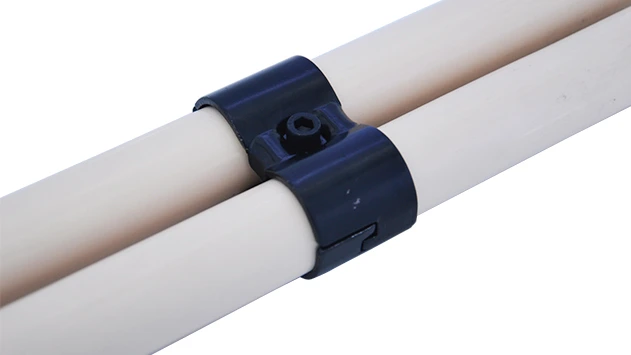
Parallel Lean Pipe Joint
Parallel lean pipe joint used for 2 pcs 28MM lean pipe connection in parallel direction to enhance frame structure, usually for heavy payload requirement for workbench. flow rack, hand trolley.
In the fast-paced world of modern manufacturing, where customer demands shift overnight and production schedules change at the drop of a hat, one thing remains constant: the need to do more with less. Enter Just-In-Time (JIT) production—a methodology that's revolutionized how factories operate by focusing on minimizing waste, reducing inventory, and delivering products exactly when they're needed. But here's the catch: JIT isn't just a set of rules; it's a mindset that requires every tool, every process, and every component on the factory floor to work in harmony. And if there's one unsung hero making this harmony possible, it's the humble yet mighty parallel lean pipe joint.
You might not have noticed them before—those small, unassuming connectors that hold together the metal pipes forming workbenches, flow racks, and conveyor systems. But parallel lean pipe joints are the backbone of flexible manufacturing. They're the reason a factory can reconfigure a production line in hours instead of weeks, why inventory doesn't pile up in dusty corners, and how teams can adapt to sudden order spikes without breaking a sweat. Let's dive into how these unassuming components are quietly transforming JIT production from a lofty goal into a daily reality.
What is Just-In-Time Production? The Basics
Before we get into the weeds of parallel lean pipe joints, let's make sure we're on the same page about JIT. Coined by Toyota in the 1950s, JIT is all about producing goods "just in time" to meet customer demand—no sooner, no later. The idea is to eliminate waste in all forms: excess inventory (waste of overproduction), idle time (waste of waiting), unnecessary movement (waste of motion), and even defects (waste of correction). By cutting these wastes, factories reduce costs, free up space, and respond faster to market changes.
But JIT isn't easy. To pull it off, production lines need to be agile . If a customer suddenly orders 500 more units of Product A and 200 fewer of Product B, the line can't grind to a halt for days while workers rebuild workstations or retool equipment. It needs to pivot—quickly. And that's where lean manufacturing tools, especially lean pipe systems, come into play.
Lean Manufacturing and the Rise of Lean Pipe Systems
Lean manufacturing, the broader philosophy that JIT is part of, is all about streamlining processes to create more value with less effort. And lean pipe systems—often called "flexible pipe systems"—are the physical embodiment of this idea. These systems use lightweight, modular pipes and joints to build everything from workbenches and material racks to flow racks and conveyors. Unlike rigid, fixed structures (think heavy steel shelves or welded frames), lean pipe systems are designed to be reconfigured, extended, or disassembled with minimal tools and time.
At first glance, a lean pipe system might look simple: metal pipes (often coated in plastic or made of aluminum) connected by joints. But the magic is in the joints. They're what turn a bunch of pipes into a functional, adaptable workspace. And among all the joint types—90-degree elbows, T-joints, swivel connectors—parallel lean pipe joints stand out for one critical reason: they excel at creating stable, parallel structures that can be easily adjusted without compromising strength.

Parallel Lean Pipe Joints: What Are They, and How Do They Work?
Let's break it down. A parallel lean pipe joint is a connector designed to hold two or more lean pipes in a parallel arrangement. Picture this: you're building a workbench. The legs need to run straight up and down, parallel to each other, to keep the surface level. Or maybe you're constructing a flow rack, where two parallel pipes form the track for bins to slide along. In both cases, the pipes must stay perfectly aligned—even when heavy loads are placed on them or the system is moved. That's where parallel joints shine.
Unlike standard joints that might allow pipes to twist or shift, parallel lean pipe joints lock pipes into a fixed, side-by-side position. They often feature dual clamping mechanisms, meaning each pipe is secured independently but held in sync. Some designs even allow for (fine adjustment) —so if the pipes start to drift slightly out of parallel after heavy use, a quick twist of a bolt brings them back into alignment. This might sound small, but in JIT production, where precision and reliability matter, it's a game-changer.
Design Mechanics: More Than Just a "Clamp"
Not all parallel joints are created equal. The best ones are engineered with three key features in mind: stability , ease of use , and durability . Let's take a closer look:
- Dual-Pipe Clamping: Most parallel joints have two separate clamping areas, one for each pipe. This ensures each pipe is held tightly, preventing slippage even under vibration (common in factories with heavy machinery).
- Rotational Flexibility (When Needed): Some parallel joints allow limited rotation around the pipe axis. This is handy for adjusting angles slightly—say, tilting a flow rack to improve bin sliding without rebuilding the entire structure.
- Material Choices: Parallel joints are often made of zinc-plated steel for strength or aluminum for lighter, corrosion-resistant applications (like in food processing or cleanrooms). The material depends on the environment: steel for heavy loads, aluminum for areas where weight or rust is a concern.

Why Parallel Lean Pipe Joints Are a JIT Game-Changer
Now, let's connect the dots: how do these joints specifically make JIT production smoother? Let's look at four real-world challenges JIT factories face and how parallel lean pipe joints solve them.
1. Adapting to Changing Production Volumes
JIT means producing exactly what's needed, which means production volumes can swing wildly. One week, you're assembling 100 units of a small gadget; the next, you're scaling up to 500. To handle this, workbenches might need extra space for more tools, or flow racks might need additional levels to hold more components. With parallel lean pipe joints, expanding a workbench is as simple as adding two more parallel pipes and securing them with joints—no welding, no heavy lifting, no downtime.
Take a hypothetical example: A electronics manufacturer uses a lean pipe workbench with parallel joints to hold circuit board assembly stations. When a big order comes in, workers add two extra parallel pipes to the bench's side, creating space for two more assemblers. The joints keep the new pipes perfectly aligned with the existing ones, so the surface stays level, and tools don't slide off. Total time to expand? Less than an hour. With traditional wooden or welded steel benches, this would take a day or more—and cost far more.
2. Reducing Changeover Time Between Products
Changeover—the time it takes to switch a production line from making one product to another—is enemy number one in JIT. The longer changeover takes, the more waste (waiting) occurs. Parallel lean pipe joints slash changeover time by making it easy to reconfigure tools and workstations.
Imagine a line that makes both small and large widgets. For small widgets, the flow rack needs to be low to the ground so workers can grab components without bending. For large widgets, it needs to be higher to accommodate bigger bins. With parallel joints, adjusting the rack's height is a breeze: loosen the joints, slide the pipes up or down, retighten, and you're done. No need to disassemble the entire rack—just tweak the existing structure. A study by the Lean Enterprise Institute found that factories using lean pipe systems with parallel joints reduced changeover time by up to 40% compared to fixed systems.
3. Minimizing Inventory Waste with Better Flow
JIT thrives on continuous flow —components should move seamlessly from one workstation to the next, with no bottlenecks. Flow racks, which use gravity to slide bins from storage to assembly, are critical for this. But if the rack isn't angled correctly or the parallel pipes are misaligned, bins get stuck, causing delays (and waste of waiting).
Parallel lean pipe joints ensure the pipes on a flow rack are perfectly parallel, so bins glide smoothly. And if the angle needs (say, during summer when humidity makes bins stick), the joints let workers adjust the tilt slightly without taking the rack apart. This keeps flow steady, inventory moving, and waste to a minimum.
4. Durability That Stands Up to Daily Use
JIT factories run fast—workstations are in constant use, material handlers are moving bins around, and equipment takes a beating. A flimsy joint that loosens after a week would derail the entire system. Parallel lean pipe joints, with their robust clamping and high-quality materials, stand up to this abuse. Zinc-plated steel joints, for example, can handle loads of up to 500 lbs per joint, meaning they won't bend or slip even when supporting heavy toolboxes or stacks of metal parts.
Parallel Joints in Action: Real-World Examples
Let's look at two industries where parallel lean pipe joints are making a tangible difference:
Automotive Manufacturing: A Case Study
A mid-sized auto parts supplier in Michigan produces brake components for major car brands. Their JIT contracts require them to switch between 12 different part types monthly. Before using lean pipe systems, they relied on welded steel workbenches. Changing a bench for a new part took 8 hours (and a team of 3 workers). After switching to lean pipe workbenches with parallel joints, they reconfigure the same bench in 45 minutes— by a single worker . The parallel joints let them add/remove pipe sections quickly, and the stability ensures tools stay in place during assembly, reducing defects by 15%.
Electronics Assembly: Small Parts, Big Demands
A smartphone charger manufacturer in China faces extreme demand fluctuations—during holiday seasons, orders jump 300%. Their solution? Lean pipe flow racks built with parallel joints. When demand spikes, they add extra parallel pipe levels to the racks, doubling storage capacity for components like USB ports and wires. The joints keep the levels aligned, so bins don't jam, and workers can access parts without stopping. As a result, they cut inventory holding costs by 25% and met 98% of holiday delivery deadlines last year.
Traditional vs. Parallel Lean Pipe Joints: A Comparison
| Aspect | Traditional Fixed Joints (Welded/Non-Adjustable) | Parallel Lean Pipe Joints | JIT Benefit |
|---|---|---|---|
| Reconfiguration Time | 8–12 hours (requires disassembly/welding) | 30–60 minutes (tool-free adjustments) | Reduces downtime; faster response to demand changes |
| Flexibility | Fixed layout; cannot adapt to new products | Easily adjustable height, width, and length | Handles product mix changes without retooling |
| Durability Under Load | High (but permanent) | High (up to 500 lbs per joint) and reusable | Sustains heavy use without frequent replacements |
| Cost Over Time | High (replacement needed for layout changes) | Low (reusable across multiple configurations) | Reduces capital expenditure on new equipment |
Choosing the Right Parallel Lean Pipe Joints: What to Look For
Not all parallel joints are created equal. When shopping for them, keep these factors in mind:
- Load Capacity: Check the joint's weight rating. If you're building a workbench for heavy tools, go for steel joints rated for 400+ lbs. For lighter use (like a small parts bin rack), aluminum joints with 200–300 lbs capacity work.
- Clamping Mechanism: Look for joints with "cam-lock" or "screw-lock" designs. Cam-lock is faster (no tools needed), while screw-lock offers more precision for heavy loads.
- Compatibility: Ensure the joint fits your lean pipe size. Most pipes are 28mm (1.1 inches) in diameter, but some systems use 20mm or 30mm pipes. Mismatched sizes lead to instability.
- Environmental Resistance: In wet or corrosive environments (like food processing), choose stainless steel or aluminum joints. For dry factories, zinc-plated steel is cost-effective.
The Future of JIT: Parallel Joints and Beyond
As JIT evolves—with trends like AI-driven demand forecasting and IoT-enabled production monitoring—lean pipe systems will need to keep up. Parallel lean pipe joints are already adapting: newer models integrate with smart sensors that alert workers when a joint is loose (preventing breakdowns) or track usage to predict maintenance needs. Imagine a factory where your flow rack "tells" you it's time to retighten a parallel joint before it fails—that's the future, and it's closer than you think.
But even without fancy tech, the humble parallel lean pipe joint remains a cornerstone of JIT success. It's proof that in manufacturing, sometimes the smallest components make the biggest impact. After all, JIT is about removing waste—and what's more wasteful than a production line that can't keep up with the world? With parallel lean pipe joints, factories don't just keep up—they thrive.
So the next time you walk through a factory, take a second look at those unassuming connectors holding pipes together. They might not have flashy buttons or screens, but they're the reason JIT isn't just a buzzword—it's a daily reality.