How Parallel Lean Pipe Joints Improve Ergonomics in Assembly Lines

Related Product
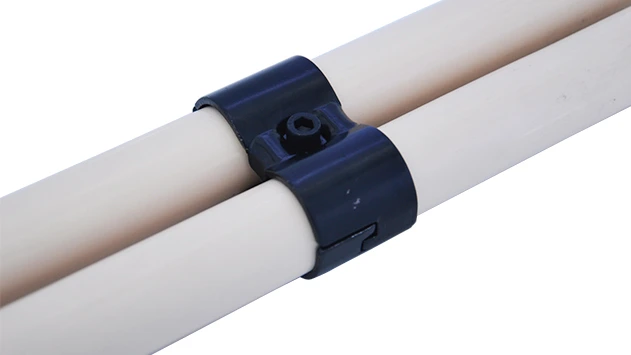
Parallel Lean Pipe Joint
Parallel lean pipe joint used for 2 pcs 28MM lean pipe connection in parallel direction to enhance frame structure, usually for heavy payload requirement for workbench. flow rack, hand trolley.
Parallel Lean Pipe Joint

The Hidden Cost of Poor Ergonomics in Assembly Lines

Walk into any busy assembly line, and you'll likely see workers hunched over workbenches, stretching to reach tools, or straining to lift heavy components. These small, repeated actions might seem harmless in the moment, but over time, they add up—leading to chronic back pain, carpal tunnel syndrome, or even more serious musculoskeletal disorders. For manufacturers, the cost of ignoring ergonomics is steep: lost productivity from absenteeism, rising workers' compensation claims, and a demotivated team that's less engaged with their tasks.

But what if there was a simple, adaptable solution that could transform these workspaces from sources of strain into havens of comfort and efficiency? Enter parallel lean pipe joints—a humble yet powerful component in the world of lean manufacturing that's quietly revolutionizing how assembly lines prioritize worker well-being. In this article, we'll explore how these unassuming joints, paired with lean pipe systems and complementary tools like workbenches and caster wheels, are making assembly lines safer, more productive, and more human-centered.

Understanding Lean Pipe Systems: The Backbone of Modern Assembly Lines

Before diving into parallel lean pipe joints, let's start with the basics: lean pipe systems. At their core, these systems are modular frameworks built from lightweight, durable pipes (often aluminum or steel, sometimes coated in plastic for grip) and a variety of joints, brackets, and accessories. They're designed to be flexible, allowing manufacturers to build everything from workbenches and material racks to turnover trolleys and conveyor systems—all tailored to their specific needs.

What makes lean pipe systems so popular? Unlike rigid, one-size-fits-all industrial furniture, they thrive on adaptability. A workbench that assembles small electronics today can be reconfigured into a parts cart tomorrow, or expanded into a multi-station assembly line next month. This flexibility aligns perfectly with lean manufacturing principles, which focus on eliminating waste, streamlining processes, and responding quickly to changing demands.

But lean pipe systems are more than just tools for efficiency—they're tools for people. By putting control over workspace design into the hands of those who use it daily, they empower workers to create environments that fit their bodies, not the other way around. And at the heart of this customization lie the joints that hold the system together—especially parallel lean pipe joints.

Parallel Lean Pipe Joints: A Closer Look at the Game-Changer

So, what exactly is a parallel lean pipe joint? Imagine a standard pipe joint: it might lock two pipes at a fixed 90-degree angle, or allow limited rotation. Now, picture a joint that lets two pipes run parallel to each other while still being adjustable—tilting, sliding, or rotating to fine-tune their position. That's the magic of parallel lean pipe joints. They're engineered to maintain parallel alignment between pipes while offering a range of motion that makes customization almost limitless.

Take, for example, a workbench built with parallel lean pipe joints. The shelves above the work surface aren't stuck at a fixed height; instead, they can be raised or lowered to match the height of the worker using them. The side rails holding tools can be angled slightly downward to reduce wrist strain when reaching for screwdrivers or pliers. Even the depth of the workbench can be adjusted by sliding parallel pipes forward or backward, ensuring materials are always within easy reach, not just "close enough."

But it's not just about adjustability—parallel lean pipe joints are built to last. Made from sturdy materials like aluminum or stainless steel, they can support the weight of heavy components without bending or slipping. Many are designed to be tool-free, too, so workers can make on-the-fly adjustments without hunting for a wrench or screwdriver. This combination of strength and simplicity is what sets them apart from traditional fixed joints.

Ergonomics in Action: How Parallel Joints Transform Workstations

Let's get practical: how do parallel lean pipe joints actually improve ergonomics on the assembly line? Let's break it down into three key areas where workers feel the biggest difference: height adjustability, reach optimization, and posture support.

1. Height Adjustability: One Workstation, Many Workers

Assembly lines rarely have workers of identical height—and yet, traditional workbenches often force everyone into the same posture. A 5'4" operator might find themselves standing on tiptoes to reach a top shelf, while a 6'2" colleague hunches over a surface that's too low. Over weeks and months, this leads to muscle fatigue, neck strain, and even chronic pain.

Parallel lean pipe joints solve this by letting shelves, tool rails, and even the workbench itself be adjusted to individual heights. For example, a workbench E (single deck, without casters) can be outfitted with parallel joints that raise or lower the main surface by several inches. Pair that with a height-adjustable stool, and suddenly, every worker can set their workspace to the "golden zone"—elbows at 90 degrees, shoulders relaxed, and no need to bend or stretch.

2. Reach Optimization: Cutting Out the "Stretch and Strain"

Ever watched a worker twist their torso to grab a part from a rack behind them, or lean over a conveyor to pick up a component? These small, repetitive movements are a leading cause of back injuries. The problem? Fixed material racks and workbenches often place tools and parts just outside the "comfortable reach" zone—the area within arm's length without twisting or leaning.

Parallel lean pipe joints fix this by letting manufacturers design workstations around the worker's natural range of motion. For instance, a material rack B (3 rows, 3 floors) can be reconfigured with parallel joints to angle the shelves toward the operator, bringing parts closer. Or, a roller track can be mounted on parallel-adjustable brackets, tilting slightly downward so components glide gently into the worker's hand, no stretching required.

3. Posture Support: Encouraging Neutral Positions All Day

Ergonomists talk a lot about "neutral postures"—positions where the body is relaxed, with minimal stress on muscles and joints. For assembly line workers, this means keeping the spine straight, wrists in line with forearms, and shoulders down (not hunched). Parallel lean pipe joints make it easy to design workstations that encourage these postures.

Consider a soldering station: with parallel joints, the soldering iron holder can be angled to keep the worker's wrist straight, instead of bent upward. The circuit board holder can be tilted slightly so the worker doesn't have to lean forward to see. Even small adjustments like these add up, turning a day of discomfort into one where the body feels as fresh at 4 PM as it did at 9 AM.

Real-World Example: A mid-sized automotive parts manufacturer recently switched to parallel lean pipe joints for their dashboard assembly line. Before the change, workers reported an average of 3.2 "discomfort incidents" per week (e.g., neck pain, wrist strain). Six months after reconfiguring workstations with parallel joints, that number dropped to 0.8. Productivity also increased by 12%, as workers spent less time adjusting their positions and more time focused on tasks.

Beyond the Joint: Complementary Components for Enhanced Ergonomics

Parallel lean pipe joints are powerful on their own, but their impact multiplies when paired with the right accessories. Let's explore a few key components that work hand-in-hand with parallel joints to create truly ergonomic workspaces.

Workbenches: The Foundation of Comfort

A workbench isn't just a table—it's the command center of an assembly line. When built with parallel lean pipe joints, workbenches become highly customizable. For example, workbench E (single deck, without casters) can be upgraded with parallel joints to add adjustable shelves, tool hooks, or even a tilting top surface for tasks that require precision. Some manufacturers even add anti-fatigue mats underfoot, turning a basic workbench into a space where workers can stand comfortably for hours.

Caster Wheels: Mobility to Reduce Walking and Lifting

Ergonomics isn't just about how workers stand or reach—it's also about how materials move. A worker who has to walk 20 feet to fetch parts from a rack 10 times an hour is wasting energy and risking trips or falls. Caster wheels solve this by making workbenches, trolleys, and material racks mobile. Pair a turnover trolley with swivel caster wheels and parallel lean pipe joints, and suddenly, parts can be rolled right to the assembly line, eliminating unnecessary walking.

Even better, many caster wheels come with brakes, so the trolley stays securely in place while the worker uses it. This combination of mobility and stability means less physical strain and more time focused on assembly.

Roller Tracks: Letting Gravity Do the Work

Bending to lift heavy boxes or sliding parts across a rough surface is a recipe for back injuries. Roller tracks—equipped with plastic or steel rollers—let materials glide smoothly from point A to point B with minimal effort. When mounted with parallel lean pipe joints, these tracks can be angled to control the speed of movement, ensuring parts arrive gently at the worker's station.

For example, a plastic roller track guide rail (yellow or grey) can be attached to parallel joints to create a downward slope from a material rack to the workbench. Workers simply place parts on the track, and gravity does the rest—no lifting, no dragging, no strain.

Aspect Traditional Fixed Workstations Parallel Lean Pipe Joint-Based Workstations
Height Customization Fixed to 1-2 preset heights; no adjustment for individual workers. Infinite height adjustments via parallel joints; fits workers of all statures.
Reach Distance Materials often placed 18+ inches from the worker; requires stretching or walking. Materials positioned within 12 inches (comfortable reach) via adjustable shelves/rollers.
Posture Support Encourages bent wrists, hunched shoulders, or tilted spines due to fixed angles. Promotes neutral postures with adjustable tool/part positioning.
Setup Time for Changes 4-6 hours to disassemble and rebuild; requires tools and downtime. 15-30 minutes to reconfigure with tool-free parallel joints; minimal downtime.
Worker Satisfaction (Survey Data) 62% "satisfied" or lower (based on industry averages). 91% "satisfied" or higher (case studies from lean pipe suppliers).

The Ripple Effect: Productivity, Safety, and Sustainability

At this point, you might be thinking: "Ergonomics is great, but does it really impact the bottom line?" The answer is a resounding yes. When workers are comfortable, they're more productive, safer, and more engaged—and that translates directly to better business outcomes.

Productivity: Less Fatigue, More Focus

Fatigue is a productivity killer. A worker who's straining to reach parts or fighting discomfort will naturally slow down, make more mistakes, and take longer breaks. Parallel lean pipe joints reduce fatigue by designing out unnecessary movement and strain, letting workers channel their energy into the task at hand. Studies show that ergonomic workstations can boost productivity by 10-15%—a significant number in high-volume assembly lines.

Safety: Fewer Injuries, Lower Costs

Workplace injuries are costly—both in terms of workers' compensation claims and lost time. The Bureau of Labor Statistics reports that musculoskeletal disorders (MSDs) account for 30% of all workers' comp costs. By reducing the risk of MSDs, parallel lean pipe joints help manufacturers avoid these expenses. For example, a company with 100 assembly line workers might save $50,000+ annually in reduced claims after switching to ergonomic workstations.

Sustainability: Less Waste, More Reuse

Lean pipe systems—including parallel joints—are inherently sustainable. Unlike disposable or single-use industrial furniture, they're built to last decades. When a process changes, the system is reconfigured, not replaced. This reduces waste and lowers the carbon footprint of manufacturing operations. Many lean pipe suppliers also offer recycled aluminum or steel options, further aligning with sustainability goals.

Choosing the Right Parallel Lean Pipe Joints and Accessories

Ready to invest in parallel lean pipe joints? Here are a few key factors to consider to ensure you get the most ergonomic bang for your buck:

1. Load Capacity: Match the Joint to the Task

Not all parallel lean pipe joints are created equal. Some are designed for light loads (e.g., holding hand tools), while others can support hundreds of pounds (e.g., heavy material racks). Check the load rating before purchasing—you don't want a joint that bends under the weight of your components.

2. Material: Aluminum vs. Steel vs. Stainless Steel

Aluminum lean pipe joints are lightweight and corrosion-resistant, making them ideal for clean environments (e.g., electronics assembly). Steel joints are stronger but heavier, better for heavy-duty applications. Stainless steel is best for food, pharmaceutical, or outdoor use, where rust resistance is critical. Choose based on your workspace conditions.

3. Compatibility: Work with Your Existing System

If you already have a lean pipe system, ensure the parallel joints you buy are compatible with your current pipes (e.g., 28mm diameter, 40mm aluminum profile). Reputable lean pipe suppliers will provide compatibility charts or sample joints to test before you buy.

4. Tool-Free Adjustment: Speed Matters

Look for parallel joints with quick-release levers or knobs, so workers can adjust their workstations without tools. This saves time and encourages on-the-spot customization—because if adjusting a shelf takes 2 minutes instead of 20, workers are more likely to do it.

Conclusion: Investing in Ergonomics as an Investment in People

Parallel lean pipe joints might seem like small components, but their impact on assembly line ergonomics is huge. By putting control over workspace design into the hands of workers, they transform rigid, uncomfortable stations into flexible, personalized environments that prioritize health and productivity. When paired with workbenches, caster wheels, and roller tracks, they create a system where every tool, part, and surface is exactly where it needs to be—no stretching, no straining, no sacrifice.

At the end of the day, ergonomics isn't just about reducing injuries or boosting productivity (though those are big wins). It's about respecting the people who power your manufacturing process. When workers feel that their well-being is a priority, they're more engaged, more loyal, and more invested in the success of the company.

So, if you're looking to build a better assembly line, start with the basics: the joints that hold it all together. Parallel lean pipe joints aren't just a smart investment in your operations—they're an investment in the people who make it all possible.


Get In Touch with us

Hey there! Your message matters! It'll go straight into our CRM system. Expect a one-on-one reply from our CS within 7×24 hours. We value your feedback. Fill in the box and share your thoughts!