- Company Articles
- Products and Technology
- Solution
- How Parallel Lean Pipe Joints Support Continuous Improvement (Kaizen)

How Parallel Lean Pipe Joints Support Continuous Improvement (Kaizen)
Related Product
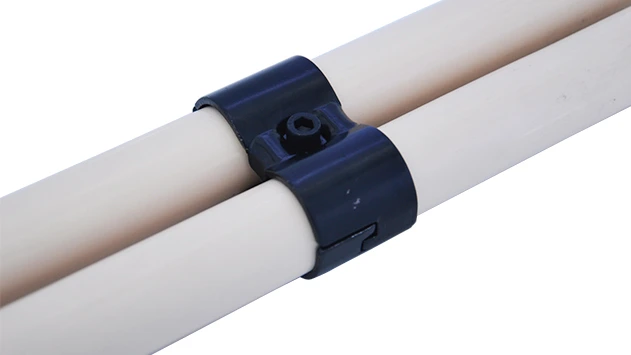
Parallel Lean Pipe Joint
Parallel lean pipe joint used for 2 pcs 28MM lean pipe connection in parallel direction to enhance frame structure, usually for heavy payload requirement for workbench. flow rack, hand trolley.
Walk into any manufacturing facility where Kaizen thrives, and you'll notice something beyond the machinery and assembly lines: a quiet energy of constant evolution. It's in the way a worker adjusts a workbench height to reduce strain, or a team rearranges a flow rack to cut down on walking time, or a supervisor tweaks a conveyor path to speed up material transfer. These small, intentional changes aren't just random acts of problem-solving—they're the heartbeat of Kaizen, the Japanese philosophy of continuous improvement that turns good operations into great ones. But here's the thing: Kaizen doesn't happen in a vacuum. It needs tools that can keep up with the mindset—tools that are as adaptable, resilient, and worker-centric as the people using them. That's where parallel lean pipe joints come in.
In this article, we're going to dive into how these unassuming mechanical components—parallel lean pipe joints—act as silent enablers of Kaizen. We'll explore why they matter not just for building workbenches or flow racks, but for fostering the kind of workplace where every employee feels empowered to suggest a better way. Because at the end of the day, Kaizen isn't about spreadsheets or efficiency metrics. It's about people. And when people have tools that bend to their needs instead of the other way around, that's when the real magic of continuous improvement begins.
Kaizen: More Than a Buzzword—A Mindset Rooted in Respect for People
Before we talk about pipes and joints, let's ground ourselves in what Kaizen really is. Too often, it's reduced to "making things better," but that's a surface-level view. Kaizen is a culture where improvement is everyone's job—from the frontline operator to the plant manager. It's the idea that the person who does the work every day is the best person to improve it. Think about it: If you're on your feet for eight hours assembling parts, you notice the little things: a workbench that's an inch too low, a flow rack that's hard to reach, a conveyor that jams when you load a certain component. These aren't just inconveniences—they're waste. And waste, in lean terms, is anything that doesn't add value to the customer: time, motion, frustration, even the mental energy spent working around a poorly designed tool.
Kaizen asks: What if we gave those frontline workers the power to fix those small issues themselves? Not in six months when engineering approves a new design, but today. With a wrench, a few parts, and the confidence that their input matters. That's where the right equipment becomes critical. Traditional manufacturing setups—welded steel frames, fixed workstations, rigid conveyor systems—are like concrete: strong, but impossible to reshape without heavy machinery and downtime. They send a message: "This is how it is." Parallel lean pipe joints, on the other hand, send a different message: "This is how it is—for now. What do you need it to be tomorrow?"
Lean Systems: The Playground Where Kaizen Grows
To understand parallel lean pipe joints, we first need to talk about lean systems—the broader framework they're part of. Lean manufacturing, born from the Toyota Production System, is all about eliminating waste (muda) and creating value. But lean isn't just about cutting costs; it's about making work smarter . And smart work requires tools that can adapt to changing needs—whether that's a new product line, a shift in demand, or a worker's suggestion to rearrange a station.
Lean pipe systems (often called "flexible pipe systems") are the backbone of this adaptability. They're made from lightweight yet durable materials like aluminum or steel pipes, connected by joints that allow for quick assembly and reconfiguration. Unlike traditional fixed structures, they're modular—meaning you can add a shelf, extend a workbench, or reangle a flow rack in minutes, not days. But within this system, not all joints are created equal. Some joints are fixed, limiting movement. Others are too flimsy for heavy use. Then there are parallel lean pipe joints—designed specifically to balance strength with flexibility, making them ideal for the dynamic needs of Kaizen-driven teams.

Parallel Lean Pipe Joints: The "Swiss Army Knife" of Lean Systems
So, what exactly is a parallel lean pipe joint? At its core, it's a connector that joins two or more lean pipes in parallel (side-by-side) while allowing for rotation, adjustment, or repositioning. Imagine a T-shaped or L-shaped piece with clamps that grip the pipes tightly, but can be loosened with a hex key to pivot or slide. This simple design packs a punch: it lets workers reconfigure their setup without welding, drilling, or waiting for a maintenance crew. Need to raise a workbench shelf by 6 inches to fit taller parts? Loosen the parallel joints, adjust, retighten. Want to angle a flow rack to reduce bending? Reposition the joints, and you're done. It's tool-free (or nearly tool-free) problem-solving—exactly what Kaizen thrives on.
But why "parallel"? Because many lean applications require pipes to run alongside each other—like the rails of a workbench, the sides of a flow rack, or the supports of a conveyor frame. Parallel joints ensure these pipes stay aligned, stable, and evenly spaced, even under heavy loads. They're built to handle the daily wear and tear of manufacturing—bumping, loading, unloading—without slipping or bending. And unlike some joints that only work with specific pipe sizes, quality parallel joints are compatible with standard lean pipe diameters, making them versatile across different setups.
| Feature | Traditional Fixed Joints | Parallel Lean Pipe Joints |
|---|---|---|
| Flexibility | Fixed position; cannot be adjusted without cutting/welding | Rotates, slides, or pivots; reconfigurable in minutes |
| Setup/Adjustment Time | Hours to days (requires tools, maintenance crew) | 5–15 minutes (worker can do it with a hex key) |
| Cost to Modify | High (labor, materials, downtime) | Low (no new materials needed; minimal labor) |
| Worker Engagement | Low (workers must request changes; no direct control) | High (workers can implement their own improvements) |
| Durability Under Reconfiguration | Poor (cutting/welding weakens structure over time) | Excellent (reusable; maintains strength after multiple adjustments) |

From Workbenches to Conveyors: How Parallel Joints Fuel Real-World Kaizen
Let's get concrete. How do parallel lean pipe joints actually support Kaizen on the shop floor? Let's look at three common applications: lean pipe workbenches, flow racks, and conveyors—all staples of manufacturing, and all areas where small adjustments can lead to big improvements.
1. Lean Pipe Workbenches: Ergonomics That Adapt to People, Not the Other Way Around
A workbench isn't just a table—it's where the magic happens. It's where parts are assembled, inspected, and prepared for the next step. But if that workbench is the wrong height, has shelves in the wrong place, or lacks space for tools, it becomes a source of frustration (and waste). Enter parallel lean pipe joints. Take Maria, an assembler at a electronics plant. She's 5'2", and the workbench she's been using was built for someone taller. For months, she's been hunching to reach components, leading to back pain and slower work. One day, during a Kaizen meeting, she suggests raising the bench top by 4 inches. Her supervisor nods—they have parallel lean pipe joints on the bench frame. Ten minutes later, with a few turns of a hex key, Maria has a workbench that fits her. Her back pain eases, she works faster, and a week later, she suggests adding a side shelf for her most-used tools. Again, the parallel joints make it possible. That's Kaizen in action: a worker's voice, enabled by the right tools, leading to better outcomes for everyone.
2. Flow Racks: Smoothing Material Flow, One Adjustment at a Time
Flow racks are the arteries of a manufacturing line, moving parts from storage to assembly. But if the racks are too steep, parts slide too fast and get damaged. Too shallow, and workers have to pull hard, wasting energy. Parallel lean pipe joints let teams tweak the angle of the roller tracks (another key component of lean systems) to find the "just right" flow. For example, a automotive parts plant was struggling with plastic components jamming on their flow rack. The team noticed the rollers were spaced too far apart for the smaller parts. Using parallel joints, they repositioned the side rails to narrow the track width by 2 inches. No more jams, and parts now glide smoothly. Later, when they introduce a larger component, they simply widen the track again. Flow racks with parallel joints don't just move parts—they adapt to the parts, ensuring consistent, efficient flow. And when flow is efficient, waste (in this case, motion and damaged parts) disappears.
3. Conveyors: Keeping Up with Changing Demand
Conveyors are workhorses, but they're often seen as "set it and forget it" systems. Not with parallel lean pipe joints. Imagine a small manufacturer that makes both small widgets and large gadgets. Their conveyor was originally built for widgets, but when gadget demand spikes, they need to widen the conveyor belt. With traditional fixed joints, this would mean calling in a contractor. But with parallel joints on the conveyor frame, the team can loosen the connectors, slide the side rails outward, and retighten. An hour later, they're running gadgets. When widget demand returns, they narrow it back. No downtime, no extra cost—just flexibility. This ability to scale up or down quickly helps the plant avoid overproduction (another form of waste) and respond faster to customer needs—core lean principles, enabled by parallel joints.
Why Parallel Joints Are a Kaizen Game-Changer: The Benefits Beyond Flexibility
Parallel lean pipe joints don't just enable quick adjustments—they fuel the entire Kaizen cycle in ways that go beyond the physical setup. Here's how:
- Empowerment = Engagement: When workers see that their ideas can be implemented in minutes, they're more likely to speak up. This creates a culture of ownership—people don't just work on the line; they own the line. And engaged workers are 21% more productive, according to Gallup research. Parallel joints turn "I have an idea" into "I fixed it."
- Speed = Momentum: Kaizen thrives on quick wins. If a suggestion takes weeks to implement, momentum fades. Parallel joints deliver results in minutes or hours, keeping the improvement cycle moving. This quick feedback loop reinforces the idea that "improvement is possible," encouraging more suggestions.
- Cost-Efficiency = Sustainability: Traditional reconfigurations (welding, new parts, contractor fees) cost money—money that could be better spent on other improvements. Parallel joints are reusable, durable, and require minimal tools. This low cost of experimentation means teams can test ideas without fear of wasting resources. Even if an adjustment doesn't work, they can revert quickly and try something else.
- Adaptability = Resilience: Manufacturing is full of surprises—supply chain delays, design changes, sudden demand shifts. Kaizen isn't just about improving the status quo; it's about building resilience for the unexpected. Parallel lean pipe joints make systems resilient. A workbench can become a packing station overnight. A flow rack can store emergency supplies. A conveyor can be rerouted to bypass a broken machine. In a world of uncertainty, adaptability is survival—and parallel joints deliver that.
Choosing the Right Partner: Why Your Lean System Supplier Matters for Kaizen
Not all parallel lean pipe joints are created equal. To truly support Kaizen, you need joints that are durable, easy to use, and compatible with your existing lean pipe system (whether aluminum, steel, or stainless steel). That's where choosing the right lean system supplier comes in. A good supplier doesn't just sell parts—they understand your Kaizen goals. They'll help you select joints that can handle your load requirements, work with your pipe sizes, and stand up to your production environment (whether it's a cleanroom or a dusty warehouse). They might even offer training on how to use the joints to maximize Kaizen opportunities, ensuring your team feels confident making adjustments on their own.
When evaluating suppliers, ask: Do their parallel joints come with a warranty? Are they tested for repeated adjustments (since Kaizen means lots of tweaks)? Do they offer samples so you can test them in your facility? A supplier who prioritizes these details is a partner in your Kaizen journey, not just a vendor.
Conclusion: Parallel Joints—More Than Hardware, They're Catalysts for Culture
At the end of the day, parallel lean pipe joints are more than metal and clamps. They're symbols of a mindset: that improvement is ongoing, that workers are the best problem-solvers, and that the tools we use should serve people , not the other way around. Kaizen isn't about grand overhauls—it's about the thousand small steps that add up to big change. And every small step needs a tool that can keep pace.
So, the next time you walk through a manufacturing facility, look beyond the machines. Look at the workbenches, the flow racks, the conveyors. If they're built with parallel lean pipe joints, there's a good chance there's a Kaizen culture thriving there—one where workers feel empowered to say, "I can make this better," and have the tools to prove it. Because in the end, Kaizen is about people. And parallel lean pipe joints? They're how we show those people we believe in their ability to improve—one joint, one adjustment, one small change at a time.