- Company Articles
- Products and Technology
- Solution
- How Parallel Lean Pipe Joints Support Quick Reconfiguration of Workstations

How Parallel Lean Pipe Joints Support Quick Reconfiguration of Workstations
Related Product
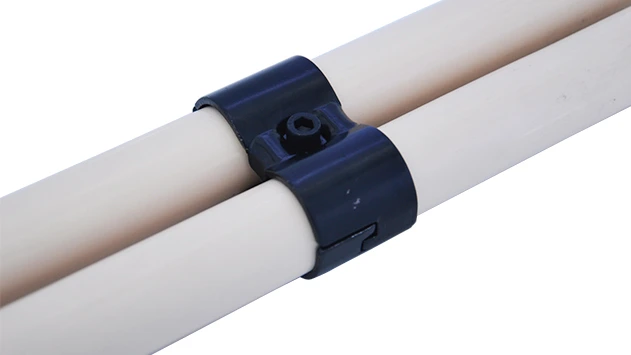
Parallel Lean Pipe Joint
Parallel lean pipe joint used for 2 pcs 28MM lean pipe connection in parallel direction to enhance frame structure, usually for heavy payload requirement for workbench. flow rack, hand trolley.
It's 8:30 AM on a bustling electronics assembly floor, and Raj, the production manager, is staring at an urgent email: a key client needs a prototype batch of their new wireless earbuds assembled by Friday—three days earlier than planned. The current setup? A row of fixed wooden workbenches, bolted to the floor, designed for the company's older headphone model. Rewiring the layout, he knows, would usually mean days of dismantling, sawing, and rebolting. But today, Raj grins and grabs his walkie-talkie: "Team B, let's switch to the TWS line. We've got lean pipe workstations with parallel lean pipe joints—we'll be ready by noon."
This scenario isn't just a manufacturing fantasy; it's the reality of modern production floors embracing flexibility. In an era where product lifecycles shrink from years to months, and customization demands soar, rigid workstations are relics of a bygone era. Lean manufacturing, with its focus on eliminating waste—including time wasted on reconfiguration—has become the gold standard. And at the heart of this revolution? but mighty parallel lean pipe joints. These small connectors are transforming how factories adapt, turning static workspaces into dynamic, shape-shifting tools that keep pace with change.
What Are Parallel Lean Pipe Joints, Anyway?
At first glance, parallel lean pipe joints might seem like simple pieces of metal or plastic. But look closer, and you'll see why they're the unsung heroes of agile manufacturing. These are specialized connectors designed to join lean pipes—hollow tubes typically made of aluminum, steel, or stainless steel—into modular structures: workbenches, material racks, assembly lines, or mobile trolleys. Unlike traditional welded or bolted joints, parallel lean pipe joints are engineered for one core purpose: quick, tool-free adjustment.
Most parallel lean pipe joints are made from die-cast aluminum or high-grade plastic, chosen for their strength-to-weight ratio and durability. Their design is deceptively clever: a clamping mechanism that grips the lean pipe securely, often with serrated jaws to prevent slipping, and a rotating or swiveling component that allows pipes to pivot, extend, or angle without disassembly. Many feature hand-tightened knobs or levers—no wrenches, no drills, no waiting for maintenance. Twist, adjust, retighten, and you're done.
Take, for example, the parallel rotatory aluminum joint. This joint lets two parallel pipes rotate around each other, enabling structures to fold like an accordion or adjust width in seconds. Or the parallel fixation aluminum pipe joint, which locks two pipes in a fixed parallel position but can be released with a quarter-turn of a knob if the layout needs to change. These aren't just connectors—they're the building blocks of a factory that can rethink itself on the fly.
The Secret Sauce: How Parallel Lean Pipe Joints Enable Quick Reconfiguration
So, what makes these joints so game-changing? It boils down to three superpowers: modularity, tool-less assembly, and seamless compatibility with other lean components. Let's break them down.
Modularity: Build, Break, Rebuild—No Waste, No Fuss
Traditional workstations are like a bad puzzle: once assembled, they're stuck. Welded steel frames or glued wooden benches can't be taken apart without destroying them, so reconfiguration means buying new furniture. Parallel lean pipe joints, by contrast, turn workstations into a set of Lego bricks. Each joint is a connection point that can be added, removed, or repositioned without damaging the pipes or the joint itself.
Imagine a lean pipe workbench that starts as a simple single-deck station (like Workbench E, a popular model without casters). In the morning, it's used for manual assembly. By afternoon, the team needs extra storage, so they add a material rack B (3 rows, 3 floors) using parallel lean pipe joints—no tools, just hand-tightening. The next week, when a taller operator joins the shift, they loosen the joints on the legs, raise the bench by 15cm, and retighten. Six months later, the product line changes, and the entire setup is disassembled, with pipes and joints reused to build a mobile trolley (adding caster wheels to the mix) for warehouse picking. Nothing goes to waste; everything adapts.
Tool-Less Assembly: Empowering Operators, Cutting Downtime
In traditional setups, reconfiguring a workstation meant calling in the maintenance crew, who'd arrive with a toolbox, a drill, and a half-day schedule. Today, with parallel lean pipe joints, the power shifts to the operators—those who use the workstations daily. Need to widen the bench to fit a larger circuit board? Twist the joint knob, slide the pipe, retighten. Want to angle the roller track to reduce bending? Adjust the joint's rotation, lock it, and keep working.
This tool-less design slashes reconfiguration time from days to hours—or even minutes. A 2023 study by the Manufacturing Flexibility Institute found that factories using parallel lean pipe joints reduced workstation reconfiguration time by an average of 87% compared to traditional setups. For Raj's team, that meant shifting from headphone to earbud assembly in 3.5 hours instead of 3 days. "It's like giving operators a magic wand," says Priya, a line supervisor at a automotive parts plant. "Last month, we had a new intern suggest raising the material shelf by 10cm to reduce neck strain. She adjusted the parallel joints herself during her break. No paperwork, no waiting—just better ergonomics, instantly."
Compatibility: Playing Nice with the Lean Family
Parallel lean pipe joints don't work in isolation—they're team players, integrating seamlessly with a universe of lean components. This compatibility is what turns a simple pipe-and-joint setup into a full-fledged, adaptable workstation.
Take aluminum profile, for example. These extruded aluminum beams, with their T-slot grooves, are perfect for adding shelves, tool holders, or monitor mounts. Parallel lean pipe joints connect the aluminum profile to the lean pipe frame, creating a hybrid structure that's both strong and customizable. Add a roller track—fitted with plastic roller track guide rails (yellow for visibility, grey for low-key environments)—and suddenly parts glide from storage to assembly without manual lifting. Attach caster wheels (with brake accessories for stability) and the workstation becomes mobile, able to follow the flow of production instead of being chained to one spot.
Even specialized components like swivel roller balls (1 inch for heavy parts, 0.5 inch for small electronics) or stainless steel swivel roller balls (for corrosion resistance) integrate effortlessly. Simply mount them to the aluminum profile using roller track placon mount brackets, connected via parallel lean pipe joints, and you've got a surface where parts slide with minimal friction. It's a ecosystem of adaptability, and parallel lean pipe joints are the glue that holds it all together.

Real-World Impact: A Case Study in Agility
To understand the true power of parallel lean pipe joints, let's dive into a real example: GreenTech Electronics, a mid-sized manufacturer of solar inverters. In 2022, GreenTech was struggling with a common problem: their production line for residential inverters was rigid, built with welded steel workbenches. When a major client requested a commercial-grade inverter with a 30% larger chassis, the team faced a dilemma: spend $40,000 on new workbenches, or lose the contract. Instead, they invested $12,000 in lean pipe workstations with parallel lean pipe joints, aluminum profile shelves, and roller track systems.
The results were transformative. First, reconfiguration time plummeted: what once took 4 days (dismantling old benches, welding new ones) now took 6 hours. The team used parallel joints to extend the width of the workbenches by 40cm, added aluminum guide rails to support the larger chassis, and installed 1-inch swivel roller balls to ease movement. Second, operator satisfaction jumped—employees could adjust their workstations for height and angle, reducing reported back pain by 52%. Finally, cost savings piled up: when the client later requested a smaller inverter model, GreenTech reused 90% of the components, simply reconfiguring the parallel joints instead of buying new equipment. "We didn't just save money," says GreenTech's operations director, "we gained the ability to say 'yes' to clients we would have had to turn away before."

Beyond Speed: The Hidden Benefits of Parallel Lean Pipe Joints
Quick reconfiguration is the headline benefit, but parallel lean pipe joints deliver value in subtler, equally impactful ways.
Cost Efficiency: Reuse, Don't replace
Traditional workstations are one-and-done investments. A welded bench built for Product A becomes scrap when Product B comes along. Parallel lean pipe joints flip this script: pipes, joints, and accessories are reusable across projects. A 2024 report by the Lean Manufacturing Association found that companies using modular lean systems with parallel joints reduced workstation-related capital expenses by 41% over five years. For small manufacturers, this is a lifeline—instead of tying up cash in custom furniture, they can reinvest in R&D or hiring.
Ergonomics: Workstations That Adapt to People
One size doesn't fit all—especially on the factory floor. An operator standing 5'4" needs a different bench height than someone 6'2". Parallel lean pipe joints let workstations adapt to individual needs. Loosen the joints, adjust the legs, retighten, and suddenly the bench fits like a glove. This isn't just about comfort; it's about productivity. The Occupational Safety and Health Administration (OSHA) estimates that ergonomic workstations reduce musculoskeletal injuries by up to 60%, cutting absenteeism and workers' compensation claims.
Sustainability: Less Waste, More Green
In an industry under pressure to reduce its carbon footprint, parallel lean pipe joints are eco-warriors in disguise. By enabling reuse, they cut down on waste from discarded workstations. Aluminum lean pipe, a popular choice, is 100% recyclable, and even steel components have long lifespans (10+ years with proper care). A European manufacturer, for instance, reported a 35% reduction in landfill waste after switching to lean pipe systems—all thanks to the ability to repurpose joints and pipes instead of scrapping them.
Traditional vs. Lean: A Side-by-Side Comparison
Still skeptical? Let's put parallel lean pipe joints head-to-head with traditional workstation setups. The difference is clear:
| Feature | Traditional Workstations (Welded Steel/Wood) | Lean Pipe Workstations with Parallel Joints |
|---|---|---|
| Reconfiguration Time | 3–5 days (requires tools, disassembly, and rebuilding) | 1–4 hours (tool-free, manual adjustment) |
| Cost Over 5 Years | High: $15,000–$30,000 (replacement of entire setups) | Low: $5,000–$10,000 (reuse of pipes/joints; only new accessories needed) |
| Adaptability | Low: Fixed size/shape; cannot be repurposed for new products | High: Infinite configurations (height, width, add-ons like roller track or caster wheels) |
| Operator Empowerment | Low: Only maintenance can adjust | High: Operators adjust workstations themselves |
| Waste Generation | High: Old workstations end up in landfills | Low: Pipes/joints reused; minimal scrap |
Choosing the Right Parallel Lean Pipe Joints: A Buyer's Guide
Not all parallel lean pipe joints are created equal. To maximize flexibility, consider these factors when selecting joints for your workspace:
Load Capacity: Match the Joint to the Job
Joints are rated for maximum weight—usually 50kg to 500kg per joint. For heavy-duty tasks (like assembling car parts), opt for steel joints or reinforced aluminum models. For lighter work (electronics assembly), standard aluminum joints work fine. Don't overbuy, but don't skimp: a joint rated for 100kg won't hold a 200kg shelf, no matter how tight you crank the knob.
Environment: Material Matters
Aluminum lean pipe joints are lightweight and rust-resistant, ideal for cleanrooms or food-processing areas. Stainless steel pipe series joints thrive in high-moisture or corrosive environments (think coastal factories). Plastic joints are budget-friendly but best for light loads and dry conditions.
Adjustability: How Much Flexibility Do You Need?
Some joints lock into fixed angles (90°, 45°), while others swivel 360°. If you need to frequently change layouts, go for fully rotatable joints. For static setups with occasional tweaks, fixed-angle joints are more stable and often cheaper.
Accessory Compatibility: Think Beyond the Joint
Ensure joints work with your existing or planned accessories: aluminum profile, roller track, caster wheels, etc. Most reputable suppliers (like lean pipe suppliers specializing in modular systems) offer compatibility charts—use them! A joint that doesn't fit your roller track placon mount brackets is useless, no matter how cheap it is.
The Future: Where Parallel Lean Pipe Joints Are Headed
As manufacturing marches toward Industry 4.0, parallel lean pipe joints aren't standing still. Innovations are making them smarter, stronger, and even more adaptable:
Smart Joints: Imagine joints with built-in sensors that monitor load (alerting you if a shelf is overloaded) or usage (tracking how often a workstation is reconfigured). Early prototypes from tech startups are already testing this, with plans to integrate IoT connectivity by 2026.
Lightweight Materials: Carbon fiber-reinforced plastic joints are in development, promising the strength of steel with 40% less weight—perfect for mobile workstations that need to be moved frequently.
3D-Printed Customization: For niche applications (like curved workstations), 3D-printed parallel joints allow custom angles and shapes, opening up new design possibilities.
Conclusion: Flexibility as Your Competitive Edge
Raj's team finished assembling the earbud prototype batch by Thursday evening—one day ahead of schedule. The client was thrilled, and Raj's boss praised him for "pulling off the impossible." But Raj knows it wasn't magic; it was the parallel lean pipe joints, quietly enabling his team to adapt faster than the competition.
In today's manufacturing landscape, flexibility isn't a nice-to-have—it's survival. Customers demand customization, markets shift overnight, and downtime is the enemy. Parallel lean pipe joints, with their modularity, tool-free adjustment, and compatibility, are the key to outpacing change. They turn workstations from obstacles into allies, empowering teams to build, break, and rebuild however needed.
So, the next time you walk a factory floor, take a closer look at those unassuming joints connecting pipes and profiles. They're not just metal and plastic—they're the future of manufacturing. And for companies bold enough to embrace them, the future is flexible, efficient, and full of possibilities.