- Company Articles
- Products and Technology
- Technology Sharing
- How Parallel Lean Pipe Joints Support Sustainable Lean Manufacturing

How Parallel Lean Pipe Joints Support Sustainable Lean Manufacturing
Related Product
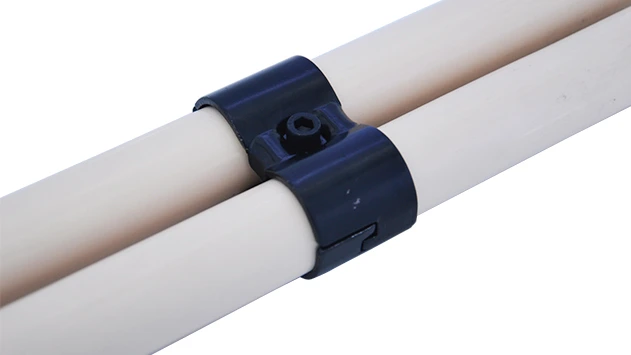
Parallel Lean Pipe Joint
Parallel lean pipe joint used for 2 pcs 28MM lean pipe connection in parallel direction to enhance frame structure, usually for heavy payload requirement for workbench. flow rack, hand trolley.
In today's fast-paced manufacturing landscape, businesses are under increasing pressure to deliver more with less—less waste, less cost, and less environmental impact. Lean manufacturing has long been the gold standard for efficiency, but true sustainability requires looking beyond just process optimization. It demands rethinking even the smallest components of production systems. Enter parallel lean pipe joints: unassuming yet powerful connectors that play a pivotal role in building flexible, durable, and eco-friendly manufacturing setups. In this article, we'll explore how these simple joints contribute to sustainable lean practices, integrating seamlessly with broader lean systems, aluminum profiles, and essential structures like workbenches and roller tracks.
Understanding Parallel Lean Pipe Joints: The Backbone of Modular Manufacturing
Before diving into their sustainability benefits, let's clarify what parallel lean pipe joints are. These are specialized connectors designed to link lean pipes—often made from aluminum, steel, or recycled materials—into sturdy, customizable structures. Unlike rigid, one-size-fits-all fasteners, parallel lean pipe joints are engineered for versatility: they allow pipes to be joined at precise angles, adjusted, and reconfigured with minimal tools. This modularity is their superpower, enabling manufacturers to build everything from workbenches and material racks to roller tracks and assembly lines that adapt to evolving needs.
Take, for example, a typical production facility. Traditional setups rely on fixed, welded structures that are expensive to modify. If a product design changes or demand spikes, the entire line might need to be rebuilt, generating waste in the form of discarded metal, labor hours, and downtime. Parallel lean pipe joints eliminate this problem. By using these joints, teams can disassemble, rearrange, and reassemble components in hours, not weeks. A workbench used for assembling small electronics today can become a packaging station tomorrow, simply by reconfiguring the pipes and joints. This flexibility is the first step toward sustainability: reducing the need for new materials and minimizing waste from obsolete equipment.
Supporting Lean Systems: From Waste Reduction to Continuous Improvement
Lean manufacturing is built on five core principles: value, value stream, flow, pull, and perfection. Parallel lean pipe joints align with each of these, but their impact on waste reduction and continuous improvement is particularly notable. Let's break it down:
1. Eliminating Overproduction Waste : Overproduction—manufacturing more than needed—is one of the deadliest wastes in lean. Parallel lean pipe joints combat this by enabling "right-sized" production lines. For instance, a roller track built with these joints can be extended or shortened to match current demand, ensuring materials flow exactly when needed (pull system) rather than piling up in inventory. The joints' quick-connect design means adjustments happen in real time, keeping production aligned with customer orders.
2. Minimizing Motion Waste : In traditional setups, workers often walk long distances to retrieve tools or materials. Parallel lean pipe joints allow the creation of ergonomic workbenches tailored to specific tasks. By mounting tools, bins, and even roller tracks directly onto the workbench frame (using the joints), everything a worker needs is within arm's reach. This reduces unnecessary movement, boosting productivity and cutting down on energy expenditure—both human and mechanical.
3. Fostering Continuous Improvement (Kaizen) : Lean isn't static; it thrives on continuous improvement. Parallel lean pipe joints make kaizen actionable. Frontline teams, who know the production floor best, can experiment with small changes—adjusting a workbench height, repositioning a roller track, or adding a new shelf—without waiting for engineering approval. This empowers employees to own sustainability efforts, turning incremental tweaks into significant long-term gains.

Sustainability by Design: Materials, Durability, and Recyclability
Sustainability isn't just about reducing waste during production—it's about choosing materials that minimize environmental impact over their entire lifecycle. Parallel lean pipe joints excel here, especially when paired with aluminum profiles. Aluminum is a standout material for eco-conscious manufacturing: it's 100% recyclable, retains its properties through multiple recycling cycles, and requires 95% less energy to recycle than to produce from raw ore. When combined with aluminum profiles, parallel lean pipe joints create structures that are not only lightweight and strong but also inherently sustainable.
Consider the lifecycle of a traditional steel workbench versus one built with aluminum profiles and parallel lean pipe joints. The steel bench, once welded, is difficult to repair; if a leg bends or a shelf cracks, the entire unit may end up in a landfill. In contrast, an aluminum-based workbench with parallel joints can be disassembled. Damaged pipes or joints can be replaced individually, extending the structure's lifespan. When the workbench is finally retired, the aluminum components are recycled, re-entering the supply chain as new pipes, profiles, or even consumer goods. This "cradle-to-cradle" approach drastically reduces the carbon footprint of manufacturing setups.
Durability is another key factor. Parallel lean pipe joints are built to withstand the rigors of factory environments—constant vibration, heavy loads, and frequent reconfiguration. High-quality joints, made from corrosion-resistant materials like stainless steel or anodized aluminum, rarely fail, meaning fewer replacements and less waste over time. A single set of joints can serve multiple structures over decades, outlasting several generations of traditional equipment.

Real-World Impact: Case Study – From Fixed Lines to Flexible, Sustainable Workbenches
To illustrate the difference parallel lean pipe joints make, let's look at a hypothetical (but realistic) case study. A mid-sized electronics manufacturer was struggling with rising waste and stagnant productivity. Their assembly line relied on fixed wooden workbenches and welded steel roller tracks. When product sizes changed, the team had to build new workbenches from scratch, sending old ones to the dumpster. Inventory storage was another pain point: rigid material racks couldn't adapt to varying component sizes, leading to overstocking and clutter.
The solution? A switch to aluminum profiles, parallel lean pipe joints, and roller tracks. The manufacturer replaced wooden workbenches with aluminum-framed ones, using parallel joints to attach adjustable shelves, tool holders, and ESD (electrostatic discharge) mats. Roller tracks, built with the same joint system, were integrated into the line to transport components smoothly between stations. Within months, the results were clear: setup time for new product runs dropped by 40%, waste from discarded furniture plummeted by 65%, and employee satisfaction rose as workbenches were tailored to individual ergonomic needs. Most importantly, when the company expanded its product line a year later, existing structures were reconfigured in days, avoiding the need for new materials.
Comparing Traditional vs. Parallel Lean Pipe Joint Setups: A Sustainability Snapshot
| Feature | Traditional Fixed Setups | Parallel Lean Pipe Joint Setups |
|---|---|---|
| Material Waste | High: Welded structures are hard to repair; entire units are discarded when obsolete. | Low: Modular components (pipes, joints, aluminum profiles) are reusable and recyclable. |
| Flexibility | Very low: Changes require full rebuilds, leading to downtime. | Very high: Reconfigurable in hours to adapt to new products or demand. |
| Energy Use | High: Manufacturing fixed structures requires more energy; frequent replacements increase carbon footprint. | Low: Aluminum recycling saves 95% energy; durable joints reduce replacement needs. |
| Cost Over Time | High: Initial low cost is offset by frequent rebuilds and waste disposal fees. | Low: Higher upfront investment pays off via longer lifespans and reduced waste. |
| Employee Engagement | Low: Workers have little control over their workspace. | High: Teams can adjust setups to improve efficiency, fostering ownership. |
Beyond the Joint: Integrating with Roller Tracks and Lean Ecosystems
Parallel lean pipe joints don't work in isolation—they're part of a larger lean ecosystem. Take roller tracks, for example. These systems rely on smooth, reliable movement of materials, and parallel joints ensure the tracks are aligned, stable, and easy to extend. A roller track built with these joints can be integrated into a pull-based production system, where materials flow only when the next station needs them, reducing inventory waste. If a bottleneck arises, the track can be rerouted or extended using spare pipes and joints, keeping the line moving without disruption.
Similarly, when paired with aluminum profiles, parallel lean pipe joints enable the creation of lightweight yet robust material racks and turnover trolleys. These racks can be adjusted to hold different-sized components, eliminating the need for multiple specialized racks. In a warehouse, this means less floor space is wasted, and fewer resources are spent on storage solutions—another win for sustainability.
Conclusion: Small Joints, Big Impact on Sustainable Lean Manufacturing
Sustainable lean manufacturing isn't about grand gestures; it's about the cumulative effect of smart, intentional choices. Parallel lean pipe joints embody this philosophy. By enabling modular, adaptable structures, reducing waste, and leveraging recyclable materials like aluminum profiles, these joints prove that even the smallest components can drive meaningful change. Whether used to build a simple workbench or a complex roller track system, they support the core principles of lean—efficiency, continuous improvement, and value—while prioritizing the planet.
As manufacturers strive to meet sustainability goals and stay competitive, investing in parallel lean pipe joints isn't just a practical choice—it's a commitment to a future where efficiency and eco-friendliness go hand in hand. After all, in the world of lean, perfection may be unattainable, but progress is always within reach—one joint at a time.