- Company Articles
- Products and Technology
- Product knowledge
- How Parallel Lean Pipe Joints with One Side Rotatory Improve Inventory Management

How Parallel Lean Pipe Joints with One Side Rotatory Improve Inventory Management
Related Product
Parallel Lean Pipe Joint
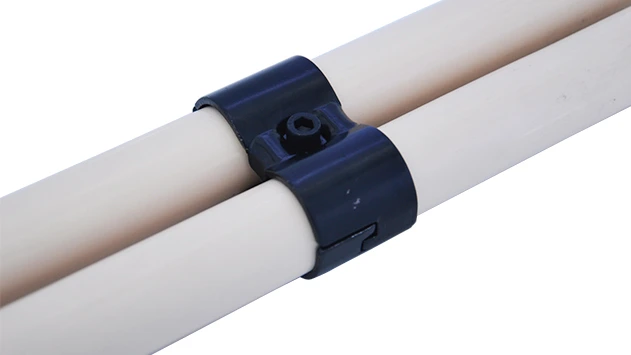
Parallel lean pipe joint used for 2 pcs 28MM lean pipe connection in parallel direction to enhance frame structure, usually for heavy payload requirement for workbench. flow rack, hand trolley.
Walk into any busy warehouse or manufacturing facility, and you'll likely hear the same frustrations echoed across the floor: "We can't find that part again," "This shelf is too rigid for the new product line," or "Our inventory counts are always off by the end of the week." These aren't just minor inconveniences—they're symptoms of a deeper problem: inflexible infrastructure that can't keep up with the dynamic demands of modern inventory management. In a world where customer expectations shift overnight and production schedules change by the hour, the ability to adapt quickly isn't just a luxury; it's the difference between thriving and falling behind. That's where lean systems come in—and more specifically, components like the parallel lean pipe joint one side rotatory chrome . This unassuming but powerful connector is quietly revolutionizing how teams manage inventory, turning chaos into order and waste into efficiency.
The Hidden Cost of Rigid Inventory Systems
Before diving into the solution, let's first unpack the problem. Traditional inventory management systems often rely on fixed structures: bolted-down shelves, immovable workbenches, and one-size-fits-all flow racks. These setups might work well in a static environment, but today's warehouses and production lines are anything but static. A electronics manufacturer, for example, might switch from assembling smartphones to tablets in a matter of weeks, requiring entirely different part sizes and storage configurations. A retailer gearing up for the holiday season needs to rapidly expand its picking areas, then shrink them back down in January. When your infrastructure can't pivot with these changes, the costs add up fast.
Consider overstock: rigid shelves force teams to stockpile items in hard-to-reach corners because there's no easy way to adjust shelf heights or add new storage lanes. This leads to expired goods, damaged parts, and capital tied up in inventory that's collecting dust. Then there's stockouts: if a critical component is buried behind a mountain of less urgent items (because the flow rack can't be reorganized), production grinds to a halt, and customers wait. Manual errors compound the issue—when workers have to climb ladders or stretch to reach items, they're more likely to miscount or misplace them, leading to inaccurate inventory records and costly reconciliation efforts. And let's not forget labor: rearranging a fixed shelf system can take a team of workers hours (or even days) of disassembling, moving, and rebolting—time that could be spent on higher-value tasks like fulfilling orders or improving processes.
The data backs this up. According to a 2023 study by the Warehousing Education and Research Council (WERC), 63% of warehouses cite "inflexible storage infrastructure" as a top barrier to improving inventory accuracy. Another report from McKinsey found that companies with rigid systems spend 20-30% more on inventory holding costs than those with adaptable setups. These aren't just numbers—they're lost opportunities to invest in growth, innovate, or pass savings on to customers.
Lean Systems: Flexibility as the Foundation of Efficiency
Enter lean systems. Born from the Toyota Production System, lean principles focus on eliminating waste (muda) and creating value through continuous improvement. At the heart of lean is the idea that nothing should be fixed if it can be flexible . This applies to everything from production workflows to, yes, the physical structures that support them. Lean pipe systems—often made from aluminum or steel pipes and modular joints—are a cornerstone of this philosophy. Unlike traditional fixed structures, they're designed to be reconfigured, extended, or repurposed with minimal effort, tools, or downtime. Think of them as the "Lego blocks" of industrial infrastructure: simple, versatile, and infinitely adaptable.
But not all lean pipe components are created equal. While basic lean pipe joints allow for simple connections, the real magic happens when components are engineered with specific pain points in mind. That's where the parallel lean pipe joint one side rotatory chrome shines. This joint isn't just a connector—it's a solution to the rigidity that plagues traditional inventory systems. Let's break down what makes it unique.

Inside the Design: How the Parallel Lean Pipe Joint One Side Rotatory Chrome Works
At first glance, the parallel lean pipe joint one side rotatory chrome looks like a standard industrial connector: a compact, chrome-plated piece with two openings for lean pipes. But its true innovation lies in its name: "one side rotatory." Unlike fixed joints, which lock pipes into a static angle, this joint allows one of its pipe connections to rotate 360 degrees. This rotation isn't just for show—it's engineered to let teams adjust the angle, height, or position of connected pipes without disassembling the entire structure . Need to tilt a flow rack to speed up material flow? Rotate the joint. Want to lower a shelf to eye level for easier picking? Rotate the joint. Need to create a temporary workstation by angling a workbench extension? You guessed it—rotate the joint.
The chrome plating adds another layer of value. In busy warehouses, where metal components are constantly exposed to moisture, dust, and heavy use, rust and corrosion are constant threats. Chrome plating resists both, extending the joint's lifespan and ensuring smooth rotation even after years of use. This durability is key: a joint that jams or rusts shut is just as useless as a fixed joint when you need to make a quick adjustment.
But perhaps the most underrated feature is its simplicity. Unlike hydraulic or motorized adjustable systems (which are costly and require maintenance), this joint relies on manual rotation with a simple locking mechanism. A quick twist to adjust, a firm clamp to lock it in place—no tools, no training, no downtime. This ease of use is critical in fast-paced environments, where every second counts.
Real-World Impact: A Day in the Life with Rotatory Joints
To understand how this translates to better inventory management, let's step into the shoes of Maria, a warehouse manager at a mid-sized automotive parts distributor. Maria's team handles over 500 unique part numbers, from small screws to large engine components, and they're constantly adapting to new orders and seasonal demand spikes. A few months ago, Maria was struggling with two recurring issues: stockouts of high-demand brake pads and overstock of low-turnover gaskets.
The problem? Her team's flow racks were fixed at a 15-degree angle, which worked well for the gaskets (lightweight and easy to slide) but caused the heavier brake pads to get stuck halfway down the rack. Workers had to stop and manually push the pads, leading to delays and, often, forgotten restocks. Meanwhile, the gaskets were piling up because the racks couldn't be adjusted to slow their flow, leading to overflow onto the floor and miscounts.
After researching lean solutions, Maria decided to upgrade her flow racks with parallel lean pipe joint one side rotatory chrome connectors. The transformation was immediate. Her team adjusted the angle of the brake pad racks to 25 degrees with a quick twist of the rotatory joints, allowing the pads to glide smoothly to the picking end. For the gaskets, they reduced the angle to 5 degrees, slowing the flow and preventing overflow. Within a week, stockouts of brake pads dropped by 40%, and gasket overstock was cut by 30%. But the benefits didn't stop there.
A month later, when the distributor landed a new client requiring larger fuel injectors, Maria didn't need to order new racks. Instead, her team rotated the joints to widen the spacing between pipes, creating custom-sized lanes for the injectors. What would have taken a full day of disassembling and rebuilding fixed racks took just 2 hours with the rotatory joints. "It's like having a magic wrench that lets us reshape the warehouse on the fly," Maria says. "We're not just managing inventory better—we're responding to opportunities faster."

5 Ways Rotatory Joints Transform Inventory Management
Maria's story isn't an anomaly. The parallel lean pipe joint one side rotatory chrome delivers tangible benefits across five key areas of inventory management:
1. Reduced Overstock and Stockouts Through Adaptive Storage
As Maria's example shows, the ability to adjust angles, heights, and spacing in real time ensures that inventory flows at the right pace. Fast-moving items (like brake pads) can be placed on steeper, faster-flowing racks, while slow-moving items (like gaskets) go on gentler slopes, preventing overflow. This balance reduces overstock (by eliminating "dead space" where items get stuck) and stockouts (by ensuring high-demand items are always accessible).
2. Improved Inventory Accuracy with Ergonomic Access
When shelves and flow racks are fixed at uncomfortable heights, workers are more likely to make mistakes. Straining to reach a high shelf might lead to miscounting; bending to grab a low item could result in dropping and losing parts. Rotatory joints let teams adjust storage to eye level or waist height, making picking more ergonomic and accurate. A study by the Occupational Safety and Health Administration (OSHA) found that ergonomic workstations reduce picking errors by up to 25%—and rotatory joints make ergonomic adjustments possible in minutes, not days.
3. Faster Reconfiguration for Seasonal or Product Changes
Seasonal spikes, new product launches, or shifts in customer demand all require rapid changes to storage layouts. With fixed joints, reconfiguring a flow rack or workbench means unbolting, moving, and rebolting—hours of labor. With rotatory joints, it's a matter of loosening the lock, rotating the pipe, and locking it back in. A team that once took 8 hours to reconfigure a picking area can now do it in 1 hour, freeing up time for other critical tasks like cycle counting or order fulfillment.
4. Lower Labor Costs Through Simplified Maintenance
Rigid systems don't just cost time during reconfigurations—they also require ongoing maintenance. Fixed joints can loosen over time, leading to wobbly shelves that need tightening. Rusty bolts can seize, requiring tools and replacement parts. The chrome-plated rotatory joint resists rust, and its simple locking mechanism is easy to tighten with a standard wrench. This reduces maintenance time by up to 30%, according to data from lean system suppliers, lowering labor costs and keeping teams focused on value-adding work.
5. Enhanced Compatibility with Other Lean Components
No inventory system works in isolation. The best lean setups integrate flow racks, roller tracks, workbenches, and turnover trolleys into a seamless workflow. The parallel lean pipe joint one side rotatory chrome plays well with others: it connects easily to aluminum pipes, roller track connectors, and even caster wheels, allowing teams to build hybrid systems that adapt to unique needs. For example, adding casters to a rotatory-joint-equipped workbench creates a mobile picking station that can be wheeled directly to production lines, reducing the time workers spend walking back and forth to fetch parts.
Comparing Traditional vs. Rotatory Joints: A Side-by-Side Look
Still not convinced? Let's put the parallel lean pipe joint one side rotatory chrome head-to-head with traditional fixed joints in a table that highlights their impact on inventory management:
| Feature | Traditional Fixed Joints | Parallel Lean Pipe Joint One Side Rotatory Chrome | Impact on Inventory Management |
|---|---|---|---|
| Reconfiguration Time | 4-8 hours (requires disassembly/reassembly) | 15-60 minutes (manual rotation, no disassembly) | Faster response to demand changes; reduces downtime during layout shifts |
| Ergonomic Adjustability | Limited (fixed height/angle) | Full adjustability (360° rotation for height/angle) | Reduces picking errors by 20-25%; lowers worker fatigue |
| Durability in Harsh Environments | Prone to rust (uncoated or painted steel) | Chrome-plated; rust and corrosion resistant | Longer lifespan (5-7 years vs. 2-3 years for fixed joints); lower replacement costs |
| Compatibility with Other Components | Limited to fixed pipe angles | Works with aluminum pipes, roller tracks, casters, and workbenches | Enables hybrid systems (e.g., mobile flow racks) that improve material flow |
| Cost Over Time | Higher (frequent replacements, labor for reconfigurations) | Lower (fewer replacements, reduced labor costs) | ROI typically achieved within 6-12 months; 20-30% lower total cost of ownership over 5 years |
Beyond the Joint: Building a Fully Adaptive Lean Ecosystem
While the parallel lean pipe joint one side rotatory chrome is a game-changer, it's most powerful when paired with other lean components. Let's explore how it integrates with three key tools in any inventory manager's toolkit: flow racks , roller tracks , and workbenches .
Flow Racks: Smoother Material Flow, Fewer Bottlenecks
Flow racks are the backbone of many inventory systems, using gravity to move items from the "stock" end to the "pick" end. But fixed-angle flow racks often create bottlenecks: heavy items get stuck, lightweight items slide too fast, and odd-shaped items jam. By replacing fixed joints with rotatory ones, teams can adjust the rack's angle in seconds, ensuring each product type flows at the optimal speed. For example, a flow rack holding small plastic components might need a 10-degree angle, while one holding metal brackets needs 30 degrees. Rotatory joints make this customization possible without rebuilding the entire rack.
Roller Tracks: Flexible Pathways for Material Transport
Roller tracks connect different parts of the warehouse, moving items from receiving to storage to shipping. Traditional roller tracks are fixed in place, meaning any change in workflow requires rerouting items manually (and risking damage or delays). With rotatory joints, roller tracks can be angled or curved to create new pathways on the fly. Need to divert a batch of items to a quality control station? Rotate the joint to create a temporary branch in the track. This flexibility reduces material handling time by up to 40%, according to lean manufacturing studies.
Workbenches: Customizable Picking Stations
Workbenches are where the rubber meets the road in inventory management—this is where workers pick, pack, and verify orders. A fixed workbench with rigid shelving limits productivity: tools get buried, parts get mixed up, and workers waste time searching. Rotatory joints let teams add adjustable shelves, tool hooks, or even mini flow racks directly to the workbench. Need to add a shelf for frequently used screwdrivers? Rotate a joint to extend a pipe upward. Want to attach a small roller track to feed parts directly onto the bench? Rotate a joint to angle the track toward the worker. These small adjustments add up to big gains: a 2022 study by the Lean Enterprise Institute found that customizable workbenches (equipped with rotatory joints) increase picking speed by 25%.
The Future of Inventory Management: Adaptability as a Competitive Edge
As customer expectations continue to rise—for faster delivery, more customization, and lower prices—warehouses and manufacturers can't afford to be tied to rigid systems. The companies that thrive will be those that can adapt quickly, turning challenges into opportunities. The parallel lean pipe joint one side rotatory chrome is more than a component; it's a symbol of this adaptability. It's proof that sometimes, the smallest innovations (like a rotating joint) can have the biggest impact on the bottom line.
So, the next time you walk through a warehouse and hear the familiar frustrations of rigid systems, remember: there's a solution. It's not about overhauling your entire operation at once—it's about starting with components that put flexibility first. And when it comes to flexibility, few components deliver like the parallel lean pipe joint one side rotatory chrome. After all, in inventory management, the ability to rotate, adjust, and adapt isn't just a nice-to-have—it's the key to staying ahead.