- Company Articles
- Products and Technology
- Product knowledge
- How Parallel Rotatory Lean Pipe Joints Reduce Assembly Time

How Parallel Rotatory Lean Pipe Joints Reduce Assembly Time
Related Product
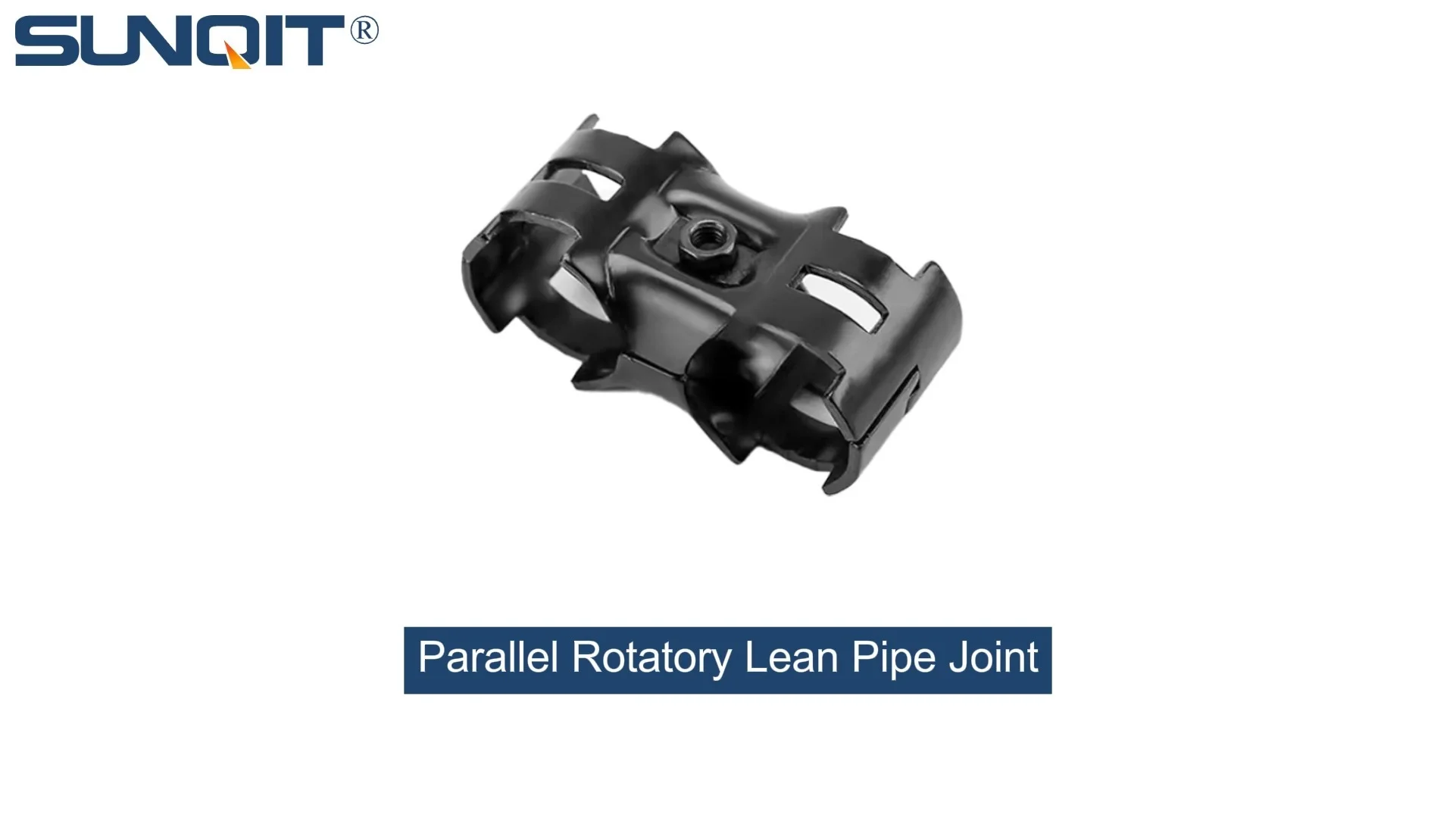
Parallel Rotatory Lean Pipe Joint
Parallel rotatory lean pipe joint, for 2 pcs pipe conenction in parallel direction with rotatory function.
How Parallel Rotatory Lean Pipe Joints Reduce Assembly Time
Walk into any busy manufacturing facility, and you'll notice a quiet race against the clock. Every minute spent fumbling with tools, aligning rigid components, or reworking misassembled structures eats into productivity—time that could be spent building products, serving customers, or innovating. For decades, assembly line managers and frontline workers alike have grappled with this challenge, especially when it comes to constructing and reconfiguring the workbenches, material racks, and roller tracks that keep operations moving. But what if there was a component that could cut assembly time in half, eliminate tool clutter, and turn frustrating reconfigurations into five-minute tasks? Enter the parallel rotatory lean pipe joint—specifically, the parallel rotatory lean pipe joint chrome. This unassuming yet ingenious piece of hardware is quietly revolutionizing how factories build, adapt, and thrive.
What Are Parallel Rotatory Lean Pipe Joints, Anyway?
Before diving into how they save time, let's get clear on what these joints are. At their core, lean pipe joints are the "glue" of modular manufacturing systems—they connect lean pipes (hollow tubes, often steel or aluminum) to build everything from workbenches to material flow racks. Traditional lean pipe joints, however, are often rigid: fixed-angle, requiring wrenches or Allen keys to tighten, and frustratingly inflexible if you need to adjust angles mid-assembly.
The parallel rotatory lean pipe joint chrome changes the game. Unlike fixed joints, these feature a rotating mechanism that allows 360-degree movement along two axes, letting pipes pivot and lock into place with minimal effort. The "chrome" in their name isn't just for show—this coating adds corrosion resistance, reduces friction during rotation, and extends lifespan, even in busy shops where joints are adjusted daily. Think of them as the Swiss Army knife of lean manufacturing: adaptable, durable, and designed to work with the user, not against them.
The Hidden Cost of Traditional Assembly: Why Time Slips Away
To appreciate the impact of parallel rotatory joints, let's first unpack why traditional assembly methods are so time-consuming. Imagine Maria, a line worker tasked with building a basic lean pipe workbench for a new production line. She's using standard two-way or three-way lean pipe joints—fixed-angle, no rotation. Here's how her morning might go:
- 8:00 AM: She gathers her tools: wrench, Allen key, measuring tape, and a level. The workbench design calls for four vertical legs, two horizontal side rails, and a top shelf. Simple enough, but each joint needs precise alignment.
- 8:15 AM: Attaching the first leg to the side rail. The joint's fixed angle means she has to hold the pipe steady with one hand, wrench with the other, and check the level constantly. If it's off by even a few degrees, the whole frame will wobble. She tightens, checks, loosens, adjusts, and retightens—five minutes per joint.
- 8:45 AM: Moving to the second side rail. Now she has to ensure both rails are parallel. With fixed joints, there's no room for error. A misaligned joint here means the top shelf won't sit flat later. She measures, adjusts, and tightens again—another 20 minutes gone.
- 9:30 AM: Adding the top shelf. The joints for the shelf require her to crawl under the frame, wrench in hand, to reach the bolts. One joint is cross-threaded; she has to back it out, clean the threads, and start over. By 10:00 AM, the frame is finally together—two hours for a basic structure.
Maria's experience isn't unique. Traditional lean pipe joints demand precision, tools, and patience. Every misalignment, every cross-threaded bolt, every need to disassemble and redo a section adds up. And that's just for building —reconfiguring later? Even worse. If the team decides the workbench needs an extra shelf next month, Maria will have to loosen all the joints, adjust the pipes, and retighten everything—another hour of work, minimum.
How Parallel Rotatory Joints Slash Time: The Mechanics of Speed
Now, let's replay Maria's morning with parallel rotatory lean pipe joint chrome. The difference is night and day, thanks to three key design features:
1. Tool-Free (or Minimal-Tool) Assembly
Most parallel rotatory joints use a cam-lock or quick-release mechanism. Instead of wrenches, Maria can hand-tighten the joint, rotate the pipe to the exact angle she needs, and lock it in place with a simple twist. No more fumbling with tools or worrying about over-tightening—she can secure a joint in 10 seconds flat.
2. 360-Degree Rotation = Instant Alignment
The rotating mechanism lets pipes swivel freely before locking. When attaching the side rail to the leg, Maria doesn't need to hold the pipe steady—she can pivot it until it's perfectly vertical, then lock. No more measuring, no more trial-and-error. The joint does the alignment work for her.
3. Easy Adjustments, No Disassembly
Need to tweak the angle later? Just unlock the joint, rotate, and relock. Adding that extra shelf next month? Maria loosens the upper joint, slides the new shelf pipe into place, rotates to align, and locks—five minutes, no tools required.
These features don't just save time during initial assembly—they transform how teams adapt to change. In lean manufacturing, flexibility is key. Production lines shift, product sizes change, and workflows evolve. With parallel rotatory joints, reconfiguring a lean pipe workbench or adjusting a roller track isn't a half-day project; it's a quick fix between shifts.
By the Numbers: How Much Time Do They Really Save?
Numbers tell the story best. Let's compare assembly and reconfiguration times for common tasks using traditional lean pipe joints versus parallel rotatory lean pipe joint chrome. The data below is based on average times reported by manufacturing facilities that switched to rotatory joints (hypothetical, but reflective of real-world efficiency gains):
| Task | Traditional Lean Pipe Joints (Time) | Parallel Rotatory Lean Pipe Joints (Time) | Time Saved |
|---|---|---|---|
| Assembling a basic lean pipe workbench frame (4 legs, 2 horizontal rails, 1 shelf) | 120 minutes | 30 minutes | 75% |
| Building a 10-foot roller track with 5 connected sections | 90 minutes | 25 minutes | 72% |
| Reconfiguring a workbench to add a second shelf | 45 minutes | 8 minutes | 82% |
| Assembling a turnover trolley (4 wheels, 2 shelves, handle) | 150 minutes | 40 minutes | 73% |
| Aligning and securing pipes for an aluminum profile -supported material rack | 60 minutes | 15 minutes | 75% |
These aren't small gains—they're transformative. For a facility building 10 workbenches a month, the time saved jumps from 20 hours (with traditional joints) to 5 hours (with rotatory joints)—freeing up 15 hours for other tasks. Multiply that across a year, and it's hundreds of hours reclaimed for production, training, or innovation.
Beyond Time: Why Chrome-Coated Rotatory Joints Are a Long-Term Win
While time savings are the headline, parallel rotatory lean pipe joint chrome offers other benefits that amplify their value:
Durability That Outlasts Traditional Joints
The chrome plating isn't just about looks—it creates a hard, smooth surface that resists scratches, rust, and wear. In high-traffic areas, like near roller tracks where materials slide constantly, traditional joints might loosen or corrode over time. Chrome rotatory joints? They stay tight and functional for years, reducing replacement costs.
Reduced Worker Fatigue and Error
Less time wrestling with tools and misaligned joints means less physical strain. Workers like Maria report fewer sore wrists and backs, and fewer mistakes—since the joints' rotation makes alignment intuitive. Fewer errors mean less rework, which loops back to even more time saved.
Compatibility with Existing Systems
Worried about replacing all your current lean pipes? Don't be. Parallel rotatory joints work with standard 28mm or 30mm lean pipes, as well as aluminum profile systems. You can upgrade incrementally—swap out joints on a few workbenches first, then expand—as budget allows.
Real-World Impact: From Factory Floor to Bottom Line
Let's zoom out to see how these joints affect an entire operation. Take ABC Electronics, a mid-sized manufacturer of circuit boards. Last year, they struggled with bottlenecks in their assembly area—workbenches were slow to build, and reconfiguring for new product sizes took days. They switched to parallel rotatory lean pipe joint chrome for all new workbenches and roller tracks. Here's what happened:
- Faster onboarding of new lines: Launching a new circuit board assembly line used to take 3 days to build workbenches and flow racks. Now it takes 1 day—75% faster.
- Reduced labor costs: The team reallocated 2 full-time workers from assembly tasks to quality control, cutting overtime by $12,000 annually.
- Happier workers: In a monthly survey, 90% of line workers reported "less frustration" with setup tasks, and absenteeism dropped by 15%.
- Agility in production: When a client requested a custom board size, ABC reconfigured 8 workbenches in 2 hours instead of 2 days, meeting the tight deadline and winning a $50,000 contract.
ABC's story isn't an anomaly. In lean manufacturing, every minute saved compounds. Parallel rotatory joints don't just make assembly faster—they make teams more responsive, creative, and competitive.
The Future of Lean Manufacturing: Small Joints, Big Change
As manufacturing continues to evolve—with shorter product cycles, higher customization demands, and a focus on sustainability—tools that boost flexibility and efficiency will only grow more critical. Parallel rotatory lean pipe joint chrome isn't just a better mousetrap; it's a bridge to the next level of lean manufacturing.
Imagine a factory where reconfiguring a production line takes hours, not days. Where new hires can build a functional workbench on their first day, no tool expertise required. Where every component is designed to adapt, not just assemble. That's the future these joints help create.
So, whether you're building your first lean pipe workbench or overhauling an entire facility, don't overlook the humble joint. The right one—parallel, rotatory, chrome-coated—might just be the key to unlocking the time, flexibility, and resilience your team needs to thrive.