- Company Articles
- Products and Technology
- Product knowledge
- How Parallel Rotatory Lean Pipe Joints Simplify Reconfigurable Lines

How Parallel Rotatory Lean Pipe Joints Simplify Reconfigurable Lines
Related Product
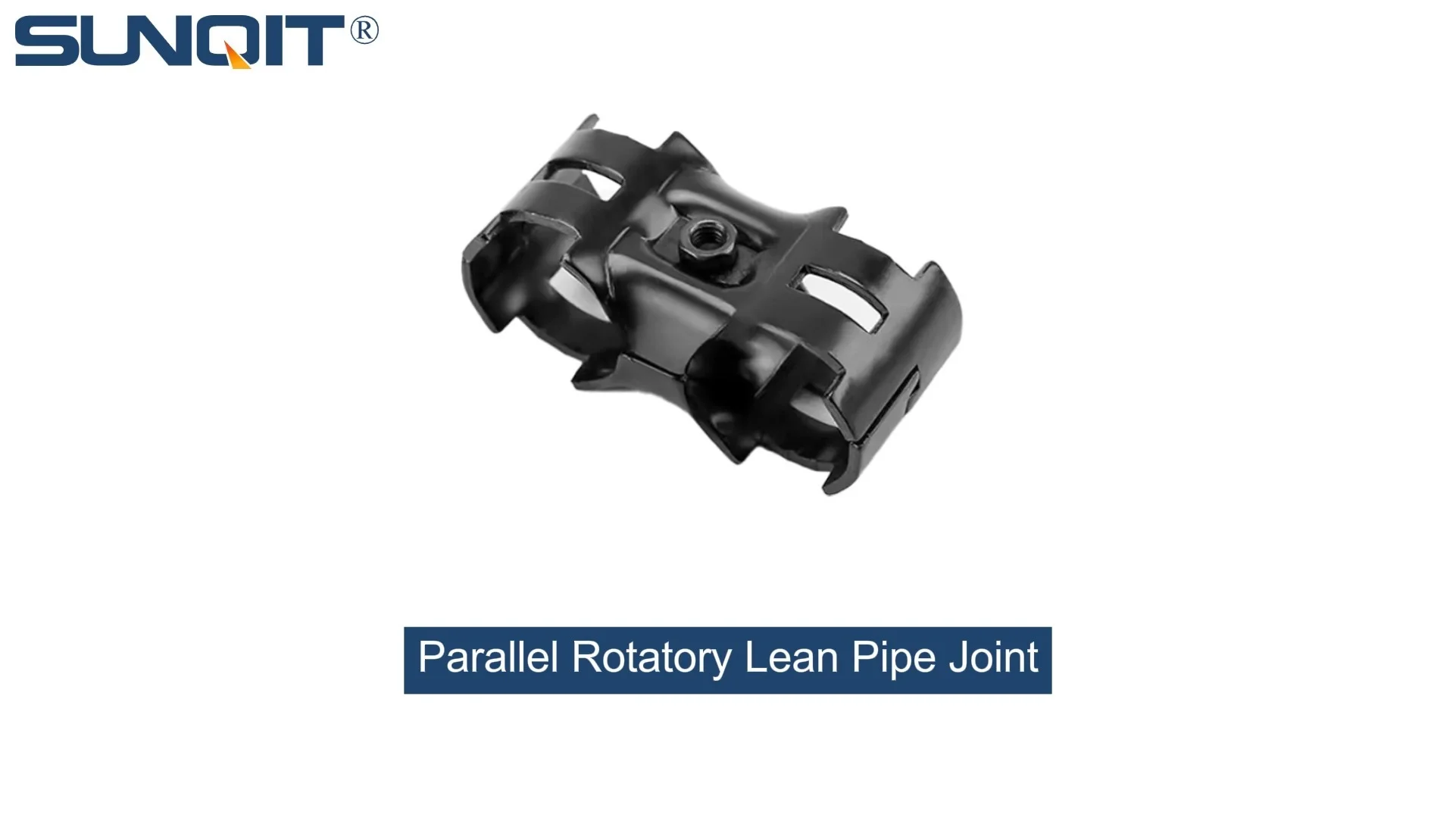
Parallel Rotatory Lean Pipe Joint
Parallel rotatory lean pipe joint, for 2 pcs pipe conenction in parallel direction with rotatory function.
Walk into any modern factory, and you'll likely hear the hum of machines, the clink of parts, and the steady rhythm of production. But behind that rhythm lies a hidden tension: the need to stay productive today while preparing for tomorrow. A decade ago, manufacturers could rely on long product cycles and stable demand—build a line for a product, run it for years, and tweak it occasionally. Now? A product might be hot for six months before a new model arrives. A sudden surge in orders could require doubling output next week. A shift to eco-friendly materials might demand a complete workflow overhaul by next quarter. In this environment, rigidity is the enemy. And that's where reconfigurable production lines step in—systems designed to adapt quickly, efficiently, and cost-effectively to changing needs. At the core of making these lines work? The unsung hero of modular manufacturing: the parallel rotatory lean pipe joint .
But before we dive into the specifics of this joint, let's take a step back. What makes reconfigurable lines so critical, and why has lean pipe become the backbone of this flexibility? To answer that, we need to understand the philosophy that drives modern manufacturing: lean thinking. Lean isn't just about cutting costs—it's about eliminating waste, optimizing flow, and creating systems that respond to actual demand, not just projections. And in a lean system, the ability to reconfigure workspaces and lines isn't a luxury; it's a necessity. This is where lean pipe—often made from aluminum or steel, lightweight yet strong—shines. When combined with the right joints, it becomes a building block for everything from workbenches to material racks, allowing teams to design, build, and rebuild with ease. But for years, even with lean pipe, a bottleneck remained: fixed joints that locked lines into rigid shapes, making reconfiguration a time-consuming, tool-heavy chore. Enter the parallel rotatory lean pipe joint—a small innovation that's changing how factories adapt.
The Problem with "Set It and Forget It" Production Lines
Imagine a mid-sized electronics manufacturer—let's call them TechFlow—that produces smartphone chargers. Two years ago, they built a dedicated line with fixed steel frames and welded joints. The line was efficient for their best-selling charger, churning out 500 units per hour. Then, a new model hit the market: a faster, slimmer charger with a different circuit board. Overnight, TechFlow needed to adjust their line. The old frames were too narrow for the new circuit boards. The material racks, welded at fixed heights, couldn't accommodate the taller component bins. The team spent three days with grinders, welders, and new steel beams, losing production time and spending $15,000 on retooling. By the time they were back up, a competitor had already captured 10% of the new charger market. TechFlow's story isn't unique—it's the reality for thousands of manufacturers stuck with rigid systems.
The root of the problem? Traditional joints—whether welded, bolted, or glued—are designed for permanence. They lock pipes and frames into fixed angles and positions, making even minor adjustments a major project. To reconfigure a line, teams need tools, specialized labor, and often new parts. The result? Downtime (which averages $22,000 per minute for manufacturers, according to IndustryWeek), high costs, and missed opportunities to pivot quickly. For small and medium-sized businesses (SMBs), which make up 90% of manufacturers globally, this rigidity can be fatal. They don't have the budget for multiple dedicated lines, so they need one line that can do it all—or at least adapt quickly. This is where reconfigurable lines, built on modular components like lean pipe and flexible joints, become a game-changer.
Lean Pipe: The Backbone of Modular Manufacturing
Before we focus on the joint itself, let's talk about the foundation it connects: lean pipe. Also known as "flexible pipe" or "kitchen pipe" (a nod to its early use in restaurant kitchens), lean pipe is a lightweight, durable tube typically made of steel with a plastic coating or, increasingly, aluminum lean pipe for added corrosion resistance and lighter weight. Its magic lies in its simplicity: it's strong enough to support tools, parts, and even small machines (up to 200kg per meter for steel, 150kg for aluminum), yet light enough for two people to carry and assemble. Unlike welded steel or heavy aluminum profiles, lean pipe is designed to be modular—meaning it can be cut to length, connected with joints, and reconfigured without specialized tools.
The most common application of lean pipe? The lean pipe workbench —a staple in factories, warehouses, and workshops worldwide. A basic lean pipe workbench might consist of four vertical pipes, horizontal pipes for the frame, and a wooden or metal top. But with the right joints, that same workbench can transform into a testing station, a packaging area, or a material staging rack in minutes. Or, scale it up: connect multiple workbenches with roller track systems, and you've got a production line where parts flow smoothly from one station to the next. The key, of course, is the joints that hold it all together. For decades, the go-to was the fixed joint—a simple connector that locked pipes at 90° or 45° angles. Functional, but limiting. Then came the parallel rotatory joint, which adds a critical feature: rotation. Not just a little wiggle, but 360° rotation and locking at any angle, allowing pipes to pivot, tilt, and reposition with minimal effort.
Parallel Rotatory Lean Pipe Joints: Design and Functionality
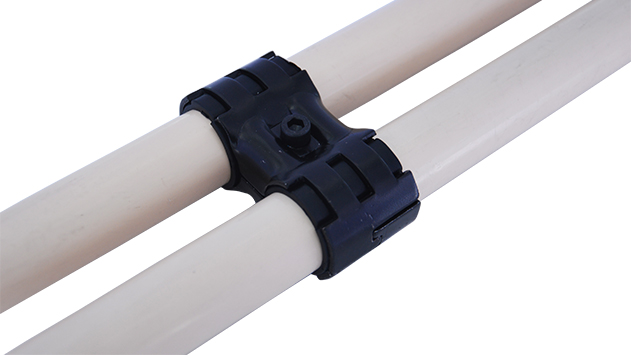
So, what exactly is a parallel rotatory lean pipe joint? Let's break it down. At first glance, it looks like a standard lean pipe joint—a cylindrical or rectangular connector with holes for inserting pipes. But inside, there's a clever mechanism: a rotating bushing or bearing that allows one pipe to swivel relative to another, while a locking lever or setscrew holds it in place once adjusted. Unlike fixed joints, which force pipes into rigid angles, parallel rotatory joints let pipes move in parallel (hence "parallel") and rotate (hence "rotatory")—think of it like a door hinge that can also spin on its axis.
Most parallel rotatory joints are made from die-cast aluminum or reinforced plastic, chosen for their strength-to-weight ratio. Aluminum joints, in particular, pair well with aluminum lean pipe, creating a lightweight system that's easy to maneuver. The design varies by manufacturer, but the best ones share key features: a smooth rotation mechanism (no sticking or jamming), a secure locking system (to prevent accidental movement during production), and compatibility with standard lean pipe sizes (typically 28mm or 30mm diameter). Some even include built-in rulers or angle markers, making precise adjustments faster.
Let's get technical for a moment. A typical parallel rotatory joint has two or more pipe sockets. For example, a T-shaped joint might have one vertical socket and two horizontal sockets, with the horizontal sockets mounted on a rotating collar. When you loosen the locking lever, the collar spins, allowing the horizontal pipes to pivot up, down, left, or right. Tighten the lever, and the joint locks solidly, supporting the weight of tools, parts, or even small machines. This might sound simple, but compared to fixed joints—where changing angles requires unscrewing, repositioning, and rescrewing (if you're lucky) or cutting and reattaching (if you're not)—it's revolutionary.

5 Ways Parallel Rotatory Joints Simplify Reconfiguration
The true value of parallel rotatory lean pipe joints lies in how they solve real-world problems for production teams. Let's break down the top five benefits, with examples from factories that have made the switch.
1. Tool-Free Adjustments Cut Downtime from Hours to Minutes
Remember TechFlow, the electronics manufacturer? After their costly retooling experience, they switched to aluminum lean pipe and parallel rotatory joints for their next line. Last quarter, they launched a third charger model—this time, with a wider plug. Instead of grinding and welding, two technicians loosened the locking levers on the lean pipe workbench frames, rotated the horizontal pipes outward by 3 inches, and retightened the levers. Total time: 45 minutes. Cost: $0 in new materials. They didn't miss a single production hour. "It was like adjusting a bicycle seat," said Maria, their production supervisor. "We went from dreading changeovers to actually looking forward to them—because we know we can adapt without the headache."
Tool-free adjustment is a game-changer for SMBs, where labor and downtime are precious. Traditional joints often require wrenches, Allen keys, or even power tools to reposition. With parallel rotatory joints, a quick twist of a lever or knob is all it takes. This isn't just about speed—it's about empowerment. Line operators, not just maintenance teams, can make adjustments, freeing up skilled workers for more critical tasks.
2. Multi-Angle Flexibility Adapts to Any Product or Process
A fixed joint locks you into 90°, 45°, or 180° angles. But what if your new product needs a 30° incline on the roller track to prevent jamming? Or a 120° angle on the workbench to fit a larger assembly fixture? Parallel rotatory joints eliminate the "one angle fits all" problem. Take AutoParts Inc., a manufacturer of car door handles. Their assembly process involves three steps: molding the plastic handle, inserting a metal rod, and testing the mechanism. Each step requires a different workbench height and angle. With fixed joints, they needed three separate workbenches. Now, they use one lean pipe workbench with parallel rotatory joints. For molding, the top is flat. For inserting the rod, they tilt it 15° to let gravity feed the rods into place. For testing, they angle it 20° downward to slide handles into the test fixture. The result? They saved 50 sq. ft. of floor space and reduced work-in-progress inventory by 30%.
This flexibility isn't just for workbenches. Roller tracks, which move parts between stations, often need to adjust angles based on part weight or size. A heavy component might need a steeper incline to roll properly, while a lightweight part needs a gentler slope to avoid damage. Parallel rotatory joints let teams tweak roller track angles on the fly, ensuring smooth flow no matter what's being produced.
3. Compatibility with Existing Systems Reduces Upgrade Costs
One of the biggest barriers to adopting new manufacturing tech is cost. Many factories already have lean pipe systems—they don't want to scrap them for an all-new setup. The good news? Parallel rotatory joints are designed to work with standard lean pipe, whether it's steel, aluminum, or plastic-coated. That means you can upgrade incrementally: start with the joints on your most frequently reconfigured workbench, then expand to roller tracks and material racks. For example, GreenPack, a food packaging company, had 10 steel lean pipe workbenches with fixed joints. Instead of replacing all 10, they swapped out the joints on 3 high-use benches. The new joints connected seamlessly to their existing steel pipes, and within a month, they'd saved enough on downtime to pay for the upgrade. "We didn't have to throw away our investment in lean pipe," said Raj, their operations manager. "We just made it smarter."
4. Durability That Stands Up to Daily Use
Skeptics might wonder: if these joints rotate, are they less durable than fixed ones? The answer, when choosing quality joints, is no. Leading manufacturers test their parallel rotatory joints for tens of thousands of rotations and locking cycles, ensuring they hold up to daily use in harsh factory environments. Take the case of MetalWorks, a metal stamping shop where workbenches vibrate from nearby presses and are exposed to oil and metal shavings. They switched to parallel rotatory joints five years ago, and 90% of those joints are still in use. The secret? Sealed bearings to keep out debris, reinforced locking levers that resist vibration loosening, and corrosion-resistant coatings (important for aluminum lean pipe in humid or oily settings). "We expected to replace them every year," said Tom, their maintenance lead. "Instead, we're still using the original joints, and they lock as tightly as day one."
5. Cost Savings That Add Up Over Time
At first glance, parallel rotatory joints cost more than basic fixed joints—sometimes 2-3x as much. But the ROI is undeniable. Let's do the math: A fixed joint costs $5, while a parallel rotatory joint costs $12. A typical workbench uses 8 joints, so the upgrade costs $56 more per workbench. But if that workbench needs reconfiguring 4 times a year, and each reconfiguration with fixed joints takes 2 hours (at $50/hour labor cost), that's $400 per year in labor. With parallel rotatory joints, each reconfiguration takes 15 minutes, cutting labor to $50 per year. The savings? $350 per workbench, per year—more than enough to offset the initial joint cost. And that's not counting savings from reduced downtime, fewer missed orders, or the ability to take on smaller, custom projects that rigid lines couldn't handle.

Parallel Rotatory vs. Fixed Joints: A Head-to-Head Comparison
| Feature | Parallel Rotatory Lean Pipe Joint | Traditional Fixed Joint |
|---|---|---|
| Adjustment Time | 5-15 minutes per reconfiguration | 1-3 hours per reconfiguration (or more) |
| Tools Required | None (tool-free locking levers) | Wrenches, Allen keys, or power tools |
| Angle Flexibility | 360° rotation, locks at any angle | Fixed angles (90°, 45°, 180° only) |
| Compatibility | Works with standard steel, aluminum, and plastic-coated lean pipe | Often limited to specific pipe types/sizes |
| Durability | Sealed bearings, reinforced locking; 50,000+ cycles typical | Durable but requires replacement if angles need changing |
| Initial Cost | Higher ($10-$15 per joint) | Lower ($3-$8 per joint) |
| Long-Term Cost | Lower (saves on labor, downtime, and retooling) | Higher (costly reconfigurations add up) |
| Best For | Reconfigurable lines, custom projects, frequent changeovers | Static lines, long-term fixed production, low changeover needs |
Beyond the Joint: Building a Fully Reconfigurable Ecosystem
Parallel rotatory lean pipe joints are powerful on their own, but their true potential shines when paired with other modular components. Let's explore how they integrate with key tools in the lean manufacturing toolkit:
Lean Pipe Workbenches: From Static to Adaptive
The lean pipe workbench is the most common application for parallel rotatory joints. A basic workbench has a frame, a top, and sometimes shelves or tool rails. With fixed joints, the shelves are at fixed heights, the tool rails are in fixed positions, and the top is either flat or at a fixed angle. With parallel rotatory joints, everything moves. Need a shelf higher to fit a taller bin? Rotate the vertical joints and lock. Want a tool rail angled toward the operator to reduce reaching? Swivel the horizontal joints. Some factories even use them to create "tilting workbenches" for assembly tasks, where the top angles downward to let gravity feed parts, reducing operator fatigue. For example, a furniture manufacturer in Canada uses this setup for chair assembly: the workbench top tilts 10°, so screws and washers roll toward the operator, cutting pick time by 20%.
Roller Tracks: Smoother Flow, Any Angle
Roller track systems—lines of rollers that let parts glide from one station to the next—are critical for efficient production flow. But parts come in all shapes and weights: a small plastic gear might need a gentle slope, while a heavy metal bracket needs a steeper incline. Fixed roller tracks, set at one angle, often struggle with this variety. Parallel rotatory joints solve the problem by letting teams adjust track angles on the fly. A medical device manufacturer in Germany uses this to move syringes between stations: empty syringes (light) need a 5° incline, while filled syringes (heavier) need a 2° incline to prevent jamming. With parallel rotatory joints at the track supports, they adjust the angle in minutes, ensuring smooth flow for both.
Material Racks: Custom Storage for Changing Inventory
Material racks, used to store bins of components, are another area where flexibility matters. A clothing manufacturer might need wide racks for fabric bolts in summer and narrow racks for thread spools in winter. With parallel rotatory joints, the vertical supports can pivot to adjust shelf width, and the shelves themselves can tilt to prevent bins from sliding. A toy factory in Brazil does this: during the holiday rush, they need extra-wide shelves for large toy boxes; in slower months, they narrow the shelves to store small parts, doubling storage capacity without adding new racks.
Choosing the Right Parallel Rotatory Joint: Key Considerations
Not all parallel rotatory lean pipe joints are created equal. To get the most value, look for these features when selecting joints for your facility:
- Load Capacity: Check the maximum weight the joint can support when locked. For workbenches or heavy tool rails, look for joints rated for 50kg+ per pipe. For lighter applications like roller tracks, 20-30kg may suffice.
- Rotation Range: Some joints rotate 180°, others 360°. For maximum flexibility, 360° rotation is better, especially for workbenches or racks that need to pivot in multiple directions.
- Locking Mechanism: Lever locks are faster to adjust than setscrews, but setscrews may offer more security in high-vibration environments. Look for locks that are easy to grip with gloved hands (critical for factory floors).
- Material: Aluminum joints are lightweight and corrosion-resistant (great for humid or cleanrooms). Reinforced plastic is cheaper but less durable for heavy use. Steel joints are strongest but add weight.
- Pipe Compatibility: Ensure the joint fits your existing lean pipe diameter (common sizes are 28mm, 30mm, and 40mm). Some joints are adjustable to fit multiple sizes, which is ideal for mixed-pipe systems.
- Warranty: A good joint should come with a 1-3 year warranty, indicating the manufacturer stands behind its durability.
Also, consider working with a reputable lean pipe supplier who can provide samples, technical support, and bulk pricing. A supplier familiar with reconfigurable systems can help you design workbenches, roller tracks, and lines that maximize the benefits of parallel rotatory joints.
The Future of Manufacturing: Adaptability as a Competitive Advantage
As manufacturing continues to evolve—driven by trends like customization, sustainability, and reshoring—the ability to adapt will only grow more critical. Factories that can quickly reconfigure lines to produce small batches, eco-friendly products, or region-specific designs will win market share. Those stuck with rigid systems will fall behind. Parallel rotatory lean pipe joints are a small but powerful step toward this adaptive future. They're not just tools for reconfiguring lines—they're tools for empowering teams to innovate, respond to customer needs, and turn change from a threat into an opportunity.
Consider this: A recent study by McKinsey found that manufacturers with highly reconfigurable lines are 30% more likely to meet delivery deadlines and 25% more profitable than those with rigid systems. The difference often comes down to small, smart investments in modular components—like parallel rotatory joints. TechFlow, the electronics manufacturer we met earlier, is now launching custom charger lines for regional markets (Europe, Asia, North America) with different plug types. Instead of building three lines, they have one line with parallel rotatory joints, adjusting the workbenches and roller tracks in hours. They've cut lead times by 40% and are on track to double their market share in two years.
At the end of the day, manufacturing isn't just about making products—it's about making change work for you. Parallel rotatory lean pipe joints are a simple innovation, but they represent a shift in mindset: from building lines that fight change to building lines that embrace it. And in today's market, that's the difference between surviving and thriving.
Final Thoughts: From Rigid to Resilient
The next time you walk through a factory, take a look at the workbenches, the material racks, the roller tracks. Chances are, some are still held together with fixed joints—silent reminders of a "set it and forget it" past. But more and more, you'll see the telltale signs of adaptability: workbenches with angled shelves, roller tracks that slope gently one day and steeply the next, material racks that shrink and grow with inventory. Behind those flexible systems? Parallel rotatory lean pipe joints—small, unassuming, and quietly revolutionizing how factories adapt.
For manufacturers ready to leave rigid systems behind, the message is clear: modularity matters. And when it comes to modularity, parallel rotatory lean pipe joints are the unsung heroes. They turn lean pipe from a static building material into a dynamic tool for innovation, letting teams design, build, and rebuild lines that keep up with the pace of change. In the end, it's not just about saving time or money—it's about building factories that are resilient, responsive, and ready for whatever tomorrow brings.