- Company Articles
- Products and Technology
- Solution
- How Roller Track Placon Mount Joints Support Lean Manufacturing Principles

How Roller Track Placon Mount Joints Support Lean Manufacturing Principles
Related Product
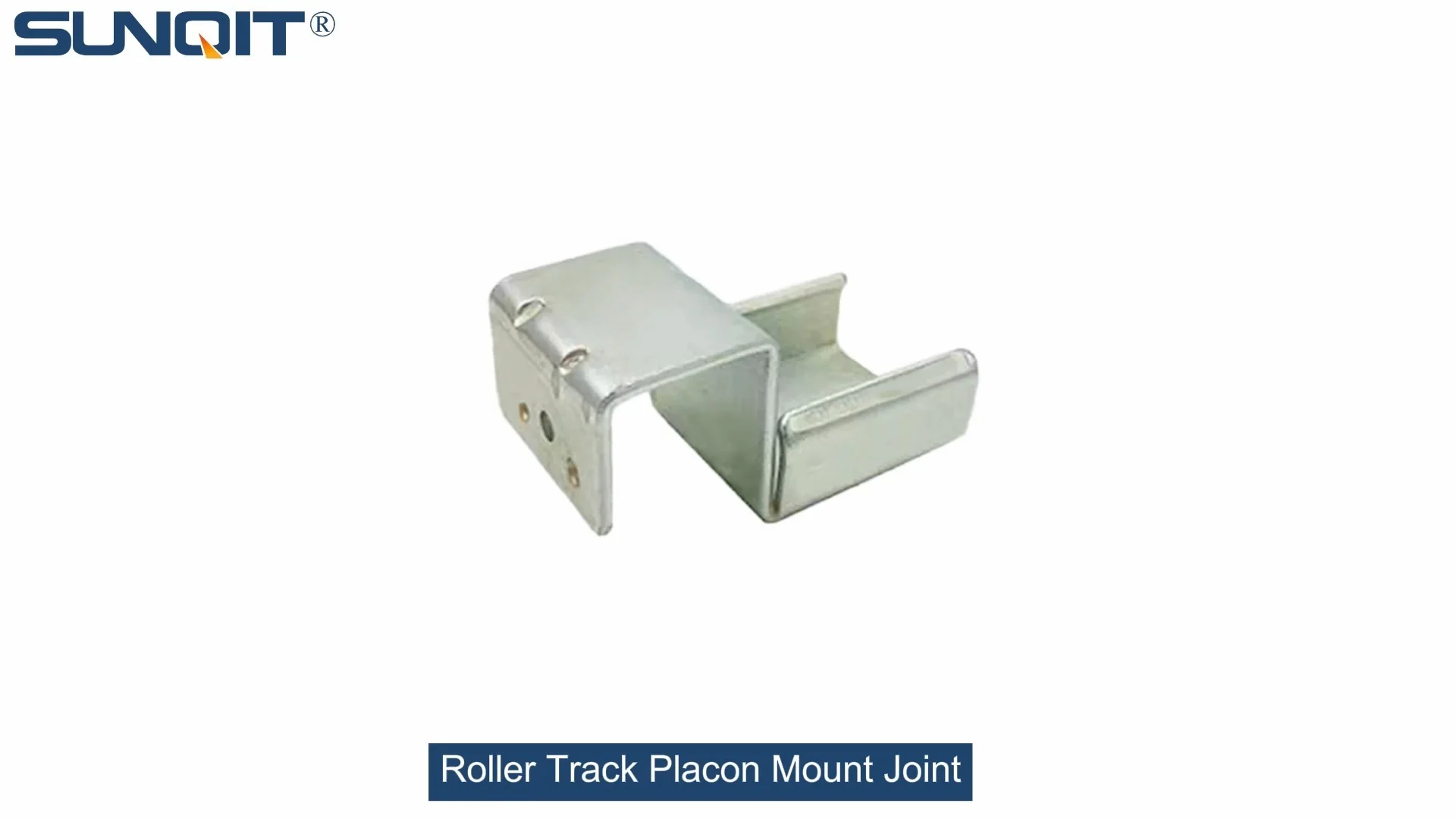
Roller Track Placon Mount Joint
Roller track placon mount work as a connector for roller track and pipe or aluminum profile in rack syetem, it is a necessary parts in rack system which widely used in industrial plant and logistic,warehouse storage.
In the fast-paced world of modern manufacturing, where every second counts and efficiency can make or break a business, lean manufacturing has become more than just a buzzword—it's a lifeline. At its core, lean is about creating more value with less waste, empowering teams to work smarter, and building systems that adapt as needs change. But here's the thing: lean manufacturing doesn't happen by accident. It's built on small, intentional choices—choices about the tools, the processes, and even the tiny components that hold everything together. Today, we're shining a spotlight on one such unsung hero: the roller track placon mount joint . These unassuming connectors might not grab headlines, but they play a critical role in making lean principles a reality on the factory floor. Let's dive into how these small-but-mighty components support the heart of lean manufacturing, and why they've become a go-to for industries from 3C assembly to medical device production.
The Backbone of Lean: What Makes Manufacturing "Lean" Anyway?
Before we get into the nuts and bolts of roller track placon mount joints, let's make sure we're on the same page about what lean manufacturing really means. Think of it as a mindset—a commitment to cutting out the fluff so your team can focus on what truly matters: creating quality products, satisfying customers, and staying competitive. Over the years, lean has evolved into a set of guiding principles, and these are the ones that matter most for our conversation today:
- Eliminate Waste (Muda): Waste comes in many forms—wasted time, wasted materials, wasted movement. Lean teams hunt it down like detectives, asking: "Why are we moving this part three times before it's assembled?" or "Why does this workstation take twice as long to reconfigure as it should?"
- Continuous Improvement (Kaizen): Lean isn't a one-and-done project. It's about small, daily improvements that add up over time. Maybe it's adjusting a conveyor angle to reduce bottlenecks, or rearranging a flow rack to cut down on reaching. Every tweak matters.
- Flexibility & Adaptability: Today's customers want customization, and markets change overnight. A lean system can't be rigid—it needs to pivot quickly, whether you're shifting from making smartphones to tablets or scaling up production for a sudden surge.
- Respect for People: At the end of the day, lean is about people. When workers don't have to wrestle with clunky equipment or waste energy on unnecessary tasks, they're happier, more engaged, and more likely to spot ways to improve.
Now, here's the connection: Every tool, every piece of equipment, and yes, every joint in your production line either supports these principles or gets in their way. Roller track placon mount joints? They're designed to be a lean ally. Let's break down why.
Meet the Hero: What Are Roller Track Placon Mount Joints, Anyway?
Let's start with the basics. Roller track placon mount joints are the connectors that hold roller tracks together—those grooved rails you see in factories, warehouses, and assembly lines, moving parts, boxes, and materials from one station to the next. But these aren't just any connectors. Think of them as the "hinges" of your material flow system. They attach roller tracks to aluminum profiles, workbenches, or conveyor frames, and they do it with a level of precision and flexibility that old-school fixed brackets just can't match.
What makes them special? Let's list the highlights:
- Tool-Free Adjustability: No more fumbling with wrenches or screwdrivers when you need to reangle a track. These joints often click into place or use quick-release levers, so a single worker can reconfigure a section in minutes, not hours.
- Modular Design: They're built to work with standard aluminum profiles and lean pipes, so you can mix and match components. Need to extend a flow rack? Just add another track section with a placon mount joint. Simple as that.
- Durable & Lightweight: Made from high-grade aluminum or reinforced plastic, they're tough enough to handle daily wear (think heavy boxes sliding over tracks) but light enough to make reconfiguration easy.
- Precision Alignment: They keep roller tracks perfectly aligned, so materials glide smoothly—no jams, no stuck parts, no frustrating delays.
Still with me? Good. Now, let's get to the real question: How do these features translate into supporting lean manufacturing principles? Let's connect the dots.

Supporting Lean Principle #1: Eliminating Waste (Muda)
Waste is the enemy of lean, and in manufacturing, it's everywhere. Let's walk through a typical day on a factory floor without roller track placon mount joints and see where the waste creeps in.
Imagine Maria, a production supervisor at a 3C assembly plant. Her team builds smartphone components, and today, they're switching from Model X to Model Y—a slightly smaller device. That means reconfiguring the flow rack that feeds parts to the assembly line. The old system uses fixed steel brackets: to adjust the track angle, Maria's team has to unbolt each bracket, drill new holes, and rebolt. It takes two workers three hours, and by the time they're done, the morning shift is half over. That's transportation waste (workers moving tools, parts waiting idle) and waiting waste (the line sitting empty). Plus, if they misalign a bracket? Parts jam on the track, causing more delays— defect waste .
Now, swap in roller track placon mount joints. Maria grabs a single worker, who releases the joints with a quick twist, adjusts the tracks to the new angle, and locks them back in place. Total time? 20 minutes. The line is up and running, parts flow smoothly, and Maria's team meets their daily quota. That's waste eliminated.
But that's just one example. Let's list the specific wastes these joints target:
- Transportation Waste: By making reconfiguration fast, they reduce the need to move heavy equipment or parts long distances during setup.
- Waiting Waste: Less downtime during line changes means more production time.
- Motion Waste: Smooth, aligned tracks mean workers don't have to bend, reach, or push stuck parts—saving energy and reducing strain.
- Overprocessing Waste: No need for custom brackets or extra tools; the joints work with standard components, so you're not overcomplicating setup.
It's simple math: less waste = lower costs + higher output. And that's lean in action.

Supporting Lean Principle #2: Continuous Improvement (Kaizen)
Lean isn't about perfection on day one—it's about getting a little better every day. Roller track placon mount joints turn "continuous improvement" from a poster on the wall into a daily habit.
Take Raj, a line operator at a medical device plant. He assembles IV pumps, and he's noticed something: the roller track feeding pumps to the testing station is slightly too high. Workers have to lift each pump a few inches to place it on the test bench—not a huge deal, but over an 8-hour shift, it adds up. Fatigue sets in, and mistakes happen.
In the old system, adjusting the track height would mean submitting a work order, waiting for maintenance, and maybe even halting production. With placon mount joints? Raj can make the change himself. He loosens the joints, lowers the track by 2 inches, locks them back, and—boom—problem solved. No paperwork, no waiting, no downtime. That's Kaizen in its purest form: a frontline worker identifying a problem and fixing it on the spot.
These joints also make it easy to test new ideas. Want to try angling a track at 5 degrees instead of 10 to see if parts flow faster? Go for it. If it works, keep it; if not, adjust back in minutes. This "test-and-learn" approach is how great improvements happen—and placon mount joints make it possible without disrupting production.

Supporting Lean Principle #3: Flexibility & Adaptability
Remember when we talked about markets changing overnight? Let's say a sudden surge in demand hits a consumer electronics company—they need to double production of wireless earbuds in two weeks. Without flexible equipment, they'd have to invest in new conveyor systems or hire temporary workers to manually move parts. With roller track placon mount joints, they can repurpose existing flow racks and conveyors.
Here's how it might work: The warehouse has extra roller track sections and placon mount joints in stock (since they're modular and easy to store). The team takes flow racks used for packaging and reconfigures them into additional assembly feed lines, using joints to connect tracks to existing lean pipe workbenches. In three days, they've doubled their line capacity—no new equipment, no massive costs, just smart use of what they already have.
This flexibility is a game-changer for small-batch production too. A medical device company making custom surgical tools, for example, might produce 10 different tool types in a week. With placon mount joints, they can quickly adjust tracks, flow racks, and workstations to fit each tool's size and shape. No more dedicated lines for each product—just one adaptable space that changes as needed.
Supporting Lean Principle #4: Respect for People
Let's circle back to the humans behind the machines. Lean isn't just about processes—it's about making work better for the people doing it. When workers struggle with clunky, unadjustable equipment, frustration builds. Morale drops. And when morale drops, so does productivity and innovation.
Roller track placon mount joints change that. Let's meet Carlos, who works on an automotive parts line. Before the plant switched to these joints, adjusting the roller track height meant he had to kneel on the concrete floor, wrestling with rusted bolts and a wrench that never seemed to fit. By the end of the day, his back ached, and he was too tired to suggest improvements. Now, with tool-free placon mount joints, he adjusts the track height in 30 seconds, standing comfortably. His back pain is gone, and he's started noticing other ways to optimize the line—like adding a small conveyor section (connected with placon mount joints, of course) to reduce walking distance between stations.
It's a small change, but it sends a message: "We care about how you work." And when workers feel that, they show up more engaged, more creative, and more committed to making the operation better. That's respect for people in action.
Beyond Joints: How Roller Track Placon Mounts Work with Other Lean Tools
Lean manufacturing isn't about one "magic" component—it's about a system. Roller track placon mount joints shine brightest when they're part of a larger lean ecosystem, working with flow racks, conveyors, and lean pipe workbenches. Let's see how they team up:
With Flow Racks
Flow racks are all about "first in, first out" (FIFO) material flow, reducing inventory waste. Placon mount joints keep the roller tracks in flow racks perfectly sloped, so materials glide to the front as needed. Need to adjust the slope for heavier boxes? Just loosen the joints, tweak the angle, and you're done. No more overstocking parts because the rack can't keep up.
With Conveyors
Conveyors automate material movement, but only if they're aligned. Placon mount joints connect conveyor sections with precision, ensuring a smooth handoff between belts or rollers. For example, in a warehouse, a gravity conveyor (using roller tracks) might feed into a powered conveyor—placon mount joints make sure the transition is seamless, so boxes don't get stuck at the gap.
With Lean Pipe Workstations
Lean pipe workstations are modular, customizable workbenches. Add a roller track (connected with placon mount joints) to the side, and suddenly, parts slide right to the worker—no more reaching across the bench. It's a small addition, but it turns a basic workstation into a lean, efficient hub.
| Lean Tool | How Placon Mount Joints Enhance It | Resulting Benefit |
|---|---|---|
| Flow Racks | Adjustable track angles for different material weights | Faster material retrieval, reduced inventory waste |
| Conveyors | Precision alignment between sections | Smoother material flow, fewer jams |
| Lean Pipe Workstations | Easy attachment of tracks to workbench frames | Reduced worker motion, faster assembly |
Real-World Impact: Case Studies from Key Industries
Enough theory—let's look at how roller track placon mount joints are making a difference in real factories, across the industries that matter most.
Case Study 1: 3C Assembly (Smartphone Production)
A major electronics manufacturer in Shenzhen was struggling with frequent model changes. Their old production line used welded steel tracks, so switching between phone models took 8 hours of downtime. After installing roller track placon mount joints and aluminum roller tracks, they cut reconfiguration time to 1 hour. Result? They increased annual production capacity by 15% and reduced labor costs for line changes by 60%.
Case Study 2: Medical Device Manufacturing
A medical equipment company in produces surgical tools with strict sterility requirements. Their old flow racks had fixed plastic tracks that were hard to clean (waste of time) and prone to jamming (defect waste). They switched to stainless steel roller tracks with placon mount joints, which are easy to wipe down and adjust. Now, cleaning time is cut by 50%, and jams are down to zero—critical for meeting FDA compliance and keeping production on track.
Case Study 3: Automotive Parts Warehouse
A car parts distributor in Shanghai needed to optimize their picking process. Their warehouse used static shelving, so workers walked miles daily to retrieve parts (motion waste). They installed flow racks with roller tracks and placon mount joints, creating gravity-fed lanes for parts. Now, parts slide to the picking station, reducing walking distance by 70%. Workers are less fatigued, and order fulfillment time is down by 30%.
Why Custom Solutions Matter: Tailoring Lean to Your Needs
Not every factory is the same, and that's where custom lean solutions come in. Roller track placon mount joints are versatile, but when paired with a supplier who understands your specific industry—like 3C, medical, or automotive—they become even more powerful.
For example, a 3C plant might need ESD (electrostatic discharge) protection to avoid damaging sensitive electronics. A custom solution could include ESD-safe roller tracks with placon mount joints that ground static electricity, paired with an ESD workbench. For a heavy machinery factory, it might mean reinforced placon mount joints that handle extra weight, paired with heavy-duty conveyor systems.
The key is "," (reusable, continuously improvable)—a core lean (philosophy) that these jointss embody. When you invest in modular components, you're not just buying equipment; you're buying the ability to adapt, grow, and get better over time. That's the opposite of wasteful "one-and-done" solutions.
Conclusion: Small Parts, Big Lean Impact
Roller track placon mount joints might not be the first thing you think of when you hear "lean manufacturing," but they're a perfect example of how the smallest components can drive the biggest results. By making reconfiguration fast, reducing waste, supporting continuous improvement, and respecting the people on the floor, they turn lean principles from abstract ideas into daily reality.
So, the next time you walk through a factory—whether it's building smartphones, medical tools, or car parts—take a closer look at the roller tracks. The joints holding them together? They're not just connectors. They're the unsung heroes of lean, helping manufacturers stay competitive, agile, and ready for whatever the future throws their way.
And if you're in the market to boost your own lean efforts? Start small. Maybe swap out a few fixed brackets for roller track placon mount joints. See how much time you save, how much smoother things run, and how your team responds. Chances are, you'll wonder how you ever worked without them.