- Company Articles
- Products and Technology
- Application Cases
- How Saddle Pipe Clamps Improve Assembly Line Safety in Electronic Manufacturing

How Saddle Pipe Clamps Improve Assembly Line Safety in Electronic Manufacturing
Related Product
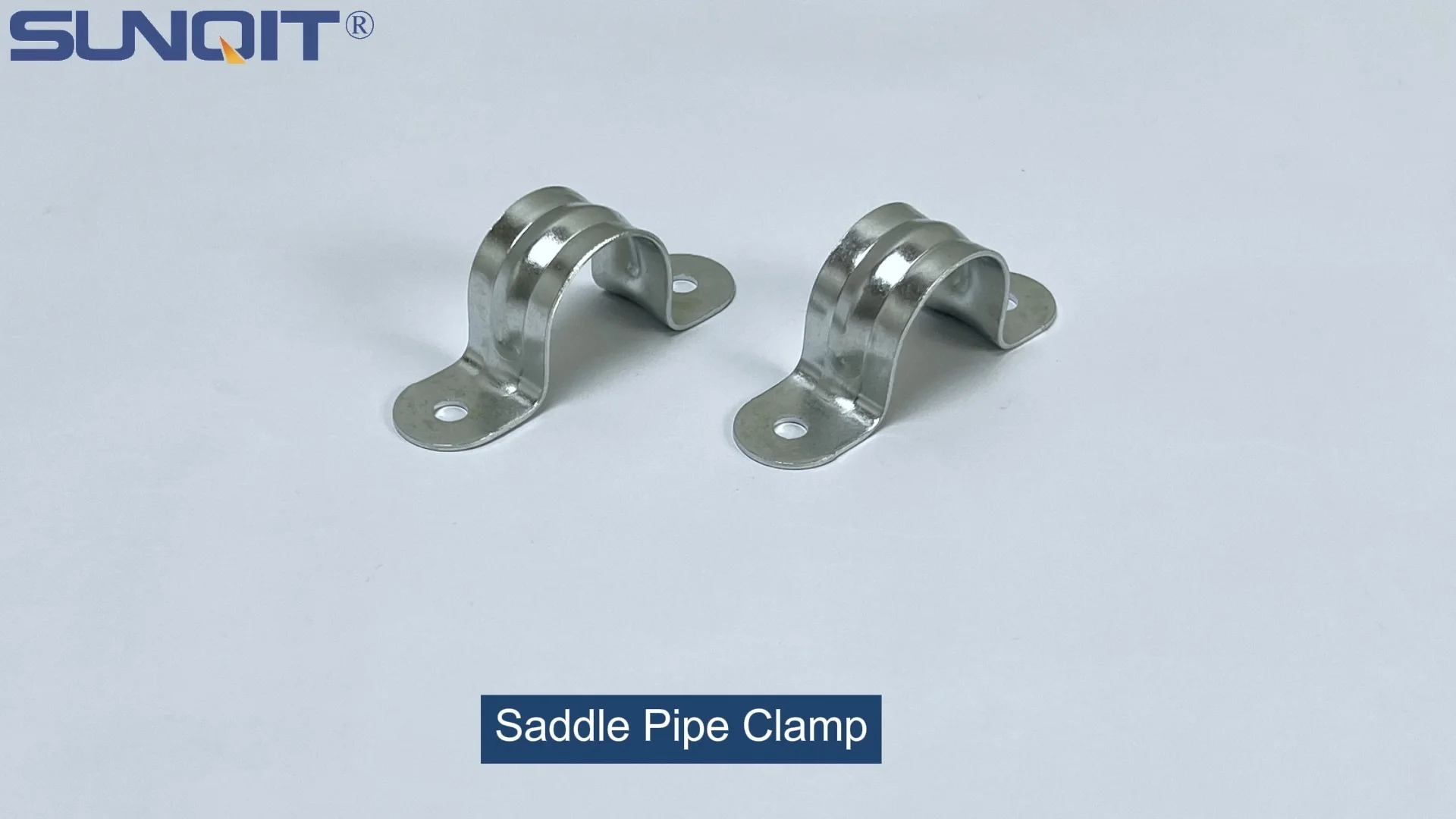
Saddle Pipe Clamp
Saddle pipe clamp, used for board connect with pipe, usually for table top installation.
In the high-stakes world of electronic manufacturing, where precision is measured in millimeters and components as delicate as a butterfly's wing power our daily lives, the assembly line isn't just a production tool—it's the backbone of reliability. Every wire, every bracket, every surface matters. But amid the buzz of machinery and the focus on speed, one critical element often flies under the radar: safety. Not the flashy kind with neon signs or emergency stops, but the quiet, foundational safety that prevents disasters before they start. Today, we're shining a light on a small but mighty hero in this space: the saddle pipe clamp. Paired with tools like lean pipe workbenches, ESD workstations, and conveyors, these unassuming components are redefining how safe, efficient, and resilient electronic assembly lines can be.
The Invisible Threats Lurking in Assembly Line Structures
Before we dive into how saddle pipe clamps solve problems, let's talk about the problems themselves. Electronic manufacturing floors are dynamic environments. Think about it: workers leaning on workbenches while soldering tiny microchips, conveyors zipping PCBs from station to station, ESD-sensitive components being shuttled across tables. Now, imagine if that workbench wobbles mid-solder, or the conveyor track shifts, jamming a circuit board. The result? Damaged parts, delayed production, or worse—injuries. But the risks go deeper than just physical instability.
Static electricity, for example, is an invisible assassin in electronics. A single spark can fry a $500 microprocessor or render a batch of sensors useless. Traditional metal clamps or loose-fitting brackets often act as static generators, especially if they're made from non-conductive materials or aren't properly grounded. Then there's the issue of adjustability. As production needs change—say, a new model with larger components requires a taller workbench—rigid, bolted-down structures force workers to improvise, stacking blocks or using makeshift supports. These quick fixes might work for a shift, but they're ticking time bombs for alignment issues or collapse.
And let's not forget about maintenance. Loose bolts on a conveyor track? They'll rattle louder each day until they snap. A workbench leg that's slightly off-kilter? It'll wear unevenly, leading to cracks or splits. These aren't just "inconveniences"—they're safety hazards. A worker tripping over a protruding bracket, a component sliding off a tilted surface, a static discharge frying a week's worth of production—all of these stem from structural weaknesses we often overlook.
What Even Is a Saddle Pipe Clamp?
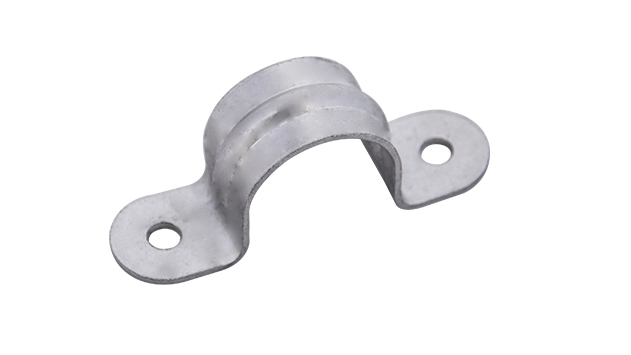
Okay, so we've established that unstable structures are bad. Enter the saddle pipe clamp. At first glance, it looks simple: a curved, saddle-shaped piece of metal (or sometimes aluminum) with holes for bolts. But don't let the simplicity fool you. Its design is the result of decades of iteration, tailored specifically to the needs of industrial environments. Let's break it down.
The "saddle" part is key. Unlike flat clamps that grip pipes at a single point, the curved saddle wraps around the pipe (often a lean pipe or aluminum profile), distributing pressure evenly. This isn't just about "holding tight"—it's about uniform holding. Think of it like a handshake: a firm, even grip is more secure than a tight squeeze in one spot. Most saddle pipe clamps are made from stainless steel or coated aluminum, both of which offer durability and, crucially, can be treated for ESD protection. That means they don't just hold pipes—they help channel static away from sensitive components, grounding it safely into the floor.
Installation is another win. Traditional clamps often require precise alignment and multiple tools, leading to human error (hello, over-tightened bolts that snap or under-tightened ones that loosen). Saddle pipe clamps, by contrast, are designed for quick, tool-friendly setup. Many models use standard hex bolts or wing nuts, so even a new line worker can secure them properly in minutes. And because they're adjustable—you can loosen, reposition, and retighten without damaging the pipe—they adapt as your needs change. Need to raise a conveyor by 2 inches? Loosen the clamps, adjust the pipes, retighten. No drilling new holes, no replacing brackets. It's flexibility built into the design.
Saddle Pipe Clamps in Action: Safety Benefits You Can Feel
Now, let's get concrete. How exactly do these clamps make assembly lines safer? Let's walk through four critical areas where they shine, using real-world scenarios from electronic manufacturing floors.
1. Eliminating "Wobbly Workbench Syndrome"
Picture this: A technician is sitting at a lean pipe workbench, carefully placing surface-mount resistors onto a PCB. The workbench has been in use for six months, and lately, it's developed a slight rock—just enough that when they lean forward, the table shifts. One wrong move, and that resistor could slip, landing on the floor (and potentially getting stepped on) or shorting out against another component. Now, swap out the old U-bolt clamps holding the workbench's legs to its frame with saddle pipe clamps. The saddle design wraps around the lean pipe legs, gripping them at three points instead of two. Even with daily use, the clamps maintain tension, so the workbench stays solid. No more rock, no more near-misses. It's a small change, but it turns a "maybe it'll hold" setup into a "this is reliable" one.
2. Taming Static: ESD Workstations That Actually Work
ESD workstations are non-negotiable in electronics—they're supposed to protect components from static damage. But here's a secret: Many ESD workstations fail not because of the tabletop, but because of their support structures. If the clamps holding the workstation's frame together are made from non-conductive plastic or ungrounded metal, they can trap static, turning the entire bench into a static generator. Saddle pipe clamps, when made with ESD-safe materials (like stainless steel with a conductive coating), act as grounding bridges. They connect the workbench's metal frame to the grounded floor, channeling static away from components. In one case study from a smartphone manufacturer, switching to ESD-compatible saddle pipe clamps reduced static-related component failures by 42% in three months. That's not just safer—it's cheaper, too.
3. Conveyor Tracks That Stay on Track
Conveyors are the arteries of assembly lines, moving PCBs, sensors, and housings between stations. But a misaligned conveyor track is a disaster waiting to happen. If the rollers shift even 1mm, a PCB can jam, scratching its surface or bending a connector. Over time, that jam can damage the conveyor motor or cause a chain reaction of delays. Saddle pipe clamps secure the conveyor's aluminum profile rails to the frame, ensuring the track stays straight. Unlike traditional clamps that can loosen with vibration, the saddle's grip resists lateral movement. A manufacturer of automotive infotainment systems reported a 67% drop in conveyor jams after upgrading to saddle pipe clamps on their roller tracks. Workers no longer had to stop production to realign tracks—they could focus on their tasks, and the line ran smoother than ever.
4. Reducing Maintenance, Reducing Risk
Here's a truth about safety: The more time workers spend fixing things, the more opportunities there are for accidents. A maintenance tech balancing on a ladder to tighten a loose clamp? That's a fall risk. A line operator using a wrench to adjust a conveyor bracket during a shift? They might rush, leading to an improper fix. Saddle pipe clamps cut down on maintenance needs in two ways: They're durable (resisting rust and wear) and easy to adjust. Most models can be tightened with a standard wrench in 30 seconds, no ladder required. At a contract manufacturer we spoke with, maintenance time for workbench and conveyor clamps dropped by 58% after switching to saddle pipe clamps. Fewer maintenance checks mean fewer distractions, fewer chances for human error, and a safer, more focused team.

Saddle Pipe Clamps vs. Traditional Fasteners: A Safety Showdown
Still not convinced these clamps are worth the switch? Let's put them head-to-head with the old standbys: U-bolts, standard brackets, and zip ties (yes, we've seen it). The table below breaks down how saddle pipe clamps stack up in key safety categories.
| Feature | Traditional Fasteners (U-bolts, Zip Ties) | Saddle Pipe Clamps |
|---|---|---|
| Installation Stability | Uneven pressure; prone to slipping or loosening with vibration. | 360° grip distributes pressure; resists lateral/vertical movement. |
| ESD Compatibility | Often non-conductive (zip ties) or ungrounded (bare metal U-bolts); traps static. | Available in ESD-safe materials; channels static to ground. |
| Adjustability | Rigid; requires drilling new holes or cutting pipes to reposition. | Tool-friendly; loosen, adjust, and retighten without damaging pipes. |
| Durability | Zip ties degrade in heat/chemicals; U-bolts rust if uncoated. | Stainless steel or aluminum construction; resists corrosion and wear. |
| Worker Safety During Use | Sharp edges (U-bolts) or flimsy support (zip ties) can cause cuts or collapses. | Smooth, rounded edges; secure grip prevents unexpected movement. |

Beyond the Clamp: Building a Safety Ecosystem
Saddle pipe clamps are powerful, but they're not lone wolves. Their true impact shines when they're part of a cohesive safety system—paired with tools like ESD workstations, conveyors, and aluminum profiles. Let's see how these pieces work together.
Take an ESD workstation, for example. The tabletop is conductive, the mat is grounded, and the tools are anti-static. But if the workstation's frame is held together with non-conductive clamps, static can build up in the pipes, creating a "static island" that bypasses the grounding system. Saddle pipe clamps, made from conductive aluminum or stainless steel, act as bridges, ensuring the entire frame is grounded. Add a conveyor with saddle-clamped aluminum profile rails, and suddenly the entire line—from workstation to transport—is static-free. It's safety through integration, not isolation.
Aluminum profiles, too, benefit from saddle pipe clamps. These lightweight, versatile rails are used in everything from material racks to conveyor frames. But their strength lies in their connections. A loose aluminum profile can bow under weight, leading to misaligned conveyors or wobbly racks. Saddle pipe clamps grip aluminum profiles tightly, even when loaded with heavy PCBs or toolboxes. At a medical device manufacturer, using saddle clamps to secure aluminum profile material racks reduced "tipping incidents" (where racks leaned under load) by 100% over six months. No more near-misses with falling boxes of components—just stable, secure storage.
Choosing the Right Saddle Pipe Clamp for Your Line
Not all saddle pipe clamps are created equal. To maximize safety, you'll need to pick the right type for your setup. Here's what to look for:
- Material Matters: For ESD-sensitive areas, opt for stainless steel or aluminum clamps with conductive coatings. In damp environments (like cleaning stations), go for corrosion-resistant stainless steel.
- Size Counts: Match the clamp to your pipe diameter. A clamp that's too loose won't grip; too tight might crush the pipe (especially if it's a lean pipe with a plastic coating).
- Load Rating: Check the clamp's weight capacity. A workbench leg clamp needs to hold more weight than a light-duty conveyor rail clamp.
- Certifications: Look for clamps rated to ESD standards (like ANSI/ESD S20.20) if you're using them near sensitive components.
And don't forget to consult your lean pipe workbench or conveyor supplier—they'll often have recommendations for compatible clamps. After all, a clamp is only as good as how well it works with the rest of your system.
The Ripple Effect: Safety That Boosts Productivity
Here's the thing about safety improvements: They rarely stay "just safety." When you install saddle pipe clamps, you're not just preventing accidents—you're building a more reliable, efficient line. A stable workbench means fewer component drops, so less rework. A static-free ESD workstation means fewer damaged parts, so higher yields. A conveyor that stays aligned means on-time production, so happier clients. It's a ripple effect.
At a consumer electronics plant in Malaysia, after upgrading to saddle pipe clamps on 20 lean pipe workbenches and 5 conveyors, production output increased by 12% in three months. Why? Fewer delays from jams, fewer scrapped components, and a team that felt more confident in their tools. As one line supervisor put it: "When you don't have to worry about the workbench moving or the conveyor sticking, you can focus on making good products. Safety isn't just about avoiding bad things—it's about enabling good things, too."
Conclusion: Small Clamps, Big Impact
In the grand scheme of electronic manufacturing, saddle pipe clamps might seem. They're not as flashy as automated pick-and-place machines or as high-tech as AI-driven quality checks. But in the day-to-day grind of keeping an assembly line running safely and smoothly, they're indispensable. They turn wobbly workbenches into rock-solid stations, static traps into grounded havens, and frustrating maintenance headaches into 30-second fixes.
So, the next time you walk your production floor, take a look at the clamps holding your lean pipe workbenches, ESD workstations, and conveyors together. Are they doing their job, or are they just getting by? Upgrading to saddle pipe clamps isn't just a "nice-to-have"—it's an investment in the people who build your products, the components that power them, and the reputation that keeps your customers coming back. Because in electronics, safety isn't just about avoiding mistakes. It's about building something better—one clamp at a time.