- Company Articles
- Products and Technology
- Product knowledge
- How Saddle Pipe Clamps Reduce Assembly Time in 3C Product Manufacturing

How Saddle Pipe Clamps Reduce Assembly Time in 3C Product Manufacturing
Related Product
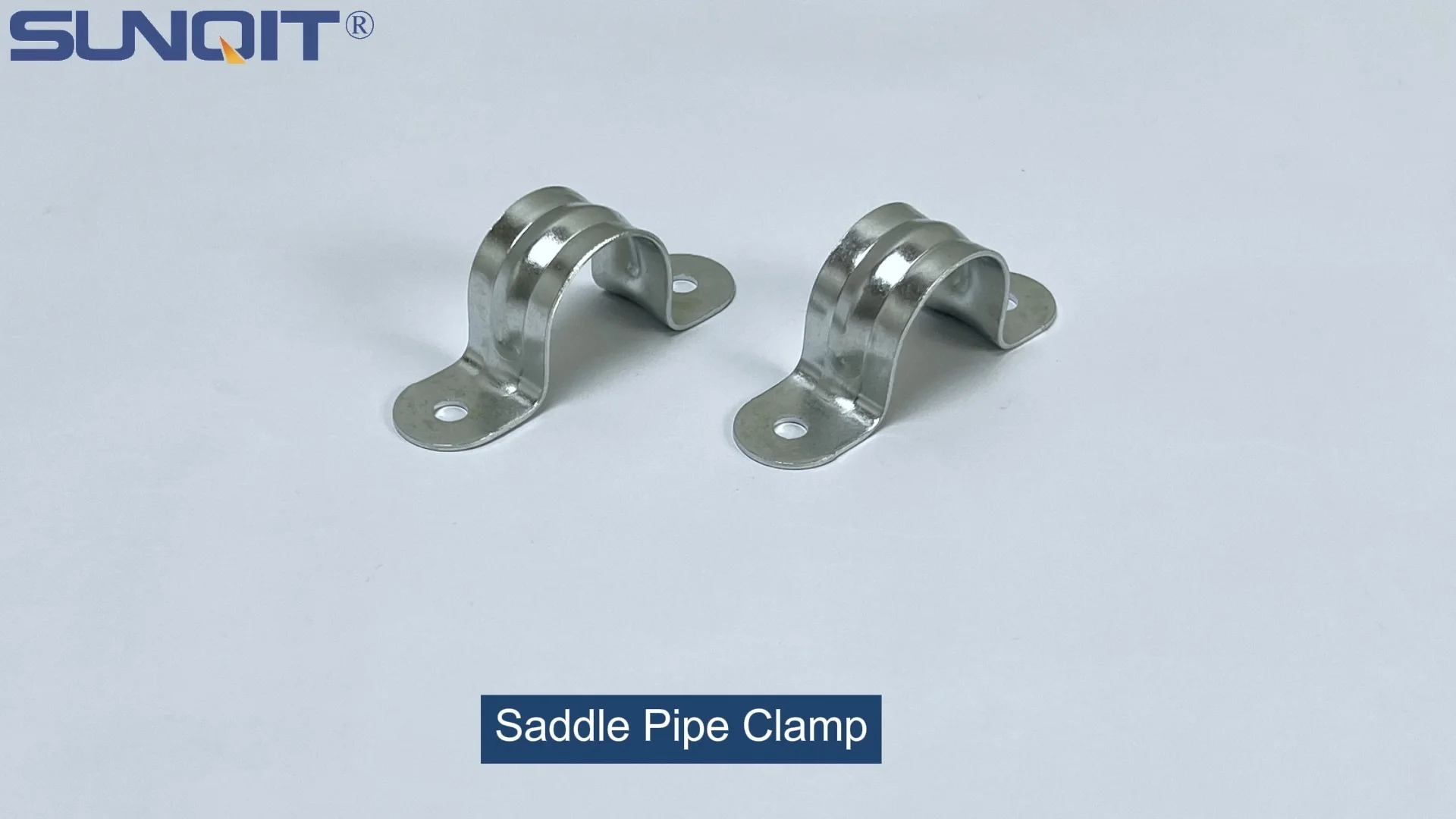
Saddle Pipe Clamp
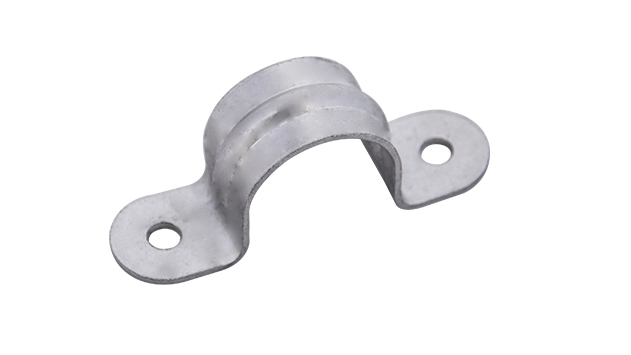
Saddle pipe clamp, used for board connect with pipe, usually for table top installation.
In the fast-paced world of 3C manufacturing—where smartphones, laptops, and tablets fly off production lines by the millions—every second counts. Assembly lines here aren't just about putting parts together; they're precision ecosystems where speed, flexibility, and reliability determine whether a factory keeps up with demand or falls behind. Yet, for all the high-tech robotics and automated systems dominating headlines, some of the biggest gains in efficiency come from surprisingly simple tools. One such unsung hero? The saddle pipe clamp. Paired with lean pipe and aluminum profile systems, these small, unassuming clamps are quietly revolutionizing how 3C assembly lines operate, slashing setup times, and turning rigid workbenches into agile, adaptable workspaces.
The Hidden Bottleneck: Rigid Assembly Lines in 3C Factories
Walk into any 3C manufacturing plant, and you'll see a symphony of motion: workers in (ESD) smocks handling microchips no bigger than a fingernail, robotic arms placing camera modules, and conveyor belts ferrying half-assembled devices to the next station. But look closer at the workbenches, material racks, and roller tracks that form the backbone of these lines, and you'll often find a critical flaw: rigidity. Traditional setups rely on fixed steel frames, welded joints, or bolted connections that take hours—if not days—to reconfigure. In an industry where product cycles last months, not years, and factories switch between models weekly, this rigidity is a silent productivity killer.
Consider a typical scenario: A factory producing smartphone Model A needs to switch to Model B, which has a slightly different battery compartment. The assembly line's material rack—loaded with bins of screws, gaskets, and adhesive strips—was built specifically for Model A's component sizes. To adapt, workers must disassemble the rack, drill new holes, and rebolt the steel pipes into place. What should take an hour takes half a shift. Meanwhile, the workbench where technicians test screen alignments has a fixed height, forcing workers to hunch or stretch depending on the device—a small ergonomic issue that adds up to lost seconds per unit, thousands of units per day.
The problem isn't just reconfiguration. Even day-to-day operations suffer. Securing pipes to joints with traditional clamps or bolts requires tools—wrenches, screwdrivers, maybe even power drills—that get misplaced, break, or slow workers down. Loose joints cause racks to wobble, risking damaged components. And when a pipe slips, the entire line pauses while someone tightens it. These "micro-pauses" might seem trivial, but over a 12-hour shift, they add up to hours of lost production.
Saddle Pipe Clamps: The "Quick-Connect" Solution for Lean Pipe Systems
Enter saddle pipe clamps—simple, tool-free fasteners designed to work with lean pipe (also called "flexible pipe") and aluminum profile systems. Unlike traditional bolts or welded joints, saddle clamps wrap around a pipe, using a lever, cam, or thumb screw to secure it in seconds. Imagine a belt buckle for industrial pipes: slip it on, tighten the clasp, and you're done. No tools, no drilling, no waiting for glue to dry or welds to cool.
At first glance, they look unremarkable: a plastic or metal clamp with a curved "saddle" that fits the contour of a lean pipe, and a locking mechanism that applies even pressure around the pipe's circumference. But their genius lies in their simplicity. Most saddle clamps weigh less than 50 grams, cost a fraction of traditional joints, and can be installed or adjusted by anyone—no special training required. This makes them perfect for 3C factories, where line supervisors need to make on-the-fly adjustments to keep pace with changing orders.
How They Work: A Closer Look
Let's break down the mechanics. A standard lean pipe is typically 28mm in diameter (though aluminum profile options vary), made of steel with a plastic coating or lightweight aluminum. A saddle pipe clamp has two main parts: the "saddle" itself, which cradles the pipe, and a mounting base that attaches to a workbench frame, aluminum profile, or another pipe. To install, you position the clamp around the pipe, align the base with your desired mounting point, and tighten the locking mechanism. Depending on the design, this might involve flipping a lever, twisting a thumb screw, or pressing a cam—all actions that take 10 seconds or less per clamp.
The result? A secure, stable connection that can support weights up to 50kg (for heavy-duty models) without slipping. And when you need to reconfigure? Loosen the clamp, slide the pipe to the new position, and retighten. It's that easy. This flexibility is a game-changer for 3C assembly lines, where material racks need to be adjusted to hold taller bins for new batteries, or workbenches repositioned to accommodate a new testing device.
4 Ways Saddle Pipe Clamps Cut Assembly Time
Saddle pipe clamps don't just make reconfiguration faster—they transform how assembly lines are built, maintained, and optimized. Here's how they deliver tangible time savings in 3C manufacturing:
1. Tool-Free Setup: From Hours to Minutes
Traditional pipe joints require tools: a wrench to tighten bolts, a drill to make holes, or a welder to fuse metal. In a busy factory, tools go missing, batteries die, and workers waste time hunting for the right size socket. Saddle clamps eliminate this entirely. A line worker can assemble a basic material rack with lean pipe and saddle clamps in 20 minutes—compared to 2 hours with bolted steel joints. For a factory setting up 10 new workbenches, that's a time savings of 18 hours—nearly two full shifts.
Take the example of a 3C manufacturer in Shenzhen that recently switched to lean pipe and saddle clamps for their component sorting area. Previously, setting up a new sorting rack took two workers 3 hours (drilling holes, bolting pipes, securing shelves). With saddle clamps, one worker now does the same job in 45 minutes. Over a year, that's hundreds of hours saved—time that can be redirected to training, quality checks, or ramping up production.
2. On-the-Fly Reconfiguration: Adapting to Model Changes in Hours, Not Days
3C factories rarely produce one model for long. A smartphone factory might make Model X for 3 months, then switch to Model Y, which has a thinner frame and different camera layout. With traditional rigid racks, this switch means disassembling and rebuilding entire sections of the line. With saddle clamps and lean pipe, it's a matter of loosening clamps, sliding pipes to new positions, and retightening. A reconfiguration that once took 2 days now takes 4 hours.
Consider a laptop assembly line that needed to adjust its roller track system to accommodate a new 14-inch model (up from 13.3 inches). The roller track—used to move partially assembled laptops between stations—was originally set to 13.3-inch width. With saddle clamps, workers simply loosened the clamps holding the side guides, slid the guides outward by 0.7 inches, and retightened. Total time: 20 minutes. No tools, no downtime, no missed deadlines.
3. Reduced Maintenance: Fewer Micro-Pauses, More Uptime
Traditional joints loosen over time, especially in high-vibration environments like assembly lines. A loose bolt on a workbench leg might seem minor, but it causes the bench to wobble, leading to misaligned components and rework. Workers end up spending 10–15 minutes per shift tightening bolts or replacing stripped screws. Saddle clamps, with their even pressure distribution, are far less likely to loosen. Their locking mechanisms—often spring-loaded or cam-action—maintain tension even with vibration, reducing maintenance checks by up to 70%.
4. Ergonomic Flexibility: Cutting Fatigue, Boosting Speed
Ergonomics might not seem like a "time-saving" factor, but uncomfortable workspaces slow workers down. A workbench that's too low forces workers to hunch, leading to fatigue and slower movements; one that's too high causes arm strain. Saddle clamps let factories adjust workbench heights in minutes. A line supervisor noticing workers straining to reach a top shelf can lower it by 10cm in 5 minutes, immediately improving speed and reducing errors.
| Metric | Traditional Assembly (Bolted Steel Joints) | Lean Pipe with Saddle Clamps | Time Savings |
|---|---|---|---|
| Workbench Setup Time | 2 hours (with tools) | 20 minutes (tool-free) | 83% |
| Model Change Reconfiguration | 2 days | 4 hours | 83% |
| Maintenance Checks (per week) | 2 hours (tightening bolts) | 30 minutes (inspecting clamps) | 75% |
| Worker Fatigue-Related Slowdowns | 10% productivity loss | 2% productivity loss | 80% |

Beyond Time: Why Saddle Clamps Are a Lean System Game-Changer
Saddle pipe clamps aren't just about speed—they're a cornerstone of lean manufacturing, the philosophy that drives efficiency by eliminating waste (muda). In 3C manufacturing, waste comes in many forms: time wasted waiting for tools, motion wasted moving between fixed racks, and materials wasted on damaged components from unstable workbenches. Saddle clamps attack all three:
- Eliminating Waiting Waste: No more waiting for a maintenance worker with a wrench to adjust a rack. Line workers can make changes themselves, on the spot.
- Reducing Motion Waste: Adjustable workbenches and racks mean tools and materials are always within arm's reach, cutting down on unnecessary movement.
- Minimizing Defect Waste: Stable, wobble-free workspaces reduce errors—like misaligned screens or bent connectors—saving time on rework.
Perhaps most importantly, saddle clamps empower workers. In traditional setups, line operators are often powerless to fix small inefficiencies ("The rack is too high, but I can't adjust it"). With saddle clamps, they become problem-solvers, tweaking their workspaces to fit their needs. This sense of ownership boosts morale—and a happier, more engaged workforce is a faster, more productive one.

Choosing the Right Saddle Clamps for 3C Factories
Not all saddle clamps are created equal. To maximize time savings, 3C manufacturers should look for these key features:
Material: Plastic vs. Metal
Plastic clamps are lightweight, corrosion-resistant, and affordable—great for low-weight applications like small component racks. Metal clamps (often aluminum or stainless steel) are stronger, making them ideal for heavy workbenches or roller tracks carrying full laptop assemblies.
Compatibility with Lean Pipe and Aluminum Profile
Ensure the clamp fits your existing lean pipe diameter (most are 28mm, but aluminum profile comes in 20mm, 30mm, and 40mm sizes). Some clamps are adjustable, fitting multiple diameters—a smart choice for factories using mixed pipe types.
Locking Mechanism
Lever-action clamps are the fastest (flip to lock/unlock), while thumb-screw clamps offer more precise tension. For high-vibration areas (near robotic arms), look for clamps with a "double-lock" feature to prevent accidental loosening.
ESD Safety
3C components are sensitive to static electricity, so choose ESD-safe clamps (often made with conductive plastic or metal) to prevent electrostatic discharge that could damage microchips.
The Future of 3C Assembly: Small Tools, Big Impact
As 3C manufacturing continues to evolve—with smaller components, faster product cycles, and higher demand for customization—the need for agile assembly lines will only grow. Saddle pipe clamps, paired with lean pipe and aluminum profile systems, are more than a trend; they're a foundational technology that lets factories do more with less. They prove that in the race for speed, sometimes the most powerful innovations are the ones you can hold in your hand.
So the next time you pick up a smartphone or laptop, take a moment to appreciate the invisible tools that helped build it. Behind that sleek device is a factory floor where saddle pipe clamps are quietly turning rigid lines into flexible, fast-moving engines of production—one quick-tightened clamp at a time.