- Company Articles
- Products and Technology
- Solution
- How Saddle Pipe Clamps Support Continuous Improvement in Lean Production

How Saddle Pipe Clamps Support Continuous Improvement in Lean Production
Related Product
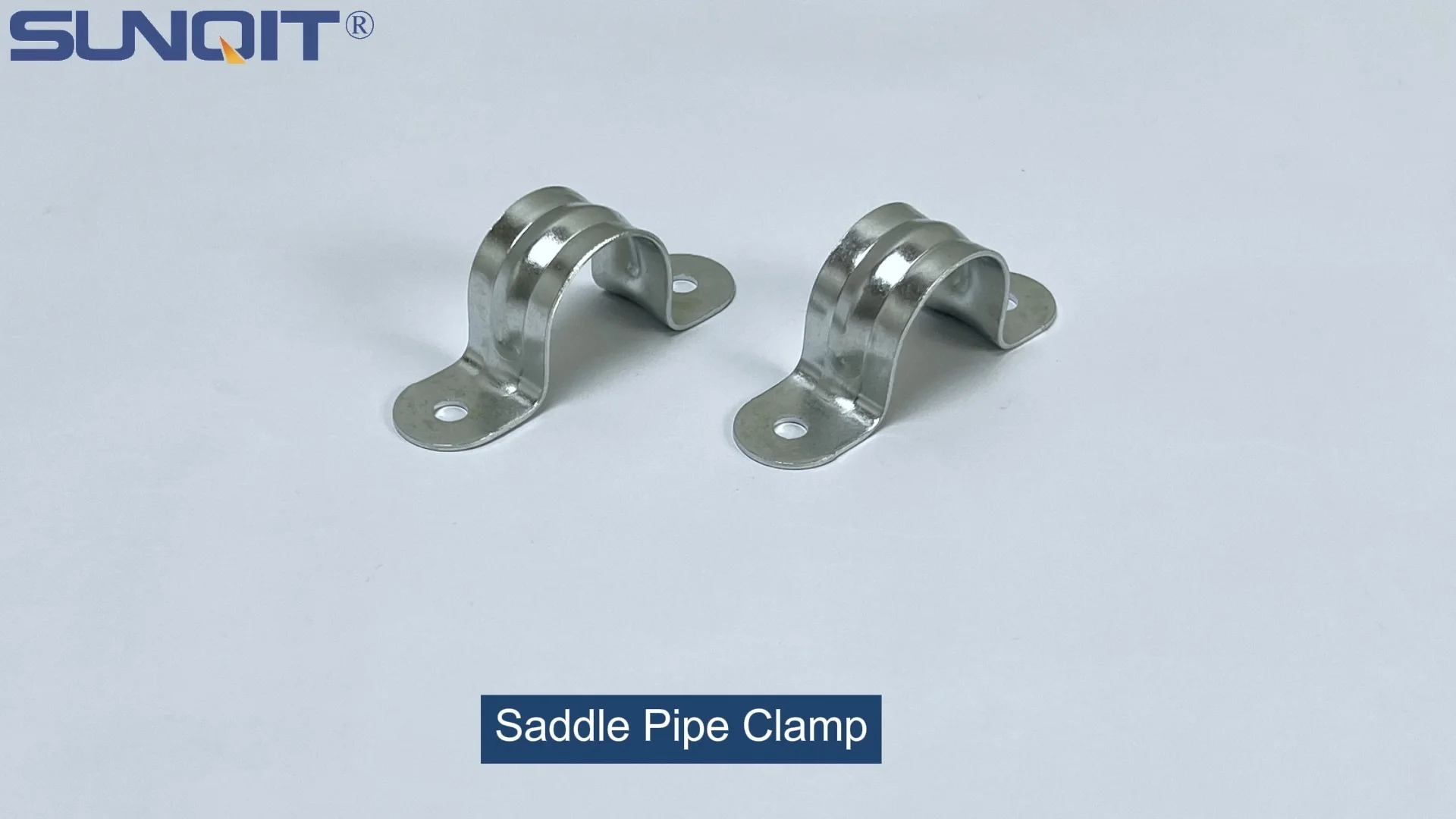
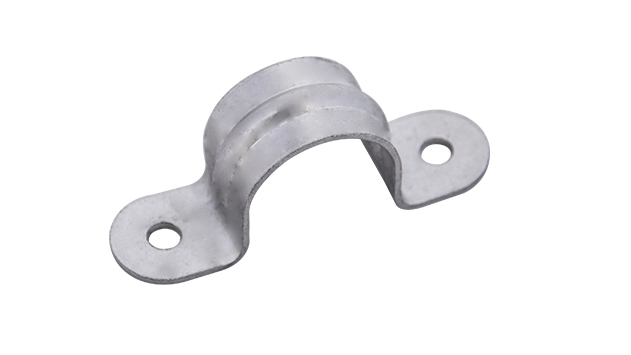
Saddle Pipe Clamp
Saddle pipe clamp, used for board connect with pipe, usually for table top installation.
Walk into any modern manufacturing facility, and you'll likely notice a common theme: efficiency. From the rhythmic hum of assembly lines to the organized flow of materials, every element is designed to minimize waste and maximize value. This is the heart of lean production—a philosophy that's transformed industries by focusing on continuous improvement. Yet, behind the scenes of these well-oiled operations, there are often small, unassuming components that play outsized roles. One such component? The saddle pipe clamp.
At first glance, a saddle pipe clamp might seem like little more than a metal or plastic fastener. But for those deep in the trenches of lean manufacturing, it's a silent workhorse. These clamps are the unsung heroes that hold together modular systems, secure workbenches, and keep material flow racks stable. In a world where adaptability and durability are non-negotiable, saddle pipe clamps bridge the gap between rigid infrastructure and the flexible, ever-evolving needs of lean production. Let's dive into how these unassuming tools support continuous improvement, and why they've become indispensable for anyone serious about optimizing their lean system.
Understanding Saddle Pipe Clamps: More Than Just a Fastener
Before we explore their role in lean production, let's get to know saddle pipe clamps better. Simply put, a saddle pipe clamp is a device designed to secure pipes, tubes, or profiles to a surface—whether that's a workbench frame, a flow rack, or another structural component. What sets them apart from standard clamps is their "saddle" shape: a curved or contoured section that fits snugly around the outer diameter of a pipe, distributing pressure evenly to prevent slippage or damage.
These clamps come in a variety of materials, including steel, stainless steel, aluminum, and even high-strength plastics, each tailored to specific environments. For example, stainless steel saddle pipe clamps are ideal for cleanrooms or food processing facilities where corrosion resistance is critical, while aluminum versions shine in lightweight applications like lean pipe workbenches. Most are designed with adjustable bolts or screws, allowing for quick tightening or loosening—a feature that becomes invaluable when reconfiguring a workspace.
But their design isn't just about holding things in place. Saddle pipe clamps are engineered for versatility. They can attach pipes to vertical surfaces, horizontal beams, or even other pipes, making them a Swiss Army knife for modular construction. This flexibility is key in lean production, where the ability to rearrange tools, workstations, or material handling systems on the fly can mean the difference between meeting a tight deadline and falling behind.
The Lean Production Landscape: Why Modularity Matters
To appreciate the role of saddle pipe clamps, it helps to first understand the core principles of lean production. At its core, lean is about eliminating waste—whether that's wasted time, materials, or effort—while continuously improving processes. A key enabler of this is modularity: the ability to build, modify, and repurpose systems without starting from scratch.
Traditional manufacturing setups often rely on fixed infrastructure: heavy, custom-built workbenches, rigid conveyor systems, and immovable storage racks. While these might work for static production lines, they're a nightmare for continuous improvement. When a process changes—say, a new product is introduced or a workflow is optimized—fixed infrastructure requires costly renovations or complete replacements. This is where modular systems, built around components like lean pipes, aluminum profiles, and yes, saddle pipe clamps, come into play.
A lean system thrives on adaptability. A lean pipe workbench, for example, isn't just a table; it's a customizable hub where tools, shelves, and bins can be added, removed, or rearranged as needs change. Similarly, a flow rack—used to move materials from one workstation to the next—needs to adjust to different product sizes or production volumes. Saddle pipe clamps are the glue that holds these modular systems together, ensuring they're both stable and easy to reconfigure.
Saddle Pipe Clamps in Action: Integrating with Lean Systems
Let's take a closer look at how saddle pipe clamps integrate with key components of a lean system. Picture a typical lean pipe workbench: it's constructed from aluminum or steel pipes (often called "lean tubes") connected by joints, with a work surface, tool hooks, and maybe a shelf for materials. To attach that shelf to the workbench frame, you might use a saddle pipe clamp. The clamp's saddle wraps around the vertical lean tube, while the flat base bolts or clamps to the shelf bracket. Tighten the bolts, and the shelf is secure; loosen them, and you can move the shelf up, down, or even remove it entirely.
Now, imagine that same workbench is part of a larger assembly line, fed by a flow rack. Flow racks use roller tracks to let materials glide from storage to the workstation, minimizing the need for manual lifting. The roller tracks themselves are mounted on a frame, often made of the same lean tubes as the workbench. Saddle pipe clamps here might secure the roller track brackets to the frame, ensuring the track stays aligned even as heavy bins slide across it. If the production team decides to angle the flow rack slightly to speed up material flow, they can loosen the clamps, adjust the frame, and retighten—no welding or new parts required.
This level of integration is what makes saddle pipe clamps so powerful. They don't just connect two parts; they connect the entire lean ecosystem. A single clamp might be, but when multiplied across a factory floor—holding together workbenches, flow racks, conveyor supports, and turnover trolleys—they create a system that's as flexible as it is robust. And in lean production, flexibility is the foundation of continuous improvement.

Benefits of Saddle Pipe Clamps for Continuous Improvement
So, what exactly do saddle pipe clamps bring to the table that supports continuous improvement? Let's break down their key benefits:
1. Unmatched Flexibility: Adapt or Die (Lean Edition)
Continuous improvement isn't a one-time project; it's an ongoing process. A production line that works perfectly today might need to change tomorrow—whether due to new product specs, updated safety regulations, or feedback from frontline workers. Saddle pipe clamps make these changes possible with minimal hassle. Unlike welded connections or permanent adhesives, they're designed to be adjusted. Need to raise a workbench shelf by 6 inches? Loosen the clamps, move the shelf, retighten. Want to repurpose a flow rack into a turnover trolley? Swap out the roller tracks for casters, secured with—you guessed it—saddle pipe clamps. This flexibility reduces downtime during reconfigurations, letting teams test new workflows quickly and iterate until they find what works best.
2. Durability That Stands the Test of Time (and Wear)
In manufacturing, equipment takes a beating. Workbenches vibrate, flow racks bear heavy loads, and trolleys get bumped into walls. A flimsy clamp could mean a shelf collapsing, a roller track misaligning, or worse—a safety hazard. Saddle pipe clamps are built to withstand this abuse. Their robust design, often with reinforced saddles and high-tensile bolts, ensures they hold firm even under repeated stress. Stainless steel versions resist rust and corrosion, while aluminum clamps offer strength without adding unnecessary weight. This durability means fewer replacements, lower maintenance costs, and a more reliable system—all of which free up resources to invest in other improvement initiatives.
3. Cost-Effectiveness: More Bang for Your Lean Buck
Lean production is as much about cost control as it is about efficiency. Saddle pipe clamps deliver here too. Compared to custom fabrication or specialized fasteners, they're relatively inexpensive. But their true cost savings come from their reusability. When a workstation is retired or redesigned, the clamps can be removed and reused elsewhere. A factory might buy a batch of clamps once and use them across multiple projects over years. Additionally, their ease of installation reduces labor costs. A single worker with a wrench can secure a clamp in minutes, no specialized training required. This combination of low upfront cost, reusability, and easy installation makes saddle pipe clamps a budget-friendly choice for lean teams looking to maximize ROI.
4. Safety: A Foundation for Improvement
No discussion of lean production is complete without mentioning safety. After all, a safe workplace is a productive workplace. Saddle pipe clamps contribute to safety in two key ways: by preventing structural failures and by reducing human error. A securely clamped shelf is less likely to collapse, and a stable flow rack minimizes the risk of materials falling and causing injuries. Additionally, because they're easy to adjust correctly, there's less chance of a worker overtightening (stripping threads) or undertightening (creating a loose connection) compared to more complex fasteners. When safety is prioritized, teams feel more confident suggesting improvements—knowing their ideas won't compromise their well-being.

Saddle Pipe Clamps vs. Other Fasteners: A Comparison
To truly understand why saddle pipe clamps are a favorite in lean systems, it helps to compare them to other common fasteners, like standard lean pipe joints or rigid brackets. Let's break it down in the table below:
| Feature | Saddle Pipe Clamps | Standard Lean Pipe Joints | Rigid Welded Brackets |
|---|---|---|---|
| Ease of Assembly | High: Requires only basic tools (wrench, screwdriver) | Medium: Joints snap or twist into place but may need adjustments | Low: Requires welding equipment and skilled labor |
| Reconfiguration Speed | Fast: Loosen/tighten bolts; no disassembly needed | Medium: Joints must be disconnected and reconnected | Very Slow: Requires cutting and rewelding |
| Load Capacity | High: Distributes pressure evenly; suitable for heavy loads | Medium: Limited by joint design; best for light to medium loads | Very High: Welded connections are extremely strong but permanent |
| Material Compatibility | High: Works with steel, aluminum, stainless steel pipes/profiles | Medium: Designed for specific lean tube diameters | High: Can be welded to most metals but limited to fixed materials |
| Cost-Effectiveness | High: Low upfront cost + reusable | Medium: Moderate cost, but some joints may wear out with reuse | Low: High labor and material costs; not reusable |
As the table shows, saddle pipe clamps strike a balance between strength, flexibility, and cost that's hard to beat—especially for lean environments where adaptability is key. While rigid welded brackets might offer more raw strength, they lack the reconfigurability that makes continuous improvement possible. Standard lean pipe joints are flexible but often can't match the load capacity or material compatibility of saddle clamps.
Real-World Impact: Case Studies in Lean Improvement
To put these benefits into context, let's look at two real-world examples of how saddle pipe clamps have supported continuous improvement.
Case Study 1: Automotive Supplier Reduces Changeover Time by 40%
A mid-sized automotive parts manufacturer was struggling with changeover times on their assembly line. Every time they switched from producing Part A to Part B, they had to reconfigure their lean pipe workbenches—adjusting tool positions, adding/removing shelves, and repositioning flow racks. The process took 2 hours, eating into production time and delaying orders.
Their solution? Upgrading to a system built with saddle pipe clamps. Previously, they'd used a mix of welded brackets and proprietary joint connectors that were time-consuming to adjust. By switching to saddle clamps, they could loosen a few bolts, move components, and retighten—no need to disconnect entire sections of the workbench. Within a month, changeover time dropped to 1 hour and 12 minutes—a 40% improvement. The team then used the saved time to implement additional lean practices, like 5S organization, further boosting productivity.
Case Study 2: Electronics Manufacturer Improves Ergonomics and Safety
An electronics manufacturer faced high turnover on their circuit board assembly line, partly due to ergonomic issues. Workers reported neck and back strain from leaning over low workbenches, and there were frequent minor injuries from tools slipping off overcrowded shelves.
The safety team recommended adjustable workbenches and tool storage. Using lean pipe workbenches with saddle pipe clamps, they installed height-adjustable work surfaces and modular tool shelves. Each worker could now adjust their bench to elbow height, reducing strain, while tools were secured on shelves positioned at eye level—no more reaching or bending. Saddle pipe clamps ensured the shelves stayed in place even when tools were grabbed quickly. Within six months, injury reports dropped by 65%, and turnover rates improved significantly. The team later expanded the system to other lines, using the same clamps to keep costs low.
Common Misconceptions About Saddle Pipe Clamps
Despite their benefits, saddle pipe clamps sometimes get overlooked, often due to misconceptions. Let's debunk a few:
"They're Just for Small-Scale Operations"
Some assume saddle pipe clamps are only suitable for small workshops or low-volume production. Nothing could be further from the truth. Large manufacturers—from automotive plants to aerospace facilities—use them to secure everything from heavy-duty flow racks to conveyor supports. The key is choosing the right material and size: a heavy-gauge stainless steel saddle clamp can handle loads of hundreds of pounds, making it more than capable for industrial applications.
"They're Not as Secure as Welded Connections"
It's true that welded connections are permanent, but "permanent" doesn't always mean "more secure." A properly installed saddle pipe clamp, with bolts torqued to the manufacturer's specifications, can be just as stable as a weld—without the risk of cracking or weakening over time (a common issue with welded joints). Plus, if a welded joint fails, it's far harder to repair than a loose clamp.
"They're Too Simple to Add Value"
In lean production, simplicity is often a strength, not a weakness. The beauty of saddle pipe clamps lies in their simplicity: they do one job—secure components—and they do it well. Their lack of complexity means fewer points of failure, easier maintenance, and faster adoption by teams. Sometimes, the most valuable tools are the ones that don't require a manual to use.
Choosing the Right Saddle Pipe Clamps for Your Lean System
Not all saddle pipe clamps are created equal. To get the most out of them, you'll need to choose the right ones for your specific needs. Here are a few factors to consider:
Material Matters
Start with the material. Steel clamps are strong and affordable but may rust in humid environments. Stainless steel is corrosion-resistant, making it ideal for wet or cleanroom settings. Aluminum is lightweight and rust-proof, perfect for mobile systems like turnover trolleys. Plastic clamps are cost-effective for light loads and non-conductive applications (e.g., electronics manufacturing with ESD workbenches).
Size and Fit
Clamps are designed to fit specific pipe or profile diameters. A clamp that's too small won't fit; one that's too large won't grip properly. Measure your lean tubes or aluminum profiles before buying—most suppliers list the compatible pipe sizes (e.g., 1-inch, 0.5-inch) in their product specs. Also, consider the clamp's width: wider clamps distribute pressure better for heavy loads.
Installation Type
How will the clamp be mounted? Some saddle pipe clamps bolt directly to a surface, while others use screws, clips, or even adhesive (for temporary applications). Think about your surface material: wood or plastic might require self-tapping screws, while metal frames could use bolts with nuts. Also, consider access—will you need a clamp that can be tightened from one side, or is two-sided access available?
Load Capacity
Don't skimp on load capacity. Check the manufacturer's ratings to ensure the clamp can handle the weight of the component it's securing. If you're unsure, err on the side of caution—overloading a clamp is a safety risk and could lead to failure.
The Future of Saddle Pipe Clamps in Lean Production
As lean production evolves—with trends like Industry 4.0, automation, and smart manufacturing—what role will saddle pipe clamps play? If history is any indication, they'll adapt and thrive. Here's why:
First, modularity isn't going anywhere. Smart factories still need flexible infrastructure to accommodate changing technologies, and saddle pipe clamps are perfectly suited to this. For example, as more factories add collaborative robots (cobots) to their lines, they'll need to reconfigure workbenches to make space. Saddle clamps will make those reconfigurations fast and easy.
Second, sustainability is becoming a core part of lean philosophy. Saddle pipe clamps align with this: their durability and reusability reduce waste, while materials like recycled aluminum or stainless steel lower environmental impact. Manufacturers are already exploring eco-friendly coatings and materials for clamps, further boosting their green credentials.
Finally, customization will grow. As lean systems become more tailored to specific industries—medical device manufacturing, aerospace, consumer electronics—saddle pipe clamp suppliers will offer specialized designs: clamps with built-in sensors to monitor tightness, ergonomic handles for tool-free adjustment, or even magnetic versions for quick-release applications. The basic principle—secure, flexible fastening—will remain, but the details will evolve to meet new needs.
Conclusion: The Clamp That Holds Lean Together
In the grand scheme of lean production, saddle pipe clamps may not get the same attention as advanced software or high-tech machinery. But as we've explored, they're the backbone of the modular, flexible systems that make continuous improvement possible. They let teams adapt quickly, reduce waste, and build safer, more efficient workspaces—all while keeping costs in check.
So, the next time you walk through a lean manufacturing facility, take a moment to look for those unassuming clamps. They might be holding up a workbench, securing a flow rack, or stabilizing a conveyor. And remember: behind every efficient process, every improved workflow, and every satisfied worker, there's often a saddle pipe clamp quietly doing its job. In the world of lean, sometimes the smallest components make the biggest difference.