- Company Articles
- Products and Technology
- Product knowledge
- How Single Side Aluminum Pipe Enhances Workplace Safety in Manufacturing

How Single Side Aluminum Pipe Enhances Workplace Safety in Manufacturing
Related Product
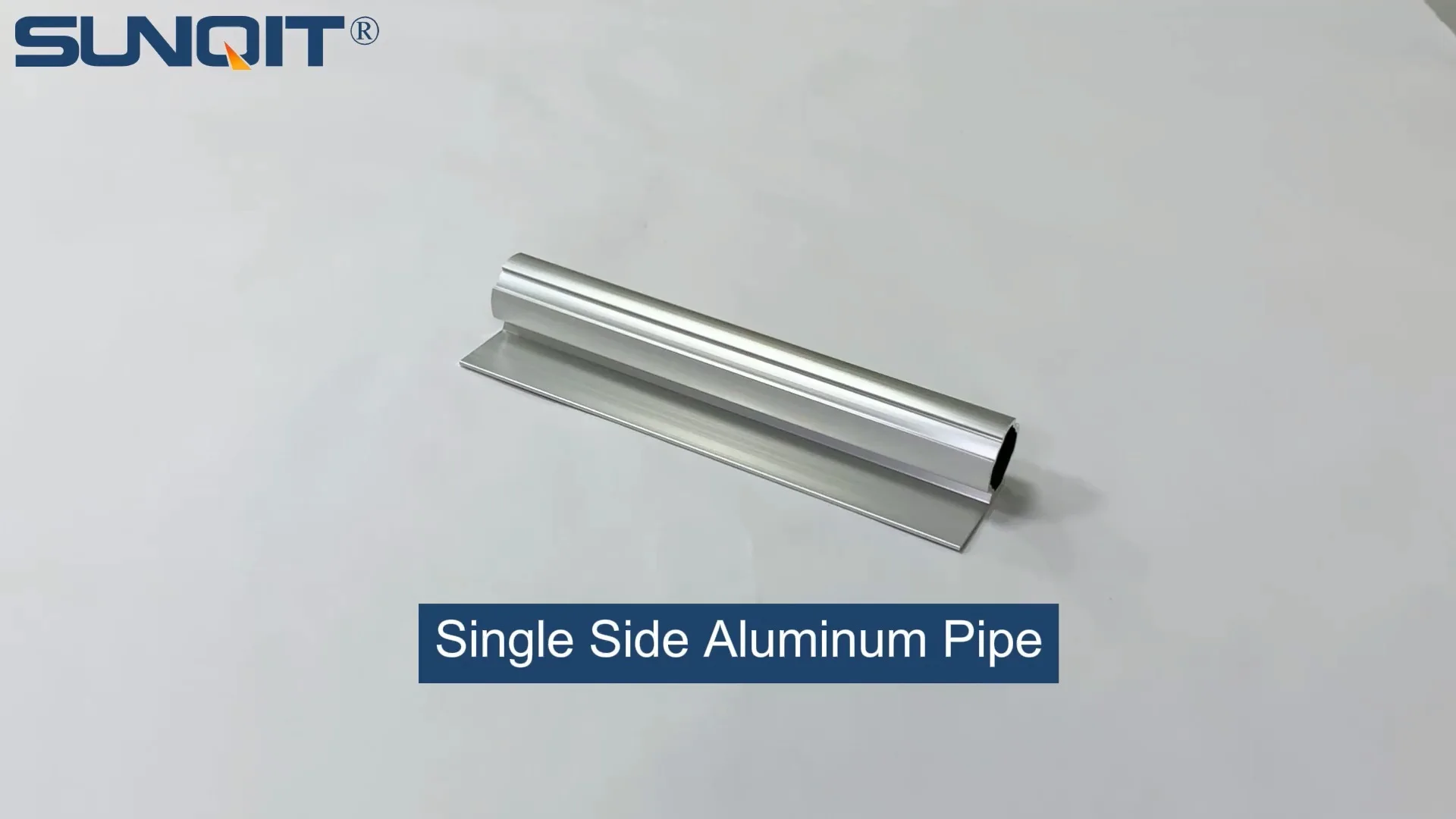
Single Side Aluminum Pipe
The single-sided plane can be installed with a back-mounted material box, and can also be used as a sidewall or partition.
Walk into any manufacturing facility, and you'll quickly realize that safety isn't just a poster on the wall or a line item in a training manual. It's the quiet foundation that keeps operations running—protecting workers from strains, slips, and equipment failures, while ensuring deadlines are met and morale stays high. Yet, despite best efforts, many factories still grapple with avoidable safety gaps: workbenches that force employees to hunch for hours, material racks that wobble under heavy loads, or rigid structures that can't adapt to shifting workflows. These aren't just nuisances; they're silent risks that chip away at productivity and, worse, put lives on the line.
In recent years, a shift toward smarter, more adaptable workplace solutions has begun to change this. Among the most impactful innovations? Single side aluminum pipe and its aluminum profile systems. Far more than just "pipes and brackets," these modular components are redefining how manufacturers approach safety—blending strength, flexibility, and ergonomics into a toolkit that doesn't just meet compliance standards, but actively prevents accidents before they happen. Let's dive into how this unassuming material is becoming a cornerstone of safer, more resilient manufacturing floors.
Why Aluminum? The Material Behind the Safety Revolution
To understand the safety benefits of single side aluminum pipe, we first need to appreciate why aluminum itself has become a go-to material in modern manufacturing. For decades, factories relied on steel for structural components—think heavy workbenches, fixed racks, and clunky conveyor systems. While steel is strong, it comes with trade-offs: it's dense, making adjustments or reconfigurations backbreaking work; prone to rust in humid or chemical-heavy environments; and often requires welding or specialized tools to modify. These traits don't just hinder efficiency—they create safety hazards.
Aluminum, by contrast, is a game-changer. Lightweight yet surprisingly robust, it cuts down on the physical strain of moving or adjusting equipment. A 10-foot length of single side aluminum pipe, for example, weighs roughly a third of its steel equivalent, meaning a single worker can reposition a section of a workbench or flow rack without needing a team of colleagues (or risking a pulled muscle). Its natural resistance to corrosion also eliminates the need for constant maintenance—no more worrying about rusted joints weakening a material rack or sharp, flaking metal edges cutting gloves or skin.
But what truly sets single side aluminum pipe apart is its design. Unlike traditional round pipes, single side aluminum pipe features a flat, T-slot edge that runs along one side—think of it as a pipe with a built-in "track" for attachments. This allows for quick, tool-free connections using aluminum pipe accessories like brackets, clamps, and joints. Need to raise a workbench by 6 inches to reduce shoulder strain for taller employees? Slide a bracket into the T-slot, tighten a knob, and you're done. No welding, no drilling, no downtime. This flexibility isn't just convenient—it's a safety win, as it lets teams adapt their workspace to evolving needs without compromising structural integrity.
Ergonomics First: How Single Side Aluminum Pipe Reduces Strain and Fatigue
Ergonomic injuries—strains, sprains, and repetitive motion disorders—account for nearly a third of all workplace injuries in manufacturing, according to OSHA data. These aren't just "minor" issues: a single back strain can keep an employee off the floor for weeks, costing thousands in lost productivity and workers' compensation. The root cause? Poorly designed workstations that force employees into unnatural positions for hours on end.
Enter the workbench reimagined with single side aluminum pipe and aluminum profiles. Traditional workbenches are often one-size-fits-all: fixed heights, limited storage, and surfaces that force workers to lean, stretch, or hunch to reach tools or materials. With aluminum systems, however, customization is effortless. Let's take a common scenario: a assembly line where operators range in height from 5'2" to 6'4". With a steel workbench, the tallest workers might stoop, while the shortest strain to reach overhead tools. With aluminum, the solution is simple: adjustable legs with T-slot connections. Each worker can tweak their station's height in minutes, aligning the work surface with their elbow height to reduce shoulder and back strain.
But ergonomics go beyond height. Single side aluminum pipe's modularity lets teams add accessories like tool holders, monitor mounts, and footrests exactly where they're needed. A technician assembling small electronics, for example, might add a swing-out tray at waist level to hold screws and components, eliminating the need to bend down to a drawer 50 times a day. A machinist could mount a magnifying lamp on an adjustable arm, reducing eye strain without cluttering the workspace. These small adjustments add up to big reductions in fatigue—and fewer injuries.
| Feature | Traditional Steel Workbench | Single Side Aluminum Pipe Workbench |
|---|---|---|
| Adjustability | Fixed height; requires welding or cutting to modify | Tool-free height adjustment via T-slot legs; customizable in minutes |
| Weight (per 6ft section) | ~45 lbs (requires 2+ people to move) | ~15 lbs (single-person setup possible) |
| Accessory Integration | Limited; requires drilling holes or welding brackets | Unlimited; T-slot edge accepts clamps, holders, and mounts without modifications |
| Ergonomic Risk | High (strains from fixed positions, heavy lifting) | Low (customizable to worker size, lightweight design reduces strain) |

Stability That Saves Lives: How Aluminum Profiles Prevent Collapses and Trips
Beyond ergonomics, structural stability is perhaps the most critical safety concern in manufacturing. A collapsed material rack, a wobbly conveyor, or a loose workbench leg can lead to crushed fingers, falling objects, or slips and falls—incidents that can be catastrophic. Here again, single side aluminum pipe and aluminum profiles shine, thanks to their engineered precision and modular strength.
Aluminum profiles, which are often used in conjunction with single side aluminum pipe, are extruded with uniform cross-sections—think of them as pre-engineered beams with built-in channels for connections. This consistency ensures that every joint, bracket, and attachment point is load-tested and predictable. Unlike wooden racks, which can warp or splinter under heavy loads, or steel structures with welded joints that weaken over time, aluminum profiles distribute weight evenly across their length, reducing the risk of sudden failure.
Consider a common scenario: a material rack storing heavy automotive parts. A traditional steel rack might use bolted or welded joints that loosen over months of vibration from nearby machinery. An aluminum profile rack, by contrast, uses T-slot nuts and bolts that lock securely into the profile's channels, maintaining tension even under repeated use. Add single side aluminum pipe crossbars for additional support, and you've got a structure that can handle hundreds of pounds without so much as a creak—no more late-night worries about racks collapsing during a night shift.
Trips and falls are another major hazard, often caused by cluttered floors, loose cables, or uneven surfaces. Single side aluminum pipe systems address this by keeping everything "off the ground." Cable management, for example, becomes a breeze: clips and holders snap into the T-slot edge of the pipe, routing wires neatly along workbench legs or rack frames instead of letting them dangle into walkways. Similarly, roller tracks built from aluminum profiles (often paired with single side aluminum pipe supports) create smooth, level material flow, eliminating the uneven surfaces that can catch shoes or wheels.

Flexibility = Safety: Adapting to Change Without Risk
Manufacturing isn't static. Product lines change, demand fluctuates, and workflows evolve—and when your workspace can't keep up, safety suffers. A factory that suddenly needs to reconfigure a production line to meet a rush order, for example, might find itself jury-rigging temporary workstations with mismatched tables, unstable shelves, or even stacks of pallets. These "quick fixes" are breeding grounds for accidents.
This is where the modularity of single side aluminum pipe becomes a safety superpower. Because components connect via simple, tool-free joints (no welding, no drilling), reconfiguring a workspace takes hours instead of days. Need to add a new section to a lean system flow rack to accommodate a new product size? Slide a few aluminum profiles into place, lock them with T-slot bolts, and you're done. Want to move a workbench from one side of the line to another? Unclip the accessories, detach the legs, and carry the sections to the new spot—no heavy machinery, no risk of dropping a steel table on a foot.
This flexibility also reduces "changeover stress," a hidden factor in many workplace accidents. When employees are rushed to modify a workstation or rack, corners get cut: bolts are tightened haphazardly, weight limits are ignored, or unstable configurations are left "temporarily" in place. With aluminum systems, there's no need to rush—adjustments are so simple that even last-minute changes can be done safely. As one plant manager put it: "We used to dread product launches because we'd spend a week building new workstations with steel and wood, and someone always got hurt. Now, with single side aluminum pipe, we can reconfigure a line in a morning, and everyone goes home uninjured."

Real-World Impact: Safety Wins on the Factory Floor
To put these benefits into perspective, let's look at a real-world example (details anonymized to protect privacy). A mid-sized electronics manufacturer in the Midwest was struggling with a high rate of ergonomic injuries: 12 reported strains or sprains in a single year, mostly from workers bending to reach components on low shelves or lifting heavy toolboxes onto fixed-height workbenches. Their safety team recommended a overhaul of their assembly stations, and the factory chose to invest in single side aluminum pipe workbenches and aluminum profile flow racks.
Within six months, the results were striking. By adjusting workbench heights to match each operator's elbow level and adding swing-out component trays, the number of reported strains dropped to zero. The lightweight aluminum flow racks, which workers could reposition themselves, reduced the need for team lifts—cutting down on "near misses" where loads were dropped. Even better, the factory saw a 15% boost in productivity, as employees spent less time adjusting to uncomfortable setups and more time focused on their tasks.
Another example: a food packaging plant dealing with frequent rust issues on their steel conveyor systems (a hazard not just for equipment, but for product contamination). Switching to aluminum profile conveyors with single side aluminum pipe supports eliminated rust entirely, reducing maintenance-related shutdowns and the risk of metal shavings getting into food. The lighter aluminum also made cleaning easier—workers could quickly detach conveyor sections to sanitize underneath, reducing slip hazards from spilled liquids that had previously pooled under hard-to-reach steel frames.
Choosing the Right Partner: Beyond Pipes and Profiles
Of course, the safety benefits of single side aluminum pipe depend on choosing quality components and working with suppliers who understand manufacturing needs. Not all aluminum systems are created equal: cheap, thin-walled pipes or poorly designed joints can compromise strength, while suppliers without industry expertise might oversell or underspecify components for your workflow.
When evaluating a supplier, look for those who offer custom design support—ideally, a team that will visit your facility, assess your specific safety pain points (e.g., high strain areas, frequent reconfigurations, corrosion issues), and recommend tailored solutions. A good supplier should also provide load-test data for their aluminum profiles and single side aluminum pipe, ensuring you know exactly how much weight each component can handle. Finally, prioritize suppliers who offer training on proper assembly and adjustment—even the best system is only safe if your team knows how to use it correctly.
Conclusion: Safety as an Investment, Not an Expense
At the end of the day, single side aluminum pipe and aluminum profile systems aren't just about "pipes and brackets." They're about rethinking safety as an integral part of how work gets done—not a checklist to be ticked, but a foundation for productivity, morale, and long-term success. By combining ergonomics, durability, and flexibility, these systems turn the manufacturing floor from a place of hidden risks into one of proactive protection—where workers can focus on building quality products, not avoiding accidents.
For manufacturers still on the fence, consider this: the average cost of a workplace injury (including medical bills, lost wages, and downtime) is over $40,000, according to the National Safety Council. A single serious incident can cost hundreds of thousands. Investing in aluminum systems isn't just about avoiding these costs—it's about building a workplace where employees feel valued, supported, and safe. And in today's competitive manufacturing landscape, that's not just good for safety—it's good for business.
So the next time you walk through your factory, take a look at your workbenches, racks, and conveyors. Are they holding your team back? Or could they be part of the solution? With single side aluminum pipe, the answer is clear: safety doesn't have to be a sacrifice. It can be the most valuable tool in your toolkit.